Music PR Campaign Explained for Independent Artists

What a music PR campaign actually is
A music PR campaign is a strategic effort to generate earned media — interviews, reviews, features, and editorial placements — that build your credibility and public awareness without direct payment. You’re not buying the coverage. You’re earning it by giving journalists, bloggers, and podcast hosts a story worth telling.
That distinction matters more than most artists realize. Paid ads disappear the moment you stop spending. Earned press sticks around, gets indexed, gets shared, and gets referenced in your next pitch. It’s the difference between renting attention and owning it.
The core components of any music PR campaign:
- Story development: Crafting a compelling narrative around who you are and why this release matters now
- Media list building: Researching outlets, writers, and podcasters who cover your genre and audience
- Targeted pitching: Sending personalized outreach to journalists and editors with a clear story hook
- Earned coverage: Securing placements through relationship and relevance, not payment
- Amplification: Sharing press wins across your socials, electronic press kit, and future pitches
- Follow-up: Sustaining momentum through consistent relationship-building beyond a single campaign
Table of Contents
- How a music PR campaign actually works
- Why PR matters specifically for independent artists in 2026
- What does a music PR campaign cost?
- How to plan and run an effective music PR campaign
- How music PR differs from music marketing
- How AI-powered tools are changing music PR for indie artists
- What is a PR in music?
- What does a PR do in music?
- How to hire the right music PR company
- What a music PR campaign timeline looks like
- How to measure whether your PR campaign worked
- Upncomer gives you a full PR and campaign toolkit in one place
- FAQ
- Key Takeaways
How a music PR campaign actually works
The mechanics start before you send a single email. First, you develop your narrative — not “I made a song” but a specific angle that gives a journalist something to write about. That could be a personal story behind the record, a cultural moment your music speaks to, or an unusual creative process. A compelling story hook is what separates pitches that get opened from ones that get deleted.
From there, you build a targeted media list. Think several dozen outlets mixing national blogs, niche genre publications, local press, and podcasts. Mass blasting 500 contacts is a waste of time. Personalized outreach to the right 30 people will always outperform it.

The pitch itself is short: one paragraph on the story hook, one on who you are, a streaming link, and a clear ask. No attachments. No walls of text. Journalists are busy, and your job is to make their decision fast.
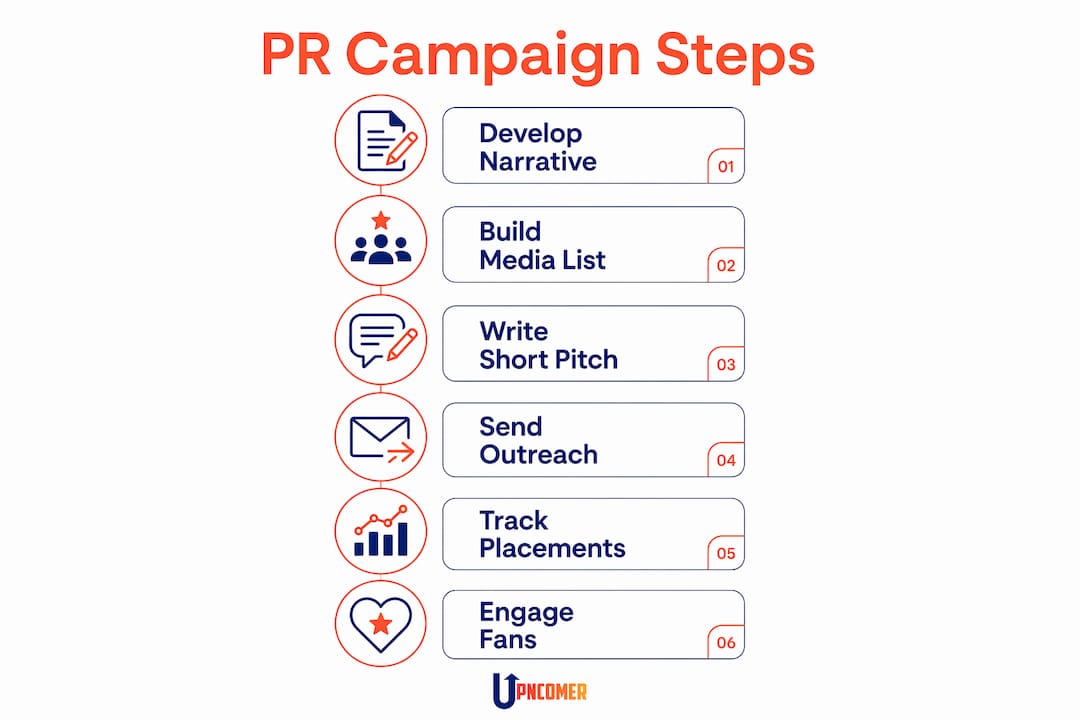
Once placements land, the work isn’t over. Every PR piece should include a clear call-to-action that converts attention into streams, ticket sales, or fan follows. Share coverage everywhere, add press logos to your website, and save features to your Instagram highlights. That amplification is what turns a single placement into long-term leverage.
Why PR matters specifically for independent artists in 2026
Streaming is the top of your funnel, not the finish line. With millions of tracks uploaded every year, discovery alone won’t build a career. What separates artists who grow from those who plateau is third-party validation — and that’s exactly what PR delivers.
Here’s why it hits differently for indie artists:
- Credibility you can’t buy: A genuine review from a respected blog carries more weight with playlist editors, booking agents, and sync supervisors than any ad spend
- Doors that open: Press placements compound over time, enhancing your credibility and opening industry doors for sync licensing, brand partnerships, and festival bookings
- Algorithm support: Streaming platforms notice when external press drives traffic to your profile; it signals legitimacy
- Narrative control: PR lets you shape how the industry talks about you before someone else does it for you
Pure social media tactics get you reach. PR gets you respect. And in 2026, you need both. Tools like Upncomer’s Amplitude AI and Growth Engine help you understand which audiences are already responding to your music, so your PR narrative is grounded in real data rather than guesswork about who you’re speaking to.
What does a music PR campaign cost?
Budget reality: entry-level services from well-connected freelancers or boutique firms are available, with most independent artist campaigns typically costing between $800 and $3,500 per month, and full single campaigns ranging from $3,000 to $8,000 in the US market. Monthly retainers can vary depending on the level of activity and the PR firm’s tier.
Here’s how the tiers break down:
| Tier | Monthly Cost | What You Get |
|---|---|---|
| Entry-level / developing publicist | $800–$1,000 | Blog outreach, building media relationships, personalized attention |
| Established indie publicist | $1,000–$2,000 | Mid-tier press, podcast placements, solid outlet relationships |
| Mid-tier PR agency | $2,000–$3,500 | Broader media reach, team-based approach, more outlets simultaneously |
| Major PR firm | $3,500+ | Access to top-tier outlets, crisis management capabilities, established credibility |
A few things to know before you sign anything. No reputable PR firm guarantees specific placements — they sell access and effort, not outcomes. Two artists paying the same fee can see very different results depending on their story, assets, and timing.
Also budget for the assets a publicist needs before they can pitch: professional photos, a mastered single, and an updated EPK. Skipping those costs you coverage, not money.
Pro Tip: For artist financial planning, add 20–30% on top of your headline PR fee to cover assets, add-ons, and unexpected costs like rush timelines.
How to plan and run an effective music PR campaign
A solid campaign follows a clear sequence. Here’s the framework:
- Craft your narrative first. Use a three-part formula: who you are, why this release matters now, and why it matters to the reader. One paragraph. Specific, not vague.
- Build a focused media list. Target 25 outlets mixing big blogs, niche genre sites, local press, and podcasts. Personalized beats volume every time.
- Write a tight pitch email. Story hook in the first line, your background in two sentences, a streaming link, and one clear ask. No attachments.
- Prepare your EPK. Your electronic press kit needs a one-line positioning statement, a short bio, two or three of your best tracks, any real press quotes, one high-resolution photo, and clear contact links. A live web page beats a PDF.
- Time your pitching strategically. Start outreach 6–8 weeks before release for singles, 8–12 weeks for albums. Long-lead publications need that runway.
- Amplify every placement. Post coverage to all social platforms, add press logos to your website, include quotes in future promotional materials, and thank the journalist publicly.
- Track and carry forward. Log every response, placement, and pass. Use that data to refine your next release campaign and build on existing press in future pitches.
How music PR differs from music marketing
These two things get conflated constantly, and the confusion costs artists money. They serve different functions.
Music PR is earned media. You pitch a story, a journalist decides it’s worth covering, and the coverage appears without payment. The goal is credibility, reputation, and long-term public awareness. You don’t control the message once it’s published, but that’s actually the point — third-party validation carries weight precisely because it’s independent.
Music marketing is paid or owned media. You run ads, post on your own channels, and send emails to your list. You control the message entirely, but the audience knows you’re the one saying it.
The PESO framework maps this clearly: Paid, Earned, Shared, and Owned media each play a distinct role. Owned media (your website, your profiles) is your foundation. Earned media (PR) builds credibility. Paid media extends reach. Shared media (social amplification) connects them.
Neither PR nor marketing works as well alone. The artists who grow fastest use both: PR to build credibility and open doors, online music promotion to drive direct audience action. Think of them as two gears that need each other to turn.
How AI-powered tools are changing music PR for indie artists
The “post-and-pray” approach — drop the song, post once, hope for the best — consistently underperforms campaigns built around real data. AI changes what’s possible for artists who don’t have a full team behind them.
Here’s where AI makes a real difference in PR workflows:
- Media targeting: AI can analyze which outlets and writers have covered artists in your genre recently, saving hours of manual research
- Pitch timing: Streaming analytics reveal when your audience is most active, helping you time outreach around genuine momentum
- Narrative development: Audience data shows you which aspects of your music resonate most, giving you a story hook grounded in real listener behavior
- Placement tracking: Automated monitoring catches coverage you might otherwise miss and feeds it back into your EPK and future pitches
Upncomer’s Publicist and Amplitude AI modules are built specifically for this workflow. Amplitude AI surfaces audience insights and helps you craft narratives that match what your listeners actually respond to. The Data Analyst module tracks streaming performance so you know when momentum is building — and when to pitch.
Pro Tip: Use Upncomer’s audience data tools to identify your top cities and demographics before building your media list. Local press in your strongest markets is often easier to land and just as valuable for credibility.
What is a PR in music?
PR in music stands for public relations. It’s the practice of managing how an artist is perceived by the public and the industry through earned media coverage rather than paid advertising. A music publicist works to place your story in front of journalists, editors, and podcast hosts who can amplify it to their audiences.
What does a PR do in music?
A music publicist develops your campaign strategy, writes press materials, pitches journalists and playlist curators, coordinates interviews, manages press assets, and tracks coverage. They identify which outlets cover artists like you, craft pitch angles tailored to each contact, and follow up persistently. What they don’t do: run paid ads, manage your social media, or book shows. Understanding that scope prevents misaligned expectations.
How to hire the right music PR company
Start by looking at their existing roster. A publicist who regularly places artists in your genre has the relationships that matter. Ask for a sample media list and recent campaign results — not just names of outlets, but actual placements with links.
A few things to check before signing:
- Genre fit: A pop-focused firm pitching your jazz record is wasting both your time and theirs
- Roster size: A publicist with 40 clients can’t give your campaign real attention; ask how many active campaigns they’re running
- Realistic expectations: Any firm promising guaranteed placements is a red flag; reputable publicists sell effort and access, not outcomes
- Contract terms: Understand the campaign length, deliverables, and what happens if coverage is minimal
- Asset readiness: Have your EPK, professional photos, and mastered music ready before the first conversation; publicists can’t pitch effectively without them
Start conversations 3–4 months before your release date. Campaigns compressed into shorter timelines miss long-lead publications entirely.
What a music PR campaign timeline looks like
A standard single campaign runs 6–8 weeks. An album push runs 8–12 weeks. Here’s how the phases break down:
Pre-release (8–12 weeks out): Story development, press kit preparation, media list building, exclusive premiere scheduling, and early outreach to long-lead outlets.
Release phase (2–4 weeks out): Coordinated rollout execution, interview scheduling, review copy distribution, and real-time response to opportunities as they come in.
Post-release (4–8 weeks after): Extended feature opportunities, year-end list positioning, award submission support, and relationship maintenance for your next campaign.
One thing most artists miss: the post-release phase is where a lot of the best coverage actually lands. Don’t pull back the moment the song drops. Keep pitching, keep amplifying, and keep the story alive.
How to measure whether your PR campaign worked
Success in PR isn’t just a placement count. Here’s what to actually track:
- Coverage volume and quality: How many placements, and at what outlet tier? Ten blog features and a podcast interview is a solid result for an emerging artist
- Referral traffic: Did press coverage drive listeners to your streaming profiles or website? Check your analytics for spikes tied to publication dates
- Streaming momentum: Did your monthly listeners or saves increase during the campaign window? Data-driven campaigns convert media attention into measurable audience actions
- Industry doors: Did any booking agents, sync supervisors, or playlist editors reach out after seeing coverage?
- EPK strength: Every placement you earn makes your next pitch stronger; track press quotes and logos you can add to your kit
A successful emerging artist campaign might yield several blog features, a few podcast interviews, and one or two mid-tier outlet placements. Major outlet coverage at Rolling Stone or Pitchfork typically requires an established profile or an exceptional story angle. Set expectations accordingly, and measure progress against your own baseline, not someone else’s.
Upncomer gives you a full PR and campaign toolkit in one place
Running a PR campaign as an independent artist means juggling story development, media research, pitch writing, asset management, and performance tracking — usually across five different tools that don’t talk to each other.
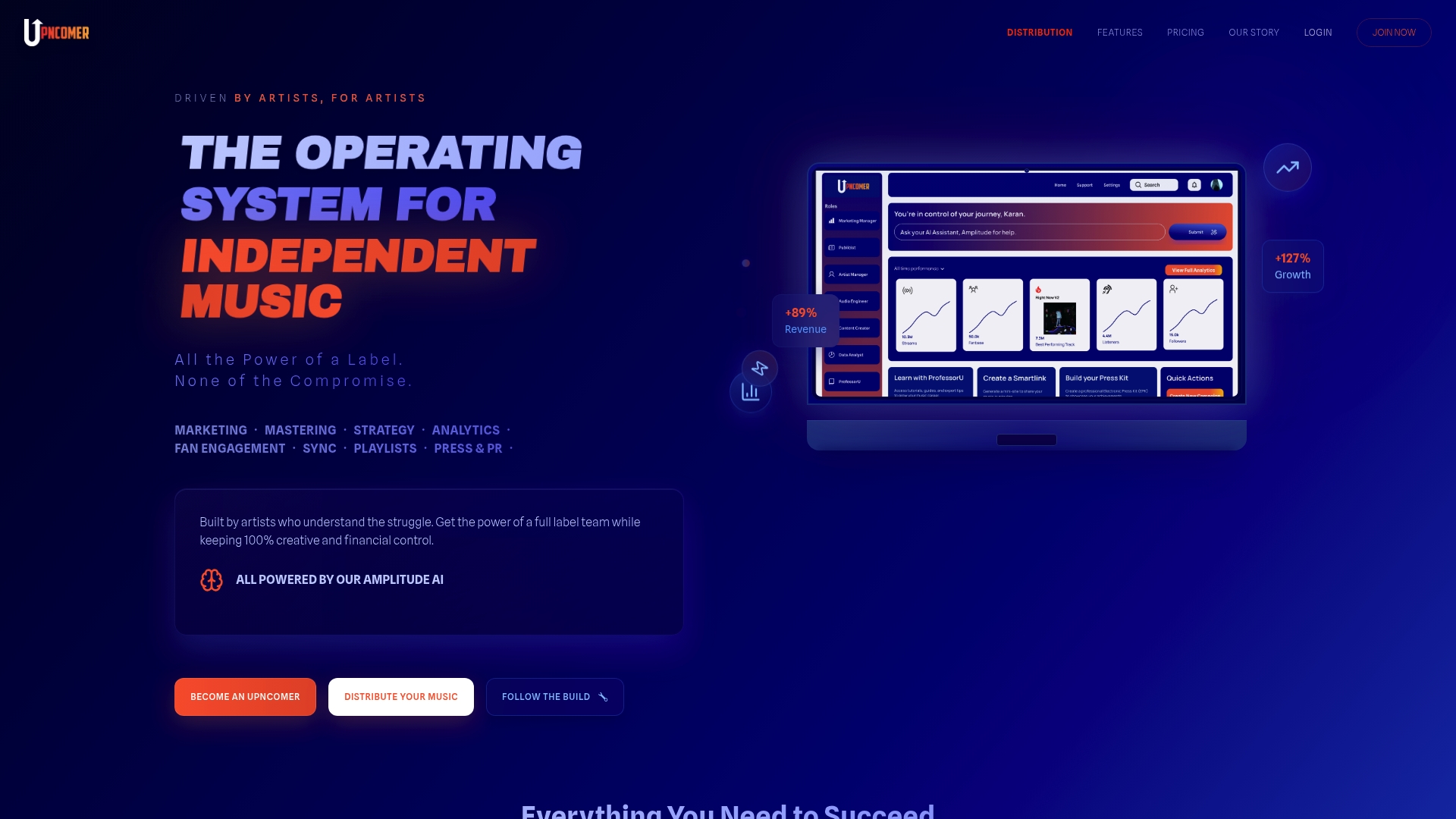
Upncomer is built to change that. The platform combines Amplitude AI for audience insights and narrative development, the Publicist module for campaign management, and the Data Analyst for streaming performance tracking — all inside one ecosystem designed specifically for independent artists. You get the kind of infrastructure that used to require a full label team, without the label.
Whether you’re planning your first PR push or scaling a release campaign with real momentum behind it, Upncomer gives you the data, tools, and guidance to do it right. Explore what’s possible and see how independent artists are building sustainable careers with smarter campaigns.
FAQ
What does a PR campaign include?
A music PR campaign includes story development, press kit preparation, targeted media outreach, pitch writing, interview coordination, placement tracking, and post-release amplification. The goal is earned media coverage that builds credibility over time.
What is PR in music marketing?
PR in music is the practice of securing earned media coverage — reviews, interviews, and features — through story-driven outreach rather than paid advertising. It sits within the broader PESO framework alongside paid, shared, and owned media.
How much does a music PR campaign cost?
Independent artist campaigns typically range from $800–$3,500 per month for freelance or boutique publicists, with full single campaigns often totaling $3,000–$8,000 in the US market. No reputable firm guarantees specific placements.
What is the 3-minute rule in music?
The 3-minute rule is an informal industry guideline suggesting songs under three minutes tend to perform better for radio and streaming algorithms. It’s a production consideration, not a PR strategy, though song length can influence which outlets and formats a publicist targets.
When should I start a PR campaign for my music?
Start conversations with a publicist 3–4 months before your release date. For a standard single campaign, active pitching begins 6–8 weeks out. Starting too late means missing long-lead publications with extended editorial calendars.
Key Takeaways
A music PR campaign earns credibility through third-party coverage that compounds over time, opening industry doors no paid ad can unlock.
| Point | Details |
|---|---|
| PR is earned media | Interviews, reviews, and features build credibility without direct payment, unlike paid ads that stop when spending stops. |
| Costs vary by tier | Independent artist campaigns typically run $800–$3,500 per month; full single campaigns often total $3,000–$8,000 in the US. |
| Timing is critical | Start publicist conversations 3–4 months before release; active pitching begins 6–8 weeks out for singles. |
| Story hook drives results | A compelling narrative angle is what gets pitches opened; mass outreach without personalization consistently underperforms. |
| Upncomer centralizes the workflow | Amplitude AI, the Publicist module, and Data Analyst give independent artists label-level PR infrastructure in one platform. |