Why Data Drives Music Marketing for Independent Artists

Data-driven music marketing is the practice of using measurable audience signals, including demographics, streaming behavior, and engagement metrics, to build smarter promotion strategies that outperform guesswork. Tools like Spotify for Artists, Apple Music Analytics, and centralized platforms give independent musicians a real competitive edge. Understanding why data drives music marketing is not optional anymore. It is the difference between releasing into a void and releasing with a plan that compounds over time.
Why data drives music marketing: the core case
Data-driven music marketing replaces assumptions with evidence. Instead of promoting a track everywhere and hoping something sticks, you use real signals to find out who is listening, where they are, and what moves them to act.

The benefits of data-driven music marketing show up fast. You spend less on channels that do not convert. You find the cities where your fanbase is already clustering. You learn which playlist placements actually drive saves versus passive streams. Every one of those insights shapes a sharper next campaign.
Spotify for Artists and Apple Music Analytics are the starting points most indie musicians already have access to. They surface listener age ranges, geographic hotspots, and source-of-streams data. The artists who treat those dashboards as a weekly habit, not a one-time curiosity, are the ones who build momentum release after release.
How data reveals your audience: demographics, listening habits, and fan engagement
Your audience data tells you things your gut never could. Age, location, platform preference, and skip rate are not vanity metrics. They are the inputs that determine where you spend your next $200 in ads and which city you book your next show in.
Here are the most useful data points to track and act on:
- Age range: If 60% of your streams come from listeners aged 18 to 25, your visual content and ad placements belong on TikTok and Instagram Reels, not Facebook.
- Geography: A cluster of listeners in Atlanta or Berlin tells you where to pitch live shows and where to run localized ad campaigns.
- Platform source: Knowing whether listeners find you through algorithmic playlists, editorial placements, or direct search tells you which growth channels to double down on.
- Engagement depth: Saves, repeat listens, and playlist adds signal genuine fans, not passive ears. These are the listeners worth retargeting.
One case study from Cammo Network showed that targeting platforms favored by 18 to 25 year olds produced a 40% engagement increase. That is not a small lift. It means the same budget, applied with better targeting, nearly doubled the response rate.
The impact of data on music marketing extends to live show planning too. If your streaming data shows a dense listener cluster in a city where you have never played, that is a low-risk, high-potential booking decision backed by real demand.
Pro Tip: Set a recurring weekly calendar block to review your Spotify for Artists and Apple Music Analytics dashboards. Treat it like a business meeting, not an afterthought. Patterns only become visible when you look consistently.
First-party fan data vs. algorithmic discovery: which one builds your career?
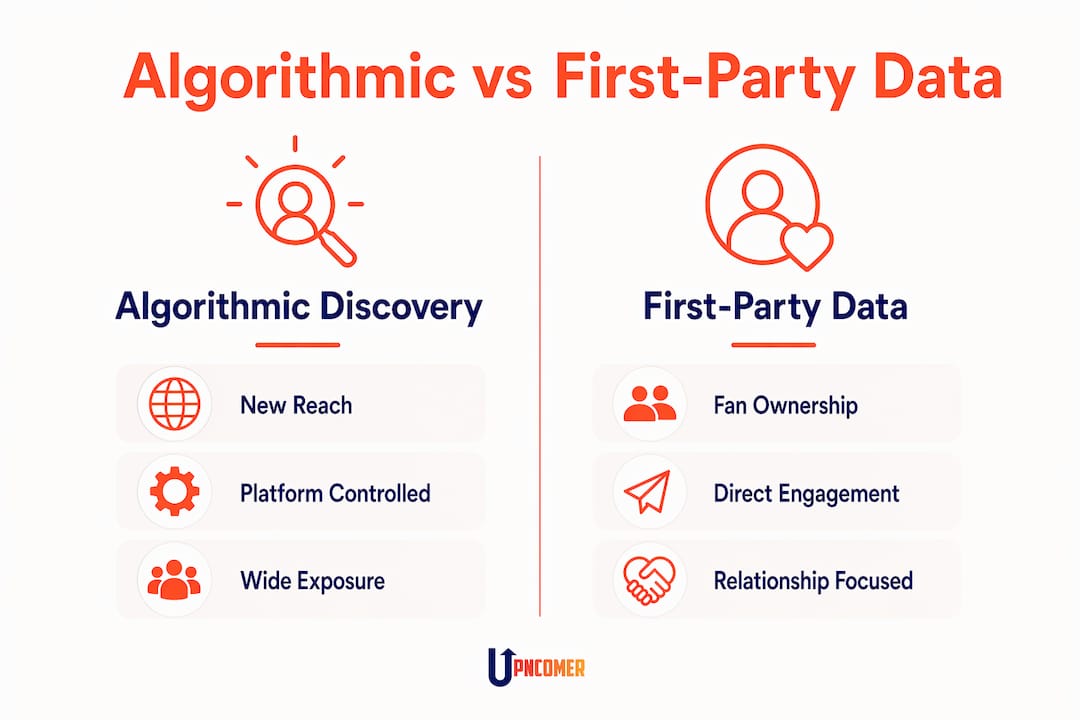
Algorithms and first-party data serve different purposes, and confusing them is one of the most expensive mistakes an independent artist can make.
| Factor | Algorithmic discovery | First-party fan data |
|---|---|---|
| What it does | Distributes your music to new listeners based on engagement signals | Retains identifiable fan profiles you own and control |
| Longevity | Resets with each release cycle | Compounds across every release |
| Control | Platform-dependent | Fully owned by you |
| Best use | Expanding reach and finding new audiences | Re-engaging known fans and building loyalty |
First-party fan data includes email subscribers, SMS opt-ins, and direct fan interactions you collect and store yourself. Unlike an algorithm-driven stream, a fan on your email list stays yours regardless of what Spotify changes in its recommendation logic next quarter.
Algorithms optimize for distribution reach. First-party data optimizes for audience relationship continuity, enabling compounding growth across releases. The artists who understand this distinction build careers. The ones who chase algorithm plays alone build a treadmill they can never step off.
The smart move is combining both. Use algorithmic tools to expand your reach on each release. Use that momentum to capture email and SMS subscribers. Then, on your next release, you launch to a warm audience you already own, not a cold algorithm you have to re-convince.
Pro Tip: Add a simple email capture to every smart link, pre-save page, and merch checkout. Even 200 email subscribers who genuinely care about your music are worth more than 20,000 passive streams from listeners who will never hear from you again.
How integrating streaming, paid media, and CRM data sharpens your campaigns
Using data from a single source is like mixing a track with only one monitor. You hear part of the picture. Connecting your streaming analytics, paid media performance, and fan CRM data gives you the full mix.
Centralized data dashboards help identify where a track gains traction and improve the cost efficiency of your spend. When you know that listeners in Chicago who discovered you through a TikTok ad are saving your tracks at twice the rate of listeners from editorial playlists, you know exactly where to put your next ad dollar.
Here is what integrated data enables in practice:
- Persona building: Combine age, location, and listening behavior to create specific audience profiles. A 22-year-old R&B listener in Houston who saves tracks and follows artists is a different persona than a 35-year-old who streams passively during commutes.
- Lookalike audiences: Upload your email list or fan data to Meta Ads or TikTok Ads to find new listeners who match your existing superfans. This is one of the highest-ROI moves available to indie artists with limited budgets.
- Territory optimization: If streaming data shows growth in Germany but your ads are only running in the US, you are leaving real momentum on the table.
- Budget allocation: When you can see which channels drive saves and conversions versus which ones drive passive plays, you stop wasting money on the latter.
Fragmented tools create blind spots for indie teams, leading to misallocation when marketing data is siloed. A unified view is not a luxury. It is the infrastructure that separates artists who scale from artists who plateau. You can learn more about building this kind of foundation in the music marketing funnel guide from UpNComer.
Avoiding data pitfalls: attribution errors that distort your results
Collecting data is the easy part. Interpreting it correctly is where most independent artists and music marketers go wrong.
Last-click attribution is the most common trap. It credits the final touchpoint before a fan converts, typically a branded search or a direct link click, and ignores every piece of content, ad, or playlist that built awareness first. Last-click attribution can cause 25% to 40% wasted spend by overvaluing low-funnel channels and underestimating brand-building efforts. That means nearly half your budget could be going to channels that look effective but are simply benefiting from work done elsewhere.
“Having dashboards is not enough. Effectiveness comes from connecting outcomes to actions and building learning loops that translate data into repeatable strategies.” Source
Multi-touch attribution solves this by distributing credit across every touchpoint in the fan journey. Combined with marketing mix modeling and incrementality tests, it gives you a far more reliable picture of what is actually driving growth. One case study achieved a 35% reduction in customer acquisition cost after implementing a multi-touch attribution model. That is a significant budget recovery from simply measuring more accurately.
For indie artists without a data science team, the practical version of this is triangulation. Cross-reference your Spotify for Artists source data, your ad platform analytics, and your email open rates before drawing conclusions about what worked. No single number tells the full story. Using data to improve music reach means reading the whole picture, not just the metric that looks best.
Key takeaways
Data-driven music marketing works because it replaces costly assumptions with measurable signals, enabling independent artists to target smarter, spend less, and build fan relationships that compound across every release.
| Point | Details |
|---|---|
| Audience data shapes every decision | Demographics, geography, and engagement metrics tell you where to promote and who to reach. |
| First-party data outlasts algorithms | Email and SMS fan lists compound across releases; algorithm reach resets each time. |
| Integrated data reduces wasted spend | Connecting streaming, paid media, and CRM data improves targeting and budget efficiency. |
| Attribution errors cost real money | Last-click models can waste 25% to 40% of your budget by misreading which channels drive results. |
| Dashboards require action loops | Data only creates value when it connects to decisions and repeatable campaign strategies. |
What I have learned from using data as an independent musician
I want to be honest with you about something: the first time I looked at my Spotify for Artists dashboard seriously, I was convinced my music was performing well. The stream counts looked decent. Then I dug into the source data and realized that over 70% of those streams were coming from my own playlist adds and a handful of friends. My actual organic reach was almost nothing.
That moment changed how I approached every release after it. I stopped optimizing for streams and started optimizing for saves, follows, and email sign-ups. Those are the signals that tell you a real fan just found you, not a passive listener who will forget your name by tomorrow.
The biggest mistake I see artists make is treating data as a report card instead of a compass. A low engagement rate is not a verdict on your music. It is a signal that something in your targeting or timing needs adjusting. Engagement metrics during the first week shape whether streaming platforms continue promoting your tracks. That means your release week strategy, informed by data from previous releases, is one of the highest-leverage decisions you make.
The artists who grow consistently are not necessarily the most talented. They are the ones who treat every release as a learning loop. Signals lead to decisions. Decisions lead to adaptations. Adaptations lead to better results next time. You do not need a major label analytics team to do this. You need consistency, curiosity, and the right tools. Check out the analytics platforms guide for a practical breakdown of what to track and when.
— Karan
How UpNComer helps you put data to work
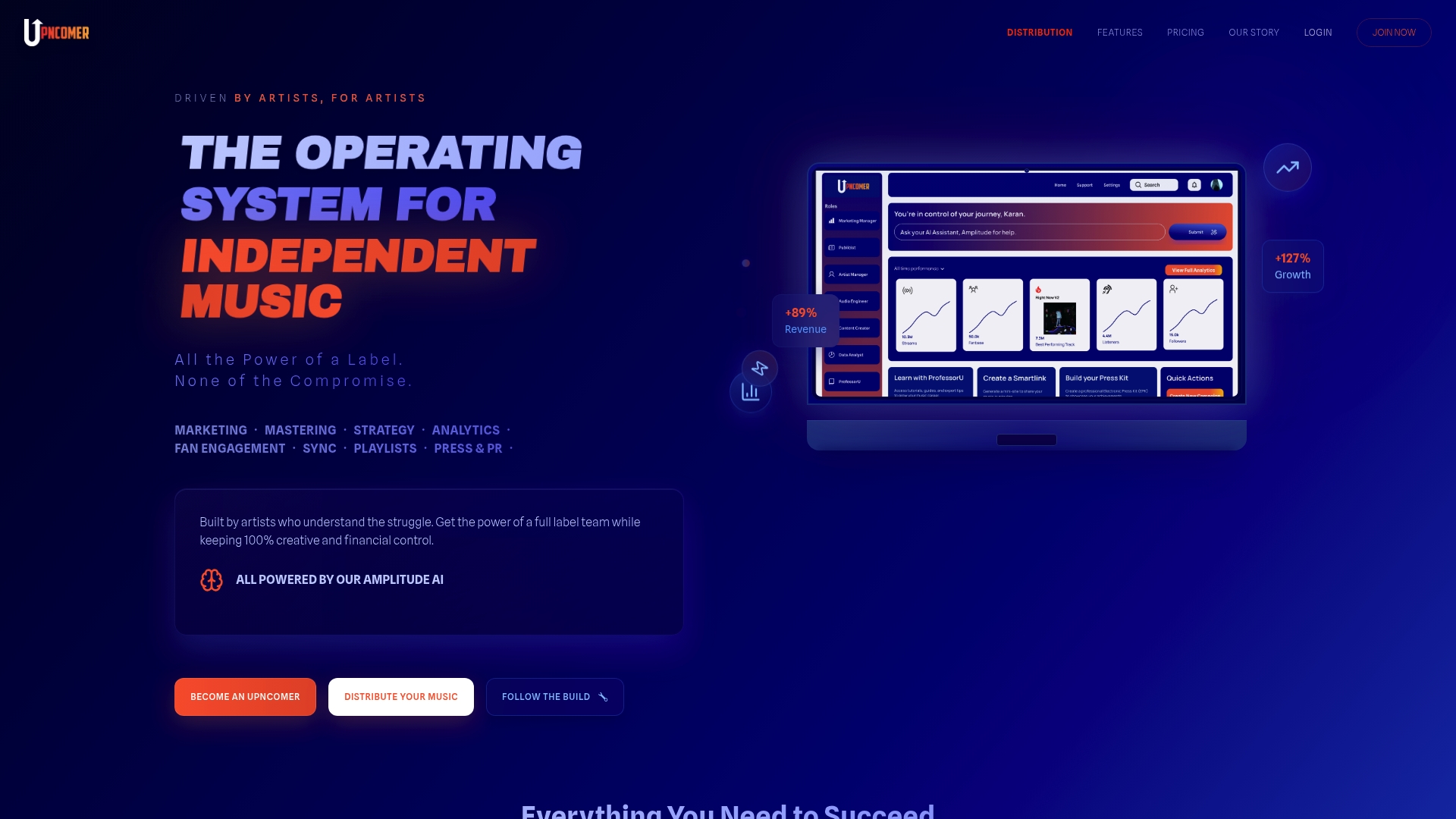
UpNComer is built specifically for independent artists who want to stop guessing and start growing. The platform’s Data Analyst module surfaces the audience insights you need without requiring a spreadsheet degree. The Growth Engine connects your streaming performance, ad campaigns, and fan engagement into one place, so you can see what is actually working across every channel. Distribution through UpNComer is integrated with those same analytics, meaning your release strategy and your data live in the same ecosystem.
If you are ready to build a career on real signals instead of hope, explore the latest tools and resources through UpNComer’s community updates. Everything you need to run smarter campaigns is already there.
FAQ
What is data-driven music marketing?
Data-driven music marketing is the practice of using measurable audience signals, such as streaming demographics, engagement rates, and ad performance, to guide promotion decisions. It replaces intuition with evidence, helping artists target the right listeners at the right time.
What data should independent artists track first?
Start with listener age range, geographic location, and source of streams inside Spotify for Artists or Apple Music Analytics. These three data points directly inform where to run ads, which platforms to prioritize, and where to book live shows.
Why does first-party fan data matter more than streaming numbers?
Streaming numbers reflect reach, but first-party data like email and SMS subscribers reflects ownership. Fan interactions via email and SMS create persistent relationships that carry forward across every release, unlike algorithm-driven exposure that resets each cycle.
What is last-click attribution and why is it a problem?
Last-click attribution credits only the final action a fan takes before converting, ignoring all earlier touchpoints that built awareness. Research shows this model can cause 25% to 40% wasted spend by overvaluing low-funnel channels and undervaluing brand-building content.
How does integrating multiple data sources improve music marketing?
Connecting streaming analytics, paid media data, and fan CRM information lets you build accurate audience personas, identify high-performing territories, and allocate budget to channels that drive real fan behavior. One case study showed a 35% CAC reduction after implementing a unified multi-touch attribution model.