Artist Campaign Management Best Practices for 2026

The most effective artist campaign management best practices share one thing in common: they treat a release like a product launch, not a social media moment. That means setting clear goals before anything goes public, building a full asset kit before launch day, and planning across three distinct phases so you never run out of content or momentum. Here is the short version of what works:
- Set measurable goals first. Know whether you are chasing streams, email signups, playlist adds, or ticket sales before you spend a dollar.
- Plan pre-release, release, and post-release as separate jobs. Each phase has different tasks and different success signals.
- Test organically before you pay. Only amplify proven content with paid ads.
- Keep branding consistent. One visual system across every asset, every platform.
- Assign clear roles. Someone owns content, someone owns outreach, someone owns data review.
- Use a unified platform. Upncomer brings campaign management, analytics, playlist pitching, and fan engagement into one place so nothing falls through the cracks.
- Avoid the “post and pray” trap. Posting once on release day and going quiet is the single most common reason campaigns fail.
Table of Contents
- How the three phases of a music campaign actually work
- How to structure and roll out your campaign without losing momentum
- Balancing organic fan growth with paid promotion
- Systems, measurement, and the pitfalls that sink campaigns
- Digital marketing tactics that actually work for independent artists
- Why audience testing and timing give your campaign an edge
- Budget planning and resource allocation
- Data privacy and legal considerations in campaigns
- Crisis management and reputation handling during campaigns
- Upncomer gives independent artists a real campaign infrastructure
- FAQ
- Key Takeaways
How the three phases of a music campaign actually work
Most artists think of a release as a single event. The artists who grow treat it as a three-act structure, each with its own job.
Pre-release (90 days out) is where the real work happens before anyone hears a note. This is when you clear rights, lock metadata, finalize cover art, build your asset kit, and identify your audience. Playlist pitching to DSP editorial teams needs to happen at least three to four weeks before release, so the clock starts here. You also confirm your creative direction and pressure-test your timeline. If your team cannot explain who the release is for and why it matters right now, public promotion will feel scattered.
Release phase (launch week) is not the start of the campaign. By the time release day arrives, your content calendar should already be running, your links should be live and tested, and your core fans should know the song is coming. A strong launch week creates enough signal to decide what gets extended: the best clip, the strongest audience segment, or the clearest press angle.
Post-release (weeks 2–8) is where most artists go silent and lose the momentum they just built. This phase is about evidence, not announcements. Review saves, playlist adds, content performance, and ad results. Refresh creative with new angles: a live version, a lyric breakdown, behind-the-scenes footage. New listeners arriving through algorithmic playlists need an active content presence to land in.
- Pre-release: rights clearance, asset production, audience identification, editorial pitch submissions
- Release: launch asset activation, outreach follow-up, content cadence, core fan activation
- Post-release: data review, creative refresh, pitch follow-up, decision to extend or wrap
Pro Tip: Schedule your post-release content before launch day. Artists who plan this in advance are far less likely to go quiet after release week, which is exactly when algorithmic playlists start surfacing new listeners.
How to structure and roll out your campaign without losing momentum
A campaign without a structure is just a series of posts. What separates a real rollout from random activity is a unified creative vision and a clear division of labor.
Start with your visual system. Lock a color palette, typography, and art style before you generate a single asset. Every piece of content, from your cover art to your TikTok clips to your pre-save graphic, should look like it belongs in the same world. Artists with strong streaming brands almost always have one visible visual system across a release cycle.
Build your asset kit before you go public. A minimum kit includes a hero music video or high-quality visualizer, a Spotify Canvas, short-form clips for TikTok and Reels, a lyric video, cover art, and a pre-save graphic. Professional campaigns treat releases as product launches, preparing this comprehensive asset kit upfront to avoid momentum loss mid-campaign.
- Define your core story and emotional hook before writing a single caption
- Build a content posting schedule with specific engagement objectives per platform
- Assign ownership: one person handles content, one handles outreach, one tracks data
- Coordinate platform-specific tactics, including DSP profile updates and social media cadence
- Use Upncomer’s Artist Manager and Content Creator modules to track tasks and deadlines
Pro Tip: Plan for 15–25 content pieces across the full campaign window, from tease through post-release. Not every piece needs high production value. Most should be quick, authentic, and varied in angle.
Balancing organic fan growth with paid promotion
Paid promotion is not a starting point. It is amplification of something that already works.

The rule is simple: post your best release-related content organically, wait 24–48 hours, and analyze performance. The piece with the highest save rate, completion rate, or engagement rate is your ad candidate. Putting money behind weak creative just makes it fail more expensively.
Once you have a proven asset, targeted paid ads on Meta (Instagram and Facebook) and TikTok can extend its reach to new audiences efficiently. Interest-based targeting, such as fans of similar artists, outperforms broad demographic targeting every time. Retargeting audiences (people who already watched a video or visited your website) convert at the highest rates because they already know who you are.
| Scenario | Organic focus | Paid focus |
|---|---|---|
| Under 1,000 monthly listeners | Build content habits, test hooks | $50 per campaign to learn cost per result |
| 1,000–10,000 monthly listeners | Sustain posting rhythm, grow email list | — |
| 10,000+ monthly listeners | Maintain community, deepen engagement | — |
Budget figures sourced from Orphiq’s paid campaign guide.
One more thing worth saying plainly: paid streams that lead to saves, playlist adds, and return listens help algorithmically. Streams from disengaged listeners who skip after a few seconds do not. Manufactured momentum without organic traction is a waste of budget and poisons your data for future campaigns.
Systems, measurement, and the pitfalls that sink campaigns
You cannot improve what you do not measure. Before you spend anything or post anything, define what success looks like in concrete terms.

Useful KPIs for music campaigns include cost per stream, cost per email signup, cost per pre-save, save rate, playlist adds, profile visits, and video completion rate. Without predefined targets, you are just watching numbers move without context. Install the Meta pixel on your website and landing pages, add UTM parameters to every link, and use DSP analytics inside platforms like Spotify for Artists to track listener behavior. Upncomer’s Data Analyst module pulls these signals into one view so you are not toggling between five dashboards.
| Metric | What it tells you | Where to track |
|---|---|---|
| Save rate | Listener intent and algorithmic signal | Spotify for Artists |
| Video completion rate | Creative quality and hook strength | TikTok, Instagram Insights |
| Cost per stream | Paid ad efficiency | Meta Ads Manager |
| Playlist adds | Discovery reach | Spotify for Artists |
| Email signups | Owned audience growth | Email platform analytics |
Common pitfalls to avoid:
- Broad targeting. “People who like music” is too wide to convert. Narrow targeting converts; broad targeting burns budget.
- Killing campaigns too early. Ad platforms need 3–5 days to learn and optimize. Judging a campaign after 24 hours gives the algorithm no data to work with.
- The “post and pray” mentality. Posting once and expecting results is not a campaign. It is a wish.
- Undefined success criteria. If you did not decide what a win looks like before launch, you cannot evaluate whether the campaign worked.
- Inconsistent messaging. If every post says something different, the campaign becomes impossible to remember.
Pro Tip: Use campaign data to set decision rules before launch. For example: “If cost per stream exceeds $0.30 after five days, we cut the ad and test a new creative.” Rules made in advance prevent emotional decisions mid-campaign.
Digital marketing tactics that actually work for independent artists
Your online presence is the infrastructure your campaign runs on. If it is broken or inconsistent, the best campaign in the world leaks listeners.
Maintain the same username across every platform. Update your DSP profiles, including Spotify for Artists and Apple Music for Artists, with current bios, photos, and top track ordering before any campaign goes live. Your website is your one distraction-free hub where you control the experience, collect emails, and sell directly to fans.
Social media works when you treat it as a relationship tool, not a broadcast channel. A smaller, highly engaged fanbase outperforms inflated follower counts every time. Reply to comments, ask questions, and create genuine two-way interactions. Posting consistently matters more than posting perfectly.
For playlist pitching, submit through the DSP’s artist portal at least three to four weeks before release to maximize editorial playlist consideration. Complement editorial pitching with independent curators on platforms like SubmitHub and Groover, which return feedback even on rejections. Niche playlists can drive meaningful engagement and build momentum that editorial lists alone cannot.
Influencer and creator collaborations work when the creator genuinely fits the song’s emotional lane. Find creators already posting in your genre’s world, send them a clean 15–20 second hook, and give them creative freedom. Forced posts from creators who never would have used your sound on their own rarely convert. For building lasting fan relationships, fan engagement platforms designed for independent artists can help you convert casual listeners into long-term supporters.
Pro Tip: Build your email list from day one. An email address is more valuable than a pre-save because you can reach that person directly for every future release, regardless of platform algorithms.
Why audience testing and timing give your campaign an edge
The artists who grow fastest in 2026 are not the ones with the biggest budgets. They are the ones running the tightest feedback loops.
TikTok is the most efficient testing ground available to independent artists right now. Post 15–30 second snippets of different hooks from the same unreleased song, watch where retention and comments spike, then build the release around the strongest moment. Audience testing on TikTok via short snippets identifies the strongest hooks and informs both campaign focus and content direction. You are letting the market help choose the hook before you commit to a full rollout.
Timing matters just as much as content quality. Waiting until release day to start promoting is one of the most common and costly mistakes independent artists make. Successful campaigns build anticipation with weeks of pre-release content that frames why people should care, not just that the song exists.
A 90-day campaign framework gives small teams enough room to fix rights, assets, pitching, content, and follow-up without scrambling. But the framework should create better decisions, not pressure every artist into the same rollout. Campaigns are flexible by design: extend when listener behavior, social response, or press interest justifies more work; shorten when there is no fresh angle and a better release is ready. Upncomer’s Amplitude AI can surface these engagement signals in real time, so you are making decisions based on actual data rather than gut feel.
Budget planning and resource allocation
Budget decisions get easier when you separate what you are paying for: learning, amplification, or infrastructure.
Early-career artists (under 1,000 monthly listeners) should treat their first few campaign budgets as tuition. The goal is not results yet; it is understanding what your cost per result looks like on each platform before you scale. Keep paid spend small and put more resources into creating varied content and building your email list, which costs nothing but time.
Mid-career artists (1,000–10,000 monthly listeners) have enough data to scale proven creative. At this stage, retargeting audiences built from previous campaigns become a real asset. Each release cycle gets more efficient because you are not starting from zero. For detailed guidance on managing money across your career, artist financial planning resources can help you build a sustainable budget framework.
A practical allocation rule: paid promotion should not exceed 30–50% of your total campaign budget initially. Ads should amplify organic efforts, not replace them. If you are spending more on ads than on creating the music and content they promote, the ratio is off. Factor in asset production costs (video, photography, graphic design), distribution fees, and any PR or playlist pitching services before you set your ad budget.
For team roles, clarity beats hierarchy. Whether you are a solo artist or working with a manager and a publicist, every campaign lane needs a named owner: content creation, outreach and pitching, paid ads, and data review. Ambiguity about who owns what is how campaigns stall.
Data privacy and legal considerations in campaigns
Legal and privacy issues are not exciting, but getting them wrong mid-campaign can stop everything cold.
Rights clearance comes first. Before any asset goes public, confirm splits, master ownership, sample clearances, featured artist agreements, and artwork permissions. A campaign built on an uncleared sample can be pulled from DSPs mid-release, wiping out all the momentum you built. The 90-day framework exists partly because rights cleanup takes time.
On the data side, if you are running Meta ads or collecting emails, you are handling personal data. The General Data Protection Regulation (GDPR) applies to any listener in the European Union who interacts with your campaign, even if you are based in the United States. That means a clear privacy policy on your website, explicit consent for email signups, and no retargeting pixels on pages where consent has not been collected. The California Consumer Privacy Act (CCPA) applies similar principles for California residents.
Email marketing has its own rules. The CAN-SPAM Act requires a physical mailing address, a clear unsubscribe option, and honest subject lines in every email you send to US recipients. Violating these rules carries real penalties and can get your email account suspended, which kills your owned audience channel.
When working with influencers or creators, the Federal Trade Commission (FTC) requires clear disclosure of paid partnerships. A creator who posts about your music without disclosing a paid arrangement puts both of you at risk. Keep disclosure requirements simple: “paid partnership” or “#ad” in the caption covers it.
Crisis management and reputation handling during campaigns
Something will go wrong during a campaign. The question is whether you have a plan before it does.
The most common crises for independent artists fall into a few categories: a song or video gets flagged or removed from a platform, a collaborator publicly disputes credits or ownership, a social media post lands badly with part of your audience, or a PR story breaks at the wrong moment. None of these are career-ending by default. How you respond in the first 24–48 hours usually matters more than the incident itself.
The first rule is to pause before you post. A reactive response made in the heat of the moment almost always makes things worse. Take a few hours to understand what actually happened, who is affected, and what a fair resolution looks like. Then communicate clearly and directly, without over-explaining or getting defensive.
For platform disputes (a removed video, a flagged track), work through official channels first. DSPs have appeals processes, and most issues get resolved faster through those channels than through public complaints. Document everything: timestamps, correspondence, and original agreements.
For reputation issues, your existing fan community is your best asset. Artists who have built genuine two-way relationships with their audience tend to weather controversy better because their fans have context for who they are. That is one more reason why consistent fan engagement throughout a campaign is not just a marketing tactic. It is a form of long-term protection.
Keep a short crisis contact list ready before launch: your distributor’s support line, your legal contact if you have one, and a trusted advisor who can give you a clear-headed read on a situation. Having those contacts ready means you are not scrambling to find them when you need them fast.
Upncomer gives independent artists a real campaign infrastructure
Running a campaign across five disconnected platforms burns time and creates gaps. Upncomer is built to fix that.
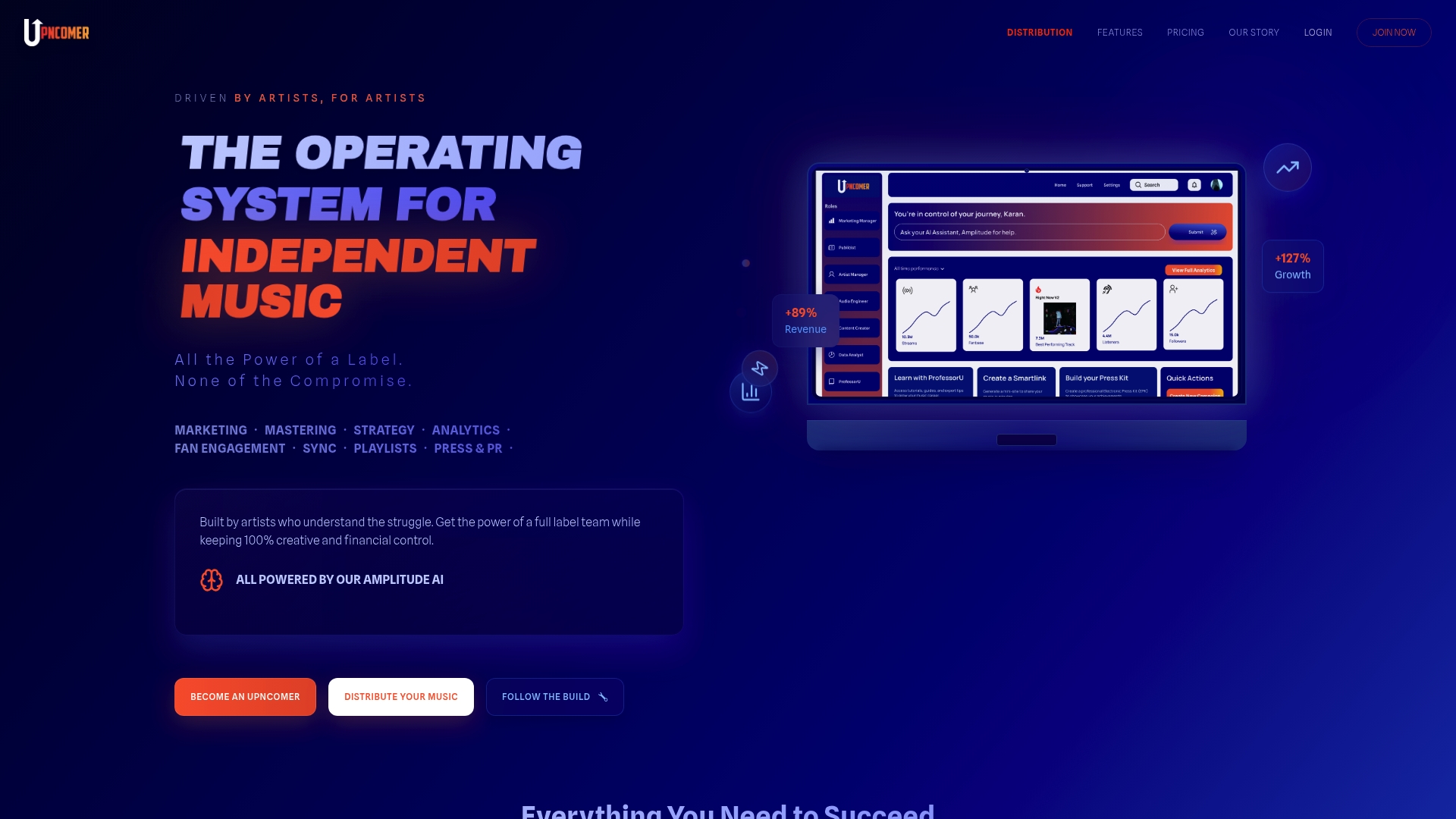
Independent artists using Upncomer get campaign management, streaming analytics, playlist pitching, fan engagement, AI mastering, smart links, and distribution inside one ecosystem. Amplitude AI acts as an always-on strategic advisor, surfacing audience insights and helping you make faster decisions without needing a full marketing team on retainer. The Growth Engine, Data Analyst, and Publicist modules handle the operational work that usually falls through the cracks between release day and week four. If you want to go deeper on music marketing tools built for independent artists, Upncomer’s resource library covers the full stack. Ready to run your next campaign with real infrastructure behind it? Start with Upncomer and see what a unified artist operating system actually feels like.
FAQ
What is the 3-3-3 rule in marketing?
The 3-3-3 rule is not a single standardized framework with one canonical definition; interpretations vary by context. In music marketing, a common version refers to reaching fans through three channels, with three touchpoints each, across three phases of a campaign (pre-release, release, and post-release) to build consistent awareness before asking for action.
How can I improve my campaign management?
Set clear KPIs before launch, build your full asset kit in advance, and review performance data weekly rather than waiting until the campaign ends. Using a platform like Upncomer to centralize analytics, content scheduling, and outreach tracking removes the friction that causes most campaigns to stall.
How do you be a good manager for an artist?
A good artist manager defines clear ownership of every campaign lane, keeps the artist focused on creating while handling logistics, and makes decisions based on data rather than gut feel. Clear communication, realistic timelines, and regular performance reviews are the practical habits that separate effective management from reactive firefighting.
What are the 7 C’s of social media strategy?
The C’s is not a single universally agreed-upon framework; versions differ across sources. For independent artists, consistency and community tend to drive the most durable results.
Key Takeaways
Effective artist campaign management requires a structured three-phase approach, organic-first testing, and consistent data review to build lasting fan relationships and career momentum.
| Point | Details |
|---|---|
| Plan all three phases | Pre-release, release, and post-release each have distinct tasks; plan post-release content before launch day. |
| Test before you pay | Only run paid ads on content that has already proven strong organic engagement (saves, completion rate, comments). |
| Set KPIs before launch | Define cost per stream, email signups, and playlist add targets before spending, so you can evaluate results honestly. |
| Pitch playlists early | Submit to DSP editorial portals at least three to four weeks before release to maximize editorial playlist consideration. |
| Upncomer unifies the workflow | Upncomer combines campaign management, analytics, fan engagement, and distribution in one platform built for independent artists. |