Music Release Checklist for Independent Artists

Releasing music without a plan is like throwing a party without telling anyone the address. You put in the work, press publish, and then wonder why the streams aren’t coming. The music release checklist independent artists actually need goes way beyond just uploading a track to a distributor. It covers royalty registrations, promotional timelines, release day tasks, and the long game after launch. Skip any of these steps and you’re leaving real money and real fans on the table. This guide walks you through every stage so nothing falls through the cracks.
Table of Contents
- Key Takeaways
- 1. Register with PROs and publishing admins first
- 2. Lock in your metadata and distributor setup
- 3. Build your release timeline at least 4-6 weeks out
- 4. Launch a pre-save campaign early
- 5. Own your fan communication with email and SMS
- 6. Submit to editorial playlists before release day
- 7. Set up Spotify Canvas, Artist Pick, and smart links
- 8. Plan your release day social content in advance
- 9. Use SubmitHub and Bandsintown to expand your reach
- 10. Track analytics and adjust your strategy post-release
- 11. Repurpose content to sustain momentum past launch
- 12. Compare your tools before you commit
- My take: stop dropping songs and start launching them
- How UpNComer helps you manage every release step in one place
- FAQ
Key Takeaways
| Point | Details |
|---|---|
| Register royalties before release | Missing pre-release PRO and publishing registrations can permanently forfeit royalty income from streams and performances. |
| Start promotion 4-6 weeks out | A structured release timeline with pre-save campaigns and fan communication drives better results than last-minute posts. |
| Use release day tools strategically | Submit to editorial playlists, set up Spotify Canvas, and time your social announcements for maximum algorithm impact. |
| Sustain engagement past 72 hours | Stopping promotion after the first three days kills long-term growth; treat every release like a product launch. |
| Pick tools that fit your workflow | Combining distribution, analytics, and fan engagement platforms in one place reduces friction and saves time. |
1. Register with PROs and publishing admins first
Before your song goes live anywhere, your royalty infrastructure needs to be in place. This is the step most artists skip, and it costs them.
Pre-release registration with all relevant royalty organizations is non-negotiable. That means signing up with a Performing Rights Organization (PRO) like ASCAP, BMI, or SESAC for performance royalties. It also means registering with a publishing administrator to collect mechanical royalties from streaming platforms. If you haven’t set up SoundExchange yet, do it now. SoundExchange collects digital performance royalties for master rights holders, and delaying registration means you forfeit income from the very first play.
- Register as both a songwriter and publisher with your PRO
- Set up a publishing admin account (DistroKid’s publishing admin, Songtrust, or similar)
- Register with SoundExchange for digital radio and streaming royalties
- Confirm your ISRC codes are assigned to every track through your distributor
- Register your ISWC code for each composition through your PRO
- Set up YouTube Content ID through your distributor or a fingerprinting service
Pro Tip: Royalty income from streams and performances cannot be recovered retroactively in many cases. Do not wait until after release day to set this up.
The music income streams guide on UpNComer breaks down each royalty type clearly if you need a refresher before getting registered.
2. Lock in your metadata and distributor setup
Bad metadata is one of the most underrated ways artists lose money and visibility. Your track’s metadata is how platforms identify, sort, and pay you. If it’s wrong, streams get misattributed and royalties disappear.
Double-check every field in your distributor dashboard before you confirm the release. Your artist name, featured artists, songwriter credits, producer credits, label name (even if it’s your own imprint), release date, and genre tags all need to be accurate. A typo in your composer credit could mean someone else’s publishing account collects your mechanical royalties.
Confirm your release date is locked at least three to four weeks out. Most distributors need 7 to 14 days to deliver to all platforms, but Spotify editorial pitching closes seven days before release. Give yourself room.
3. Build your release timeline at least 4-6 weeks out
Most first music release checklist advice for emerging artists starts on release week. That’s too late. Your promotional window starts six weeks before the song drops.
Map out a week-by-week calendar that covers: when your pre-save goes live, when you start teasing content on social media, when you pitch to playlists and press, when your email goes out, and what you post on release day itself. This isn’t overthinking it. It’s how you stop scrambling and start executing.
An independent artist release plan built this way gives you control over the story you’re telling around the music. Fans who see a build-up are primed to care when the song finally drops. Fans who see a cold “new track out now” post have no context and no reason to click.
4. Launch a pre-save campaign early
Pre-saves are one of the clearest signals of fan intent you have before a release. When someone saves your track before it drops, Spotify notes that engagement. A strong pre-save number increases your chances of algorithmic playlist placement.
Set up your pre-save campaign at least three to four weeks before release using a smart link tool. Tools like Linkfire let you create a single pivot page that captures pre-saves across Spotify, Apple Music, and Amazon Music simultaneously. Share that link everywhere: social media, your email list, your bio links.
Pre-save campaigns and direct-to-fan communication consistently outperform generic “new music out now” posts. The artists who collect fan intent before release day create momentum that the algorithm rewards.
5. Own your fan communication with email and SMS
Social media platforms change their algorithms constantly. Your email list doesn’t. Building a direct communication channel with your fans is one of the smartest long-term moves you can make as an independent artist.
Start collecting emails well before your release. Offer something in exchange: an early listen, exclusive artwork, behind-the-scenes content. Tools like Laylo let you send SMS drops and email blasts to fans who have opted in, which means your message lands without competing with 200 other posts in a feed.
Pro Tip: Avoid the trap of only emailing fans when something is for sale. Send updates, share your process, and let them into your world. Fans who feel connected buy more and stick around longer.
Data-driven fan communication consistently delivers higher engagement than reactive social posting. This is not just a best practice for music releases. It is the difference between a release that fades in a week and one that keeps growing.
6. Submit to editorial playlists before release day
Editorial playlist pitching closes on Spotify at least seven days before release. If you miss that window, you’re waiting until the next single. There is no workaround.
Go into your Spotify for Artists dashboard and submit your unreleased track through the pitch tool. Write a clear, specific pitch that describes the mood, genre, instrumentation, and who the song is for. Do not write “this song is a banger.” Tell the editorial team exactly where this track fits in a listener’s day.
Apple Music, Amazon Music, and other platforms also have editorial channels worth submitting to. Some distributors offer direct submission support. Use every door available. The Spotify for Artists dashboard guide on UpNComer walks through exactly how to navigate pitching and the other tools available to you.
7. Set up Spotify Canvas, Artist Pick, and smart links
These are the features most independent artists set up after their release is live, which means they’re already behind. Spotify Canvas is a short looping video that plays while your track runs in the app. Tracks with Canvas videos see better listener retention and share rates.
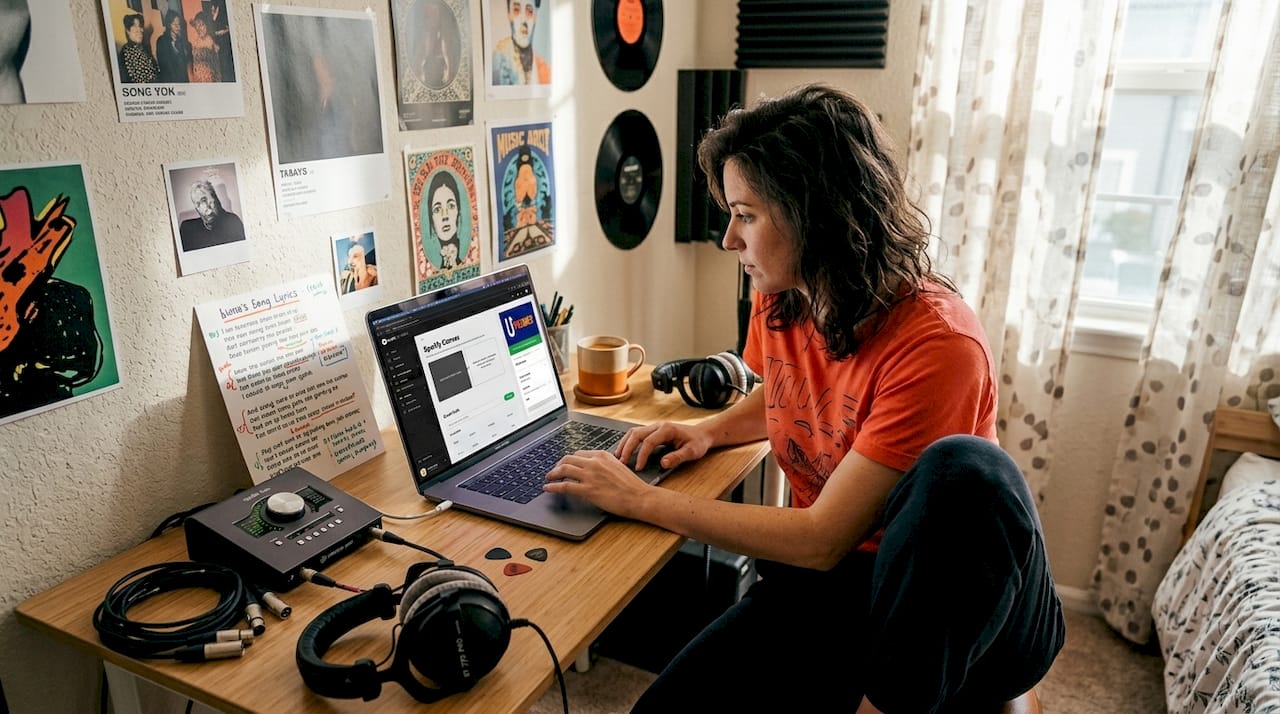
Create your Canvas before release day. Keep it between 3 and 8 seconds, looping cleanly, with no text overlay that competes with the song’s title card. Set your Artist Pick to feature the new release in your profile header as soon as it goes live.
Your smart link should be ready before launch too. A single URL that routes fans to their preferred streaming platform removes friction and makes your promotional posts cleaner. It also gives you click data so you can see where your audience is coming from.
8. Plan your release day social content in advance
Release day is not the time to be writing captions. You should have your posts drafted, approved (if you have a team), and scheduled at least 48 hours in advance.
Think beyond the standard “it’s out now” post. Share the story behind the song. Post the moment you finished it. Show the space where you recorded it. Fans connect with process and emotion, not just the announcement. Mix formats too: a long-form caption on Instagram, a short punchy post on X, a behind-the-scenes clip on TikTok, and a personal note to your email list.
AI-powered tools that predict audience demographics and genre positioning can help you time and target your content more precisely, improving visibility beyond what timing alone achieves.
9. Use SubmitHub and Bandsintown to expand your reach
Playlist placement is one revenue stream. Discovery across blogs, YouTube channels, and live show attendance is another. Tools like SubmitHub and Bandsintown serve completely different but equally valuable purposes in your promotional stack.
SubmitHub lets you pitch your release directly to independent playlist curators, music blogs, and YouTube channels. You pay a small fee per submission and get real feedback when it’s declined. It is not a magic button, but it is a real distribution channel for discovery that most emerging artists ignore.
Bandsintown keeps your fans notified of upcoming shows and links live music to your streaming presence. If you are planning any live performances around your release, Bandsintown and the Spotify Concerts feature work together to show upcoming gigs directly in a fan’s Spotify app.
10. Track analytics and adjust your strategy post-release
The release is not the finish line. It is the starting gun for your data collection. Once your music is live, your streaming analytics tell you where your listeners are, how they found you, how long they’re listening before they skip, and which playlists are actually driving plays.
Check your Spotify for Artists, Apple Music for Artists, and distributor dashboards weekly for the first month. Look for patterns. If a specific city is overperforming, that’s a touring or targeted ad opportunity. If listeners are dropping off at the same point in the track, that’s a mixing or arrangement note for your next session.
Establishing SMART goals before release helps you evaluate performance honestly. Set a specific stream target for 30 days, a playlist placement goal, and a press mention number. Vague goals produce vague results.
11. Repurpose content to sustain momentum past launch
Stopping promotion after the first 72 hours is one of the most common and damaging mistakes in independent music. The algorithm rewards consistent activity, and your fans’ attention doesn’t all arrive on the same day.
The “Anchor and Shredder” content approach works well here. Your anchor is the main piece of content: the music video, the full studio session, the long interview. Your shredder content is everything you cut from it: the 30-second clip, the quote graphic, the reaction moment, the lyric card. One anchor piece should produce at least five to eight pieces of shredder content you can post over weeks.
Pro Tip: Set up an automated email sequence that delivers your release story across three to four emails over two weeks. The first email announces the release. The second shares the story behind it. The third highlights fan reactions or press coverage. The fourth ties it back to your next move. This keeps new subscribers engaged and gives existing fans a reason to keep listening.
12. Compare your tools before you commit
Not every artist needs the same stack. Here’s a quick comparison of commonly used platforms for DIY music distribution and promotion to help you build yours:
| Platform | Distribution | Publishing Admin | Sync Licensing | AI Mastering | Royalty Advances |
|---|---|---|---|---|---|
| UpNComer | Yes | Yes | Yes | Yes | Yes |
| OneSync | Yes | Yes | Yes | Yes | Up to $750,000 |
| DistroKid | Yes | Add-on | No | No | No |
| TuneCore | Yes | Separate | No | No | No |
| SubmitHub | No | No | No | No | No |
| Bandsintown | No | No | No | No | No |
| Laylo | No | No | No | No | No |
AI tools for audience targeting are now integrated into some platforms, giving independent artists the kind of demographic and genre positioning data that labels have always had. Factor that into your evaluation when choosing where to build your workflow.
My take: stop dropping songs and start launching them
I’ve spent enough time watching talented independent artists release genuinely great music into silence to know that the problem is almost never the music. It’s the infrastructure around it.
Most artists I’ve seen miss revenue not because they lack talent but because they treat a release like a moment instead of a campaign. They upload the track, post on Instagram, and then wonder why nothing happened. What they skipped was the six-week buildup, the email list, the royalty registrations, the playlist pitching, the Canvas video, the content calendar. The music was ready. The launch wasn’t.
What I’ve learned is that treating each release as a product launch changes everything. It shifts your mindset from “I hope people find this” to “I am actively building the conditions for people to find this.” That shift is not about working harder. It’s about working in the right sequence.
You don’t need a major label. You need a repeatable workflow and real fan relationships. The artists I see building sustainable careers right now are the ones who combine creative output with data literacy. They know where their listeners are, they communicate directly with their fans, and they keep showing up after the first week. That persistence, more than any single release, is what builds a career.
— Karan
How UpNComer helps you manage every release step in one place
If this checklist feels like a lot to track across a dozen different tools, that’s because it is. That’s exactly the problem UpNComer was built to solve.
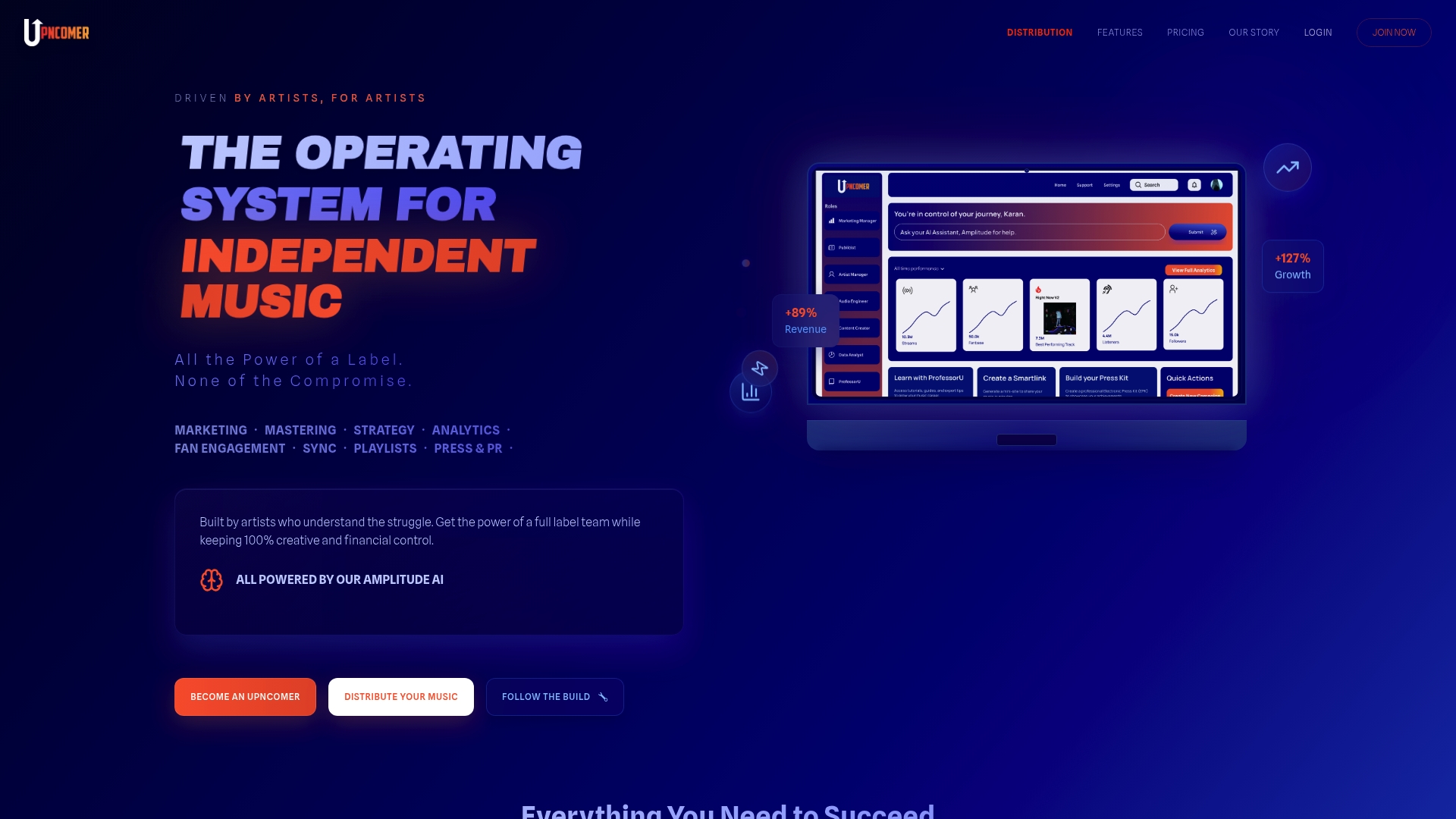
UpNComer brings your entire release workflow into one platform. The Growth Engine handles your promotional campaigns. Amplitude AI gives you data-driven guidance on timing, targeting, and strategy. The Distribution module gets your music to all major platforms. The Publicist module helps you pitch to press and playlists. Artist Manager keeps your tasks and timelines organized in one place.
Instead of paying for five separate tools and manually connecting them, you can manage your full release from pre-registration to post-launch analytics inside UpNComer. Independent artists who want label-level infrastructure without the label should start here.
FAQ
What should I do first on a music release checklist?
Register with a PRO and publishing administrator before your release date. Missing this step means you permanently forfeit royalties from your first streams and performances.
How far in advance should I plan a music release?
Start your independent artist release plan at least four to six weeks before the release date. This gives you time for playlist pitching, pre-save campaigns, content preparation, and fan communication.
Do I need a distributor to release music independently?
Yes. A distributor handles DIY music distribution by delivering your tracks to streaming platforms and collecting royalties on your behalf. Make sure your metadata is accurate before you submit.
How do I get on Spotify editorial playlists?
Submit your unreleased track through Spotify for Artists at least seven days before your release date. Write a specific pitch focused on mood, genre, and listener context rather than generic descriptions.
How long should I promote a new song after it drops?
Keep promoting for at least four to six weeks after release. Stopping promotion after the first 72 hours significantly limits long-term growth and reduces your chances of algorithmic discovery over time.