Artist Financial Planning Explained for Independent Creatives

Most independent artists don’t fail because their music isn’t good enough. They fail because nobody taught them how to manage the money. Artist financial planning is the practice of organizing your income, taxes, savings, and investments around the reality of creative work: irregular paychecks, multiple revenue streams, and zero employer benefits.
Here’s what a solid financial plan actually covers:
- Budgeting for irregular income: tracking what comes in and smoothing out the feast-and-famine cycle
- Tax planning: setting aside the right percentage from every payment before you spend it
- Debt management: paying down high-interest debt so it stops eating your creative budget
- Diversified income streams: royalties, commissions, teaching, digital products, and licensing
- Emergency fund: a cash cushion that buys you time when bookings dry up
- Investing and retirement: building long-term security without an employer-sponsored plan
- A financial support team: accountants, planners, and advisors who understand creative careers
Getting this right doesn’t mean becoming a spreadsheet person. It means building a system that runs quietly in the background while you focus on the work.
How to build a budget that actually works for irregular income
The biggest mistake artists make with budgeting is treating it like a salaried employee would. Your income doesn’t arrive on a schedule, so your budget can’t be built like it does.
Start by separating business and personal accounts. One account for rent, groceries, and personal expenses. One for art income, materials, and business costs. This single move makes tax prep faster, shows you the true cost of your practice, and stops you from accidentally spending money that belongs to the IRS.
From there, pick a budgeting method that fits variable income:
- Percentage-based budgeting: allocate fixed percentages of every payment to taxes, living costs, and savings before anything else
- Zero-based budgeting: assign every dollar a job at the start of each month, adjusting as income arrives
- The three-jar method: split income immediately into a tax jar, an operating fund, and a smoothing jar for lean months
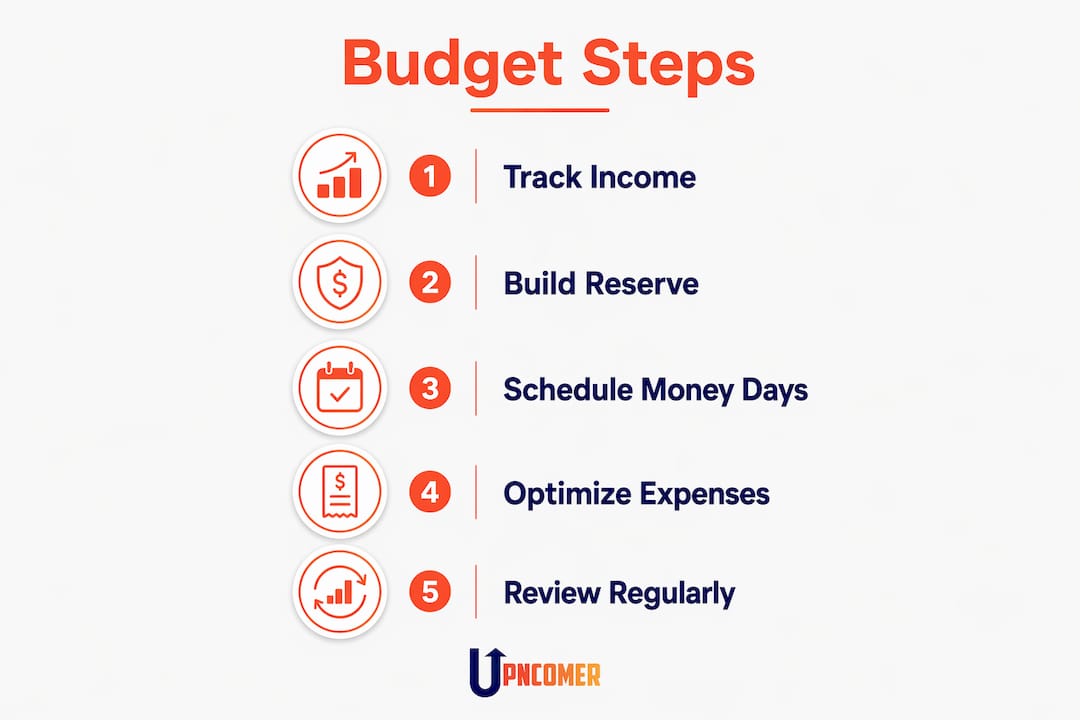
Build an emergency fund covering 3–6 months of essential living costs. If your income is highly seasonal, aim for 8 months. Automate transfers to savings the day after a payment clears so the decision is already made.
Pro Tip: Schedule a recurring “money day” once a week or month. Treat it like a studio session: block the time, close your notifications, and spend 20–60 minutes reviewing income, chasing invoices, and adjusting your budget. Financial management stops feeling like a crisis when it becomes a ritual.
Why diversifying your income streams protects your creative career
Relying on a single income source as an independent artist is like releasing one song and hoping it funds your entire career. It rarely works. A portfolio of income streams smooths cash flow and gives you negotiating power when one channel slows down.
Income generally falls into two categories. Active income requires your direct time: commissions, live performances, session work, teaching, and workshops. Passive income keeps earning after the work is done: royalties, licensing, digital downloads, and print-on-demand merch. The goal is to grow the passive side over time so your earnings don’t stop when you do.
Common income streams worth building:
- Streaming royalties from platforms via music distribution
- Sync licensing: placing your music in film, TV, ads, or games
- Teaching: private lessons, online courses, or workshops
- Digital products: sample packs, presets, sheet music, or guides
- Commissions and custom work: direct client projects
- Grants and funding: arts council grants, residencies, and fellowships
- Merchandise: physical or print-on-demand products tied to your brand
- Sponsorships and brand partnerships: once you have an engaged audience
On pricing: value-based or project-based pricing consistently outperforms hourly rates for creative work. Hourly pricing punishes you for getting faster. Project pricing lets you charge for the outcome, your experience, and the unique creative vision you bring, not just the hours logged.
Managing debt and protecting your creative work
Debt doesn’t disqualify you from a creative career, but high-interest debt will quietly drain the budget you need to grow. Prioritize it the same way you’d prioritize a leaking roof: fix the most damaging thing first.
A practical approach to debt and asset protection:
- List debts by interest rate, not size. Pay down credit cards and private loans before student debt or low-interest lines.
- Explore artist-specific relief programs. Local arts councils, state arts agencies, and some foundations offer grants or debt reduction support for working artists.
- Avoid unnecessary business loans. Low-overhead projects beat expansion funded by debt you can’t service in a slow month.
- Maintain good credit habits. Pay on time, keep utilization low, and monitor your credit report annually through AnnualCreditReport.com.
- Register your intellectual property. Copyright your recordings, compositions, and visual work. Register with the U.S. Copyright Office for the strongest legal protection.
- Track every business expense. Materials, studio rent, software, travel, and marketing costs are all potentially deductible. Keep receipts and categorize them monthly, not at tax time.
- Work with a music attorney when signing any licensing deal, distribution agreement, or publishing contract. One bad deal can cost you royalties for years.
Your creative work is an asset. Treat it like one.
Investing and retirement planning options for independent artists
No employer match. No pension. No 401(k) auto-enrollment. As an independent artist, retirement planning is entirely on you, and starting early matters more than starting big.
The two most practical retirement accounts for creatives are the SEP IRA and the Solo 401(k). Both are tax-advantaged, both are designed for self-employed people, and both let you contribute even in years when income is modest.
| Account | Who it fits | 2026 contribution limit | Key benefit |
|---|---|---|---|
| SEP IRA | Solo artists, simple setup | Up to 25% of net self-employment income | Easy to open, flexible contributions |
| Solo 401(k) | Artists with no employees | Higher limits than SEP IRA for many earners | Roth option available; loan provisions |
| Traditional IRA | Any artist with earned income | — | Tax-deferred growth |
| Roth IRA | Lower-income years | — | Tax-free withdrawals in retirement |
Beyond retirement accounts, keep investments simple. Index funds and low-cost mutual funds give you broad market exposure without requiring you to pick individual stocks. Contributing $50 a month beats contributing nothing, and compound growth rewards consistency over size.
Key steps to get started:
- Open a SEP IRA or Solo 401(k) through a brokerage like Fidelity or Vanguard
- Contribute a fixed percentage of net income each quarter, even if it’s small
- Invest in low-cost index funds and leave them alone
- Increase contributions whenever income grows
Who should be on your financial support team?
You don’t need a Wall Street advisor. You need a small, trusted group of people who understand creative careers and can help you make better decisions with your money.
The core roles worth filling:
- Accountant or CPA: ideally one with self-employed or entertainment industry clients. They handle tax prep, quarterly estimates, and deduction strategy.
- Financial planner: a fee-only CFP can help with retirement planning, investment allocation, and long-term goal setting without earning commissions on products they sell you.
- Business or entertainment attorney: for contracts, IP registration, licensing deals, and any situation where someone wants you to sign something.
- Bookkeeper: if your income is complex, a bookkeeper keeps your records clean so your accountant isn’t charging you CPA rates to sort receipts.
- Mentor or peer network: other working artists who share rates, talk openly about money, and point you toward opportunities. Financial transparency in creative communities builds collective power.
When vetting professionals, ask whether they have experience with freelancers, self-employed creatives, or entertainment industry clients. A generalist accountant who has never seen a 1099-NEC from a streaming distributor will miss deductions that a specialist catches immediately.
Technology fills gaps too. Upncomer’s Artist Manager and Amplitude AI modules help artists track performance data, manage workflows, and make informed decisions about where to invest time and money across their career.

Financial habits and tools that give artists an edge in 2026
The artists who build lasting careers aren’t necessarily the most talented. They’re the ones who treat their creative practice like a business without losing the art in the process. A few specific habits separate them from the rest.
Separate accounts from day one. Personal and business finances in the same account is a tax nightmare and a clarity problem. Open a dedicated business checking account before your next payment arrives.
Set aside 25–30% of gross income for taxes immediately. Not at the end of the quarter. Not at tax time. The moment a payment clears, move that percentage to a dedicated tax savings account and treat it as untouchable. The IRS expects quarterly estimated tax payments from self-employed artists, and missing them triggers penalties.
Model feast-and-famine scenarios before they happen. Build three versions of your annual income forecast: conservative (your worst realistic year), base (your expected year), and optimistic (a strong year). This exercise tells you exactly how lean your emergency fund needs to be and when you can afford to invest in your career. Many artists skip this and get blindsided by slow seasons they could have predicted.
Pro Tip: Run your conservative forecast with costs inflated by 15–20%. If that scenario still leaves you solvent, your financial foundation is genuinely solid. If it doesn’t, you know exactly where to build before the slow season hits.
Tools worth using in 2026:
- QuickBooks Self-Employed or Wave for invoicing and expense tracking
- Upncomer’s Growth Engine and Data Analyst modules for streaming analytics and revenue forecasting tied to your release strategy
- A high-yield savings account for your emergency fund and tax jar
- Upncomer’s ProfessorU for ongoing artist education, including financial literacy resources built for the music industry
When you’re navigating career transitions, like moving from open mic nights to paid gigs, having these financial systems already in place means you can say yes to the right opportunities without scrambling to cover the costs.
Upncomer helps you build the financial foundation your career needs
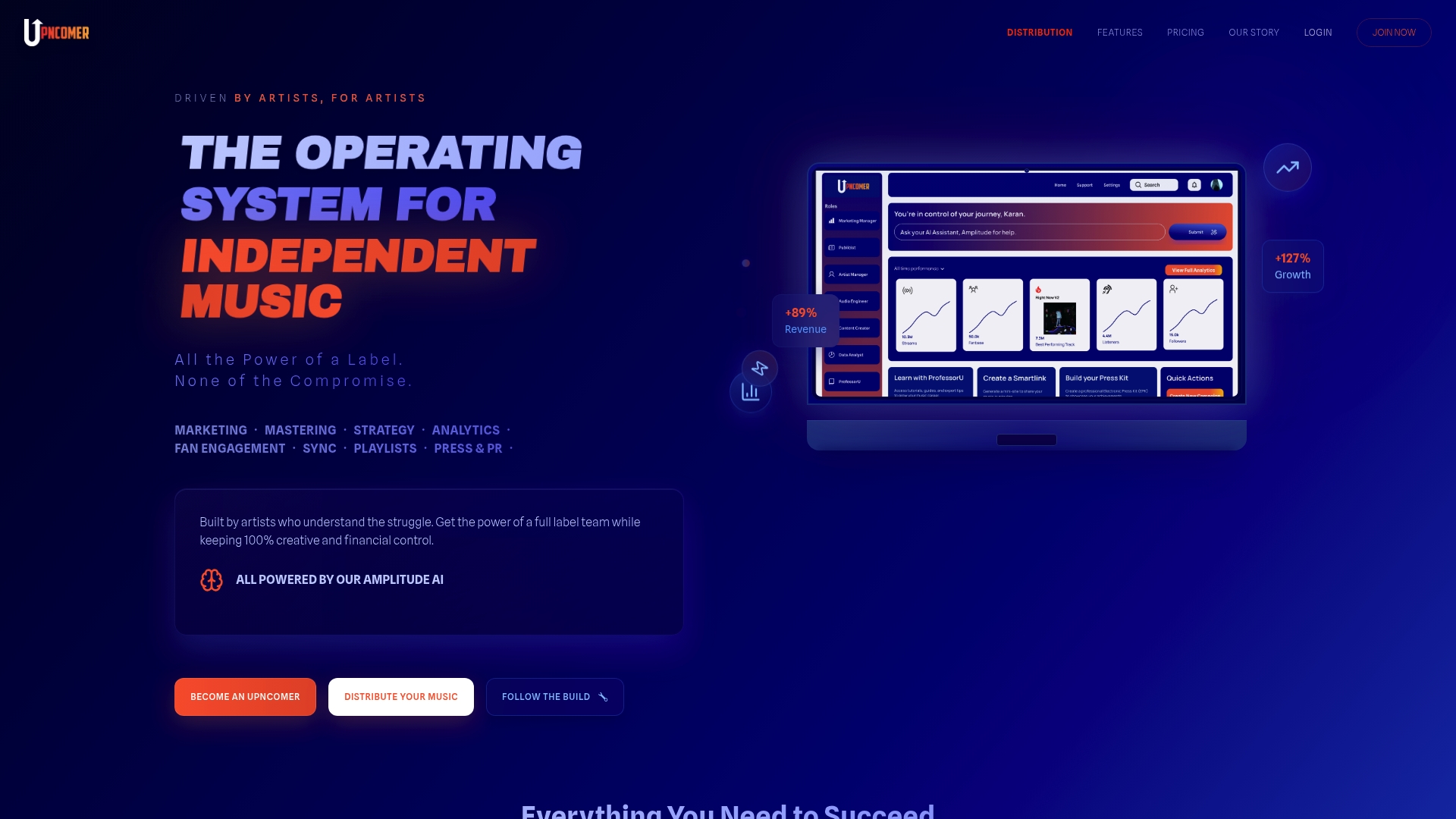
Financial clarity and career growth aren’t separate goals. They reinforce each other. Upncomer is built for independent artists who want both: an AI-powered platform that brings together distribution, analytics, fan engagement, and career strategy in one place, so you’re not piecing together a dozen tools to understand your own business.
Whether you’re tracking streaming revenue, planning a release, or figuring out where your income is actually coming from, Upncomer’s features give you the data and tools to make decisions from a place of clarity rather than guesswork. That’s what financial freedom looks like for a working artist in 2026.
Start building your career on solid ground with Upncomer.
Key Takeaways
Artist financial planning works when you build systems around irregular income rather than fighting against it.
| Point | Details |
|---|---|
| Separate your accounts | Keep business and personal finances in different accounts from the start to simplify taxes and track profitability. |
| Tax set-aside is non-negotiable | Move a substantial portion of every payment to a dedicated tax account immediately, before spending anything else. |
| Emergency fund target | Aim for 3–6 months of essential living costs; target 8 months if your income is highly seasonal. |
| Retirement starts now | Open a SEP IRA or Solo 401(k) and contribute a fixed percentage of net income each quarter, even if it’s small. |
| Diversify income streams | Mix active income (gigs, commissions, teaching) with passive income (royalties, licensing, digital products) to smooth cash flow. |
FAQ
What is artist financial planning?
Artist financial planning is the practice of managing irregular creative income through budgeting, tax planning, savings, debt management, and investing, tailored to the specific challenges of a self-employed creative career.
How much should artists set aside for taxes?
Set aside 25–30% of gross income for taxes from every payment received, covering both federal income tax and self-employment tax. Move it to a separate account immediately so it’s never accidentally spent.
What retirement accounts work best for independent artists?
A SEP IRA and a Solo 401(k) are the two most practical options, both designed for self-employed individuals and offering tax-advantaged contributions that scale with your income.
How large should an artist’s emergency fund be?
Standard guidance recommends 3–6 months of essential living costs, with 8 months as the recommended target for artists whose income is highly seasonal or project-based.
How do artists diversify their income?
Combine active income streams like live performances, commissions, and teaching with passive sources like streaming royalties, sync licensing, and digital product sales to reduce reliance on any single revenue channel.