Music Audience Growth: A 2026 Guide for Independent Artists

Music audience growth is the process of building an engaged, loyal fan base that grows in size and depth over time, not just accumulating raw stream counts. The industry term for this is audience development, and it covers everything from streaming engagement signals to direct fan relationships. Independent artists who treat growth as a system, not a lucky break, consistently outperform those chasing viral moments. The key metrics are save rate, unique listener retention, and multi-platform engagement. Get those right, and the algorithms and the fans follow.
What metrics and benchmarks define healthy music audience growth?
Save rate is the single most predictive metric for sustainable fan growth on streaming platforms. It is calculated by dividing the number of saves by unique listeners, expressed as a percentage. A track with a high save rate tells the platform that listeners want to return to it. That signal carries far more weight than a spike in streams from a playlist that nobody asked for.
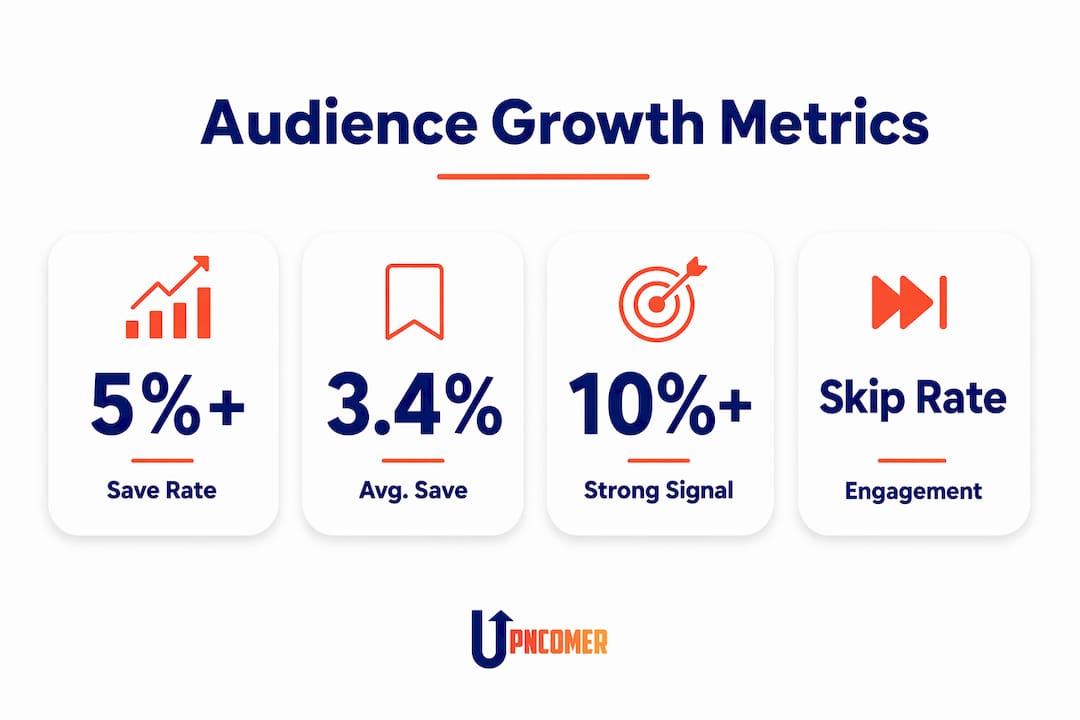
The cross-genre average save rate on Spotify sits at around 3.4% in 2026. Hitting 5% or above is considered healthy, and 10% or above signals strong performance. Those thresholds matter because save rate directly influences algorithmic surfaces like Discover Weekly and Release Radar. A track with fewer streams but a 9% save rate will outperform a track with three times the plays but a 2% save rate in algorithmic distribution.

Beyond save rate, track health includes skip rate, playlist add rate, and listener-to-follower conversion. Each of these tells you something different. A high skip rate in the first 30 seconds means your intro is losing people. A low playlist add rate means listeners enjoy the track but do not feel strongly enough to curate it. Tracking all of these together gives you a real picture of where your audience development stands.
| Metric | Benchmark | What it signals |
|---|---|---|
| Save rate | 5%+ healthy, 10%+ strong | Listener intent to return |
| Skip rate (first 30 sec) | Below 30% is solid | Hook and intro quality |
| Playlist add rate | Above 15% is strong | Curation appeal |
| Listener-to-follower ratio | Above 10% is healthy | Long-term fan conversion |
Pro Tip: Check your save rate within 48 hours of release. If it is below 3%, the issue is usually the audience you are reaching, not the track itself. Adjust your targeting before the algorithm locks in a low-engagement signal.
How can independent musicians leverage streaming platforms and playlist pitching to grow their audience?
Playlist placement is one of the fastest ways to increase music listeners, but most artists approach it wrong. They pitch after release, pitch to the wrong playlists, or pitch without any prior engagement signals. The result is silence from curators and no algorithmic lift.
The correct process for Spotify editorial pitching works like this:
- Submit through Spotify for Artists. You can only pitch one unreleased track at a time, and the pitch must be submitted at least 7 days before your release date. Missing that window removes you from editorial consideration entirely.
- Fill out every field. Genre, mood, instrumentation, and a short description of the track all help curators match your music to the right playlist. Vague pitches get ignored.
- Build momentum before you pitch. Editorial teams favor artists with active fan bases and demonstrated prior performance. Pre-saves, social engagement, and a history of healthy save rates all strengthen your case.
- Target independent playlist curators first. Getting placed on mid-size independent playlists before your release creates the engagement signals that editorial teams look for. Use your playlist pitching strategy to build that momentum systematically.
- Review and reuse your learnings. After each release, note which pitches landed and which did not. Genre fit, playlist size, and curator responsiveness all follow patterns you can refine over time.
Because editorial placements are competitive and opaque, treat them as a bonus, not a plan. Your primary strategy should be building audience engagement off-platform first, then letting that momentum support your pitch.
Pro Tip: Use your music release checklist to schedule your Spotify for Artists pitch as a fixed step, not an afterthought. Artists who pitch on release day have already missed the window.
What multi-platform marketing funnel strategies build long-term, engaged music audiences?
A music marketing funnel is the structured path that moves a stranger from first hearing your music to becoming a superfan who buys merch, attends shows, and tells their friends. Without a funnel, you are relying on luck. With one, every platform you use has a defined job.
The four stages of a music marketing funnel are discovery, conversion, retention, and amplification. Each stage requires a different platform and a different type of content.
- Discovery (TikTok, YouTube Shorts, Instagram Reels). Short-form video is where new listeners find you. The goal here is not sales. It is participation. Sounds, trends, and behind-the-scenes content all work. Your job is to get people to press play.
- Conversion (Meta ads, Spotify pre-saves, smart links). Once someone engages with your content, you move them toward a trackable action. A pre-save campaign, a link-in-bio click, or a retargeting ad on Meta all serve this purpose. This is where casual listeners become identifiable fans.
- Retention (Spotify, email, SMS). Streaming platforms keep your music in front of fans who have already saved your tracks. Email and SMS let you reach them directly, without an algorithm in the way. These owned channels are your most durable asset.
- Amplification (community, exclusives, word-of-mouth). Superfans share your music without being asked. You create the conditions for that by offering early access, exclusive content, or direct interaction. This stage costs the least and delivers the most.
Cross-platform funnels that sequence TikTok, Meta, Spotify, and owned channels produce better audience retention and conversion when each platform’s role is clearly defined. The mistake most artists make is using every platform the same way, posting the same content everywhere and hoping something sticks.
Audience segmentation and regional adaptation also improve campaign results significantly. If your streaming data shows strong listener numbers in a specific city or country, localize your Meta ads and content for that region. Fans respond to artists who feel relevant to their world.
Pro Tip: A music marketing funnel does not need to be expensive. Start with organic TikTok content, a free smart link, and an email list. Those three tools alone can move fans from discovery to retention without spending a dollar on ads.
How to build a compounding growth system through fan engagement and retention
Most artists think about growth as a series of release spikes. A new track drops, streams go up, then they fall back down. That cycle is exhausting and unpredictable. Compounding growth works differently. Each release builds on the last because the fans you retained are already primed to engage.
The operational growth loop has five connected steps: capture, convert, engage, retain, and amplify. Here is how each step works in practice:
- Capture. A new listener finds your music through a playlist, a TikTok video, or a friend’s recommendation. This is the top of your funnel.
- Convert. That listener saves your track, follows your profile, or clicks your smart link. They move from anonymous to identifiable.
- Engage. You send them something worth their attention. A behind-the-scenes clip, an early listen, a personal message. This is where casual interest becomes real connection.
- Retain. They stay connected through your email list, SMS updates, or a fan community. You now have a direct line to them that no algorithm can cut off.
- Amplify. They share your music, attend your show, or buy your merch. One fan becomes five. Five become fifty.
Operational growth loops compound audience growth by connecting fan actions across campaigns, turning single fans into thousands through retention and re-engagement systems. That compounding effect is what separates artists with sustainable careers from those stuck in the release-and-reset cycle.
Practical retention tactics that work:
- Send a personal email to new subscribers within 24 hours of them joining your list.
- Use SMS for time-sensitive announcements like ticket drops or limited merch runs.
- Build a Discord or community space where fans interact with each other, not just with you.
- Acknowledge superfans publicly. A shoutout costs nothing and creates loyalty that money cannot buy.
Artists who build retention and re-engagement loops using owned channels increase future campaign efficiency. Your third release should perform better than your first, not because the music is necessarily better, but because you have a warm audience ready to engage from day one. That is what audience data makes possible when you track it consistently.
The music marketing system that connects discovery, conversion, and retention across multiple platforms is the most reliable way to beat platform-specific reach throttling and audience fatigue in 2026. No single platform owns your audience. Your system does.
Key Takeaways
Sustainable music audience growth requires a connected system of engagement metrics, platform strategy, and fan retention, not isolated promotional tactics.
| Point | Details |
|---|---|
| Save rate beats stream count | A 5%+ save rate signals healthy growth and drives algorithmic playlist placement. |
| Pitch playlists before release | Submit to Spotify for Artists at least 7 days before your release date for editorial consideration. |
| Define each platform’s role | Use TikTok for discovery, Meta for conversion, Spotify for retention, and owned channels for amplification. |
| Build owned channels early | Email and SMS lists give you direct fan access that no algorithm can remove. |
| Compounding growth is the goal | Each release should perform better than the last because retained fans engage faster and share more. |
Why I stopped chasing streams and started tracking saves
I spent a long time measuring success the wrong way. Stream counts felt like the obvious number to watch. They go up, you feel good. They plateau, you panic. The problem is that streams tell you how many people heard your music. They do not tell you how many people wanted to hear it again.
Save rate changed how I evaluate every release. A track sitting at 8% save rate with modest stream numbers is a healthier sign than a track with 500,000 streams and a 1.8% save rate. The first track has an audience. The second track had a moment.
The artists I see building real careers in 2026 are not the ones who went viral once. They are the ones who built a funnel, retained their fans, and showed up consistently across platforms. Their baseline engagement grows with every release because they invested in the system, not just the song.
The hardest part is resisting the urge to measure everything by the biggest number. Saves, email open rates, and community activity are quieter metrics. But they are the ones that predict whether you are still doing this in five years. Build the system first. The streams follow.
— Karan
How Upncomer helps you build a real growth system
Independent artists should not need a full marketing team to execute a real growth strategy. Upncomer brings together the tools that make it possible to run a data-driven career without the overhead.
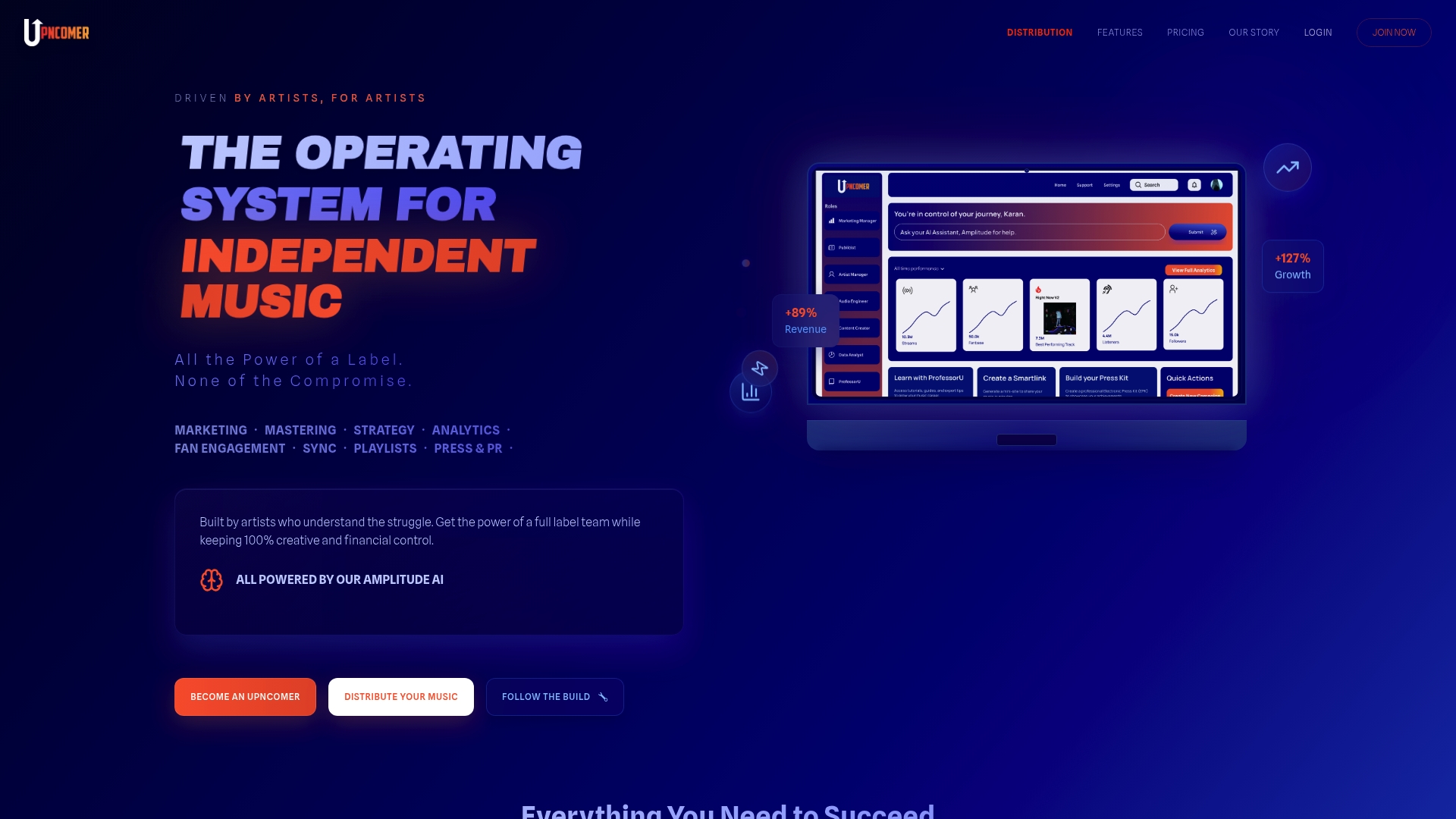
Upncomer’s Growth Engine, Data Analyst, and Amplitude AI modules give you streaming analytics, audience insights, and campaign guidance in one place. You can track your save rate, manage ad campaigns, pitch playlists, and build fan engagement systems without switching between five different platforms. The Upncomer Distribution tool handles your releases and gets your music in front of the right listeners. Check the community updates page for the latest resources, tools, and artist support built specifically for independent musicians who are serious about growing their careers on their own terms.
FAQ
What is a healthy save rate for music audience growth?
A save rate of 5% or above is considered healthy for most genres on Spotify in 2026. A rate of 10% or above signals strong performance and significantly increases your chances of algorithmic playlist placement.
How early should I pitch to Spotify editorial playlists?
You must pitch through Spotify for Artists at least 7 days before your release date. Only one unreleased track can be pitched at a time through the tool.
What platforms should independent artists use to grow their following?
TikTok works best for discovery, Meta for retargeting and conversion, Spotify for retention through saves and follows, and owned channels like email and SMS for long-term fan relationships.
How does compounding growth work in music marketing?
Compounding growth means each release builds on the last because retained fans engage faster and share more widely. Connecting pre-saves, messaging, and content across releases creates momentum that grows over time rather than resetting with every drop.
What is the difference between unique listeners and fans?
Unique listeners are anyone who played your track in a given period. Fans are listeners who saved your music, followed your profile, or joined your owned channels. Growing your fan count, not just your listener count, is the foundation of sustainable audience development.