Independent Artist Distribution: What Musicians Need to Know

Independent artist distribution is the process by which musicians deliver their music directly to streaming platforms and digital stores without signing to a record label. You keep full ownership of your master recordings, collect 100% of your recording royalties, and decide exactly when and where your music appears. Services like DistroKid, CD Baby, TuneCore, and LANDR have made this process accessible to any artist with a finished track and a release plan. Understanding how it works, and what it actually takes to do it well, is the difference between a release that lands and one that disappears.
What is independent artist distribution and how does it work?
Independent artist distribution is defined as the direct delivery of your music from you, the artist, to digital service providers (DSPs) like Spotify, Apple Music, Amazon Music, and Tidal, using a third-party distributor as the technical intermediary. You are not signing away rights. You are paying for a delivery service.
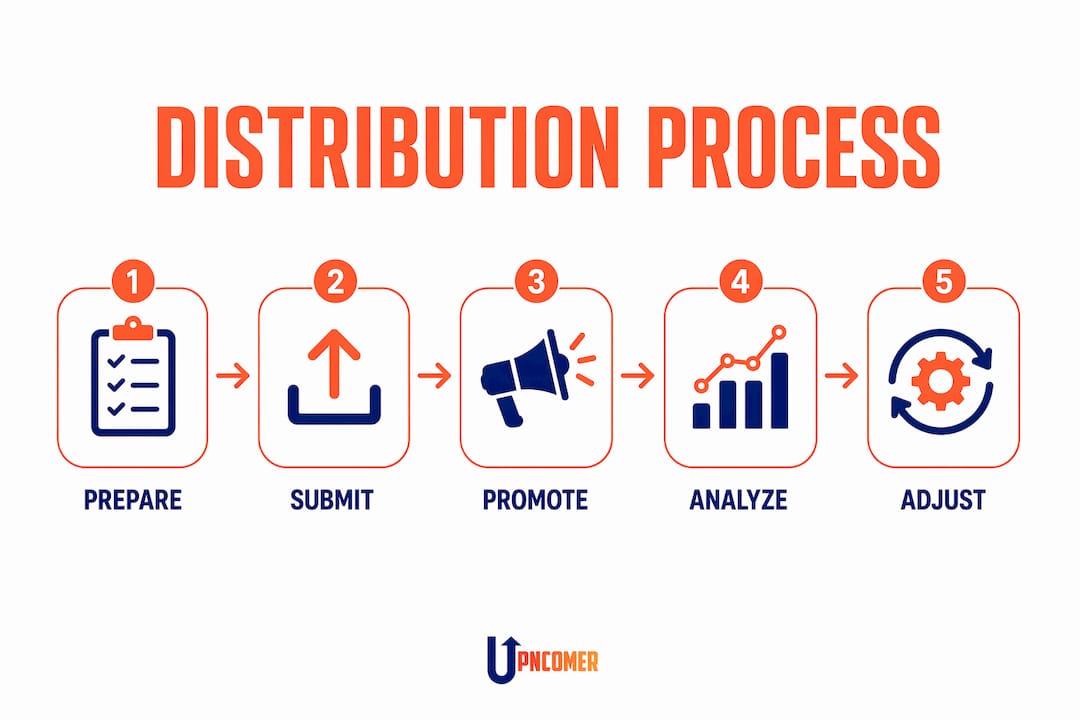
The process follows a clear sequence. Here is what it looks like in practice:
- Prepare your mastered audio. Your tracks need to meet platform specifications, typically WAV files at 16-bit/44.1kHz or higher. Poorly mastered audio gets rejected or sounds bad on streaming. Tools like Mix Analytic can help you check your mix before submission.
- Create your artwork. Cover art must be at least 3000x3000 pixels, in RGB color, with no explicit content unless flagged. This is non-negotiable for most platforms.
- Gather your metadata. This means artist name, credits, and splits for every collaborator, songwriter, and producer. Metadata errors are the most common cause of release delays and royalty misrouting.
- Obtain your ISRC and UPC codes. The ISRC (International Standard Recording Code) identifies each individual track. The UPC (Universal Product Code) identifies the release as a whole. Most distributors generate these automatically, but preserving existing codes when switching distributors is critical. Changing them fragments your streaming data and breaks royalty continuity.
- Submit to your distributor. Upload everything through your chosen platform. Processing typically takes 24 to 72 hours, though delivery to all stores can take up to a week.
- Schedule your release date. CD Baby recommends at least 4 weeks of lead time. Spotify’s editorial pitching window requires your music to be submitted at least 7 days before release. If you miss that window, you lose your shot at playlist consideration for that release cycle.
Pro Tip: Set your release date the moment you submit. Locking in a date forces you to work backward and build a real pre-release campaign instead of just pressing upload and hoping.
Metadata is not just administrative paperwork. It is how platforms identify your music, how royalties get routed to the right people, and how your release gets discovered through algorithmic recommendations. Getting it right from the start saves you months of chasing payments later.
How do the main independent music distribution services compare?
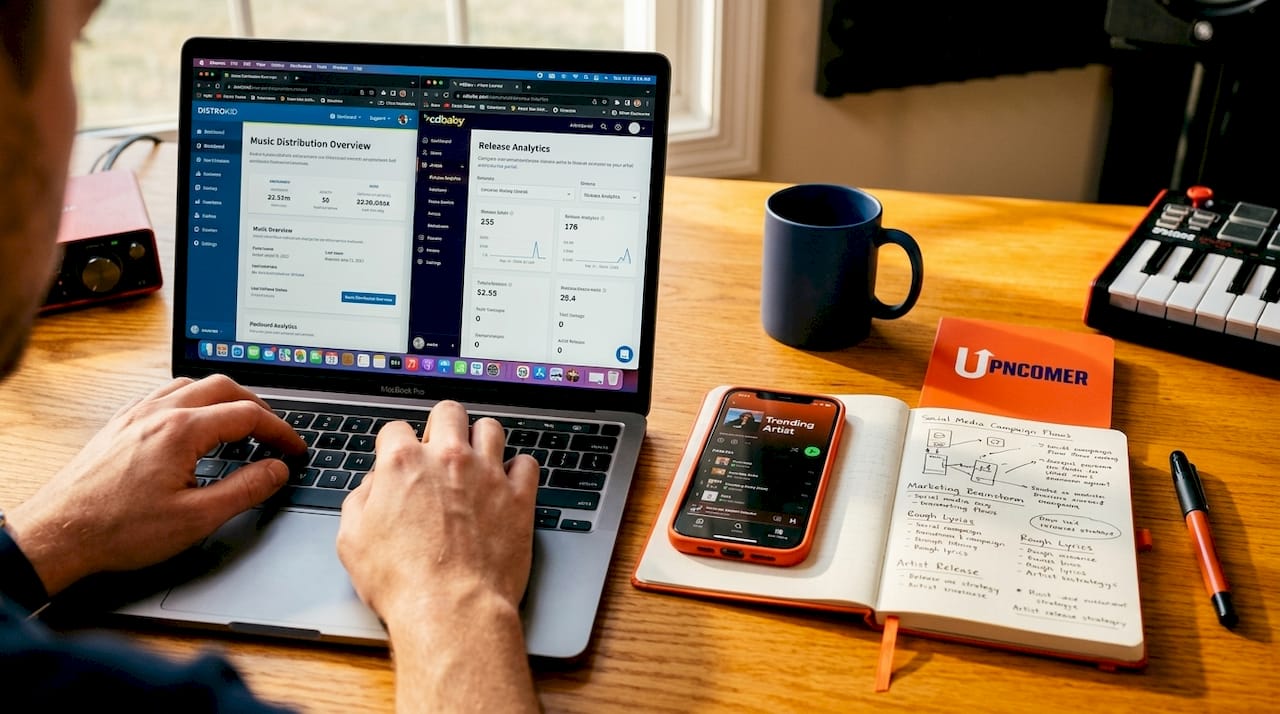
The market for independent music distribution services is crowded, and the differences between platforms matter more than most artists realize. Pricing models, royalty structures, and feature sets vary significantly.
| Service | Pricing Model | Royalty Split | Key Feature |
|---|---|---|---|
| DistroKid | $22.99/year, unlimited releases | 0% commission | Fast delivery, Spotify for Artists integration |
| CD Baby | One-time fee per release | 9% revenue share | Publishing administration, sync licensing |
| TuneCore | Per-release annual fee | 0% commission | Detailed royalty reporting |
| LANDR | Plans from $24/year | Varies by plan | Mastering + distribution bundle |
| EmuBands | ~$120/year for unlimited | 0% commission | Personal account managers, advanced reporting |
DistroKid’s unlimited model at $22.99 per year works well for artists releasing frequently. CD Baby’s 9% cut sounds small but compounds quickly on successful releases, making it more expensive long-term than a flat annual fee. EmuBands sits at a higher price point but includes features like personal account managers and advanced reporting that high-volume independent artists genuinely use.
Here is what to look for beyond the price tag:
- Royalty payout speed. Some services pay monthly, others quarterly. If cash flow matters to your operation, this is a real consideration.
- Playlist pitching tools. Not all distributors pitch to Spotify editorial on your behalf. Some require you to do it manually through Spotify for Artists.
- Publishing administration. Distributors collect master recording royalties. Publishing royalties, which represent roughly 20% of streaming income, require separate registration with a PRO like ASCAP, BMI, or SESAC and a mechanical rights administrator.
- Customer support. When a release goes wrong, response time matters. Larger platforms often have slower support queues.
Choosing the right service depends on how often you release, how much you value hands-on support, and whether you need bundled services like mastering or publishing admin.
What mistakes do independent artists make in distribution?
Most distribution problems are preventable. They fall into a few recurring categories that trip up artists at every career stage.
- Using incorrect or missing ISRC and UPC codes. If you re-release a track with a new ISRC, your old streaming numbers disappear. Platforms treat it as a brand new recording. Consistent codes across re-releases preserve your play counts, playlist placements, and royalty history.
- Submitting too late. Uploading a track three days before release means no editorial pitching, no pre-save campaign, and no time to fix errors. The 4-week buffer exists for a reason.
- Ignoring publishing rights. Distribution royalties cover roughly 80% of streaming income. The remaining 20% comes from publishing, and most independent artists never register to collect it. That is money sitting unclaimed.
- Metadata conflicts. If your artist name on a distributor does not match your Spotify for Artists profile, platforms may create a duplicate artist page. This splits your audience and confuses the algorithm.
- Treating upload as the finish line. Getting your music onto Spotify is the starting point, not the goal. Without a release strategy, playlist pitching, and fan engagement, most tracks get fewer than 1,000 streams regardless of quality.
Pro Tip: Before every release, run through a music release checklist that covers metadata, codes, artwork specs, and pitching deadlines. One missed field can delay your release by weeks.
The artists who avoid these mistakes treat distribution like a professional workflow, not an afterthought. That mindset shift alone separates artists who build momentum from those who restart from zero every release cycle.
How to plan your independent music release for maximum impact
A strong release plan starts six to eight weeks before your target date. Here is a practical workflow that accounts for both the technical and strategic sides of distribution.
- Finalize your mastered tracks and artwork at least six weeks out. This gives you time to fix any quality issues before submission deadlines hit.
- Register your publishing rights before you distribute. Sign up with a PRO and a mechanical rights administrator like Songtrust or DistroKid’s publishing arm. Do this before the release goes live so you capture royalties from day one.
- Submit to your distributor four to five weeks before release. This clears the processing window and gives you time to set up your Spotify for Artists pitch, which requires the track to be live in the system at least 7 days before release.
- Build your pre-release campaign. Set up a pre-save link using a smart link tool. Start posting content that builds anticipation without revealing everything. Your distributor’s pre-save feature or a tool like UpNComer’s smart links can handle this in one place.
- Pitch to playlists and blogs two to three weeks out. Independent playlist curators, music blogs, and press contacts need lead time. Pitching the day before release is too late.
- Track your release performance with analytics. After release, monitor streams, saves, and listener geography through your distributor’s dashboard or a platform like UpNComer’s Data Analyst module. Where your listeners are tells you where to focus your next campaign.
The advantages of independent distribution go beyond just keeping your royalties. You control the timing, the narrative, and the data. That control is only valuable if you use it intentionally.
Key takeaways
Independent artist distribution gives you global reach and full royalty ownership, but execution quality determines whether that access translates into actual growth.
| Point | Details |
|---|---|
| Distribution is a delivery system | It gets your music to platforms; strategy and marketing determine what happens after. |
| Metadata accuracy is non-negotiable | Incorrect credits, codes, or artist names cause royalty loss and release delays. |
| Publishing rights are separate | Register with a PRO and mechanical admin to collect the 20% of streaming income distributors don’t touch. |
| Lead time protects your release | Submit four or more weeks early to qualify for editorial pitching and run a real pre-release campaign. |
| Service choice depends on your workflow | High-release-frequency artists benefit from unlimited annual plans; occasional releasers may prefer per-release models. |
Distribution is a starting point, not a strategy
Here is something I want to be direct about: access to digital stores is no longer a competitive advantage. Every artist has it. The question is what you do with it.
I’ve seen artists spend weeks agonizing over which distributor to choose, then upload their music with no plan, no pitching, and no audience development. The distributor choice matters far less than the work that surrounds it. A well-executed release on CD Baby will outperform a lazy release on DistroKid every single time.
What actually moves the needle now is data. Knowing which cities your listeners are in, which playlists are driving saves versus passive streams, and which content formats are converting casual listeners into fans. That intelligence is what separates artists who grow from artists who plateau.
The other thing I’d push back on is the idea that independence means doing everything alone. The best independent artists I’ve seen build small, focused teams around them, whether that’s a manager, a publicist, or a platform like UpNComer that consolidates the operational work into one place. Independence means owning your rights and your decisions. It does not mean refusing infrastructure.
Metadata, publishing registration, release timing, and post-release analytics are not glamorous. But they are the foundation that everything else sits on. Get those right first, then build your strategy on top.
— Karan
Take your distribution further with UpNComer
If you’re ready to move beyond just uploading and actually build a release system that works, UpNComer is built for exactly that.
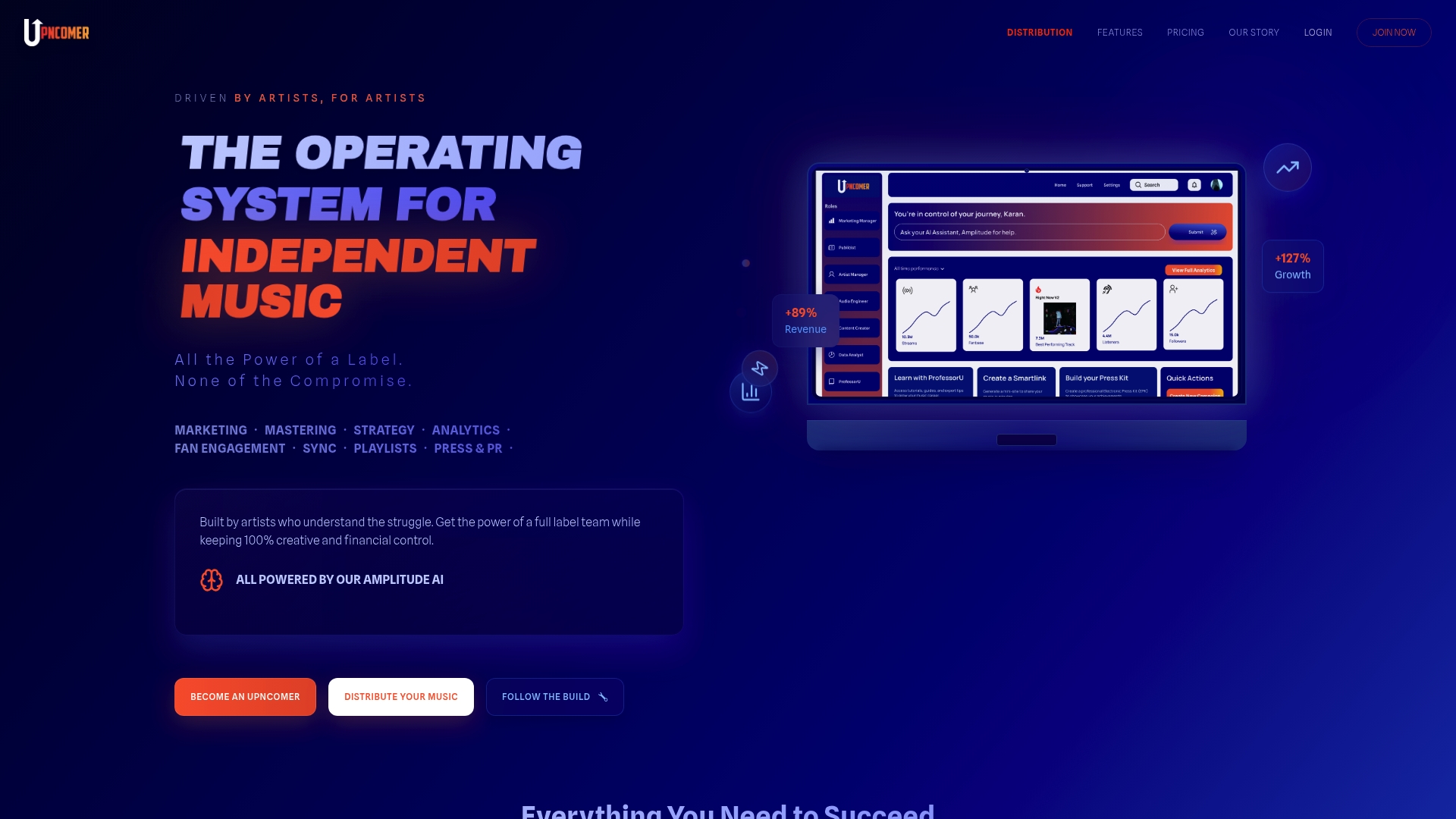
UpNComer combines music distribution with the tools you need to make it count: playlist pitching, smart links, streaming analytics through the Data Analyst module, AI-powered release guidance from Amplitude AI, and fan engagement tools all in one place. You don’t need five separate platforms to run a professional release. UpNComer’s Growth Engine connects your distribution to your broader artist strategy so every release builds on the last. Visit UpNComer to see how independent artists are running label-quality campaigns without the label.
FAQ
What is independent artist distribution?
Independent artist distribution is the process of delivering your music to streaming platforms and digital stores without a record label, using a third-party distributor. You retain full ownership of your recordings and collect your royalties directly.
How do I distribute music independently?
Choose a distribution service like DistroKid, CD Baby, TuneCore, or LANDR, prepare your mastered audio, artwork, and metadata, then submit your release at least four weeks before your target date. Your distributor handles delivery to platforms like Spotify, Apple Music, and Amazon Music.
What are ISRC and UPC codes and why do they matter?
ISRC codes identify individual tracks and UPC codes identify the full release. They are required for royalty tracking and streaming data. Using consistent codes across re-releases preserves your play counts and ensures uninterrupted royalty payouts.
Do independent distributors collect all my royalties?
No. Distributors collect master recording royalties, which represent roughly 80% of streaming income. Publishing royalties, covering the remaining 20%, require separate registration with a performing rights organization like ASCAP or BMI and a mechanical rights administrator.
How far in advance should I plan a music release?
Plan at least four to six weeks before your release date. Spotify’s editorial pitching window requires submission at least 7 days before release, and CD Baby recommends a full four-week buffer to allow for processing, pitching, and pre-release marketing.