What Is a Music Marketing Funnel? A 2026 Guide

A music marketing funnel is the structured journey a listener takes from first discovering your music to becoming a loyal fan who buys tickets, purchases merch, and tells their friends about you. The industry term for this framework is the “fan journey funnel,” and it maps every stage of fan development so you can apply the right tactic at the right moment. Without this structure, most independent artists spend money on promotion that never converts. With it, you build a fanbase that compounds over time.
What is a music marketing funnel and why does it matter?
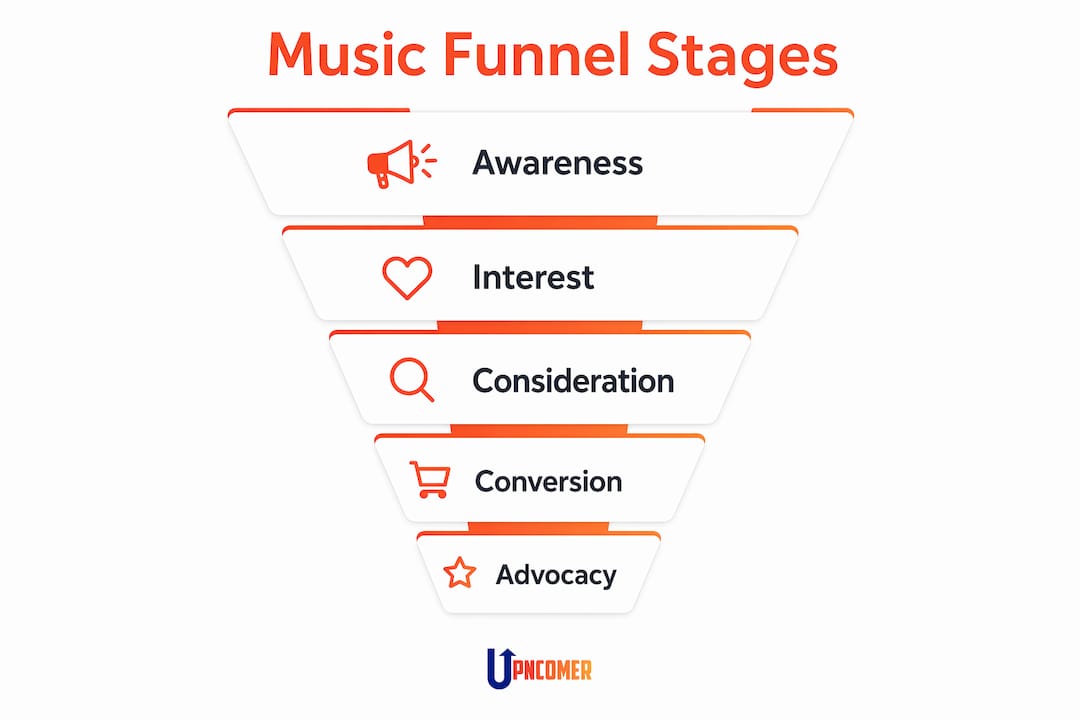
The music marketing funnel has five defined stages: Awareness, Interest, Consideration, Conversion, and Advocacy. Each stage represents a different relationship between you and your listener, and each one requires a different tactic to move people forward. Treating all listeners the same is one of the most common and costly mistakes independent artists make.
Think of it this way. A first-time listener who found you on TikTok needs something completely different from a fan who has already saved three of your albums on Spotify. One needs a reason to care. The other needs a reason to spend. A funnel gives you the language and the strategy to serve both.

For independent artists without a label or a marketing team, this framework is especially powerful. It replaces guesswork with a repeatable system. Platforms like UpNComer are built around this exact logic, combining tools like Amplitude AI and the Growth Engine to help you manage each stage without needing five separate apps.
What are the 5 stages of the music marketing funnel?
Understanding each stage clearly is the difference between a campaign that builds momentum and one that burns your budget.
-
Awareness is where new listeners discover you for the first time. TikTok, playlist pitching, opening for a larger act, and editorial placements on Spotify are the primary channels here. Your goal is reach, not depth. You want as many relevant ears as possible.
-
Interest is where a curious listener starts exploring. They visit your Instagram profile, watch a second video, or stream a full album. This stage is about holding attention. Behind-the-scenes content, short-form video, and consistent posting keep people in this zone.
-
Consideration is the emotional connection stage. Fans here are deciding whether they actually care about you as an artist. Storytelling, authentic brand voice, and direct engagement in comments or DMs are what move people through this stage. As Symphonic’s blog notes, consistent brand storytelling is more valuable than chasing viral moments.
-
Conversion is where fans take a tangible action. Pre-saves, merch purchases, ticket buys, and email list signups all count. This is where your funnel generates real revenue and measurable data.
-
Advocacy is the stage most artists forget to plan for. These are the fans who share your music personally, post about your shows, and bring new listeners into the top of your funnel. As marketing strategist Jesse Cannon emphasizes, word-of-mouth endorsement is the most powerful force in music marketing. Your funnel should actively create conditions for it.
Pro Tip: Focus your early career energy on the top two stages. Growing awareness and interest is the most effective way to build a fanbase before you have the catalog or live presence to drive conversions.
How do AI tools and data optimize your funnel?
Modern music marketing strategy is no longer about posting and hoping. AI-powered platforms have changed what independent artists can do with a modest budget.
Platforms like Yangaroo Amplify and Orion Promotion can launch Meta ad campaigns within 24 hours, generating ad creatives directly from a track URL and targeting likely fans using genre and mood data from thousands of prior campaigns. That kind of targeting used to require a label’s marketing department. Now it is accessible to any independent artist.
Here is what a data-driven funnel approach looks like in practice:
- Track conversion events, not just streams. Sending ad traffic directly to Spotify hides the data you need. Smart links and landing pages capture clicks, pre-saves, and email signups so your ad algorithm can optimize toward real fan behavior.
- Use cross-platform data together. TikTok drives discovery and participation. Meta ads support structured amplification and conversion. Treating them as separate channels misses the cross-platform funnel effect they create together.
- Connect all your data into one view. Streaming numbers, social engagement, live attendance, and email signups tell different parts of the same story. Unified fan data helps you identify where fans are dropping off and where your funnel is actually working.
- Expect a ramp-up period. AI-powered campaigns typically show initial fan actions like streams, follows, and saves within 24 to 48 hours, with long-term engagement growing as the algorithm learns your audience over weeks.
Pro Tip: Never run a paid ad campaign that sends traffic directly to Spotify or Apple Music. Always use a landing page or smart link so you capture the conversion data your algorithm needs to improve.
The shift here is significant. You are no longer just a musician promoting a release. You are operating a data-informed fan acquisition system, and the tools to do it are now within reach for independent artists.
What are common funnel mistakes independent artists make?
Knowing the stages of a music marketing funnel is one thing. Avoiding the traps that derail most campaigns is another.
“The goal isn’t to go viral. The goal is to get fans talking. Those are very different strategies with very different outcomes.” — Music Marketing Trends
The most common mistakes fall into a few clear patterns:
- Sending paid traffic directly to Spotify. This is the single most expensive mistake in digital music marketing. You lose all conversion data, and your ad platform cannot optimize. Use trackable landing pages every time.
- Chasing trends instead of building participation. Viral moments are unpredictable. Consumable, participatory content like behind-the-scenes clips, early demo access, and fan challenges builds reliable reach that compounds.
- Starting too late. Effective funnel campaigns are planned 6 to 8 weeks before a release, structured in phases: Tease, Announce, Launch, and Post-release. Starting the week of release leaves no time to build momentum.
- Ignoring brand consistency. Fans who encounter a different tone, visual style, or message at each funnel stage lose trust. Your brand voice should be recognizable whether someone finds you on TikTok, your website, or a Spotify bio.
- Measuring vanity metrics. Monthly listeners and follower counts feel good but tell you little about funnel health. Track pre-saves, email signups, merch sales, and ticket conversions instead.
A good music release checklist can help you map each of these phases before you spend a dollar on promotion.
How can UpNComer help you build a practical funnel?
UpNComer is built specifically to support each stage of the fan journey funnel without requiring you to stitch together five different tools. Here is how the platform’s modules map to funnel stages:
| Funnel stage | UpNComer module | What it does for you |
|---|---|---|
| Awareness | Growth Engine + Amplitude AI | Automates ad campaigns and targets new listeners using AI-driven audience data |
| Interest | Content Creator + Publicist | Generates content ideas and press materials to deepen listener engagement |
| Consideration | Artist Manager + ProfessorU | Manages your brand strategy and provides educational guidance on fan connection |
| Conversion | Distribution + UrStudio | Handles pre-saves, release delivery, and mastering to drive tangible fan actions |
| Advocacy | Data Analyst | Identifies your most engaged fans so you can activate them as organic promoters |
The UpNComer features page shows how these modules work together as a unified system rather than isolated tools. That integration matters because funnel drop-off often happens at the handoff between stages, and fragmented tools make those handoffs invisible.
A practical workflow looks like this. You use Growth Engine to run awareness ads two weeks before a release. Amplitude AI identifies which audiences are responding. Content Creator helps you build participation content for the interest stage. As your release date approaches, Distribution handles pre-saves while Data Analyst tracks which fans are converting. After launch, you use those insights to identify your superfans and give them a reason to share. That is a complete funnel, managed in one place.
For a deeper look at how online promotion fits into this system, the guide on music promotion for independent artists is worth reading alongside this framework.
Key takeaways
A music marketing funnel works when you match the right tactic to the right stage, track real conversions instead of vanity metrics, and plan your campaign at least six weeks before release.
| Point | Details |
|---|---|
| Five-stage fan journey | Awareness, Interest, Consideration, Conversion, and Advocacy each require distinct tactics. |
| Use landing pages, not direct links | Smart links capture conversion data that Spotify links hide, enabling ad optimization. |
| Plan 6 to 8 weeks out | Structure campaigns in Tease, Announce, Launch, and Post-release phases for maximum impact. |
| AI tools accelerate results | Platforms like Yangaroo Amplify and Orion Promotion can launch targeted campaigns within 24 hours. |
| Advocacy is the most underused stage | Activating superfans as organic promoters drives word-of-mouth, the most powerful music marketing force. |
Why most artists are building funnels backwards
I have seen a lot of independent artists pour money into the conversion stage before they have done the work at the top of the funnel. They run ads to a merch store for an artist with 200 monthly listeners and wonder why nothing sells. The math does not work. You cannot convert fans you have not yet earned.
The other pattern I notice is artists treating the funnel as a launch-day event rather than an ongoing system. A release is not a moment. It is a project with a beginning, middle, and end. The artists who grow sustainably are the ones who treat every release as a multi-week campaign with content planned for each phase, not a single upload and a prayer.
What has changed in 2026 is that the tools to run a proper funnel are genuinely accessible now. AI ad platforms, smart link analytics, and unified dashboards like UpNComer mean you do not need a label or an agency to execute a professional campaign. What you do need is the discipline to follow the framework and measure what actually matters. Streams feel good. Pre-saves, email signups, and ticket sales pay the rent.
The artists I see winning are not necessarily the most talented. They are the ones who treat fan growth as a system, not a lottery.
— Karan
Build your funnel with UpNComer
If you are ready to stop guessing and start building a fan journey that actually converts, UpNComer gives you everything in one place. From AI-powered ad campaigns through the Growth Engine to fan data analysis through the Data Analyst module, the platform is designed for independent artists who want to grow without burning out on disconnected tools.
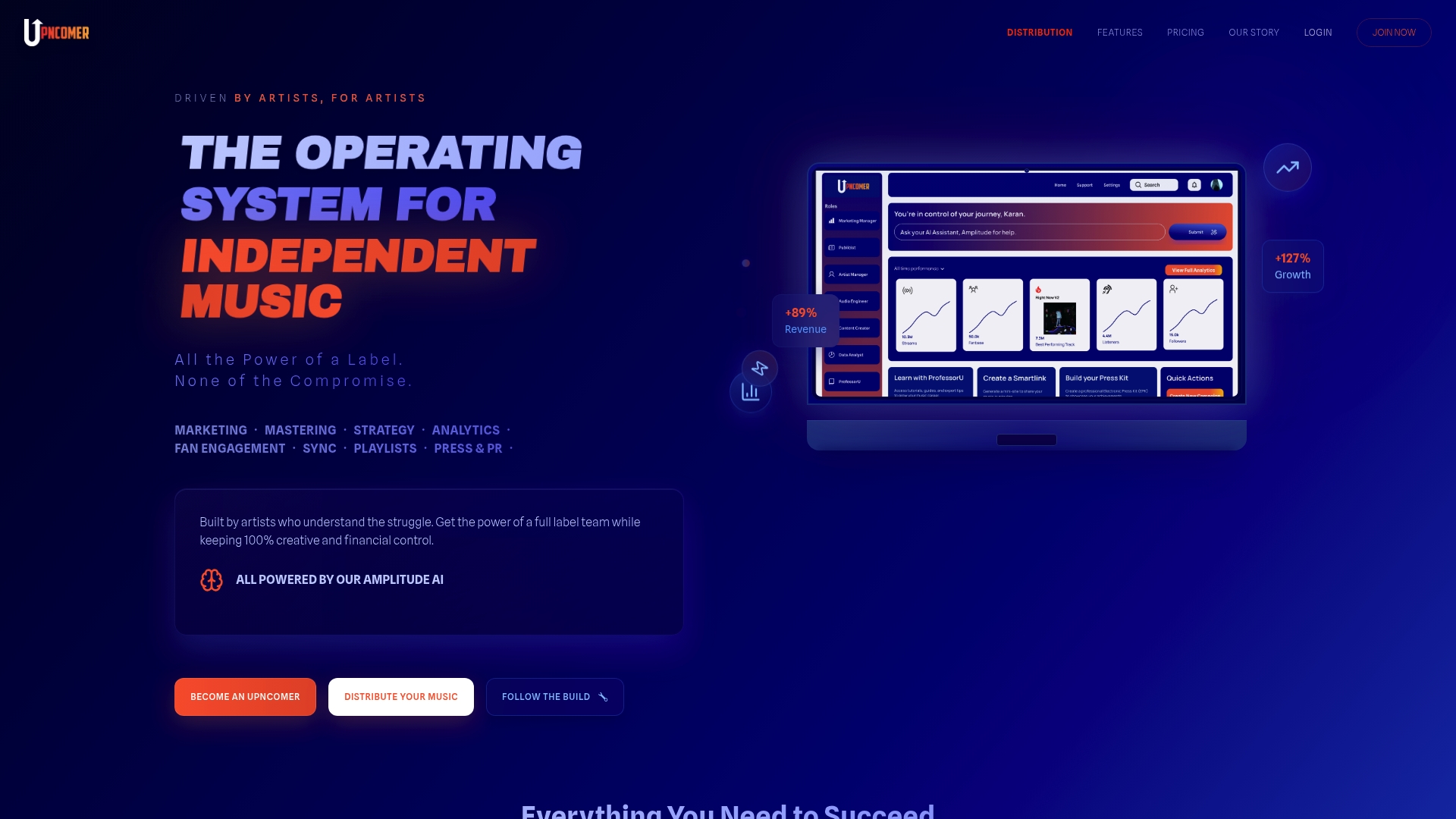
UpNComer’s Amplitude AI guides your strategy at every funnel stage, while modules like Distribution, UrStudio, and Content Creator handle the execution. You focus on making music. The platform handles the system. Check out the latest UpNComer community updates to see what new tools and resources are available for your next release campaign.
FAQ
What is a music marketing funnel?
A music marketing funnel is the structured path a listener takes from first discovering your music to becoming a loyal, paying fan. It typically covers five stages: Awareness, Interest, Consideration, Conversion, and Advocacy.
How many stages does a music funnel have?
The standard music marketing funnel has five stages. These are Awareness, Interest, Consideration, Conversion, and Advocacy, each requiring different content and tactics to move fans forward.
Why should I use a landing page instead of linking to Spotify?
Sending ad traffic directly to Spotify hides conversion data from your ad platform, making optimization impossible. A smart link or landing page tracks clicks, pre-saves, and email signups so your campaigns can improve over time.
How far in advance should I plan a funnel campaign?
Plan your funnel campaign 6 to 8 weeks before your release date. Structure it in phases: Tease, Announce, Launch, and Post-release, with specific content and goals assigned to each phase.
Can AI tools really help independent artists with funnel marketing?
Yes. Platforms like Yangaroo Amplify and Orion Promotion can launch targeted Meta ad campaigns within 24 hours using genre and mood data. UpNComer’s Growth Engine and Amplitude AI offer similar automation built specifically for independent artists.