How to Pitch Artists to Playlists Effectively in 2026

Pitching your music to playlists is the primary method independent artists use to expand streaming reach, trigger algorithmic recommendations, and grow a real fanbase without a label behind them. The process has two distinct tracks: the official editorial route through Spotify for Artists, and the independent curator route using tools like PlaylistSupply and Playlist Panda. Both require precision, timing, and a clear understanding of what curators actually want. This guide covers exactly how to pitch songs to playlists in 2026, from finding the right curators to writing pitches that get read.
How to pitch artists to playlists effectively: timing and channels
Knowing where and when to pitch is the foundation of any effective playlist submission strategy. Get this wrong, and even a great song gets ignored.
The official Spotify pitch is free, takes about 10 minutes, and requires a minimum 7-day lead time before your release date. You can only pitch one song per release, so choose the track that best defines your sound at this moment. Not your personal favorite. The one that fits a playlist niche most cleanly.

Independent curators are a separate and equally important channel. Independent playlists are more accessible than editorial playlists, and placements on them directly influence algorithmic playlists like Discover Weekly. That means a well-placed indie playlist feature can trigger a chain reaction across Spotify’s recommendation engine.
To find the right curators, use Spotify’s “Discovered On” feature. Pull up three to five artists who make music similar to yours, check which playlists have featured them, and identify the curators behind those lists. Targeted curator outreach based on genre fit and listener similarity consistently yields better results than cold-pitching large, generic playlists.
| Channel | Access Method | Pros | Cons |
|---|---|---|---|
| Spotify for Artists (editorial) | Spotify for Artists dashboard | Free, official, high visibility | One song per release, 7-day minimum lead time |
| Independent curators (email/DM) | PlaylistSupply, Playlist Panda, “Discovered On” | More accessible, faster responses | Requires research and personalization |
| SubmitHub | Direct platform submission | Organized, curator feedback available | Some curators charge credits per submission |
| Instagram DM outreach | Manual research | Personal, relationship-building | Low response rate without prior connection |
Before pitching anywhere, verify that a playlist looks legitimate. Spotify’s algorithms penalize tracks that appear on playlists with artificial streaming behaviors. A placement on a bot-inflated playlist can actively damage your profile. Check engagement ratios, follower counts relative to stream counts, and whether the playlist features real, recognizable artists.
Pro Tip: Before your release date, build your music release checklist so your pitch goes out the moment your track is live in the Spotify for Artists dashboard.
What makes a playlist pitch actually work
Curators decide within 15 to 20 seconds whether a song fits their playlist. They base that decision on sound, mood, and genre. Not your streaming numbers, not your Instagram following, and definitely not your origin story.
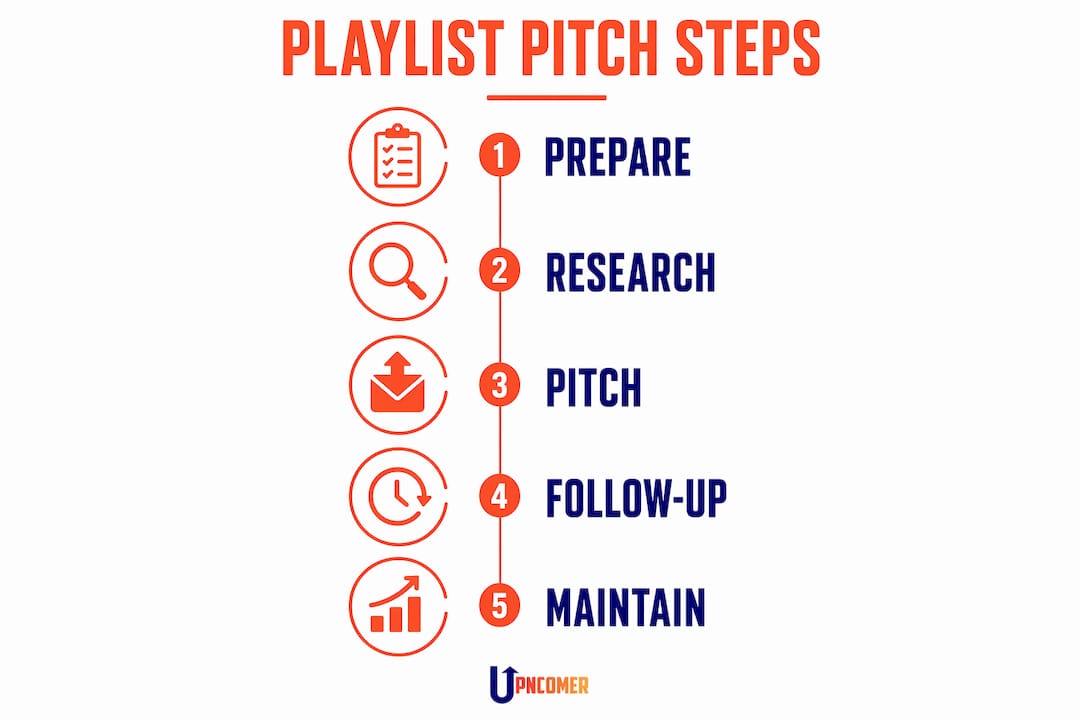
The most effective pitches lead with sonic description. Think: genre, mood, tempo, and one or two reference artists. All of that in 30 words or fewer. Then name the specific playlist you are pitching to and explain why your track fits its vibe. This shows you have actually listened to the playlist, which most artists skip.
A well-crafted pitch contains five parts: a brief greeting, the playlist name, a fit explanation, a clean Spotify track link, and a short artist context. The whole thing should stay under 120 words. Personalized pitches that reference specific tracks already on the curator’s playlist achieve response rates above 22%, compared to 8 to 15% for generic templates. That gap is too large to ignore.
Here is a pitch template you can adapt:
Hi [Curator Name], I came across [Playlist Name] and noticed it features a lot of [mood/genre description]. My new track “[Song Title]” is a [BPM] [genre] with [mood descriptor], sitting somewhere between [Reference Artist A] and [Reference Artist B]. I think it would fit well between [specific track on their playlist] and [another track]. Here is the Spotify link: [open.spotify.com link]. Thanks for your time.
A few things to avoid:
- Attachments of any kind. Curators discard them.
- Non-Spotify links. SoundCloud, YouTube, and Google Drive links signal that you are not ready.
- Streaming stats as credibility. Curators care about song fit, not your monthly listener count.
- Pitches over 150 words. If you cannot explain the fit concisely, you have not done the research.
Pro Tip: Listen to the last five tracks added to a curator’s playlist before writing your pitch. Reference one of them by name. That single detail separates your message from 90% of the pitches in their inbox.
Best practices for playlist pitches and professional etiquette
Playlist pitching is a professional outreach activity. Treat curators the way you would treat a music supervisor or a booking agent. They have limited time, clear preferences, and long memories.
-
Follow the stated submission channel. If a curator lists an email address, use it. If they use SubmitHub, go through SubmitHub. If they say “no cold pitches” on their profile, respect that completely. Respecting curator preferences directly improves pitch outcomes and keeps you off informal blacklists that curators share with each other.
-
Follow up once, and only once. If you hear nothing after two weeks, send a single polite follow-up. One sentence is enough: “Just checking in on my submission for [Song Title]. Happy to answer any questions.” After that, move on.
-
Never pay for playlist placements. Pay-for-play schemes damage your reputation with legitimate curators and put your Spotify profile at risk of penalties. The short-term stream bump is not worth the long-term cost.
-
Build and maintain a curator database. A tagged database with curator preferences, submission channels, pitch dates, and outcomes lets you refine your targeting over time. A spreadsheet works fine. Track the playlist name, curator contact, date pitched, response received, and placement result.
-
Target 30 to 60 genre-aligned curators per release. Pitching to a curated list of 30 to 60 independent curators yields better placement rates than mass-pitching hundreds of mismatched playlists. Quality targeting beats volume every time.
-
Nurture relationships between releases. Share a curator’s playlist on your social channels. Reply to their posts. Congratulate them on milestones. When your next release drops, you are not a stranger in their inbox.
The music industry’s community-driven nature means that professional relationships compound over time. A curator who places you once is far more likely to place you again if you have treated them with respect.
Common pitfalls that kill playlist pitching success
Most pitch rejections come down to a small set of avoidable mistakes. Recognizing them early saves you months of wasted effort.
| Pitfall | What Goes Wrong | How to Fix It |
|---|---|---|
| Weak production quality | Curators discard tracks with poor intros or amateur mixes | Master your track professionally before pitching |
| No playlist research | Pitching a lo-fi track to an EDM playlist wastes everyone’s time | Listen to 10 tracks on each playlist before submitting |
| Leading with stats | Follower counts and stream numbers do not signal fit | Lead with genre, mood, and reference artists instead |
| Ignoring “no cold pitch” rules | Curators remember artists who disrespect their guidelines | Read every curator’s bio and submission rules first |
| Chasing vanity playlists | Large playlists with millions of followers rarely accept indie submissions | Target mid-size playlists with 1,000 to 50,000 followers |
The production quality issue deserves extra attention. Your track competes directly with the existing songs on a curator’s playlist. If your mix sounds noticeably thinner or less polished than the tracks around it, the curator will notice in those first 15 seconds. UpNComer’s AI mastering tool inside UrStudio gives independent artists access to professional-grade mastering without the studio cost. Use it before you pitch anything.
Chasing large vanity playlists is the other trap artists fall into. A placement on a niche playlist with 5,000 engaged listeners will do more for your Discover Weekly and Radio feeds than a placement on a bloated, low-engagement playlist with 500,000 followers. Spotify’s algorithm weighs listener engagement, not raw numbers.
Key takeaways
Pitching music to playlists effectively requires early timing, sonic-focused messaging, and consistent relationship management across both official and independent curator channels.
| Point | Details |
|---|---|
| Pitch timing matters | Submit through Spotify for Artists at least 7 days before release, one song per release. |
| Lead with sonic fit | Describe genre, mood, tempo, and reference artists in 30 words before anything else. |
| Personalize every pitch | Reference a specific track on the curator’s playlist to push response rates above 22%. |
| Track everything | Maintain a tagged curator database to refine targeting and build lasting relationships. |
| Avoid pay-for-play | Paid placements risk Spotify penalties and damage your credibility with real curators. |
Why pitching is infrastructure, not a panic button
Here is what I have come to understand after watching hundreds of independent artists navigate this process: most artists pitch in panic mode. The release is two days away, they have not told anyone, and they blast 200 curators with a copy-paste message at midnight. That approach does not work, and it burns goodwill you cannot easily rebuild.
Playlist pitching is infrastructure. It is something you build, maintain, and improve release by release. The artists who get consistent placements are not necessarily the ones with the best songs. They are the ones who started their outreach three weeks early, researched their curators properly, wrote pitches that felt personal, and followed up like professionals.
The other thing I want to be direct about: your song has to be ready. No pitch strategy fixes a track that is not mixed well or does not have a strong opening hook. Sort the music first. Then pitch with confidence.
I also think artists underestimate how much relationship-building matters in this space. Curators are people running passion projects, often without pay. When you treat them like a transaction, they feel it. When you treat them like collaborators in your growth, they remember you. That distinction is worth more than any template or tool.
Treat playlist pitching as ongoing work, not a one-time task. Build your database. Refine your pitch language. Track what works. And keep making music worth pitching.
— Karan
How UpNComer helps you pitch smarter and grow faster
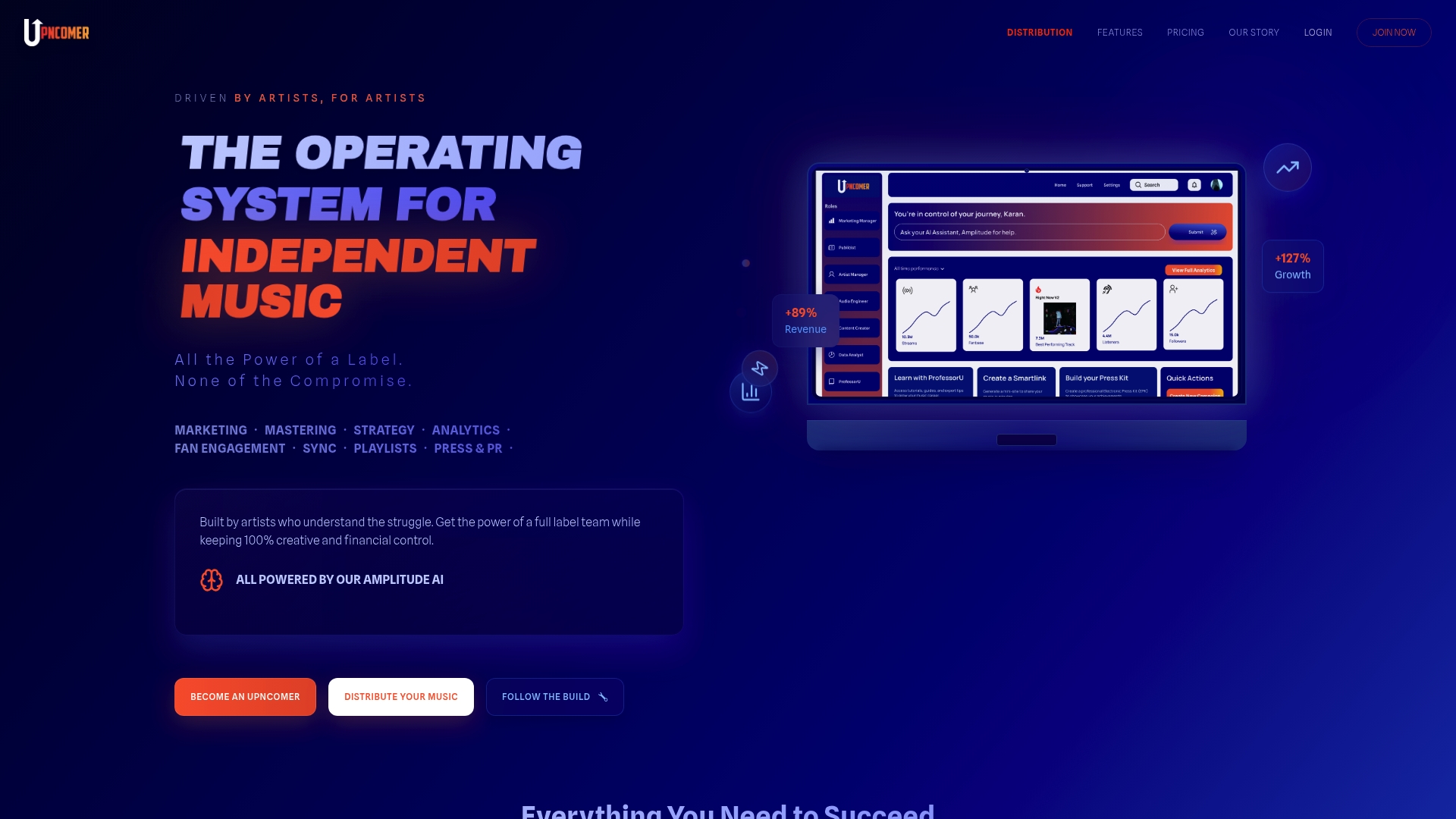
UpNComer is built for exactly this kind of work. The Artist Manager module lets you track curator contacts, pitch dates, and outcomes in one place, so you are never starting from scratch with each release. The Growth Engine supports your pitching campaigns with data-driven targeting, and the Distribution module gets your music onto Spotify and other streaming platforms so you are eligible for official editorial pitching from day one.
Amplitude AI gives you real-time guidance on release timing, audience insights, and campaign decisions, so your pitching strategy is backed by data rather than guesswork. And the Content Creator module keeps your fans engaged while your pitches are out in the world. Everything you need to pitch, promote, and grow is inside UpNComer.
FAQ
What is the official way to pitch a song to Spotify playlists?
The only valid channel for editorial playlist submissions is the Spotify for Artists pitch tool, which is free and requires at least 7 days before your release date. You can pitch one song per release.
How long should a playlist pitch be?
A playlist pitch should be under 120 words and include a greeting, the playlist name, a sonic fit explanation, a Spotify track link, and brief artist context. Pitches that reference specific tracks on the curator’s playlist achieve response rates above 22%.
Should I pay for playlist placements?
No. Pay-for-play schemes risk Spotify account penalties and damage your credibility with legitimate curators. Focus on organic outreach through SubmitHub, direct email, and Spotify for Artists instead.
How do I find independent playlist curators?
Check the “Discovered On” section of artists with similar music on Spotify, and use tools like PlaylistSupply and Playlist Panda to identify genre-aligned curators. Target curators whose existing playlists already feature music that sounds like yours.
How many curators should I pitch per release?
Pitching to a focused list of 30 to 60 genre-aligned independent curators yields better results than mass-pitching hundreds of mismatched playlists. Quality targeting and personalization consistently outperform volume.