Why Musicians Need Music Supervision in 2026

Music supervision is the process of curating, licensing, and managing music to support storytelling in film, TV, advertising, and other media. It sits at the intersection of creative vision, project management, and legal clearance. For independent artists, understanding why musicians need music supervision is not optional knowledge. It is the difference between a track sitting on a hard drive and that same track earning sync revenue in a Netflix series. Music supervisors control the gateway to those placements, and knowing how they think gives you a real competitive edge.
What does a music supervisor actually do?
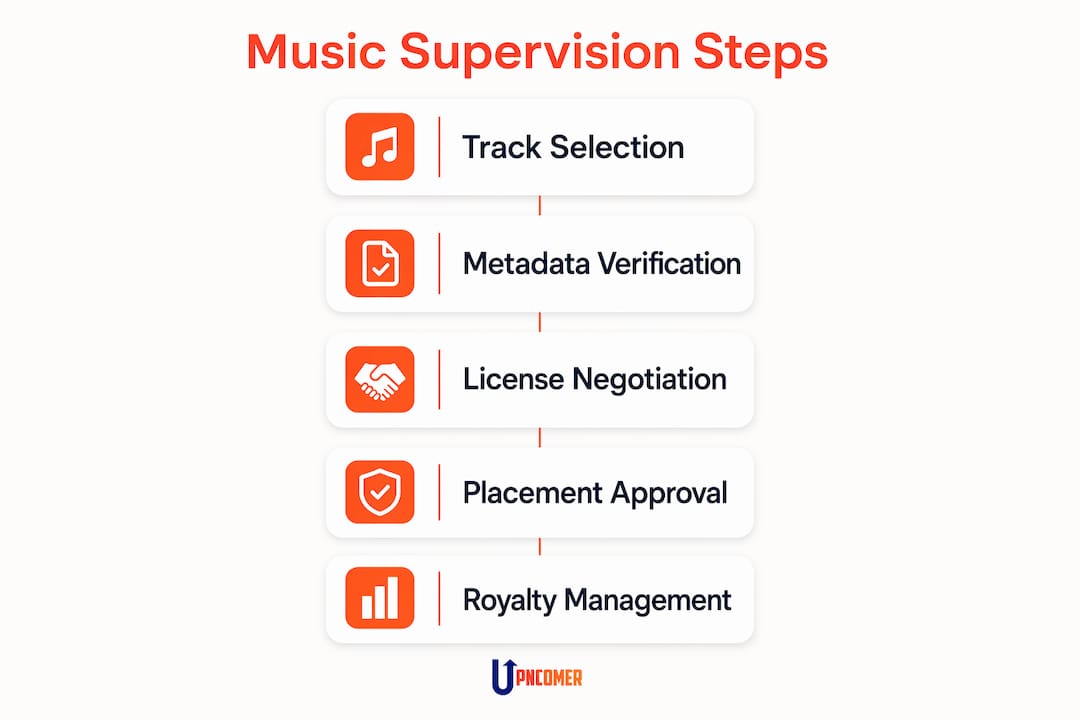
Music supervision is far more than picking songs for a playlist. Music supervision is 75% project management, legal clearance, and budgeting, with creative curation making up the remaining 25%. That split surprises most artists, but it explains why supervisors are so selective and time-pressured.
Here is what the role covers in practice:
- Creative curation: Supervisors match music to the emotional tone of a scene. Lesser-known indie tracks are often preferred because recognizable songs can pull a viewer out of the story.
- Script spotting: Supervisors review scripts or rough cuts with directors and editors to identify exactly where music is needed and what emotional function it serves.
- Budget management: Supervisors build detailed music budgets upfront to balance creative goals against financial limits. A song a director loves may simply cost too much to clear.
- Rights clearance: Supervisors coordinate the legal side, confirming who owns the master recording and who controls the publishing rights before any deal moves forward.
- Negotiation: They negotiate directly with publishers and labels to secure synchronization licenses that cover both master and publishing rights.
The workload is intense. Supervisors filter through pools of over 300 tracks for a single project, refining shortlists under tight deadlines. A track that does not set the right mood within the first few seconds gets cut immediately.
Pro Tip: Think of a music supervisor as a project manager who happens to love music. They need your track to solve a problem fast. Make it easy for them to say yes.

Why understanding music supervision benefits independent artists
Artists who understand how supervisors work prepare better music and close more deals. The knowledge gap between artists who get placements and those who do not is rarely about talent. It is almost always about preparation and rights clarity.
Here are the core areas where this understanding pays off directly:
- Metadata accuracy: Missing metadata causes up to 30% missed sync opportunities. Supervisors search by mood, tempo, and instrumentation, not artist name. If your files are not tagged correctly, your music is invisible.
- One-stop clearance: Owning both your master recording and your publishing rights is called one-stop clearance. Deals frequently collapse within 48 hours when rights are split between multiple parties. Supervisors favor tracks they can clear in a single conversation.
- Rights ownership: Signing away publishing rights early in your career can block you from sync deals entirely. Protecting your artist intellectual property is not just a legal formality. It is a business decision that affects every future licensing opportunity.
- Market-ready material: Supervisors need tracks that are ready to drop into a scene without extra work. Clean mixes, proper stems, and accurate metadata are not bonuses. They are baseline requirements.
The artists who treat their music catalog like a professional product, not just a creative output, are the ones supervisors call back.
How music supervision shapes sync licensing and revenue
Sync licensing is the legal permission to use a piece of music alongside visual media. Music supervisors are the people who make that permission happen. Without their coordination, the legal side of a placement falls apart.
Music supervisors negotiate synchronization licenses with publishers and labels, managing multiple stakeholders for every single song in a project. A film with 20 tracks might require 40 separate license agreements, one for the master and one for the publishing on each song. That volume of legal work requires someone who knows the process cold.
The financial stakes are real. Playing music without proper licenses can result in lawsuits and financial damages. For a production company, that risk is unacceptable. For you as an artist, it means your track will never get placed if your rights situation is unclear or contested.
Budget also shapes which songs get selected. A supervisor may love your track but have only $500 to spend on a scene. If your publisher is asking for $5,000, the deal dies. Understanding this dynamic helps you price your music realistically and position yourself as an artist who is easy to work with.
| Scenario | Outcome for the artist |
|---|---|
| One-stop clearance, clean metadata | Fast approval, higher placement rate |
| Split rights, no metadata | Deal collapses, track disqualified |
| Stems provided, mix ready | Supervisor can edit freely, more likely to use |
| No stems, poor file quality | Track treated as a liability, rejected |
Best practices for working effectively with music supervisors
Getting your music in front of supervisors is not about cold emails. Cold-emailing supervisors is largely ineffective. They are overwhelmed and rely on curated pipelines through music libraries, sync agents, and trusted intermediaries. Your job is to make your music impossible to ignore once it reaches them through those channels.
Follow these steps to prepare:
- Deliver professional stems. Stems are a baseline requirement for supervisors. They need to mute vocals during dialogue or isolate an instrument for a specific scene moment. Tracks without stems get discarded.
- Tag every file with complete metadata. Include mood, tempo, instrumentation, ISRC, and ISWC codes. Metadata fields like ISRC and ISWC improve your visibility in sync search tools significantly. Use your music release checklist to build this habit before every release.
- Pitch utility, not identity. Supervisors do not care about your backstory when they are on deadline. They care whether your track fits the scene. Lead with the emotional function of the music, not your bio.
- Submit through music libraries and sync agents. These intermediaries have existing relationships with supervisors and know what each project needs. Getting into a reputable library is a more reliable path than direct outreach.
- Be ready to move fast. Sync deals can close in 48 hours or fall apart in the same window. Have your contracts, rights documentation, and files ready to send the moment a supervisor expresses interest.
Pro Tip: Treat your catalog like a product catalog. Every track should have a one-line emotional description, complete metadata, stems, and a clean mix ready to go. Supervisors remember artists who make their job easier.
Key Takeaways
Music supervision is the single most important gateway between your catalog and sync revenue, and artists who understand it get placed more often.
| Point | Details |
|---|---|
| Music supervision is mostly admin | 75% of the role is legal clearance, budgeting, and project management, not creative selection. |
| One-stop clearance wins deals | Owning both master and publishing rights prevents deal collapse and speeds up licensing decisions. |
| Metadata drives discoverability | Missing or incomplete metadata causes missed sync opportunities; tag every file with mood, tempo, ISRC, and ISWC. |
| Stems are non-negotiable | Tracks without stems are rejected; supervisors need to edit music elements during post-production. |
| Skip the cold email | Reach supervisors through music libraries and sync agents, not direct outreach. |
Why I think most artists are approaching sync completely backward
Most independent artists I have seen try to break into sync by pitching their best, most personal songs. That instinct makes sense creatively, but it is the wrong move. Supervisors are not looking for your artistic statement. They are solving a production problem under budget pressure and a deadline.
The artists who consistently land placements treat their catalog as a service offering. They know which tracks work as background texture, which ones carry emotional weight in a dramatic scene, and which ones fit a 30-second ad spot. They have that information organized and ready before any supervisor ever asks.
The other thing I have noticed is how much the rights conversation trips artists up. Splitting publishing early, signing deals without reading the fine print, or simply not knowing whether they own their masters. These are not small mistakes. They are the exact reasons a supervisor will pass on your track even if they love it. Getting your rights in order is not glamorous work, but it is the foundation everything else sits on.
If you are serious about sync in 2026, start by auditing your catalog. Know what you own, tag everything properly, and get your stems exported. Then focus on building relationships with music libraries. That is the realistic path, and it works.
— Karan
How Upncomer helps you get sync-ready faster
Getting sync-ready means having your metadata clean, your rights documented, and your releases organized before an opportunity appears. Upncomer brings all of that into one place for independent artists.

Through Upncomer’s distribution tools, you can release music with proper metadata built in from the start, giving your tracks real visibility in sync search pipelines. The platform’s Amplitude AI and Artist Manager modules help you track your catalog, manage release workflows, and stay on top of the administrative side of your music career. Check out the latest resources and updates in the Upncomer community to stay current on sync licensing strategies, metadata best practices, and artist development tools built for how the industry actually works today.
FAQ
What is music supervision?
Music supervision is the process of selecting, licensing, and managing music for film, TV, advertising, and other media. It combines creative curation with legal clearance and project management.
Why do independent artists need to understand music supervision?
Independent artists who understand music supervision prepare better assets, own their rights clearly, and get placed more often. Supervisors favor tracks with one-stop clearance and complete metadata.
What is one-stop clearance and why does it matter?
One-stop clearance means one party owns both the master recording and the publishing rights. Deals collapse quickly when rights are split, so supervisors prioritize one-stop tracks.
How should musicians pitch their music for sync opportunities?
Musicians should submit through music libraries and sync agents rather than cold-emailing supervisors directly. Supervisors rely on curated pipelines and respond to utility, not unsolicited outreach.
What files should artists have ready for music supervision?
Artists should have clean stereo mixes, full stems, and files tagged with mood, tempo, instrumentation, ISRC, and ISWC codes. Tracks without stems are frequently rejected outright.