Music Manager Reporting Checklist for 2026

A music manager reporting checklist is a structured framework for tracking, verifying, and optimizing an artist’s financial and promotional performance across rights, royalties, and campaigns. In the industry, this practice is also called a management reporting workflow or artist performance audit. Without it, revenue leaks silently through unregistered metadata, missed royalty claims, and campaigns that never get measured. This article walks you through every critical checkpoint, from mapping publishing agreements to reconciling royalty statements and logging campaign data, so you can protect your artist’s income and prove your value as a manager.
1. What a music manager reporting checklist actually covers
A well-built music manager reporting checklist covers four core areas: rights and publishing verification, metadata integrity, royalty statement reconciliation, and campaign performance tracking. Most managers focus on the last two and neglect the first two. That’s where the money disappears. The checklist functions as your operating procedure, not a one-time document. You run it at onboarding, at each release cycle, and at quarterly reviews.
The independent artist revenue landscape in 2026 includes streaming, sync licensing, live performance royalties, neighboring rights, and merchandise, each generating separate reporting streams. Managing all of them without a structured checklist means you’re constantly reacting instead of controlling. A solid artist management checklist turns reactive management into proactive oversight.

2. How to verify and map artist publishing agreements
Mapping publishing agreements is the first step in any onboarding-style reporting workflow. You need to document territory, term length, reversion clauses, and expiry dates for every deal the artist holds. This is not optional admin. It’s the foundation that every royalty calculation sits on.
Here’s what to capture for each agreement:
- Territory coverage: Which countries does the deal cover? Are there carve-outs for specific markets?
- Term length and expiry: When does the deal end? Is there an automatic renewal clause?
- Reversion clauses: Under what conditions do rights revert to the artist?
- Sub-publishing arrangements: Who collects in territories the primary publisher doesn’t cover?
- Advance recoupment status: Has the artist recouped? Unrecouped artists receive no net royalties until they do.
Set calendar reminders 12 months before each agreement expires to trigger renegotiation planning. Waiting until the final month puts you in a weak negotiating position and risks automatic renewal on unfavorable terms. Cross-referencing songwriting splits against PRS registrations and logging any discrepancies is equally critical. A split that exists in a contract but isn’t registered with a collection society means unpaid royalties.
Pro Tip: UpNComer’s Artist Manager tool is built for organizing publishing details, contract deadlines, and contributor data in one place, so nothing falls through the cracks during onboarding or at renewal time.
3. Ensuring metadata accuracy and catalog integrity
Metadata is the DNA of music reporting. Every DSP payment, every collection society distribution, and every sync licensing deal depends on metadata being correct at the point of ingestion. Fixing it after the fact costs months of forensic corrections and real money in delayed or lost royalties.
Your catalog audit gate should verify the following fields for every track:
| Metadata Field | Why It Matters |
|---|---|
| ISRC | Identifies each unique recording for DSP reporting and neighboring rights |
| ISWC | Identifies the underlying composition for PRO royalty collection |
| UPC | Identifies the release product for distribution and sales tracking |
| Legal artist name | Must match PRO registration exactly to avoid payment misrouting |
| Contributor credits | Producers, featured artists, and writers must all be listed correctly |
| PRO affiliation | Confirms which society collects performance royalties for each writer |
| Split percentages | Must match signed agreements and PRO registrations precisely |
| Publisher name | Required for mechanical and performance royalty routing |
All recordings need unique, correct ISRCs; compositions need ISWCs; and contributor credits must be complete to avoid reporting failures downstream. Registrations with PRS, ASCAP, BMI, and GEMA should be confirmed, and DDEX feed compliance should be checked with your distributor. Treating identifier assignments as upstream controls means you can trust any royalty statement that follows.
Pro Tip: Standardize metadata before you deliver to any distributor. Retroactive corrections require contacting every DSP and collection society individually, which can take six months or longer.
4. How to review and reconcile royalty statements
Royalty statement review is where most managers spend their time, but few do it systematically. The goal is not just to see what came in. It’s to cross-check expected income against actual artist activity and spot reporting problems early.
Follow this sequence for each statement period:
- Pull the last two to three statements and compare them side by side. Look for unexplained drops or spikes in any income category.
- Map real-world activity to expected royalty uplifts. Reviewing statements against artist activity like tours or major releases helps you identify underpayments that should have appeared 12 to 18 months later.
- Check withholding tax deductions. Verify that applicable tax treaties are being applied. Artists earning in foreign territories often have taxes withheld at source that should be reduced or eliminated under treaty agreements.
- Validate per-play rates by format and territory. Claims-based royalty systems require validating per-play rates and reconciling claims to prevent duplicate or overclaimed payments.
- Run the DSR to CCID workflow check. The Digital Sales Report to Claim Confirmation and Invoice Details flow is how collection societies validate rates and confirm payments. Tracking format and variant differences per society prevents errors that compound over multiple periods.
“Managing metadata as a single source of truth across ingestion points minimizes errors and sets a foundation for clean royalty reporting.” — SynchTank
Pro Tip: Keep a log of which collection societies report by format and variant. GEMA, PRS, ASCAP, and BMI each handle variant-specific reporting differently. A checklist note per society saves hours of reconciliation work.
5. Tracking music marketing campaign performance
Campaign tracking is the part of the music manager client reporting workflow that most directly demonstrates your value to an artist. Every campaign, release, and promotional push should be logged with engagement data tied to the specific artist and release. Without this, you can’t prove what worked or justify future spend.
Your campaign performance checklist should capture:
- Playlist pitching results: How many playlists were pitched, how many placements were secured, and what streaming lift followed each placement.
- Social media engagement: Follower growth, post reach, saves, and shares broken down by platform and campaign period.
- Press and media outreach: Coverage secured, outlet tier, and estimated audience reach. UpNComer’s press outreach workflows give you a structured way to log and evaluate each media effort.
- Fan growth metrics: Email list growth, direct message engagement, and superfan conversion rates.
- Ad campaign data: Spend, cost per click, cost per stream, and return on ad spend for any paid promotion.
Campaign-level engagement data linked by release, artist, and contacts supports better operational reporting and proves campaign effectiveness to artists and stakeholders. UpNComer’s Growth Engine and Amplitude AI pull streaming analytics, audience insights, and campaign data into one view, so you’re not manually compiling reports from five different platforms. The music release checklist from UpNComer also covers pre-release metadata and distribution steps that feed directly into your campaign reporting.
Pro Tip: Log every campaign action in real time, not at the end of the month. Retroactive logging misses context and makes it harder to correlate specific actions with specific results.
Key takeaways
A music manager reporting checklist works because it connects rights verification, metadata accuracy, royalty reconciliation, and campaign tracking into one repeatable workflow that prevents revenue loss and proves manager performance.
| Point | Details |
|---|---|
| Start with publishing agreements | Map territory, term, reversion clauses, and expiry dates before anything else. |
| Treat metadata as upstream control | Correct ISRC, ISWC, and contributor credits at ingestion to avoid months of forensic fixes. |
| Reconcile statements against activity | Cross-check royalty income against real-world events like tours and releases to catch underpayments early. |
| Log every campaign with data | Tie playlist pitching, social engagement, and ad results to specific releases for clear ROI measurement. |
| Use integrated tools | Platforms like UpNComer consolidate rights, metadata, and campaign data to reduce manual reporting errors. |
Why most reporting checklists fail before they start
Most music managers build their reporting checklist backward. They start with the royalty statement and work back, which means they’re already too late to fix the problems that caused the statement to be wrong. The real leverage is upstream: publishing agreements, metadata, and identifier assignments. Get those right and the statements mostly take care of themselves.
The other mistake I see constantly is treating the checklist as a one-time onboarding document. Rights agreements expire. Metadata gets corrupted during catalog migrations. Collection society registrations lapse. The checklist has to be a living workflow with scheduled review triggers, not a PDF you fill out once and file away.
Global royalty reporting is also getting more complex, not less. Claims-based systems at DSPs, variant-aware reporting requirements per collection society, and expanding neighboring rights territories mean your checklist needs to evolve every year. Build in a quarterly review of the checklist itself, not just the data it captures.
The managers who consistently protect artist income are the ones who integrate promotional reporting with financial reporting. Knowing that a playlist placement drove a 40% streaming spike in Germany is only useful if you can also confirm that the neighboring rights income from that spike was correctly reported and paid. Connect those two data points and you’re doing real artist management.
— Karan
How UpNComer helps managers build a reporting workflow that actually works
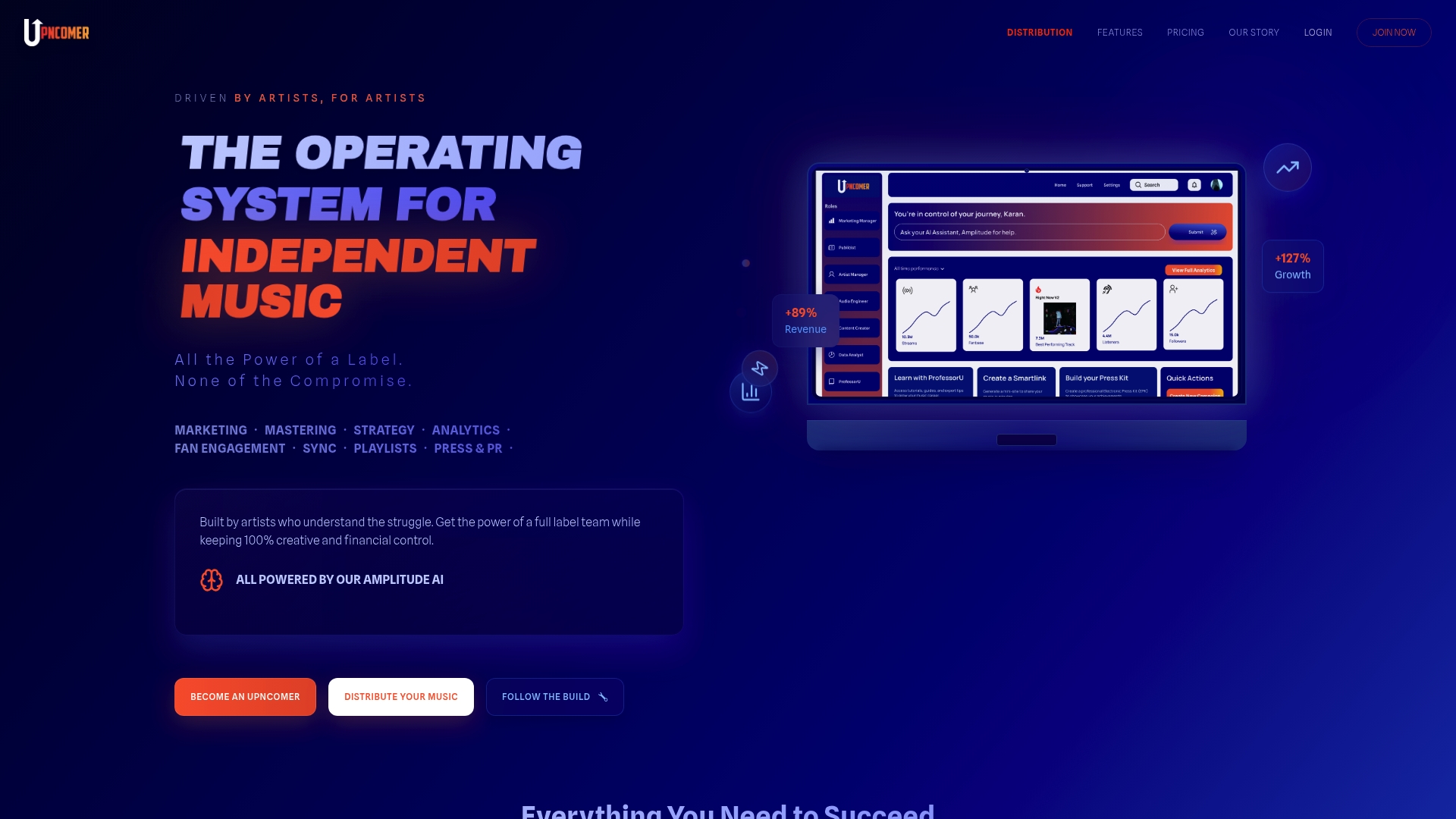
UpNComer is built for exactly this kind of work. The platform’s features include Artist Manager for organizing publishing agreements and contributor data, Growth Engine for tracking campaign performance and streaming analytics, and Amplitude AI for turning raw data into decisions. Instead of maintaining separate spreadsheets for rights, metadata, royalties, and campaigns, you get one place where all of it connects. Independent artists and their managers can protect their artist IP and track every revenue stream without needing a major-label infrastructure behind them. Visit UpNComer to explore the full platform and check community updates for the latest tools and workflows built for music managers in 2026.
FAQ
What is a music manager reporting checklist?
A music manager reporting checklist is a structured workflow for tracking an artist’s publishing agreements, metadata accuracy, royalty statements, and campaign performance. It functions as a repeatable audit process that prevents revenue leakage and documents manager activity.
How often should a music manager run a reporting review?
A full reporting review should run at every release cycle and at least once per quarter. Publishing agreement expiry checks should be triggered 12 months before each deal ends to allow time for renegotiation.
Why does metadata matter for royalty reporting?
Metadata fields like ISRC, ISWC, and contributor credits are what collection societies and DSPs use to route payments. Missing or incorrect metadata at ingestion causes royalties to be delayed, misrouted, or lost entirely, sometimes for years.
What is a claims-based royalty system?
A claims-based royalty system is a method used by some DSPs and collection societies where rights holders submit claims for plays rather than receiving automatic payments. Reconciling these claims requires validating per-play rates and checking for duplicate or overclaimed payments.
What tools help with music manager reporting?
UpNComer’s Artist Manager, Growth Engine, and Amplitude AI modules cover rights organization, campaign analytics, and streaming data in one platform. For catalog metadata audits, rightsHUB and SynchTank both publish detailed audit frameworks that align with industry standards.