Why Managers Protect Artist IP: Your Career Depends on It

Understanding why managers protect artist IP is one of the most underrated topics in independent music. Most artists focus on the creative side, which makes sense. But without intentional intellectual property (IP) protection, your songs, your brand, and your royalties are all exposed to risks you may not even see coming. A missed copyright registration or a contract without a written assignment can cost you the right to sue, thousands in lost royalties, and sometimes your ownership altogether. This guide breaks down the real, practical reasons music managers make IP protection a top priority, and why you should too.
Table of Contents
- Key Takeaways
- Why managers protect artist IP: legal leverage first
- Why written agreements are everything
- Protecting royalties through audits and rights administration
- When slowing down is actually the smart move
- Practical tools and workflows for IP protection
- My take on why IP protection is non-negotiable
- How UpNComer helps you protect what you’ve built
- FAQ
Key Takeaways
| Point | Details |
|---|---|
| Registration unlocks legal power | Copyright registration is required before you can sue for infringement in federal court. |
| Written agreements are non-negotiable | Oral copyright assignments don’t hold up in court; written transfers are legally required. |
| Royalty audits protect your income | Managers verify audit rights every 2 to 3 years to catch underpayments before they disappear. |
| Slowing down can mean more money | Managers sometimes delay deals to protect your IP position and preserve long-term leverage. |
| Workflows prevent costly gaps | IP calendars and centralized documentation keep registrations, renewals, and contracts from falling through the cracks. |
Why managers protect artist IP: legal leverage first
Here is something most independent artists don’t know until it’s too late. In the United States, you cannot sue for infringement without copyright registration on file. You own your copyright the moment your song is fixed in a tangible form, but ownership alone does not give you enforcement rights in federal court. Registration is the key that unlocks your legal leverage.
This is one of the core reasons why artist management and intellectual property are so tightly connected. A good manager treats copyright registration not as a bureaucratic afterthought but as a release planning task, just like pitching playlists or scheduling a press drop.
The financial stakes here are significant. If you register your work before infringement occurs or within 3 months of first publication, you become eligible for statutory damages and attorney’s fees. These can be substantial, sometimes reaching $150,000 per willful infringement. Without timely registration, you’re limited to actual damages, which are notoriously hard to prove and rarely cover your legal costs.
Here’s what that looks like in practice:
- Timely registration: You can pursue statutory damages and attorney’s fees, making infringement cases financially viable to pursue.
- Late registration: You’re limited to actual proven losses, which often don’t justify the cost of litigation.
- No registration: You have no standing to file a federal copyright lawsuit at all.
Managers who understand IP rights in music management push for registration within 30 days of publication as a standard operating procedure. Not eventually. Not when someone asks for it. Before the release campaign even finishes.
Pro Tip: Build copyright registration into your release checklist as a fixed task, not an optional one. Treat it the same as uploading to your distributor.
Why written agreements are everything
Protecting creative works for artists is not just about registration. It’s about documentation. Every copyright transfer or assignment in the U.S. must be in writing to be legally valid. That sounds obvious until you see how often it gets ignored.
Oral agreements feel fine in the moment, especially between collaborators who trust each other. But verbal promises don’t establish legal ownership. They don’t give you standing to sue. And they don’t hold up when money or credits become contested.
A 2026 court decision made this concrete. An artist lost the ability to sue for copyright infringement not because they didn’t create the work, but because there was no written assignment documenting the transfer of rights. The claim existed; the standing to pursue it in court did not. That distinction is everything.
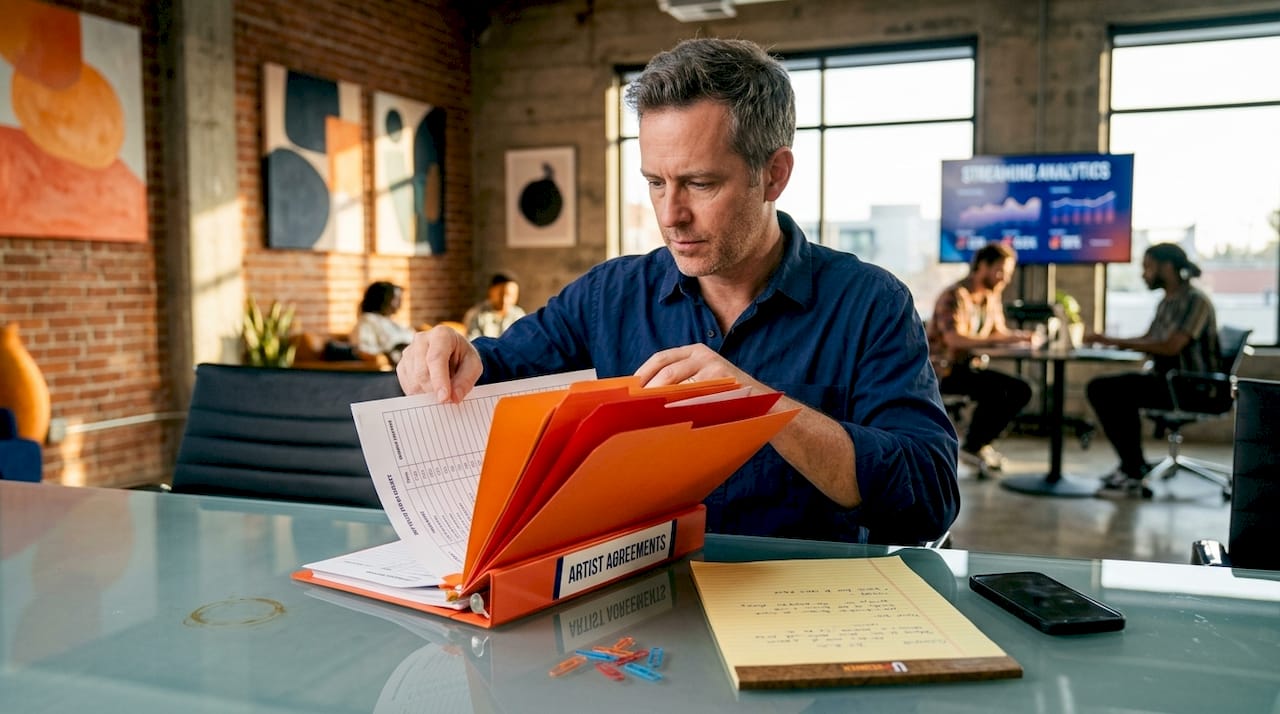
This is exactly why the role of managers in artist IP includes being relentless about paperwork. A good manager treats every collaboration, work-for-hire arrangement, and licensing deal as a documentation event. The contract has to exist, be signed, and live somewhere accessible.
Here’s what managers watch for in every agreement:
- Copyright ownership clause: Who owns the master? Who owns the composition? Both need to be explicit.
- Written assignment language: Any transfer of rights must use clear, legally binding transfer language.
- Work-for-hire clarity: If a producer, engineer, or co-writer is contributing, their role and ownership position must be spelled out.
- Signatures from all parties: Unsigned agreements are almost worthless in a dispute.
“Missing documentation can invalidate ownership claims even if verbal agreements existed.” This is not just legal theory. It plays out in real disputes regularly, and managers who treat documentation as optional are taking a serious risk with their artists’ futures.
Pro Tip: Keep a shared folder with executed copies of every contract, split sheet, and licensing agreement, organized by release or project. One missing signature has ended careers.
Protecting royalties through audits and rights administration
Even when your rights are registered and your contracts are solid, money can still fall through the cracks. This is where managing artist rights becomes an ongoing operational task rather than a one-time setup.
Publishing and recording agreements typically allow audits every 2 to 3 years. Managers who understand the importance of IP protection for artists make sure those audit windows stay active and get used. Underpayments are more common than most artists realize, and they don’t always come from bad actors. Sometimes it’s a split sheet that was entered incorrectly at a PRO. Sometimes it’s a streaming platform that miscoded a track. Either way, you don’t get that money back unless someone is watching.
Here’s a clear look at what’s at stake across different royalty scenarios:
| Scenario | Risk without manager oversight | Risk with proactive management |
|---|---|---|
| Incorrect split at PRO | Royalties paid to wrong party | Caught and corrected before payments clear |
| Audit window missed | Right to audit lapses, losses unrecoverable | Scheduled audit captures underpayments |
| Metadata errors on DSPs | Royalties go unclaimed or misattributed | Caught during rights administration review |
| Expired licensing terms | Continued use becomes unpaid or unauthorized | Renewals tracked and renegotiated in advance |
Proactive rights administration involves four main areas:
- Register with all relevant PROs and collection societies so royalty pipelines are open from day one.
- Cross-reference royalty statements against streaming activity and sync placements to catch discrepancies.
- Schedule audit windows before they expire, not after you notice something feels off.
- Maintain accurate metadata on every release, including ISRC codes, ISWC numbers, and songwriter splits.
Managers collaborate with financial and legal specialists to handle this properly. You don’t have to do all of it alone, but you do need someone ensuring it gets done. Your revenue streams as an independent musician depend directly on how well your rights are administered.
When slowing down is actually the smart move
One of the most counterintuitive things managers do is pump the brakes on opportunities. A sync deal comes in. A brand wants to partner. A label is circling. And the manager says, not yet.
That can feel frustrating from the artist’s side. But managers deliberately slow down business when your IP and business structures are not ready, because accepting a deal before your house is in order can permanently reduce your leverage and lock you into unfavorable terms.
Here’s what “not ready” actually looks like:
- Unregistered copyrights: Accepting a licensing deal before registration weakens your negotiating position and legal recourse.
- Unsigned splits: If a co-writer hasn’t signed off on ownership, you can’t cleanly license the track.
- Missing work-for-hire agreements: If a producer has an undocumented claim, any sync deal could be challenged.
- No entity structure: Without an LLC or publishing entity in place, revenue may flow to the wrong person or create tax complications.
“Protecting IP is vital for maintaining creative control and negotiating power with labels, partners, and brands.” Managers who understand this treat readiness as a prerequisite for every commercial conversation, not a nice-to-have.
The best managers see their role as protecting your future options, not just your current ones. Saying no to a mediocre deal today is how you stay available for a great one later.
Practical tools and workflows for IP protection
Knowing the principles is one thing. Actually executing them across a full release schedule is another. This is where smart workflows make the difference between good intentions and real protection.
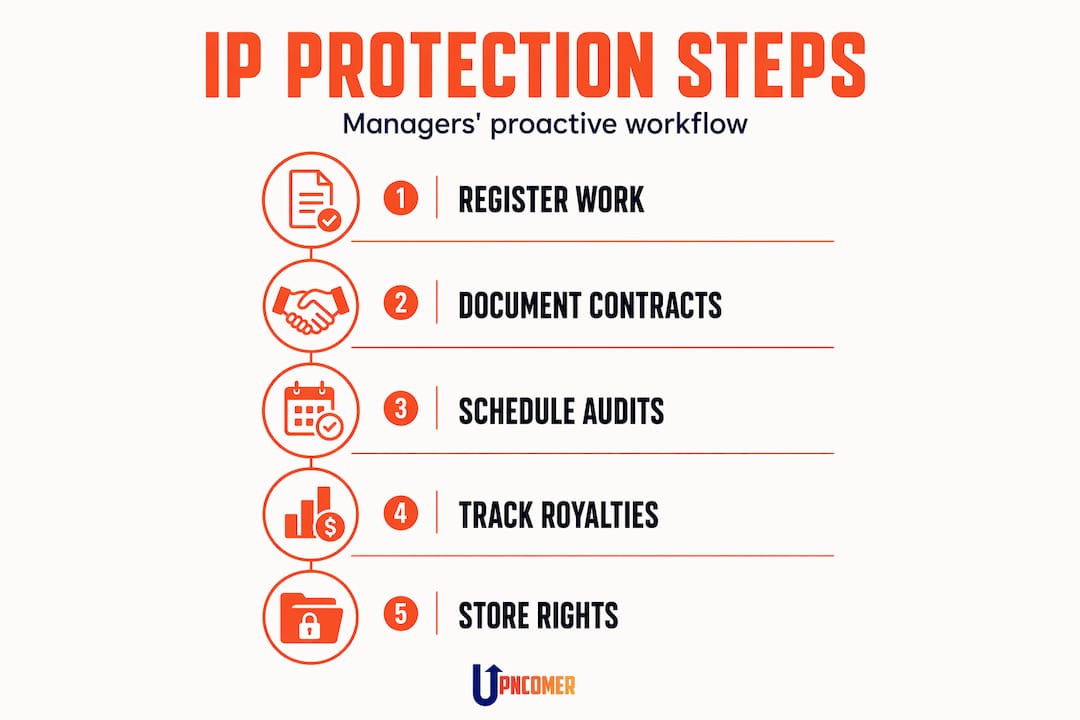
Managers who take how managers safeguard artist copyrights seriously tend to use a few consistent systems:
IP calendars are one of the most effective tools. Scheduling registrations, audits, and key renegotiations prevents rights from degrading over time. These calendars integrate with release schedules so copyright registration deadlines sit next to mastering deadlines and playlist pitch windows.
Centralized documentation portals solve the problem of scattered contracts. A single digital hub for contracts, approvals, and rights metadata reduces the risk of misadministration and makes audits much faster. When every document lives in one place, you spend less time searching and more time acting.
| Tool type | What it prevents |
|---|---|
| IP registration calendar | Missed registration deadlines and lost enforcement rights |
| Centralized contract portal | Lost paperwork, unsigned agreements, disputed ownership |
| Royalty audit tracker | Missed audit windows and unrecovered underpayments |
| Metadata management system | Misattributed royalties and unclaimed streaming income |
Pro Tip: Use a shared project management tool, like a Notion workspace or a Google Sheet, to track every IP-related deadline across your catalog. Color-code by urgency. Review it monthly.
The managers who do this well are not legal experts. They are organized, proactive, and connected to the right specialists. That combination is what keeps an artist’s rights intact across years of releases and deals.
My take on why IP protection is non-negotiable
I’ve seen artists lose royalties they’ve earned, miss infringement claims they were legally entitled to make, and walk away from deals they built, all because the documentation wasn’t in place when it mattered. And almost every time, it wasn’t carelessness. It was just a lack of understanding about what protection actually requires.
What I’ve learned working in this space is that good management means taking responsibility for decisions that protect the artist’s long-term position. IP protection isn’t gatekeeping. It’s the opposite. It’s making sure the artist gets to keep what they’ve created and gets paid for it fully.
The artists who thrive over the long term are the ones who treat their catalog like a business asset from day one. That means registration, documentation, audits, and the occasional “not yet” from a manager who sees the whole board. Proactivity always wins here. Reacting to an infringement after the fact, or trying to prove ownership without paperwork, is expensive, slow, and often unsuccessful.
My honest advice: if you’re an independent artist and you don’t have a manager yet, start building these habits yourself. IP protection doesn’t require a law degree. It requires a calendar, a folder, and the discipline to follow through on both.
— Karan
How UpNComer helps you protect what you’ve built
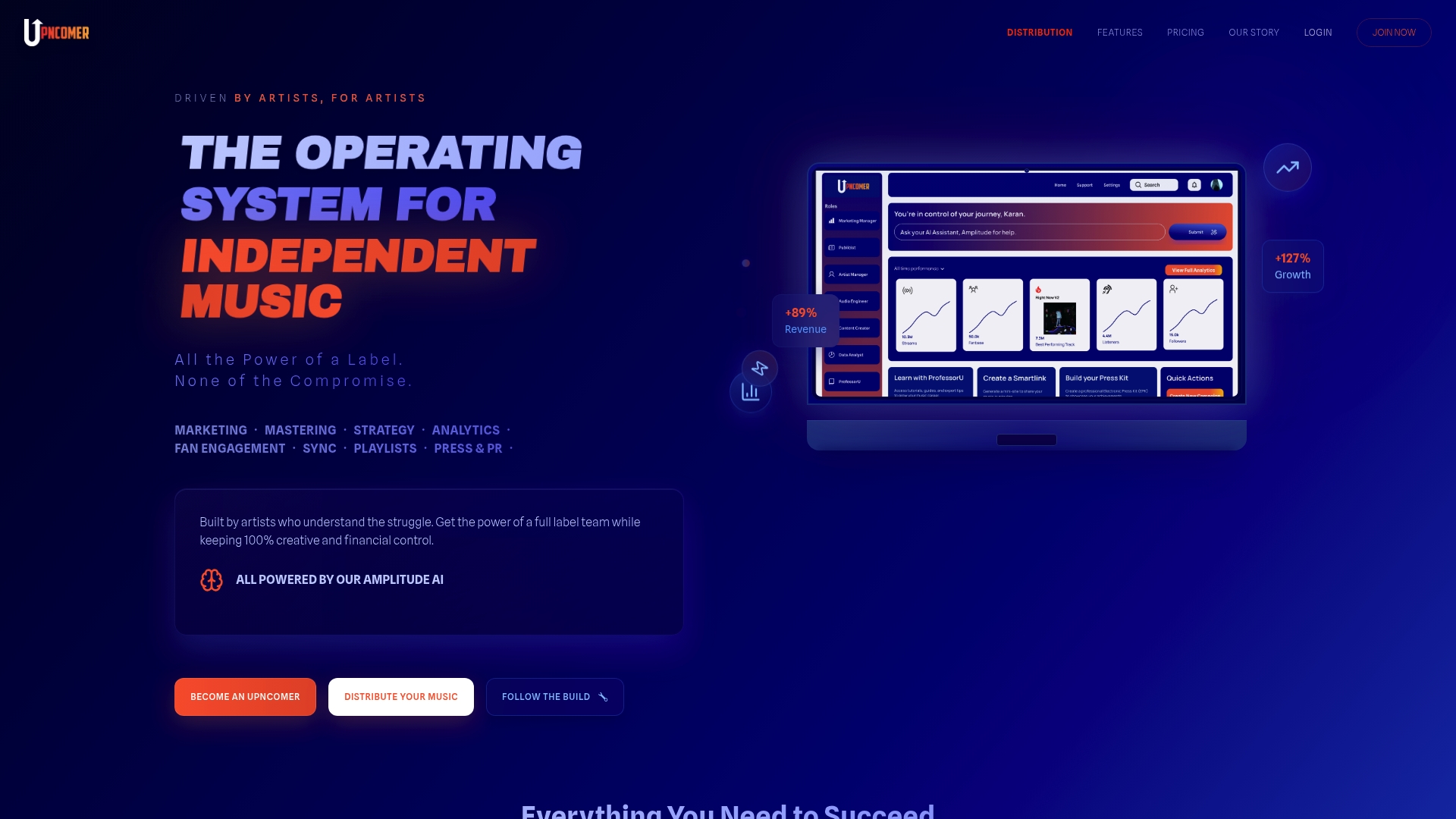
UpNComer is built for independent artists and music teams who want to grow without giving up control. The platform’s Distribution tools help you manage rights and metadata accurately from the moment a release goes live, reducing the kind of attribution errors that cause royalty gaps. The Artist Manager and ProfessorU modules give you operational frameworks and education so you understand the decisions being made about your career. Whether you’re just starting to think about rights management or looking to tighten up an existing catalog, UpNComer’s full feature set puts the infrastructure in place to support long-term creative and financial control. Check out what’s available and build smarter from the start.
FAQ
Why can’t artists sue for infringement without registration?
U.S. copyright law requires registration before filing a federal infringement lawsuit. Ownership alone is not enough to access the federal court system.
What happens if a copyright is registered late?
If registration happens after infringement and more than 3 months after first publication, you lose access to statutory damages and attorney’s fees, which makes enforcement much harder to justify financially.
Do oral agreements count for copyright ownership?
No. Federal law requires copyright transfers to be in writing and signed. A 2026 court ruling confirmed that oral assignments are legally insufficient to establish standing to sue.
How often should royalty audits happen?
Most publishing and recording agreements allow audits every 2 to 3 years. Missing those windows means underpayments may become impossible to recover.
Why do managers sometimes delay business deals for artists?
Managers delay deals to protect artists from accepting contracts before their IP is properly registered, documented, and structured. Accepting a deal too early can permanently limit your leverage and legal options.