What Is an Artist Development Program? A 2026 Guide
An artist development program is the structured process by which independent musicians systematically build their creative, business, marketing, and operational skills to grow a sustainable music career. Unlike a single course or workshop, a true development program covers the full picture: songwriting craft, royalty structures, content strategy, release planning, and fan engagement. The music industry no longer waits for artists to be “ready.” Career planning across these areas is the defining factor separating hobbyists from artists who earn consistent income. If you are an independent artist trying to figure out where to focus your energy, this guide breaks it all down.
What is an artist development program, and what does it include?
An artist development program is defined as a multi-pillar system that transforms raw creative talent into a commercially sustainable career. This approach encompasses creative growth, brand building, audience cultivation, and career planning applied in a structured, repeatable way. The goal is not perfection. The goal is progress across every dimension of your career at the same time.
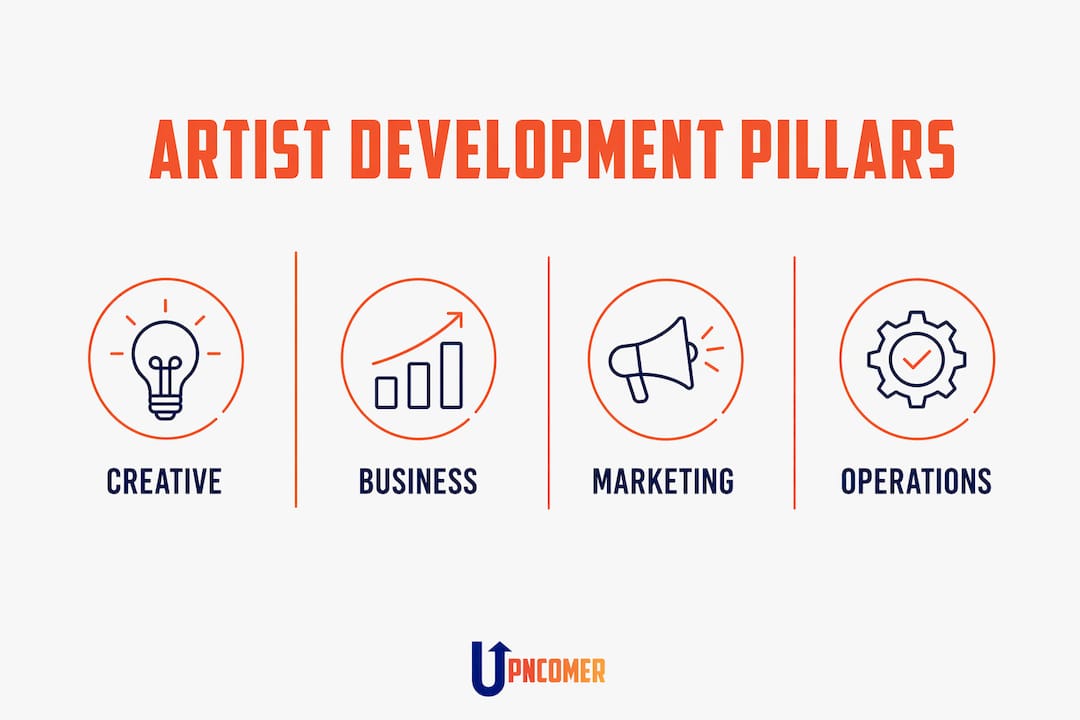
The four core pillars of any serious development program are:
| Pillar | What it covers | Why it matters |
|---|---|---|
| Creative development | Songwriting, vocal technique, performance coaching | Builds the foundation your audience connects with |
| Business knowledge | Contracts, royalty structures, revenue diversification | Protects your income and your rights |
| Marketing and content | Social media strategy, content creation, audience engagement | Grows your reach and converts listeners to fans |
| Operational management | Release planning, metadata, fan data, distribution | Keeps your career running like a real business |
Most artists focus almost entirely on the creative pillar and wonder why their career stalls. The truth is that the modern artist operates as a business entity that creates music, not just a creative talent who occasionally thinks about money.

Pro Tip: Mastery across all four pillars is what separates artists who build lasting careers from those who release great music and still struggle to pay their bills.
How has the artist development process evolved in the streaming era?
The streaming era completely changed the timeline and structure of artist development. Development is no longer linear but circular. Artists release continuously, learn from real audience feedback, and refine their approach using data rather than gut instinct alone.
Traditional development looked like this: sign a deal, spend 12–18 months in private rehearsal and recording, then launch. That model is gone for most independent artists. Here is what the modern process actually looks like:
- Release publicly and often. Waiting for perfection costs you momentum and real-world data.
- Treat each release as a test. Track what resonates with your audience, what gets skipped, and what drives saves and shares.
- Use platform analytics as feedback. Streaming analytics from platforms tell you which songs convert casual listeners into followers.
- Adjust your creative and marketing approach. Let the data inform your next creative decision without abandoning your artistic identity.
- Build in review cycles. Quarterly reviews of your metrics, content performance, and revenue keep your development on track.
Artists now develop in public and refine based on real-time feedback rather than waiting for a finished product before anyone hears it. This shift is not just logistical. It is a mindset change. You are not releasing music to prove you are ready. You are releasing music to learn what works and build a real audience at the same time.
Pro Tip: Balance creative integrity with platform preferences. Data should inform your decisions, not make them for you. If every song sounds like it was engineered for an algorithm, your audience will feel it.
What should independent artists expect from a development program?
A well-structured artist development program typically runs 6–12 months and focuses on measurable progress across creative, marketing, and business domains rather than quick wins. Expect a program to feel more like building a business than attending a class.
Here is a realistic sequence of what a structured program looks like in practice:
- Self-assessment phase (weeks 1–4). Identify your current skill gaps across all four pillars. Be honest about where you are weak, whether that is songwriting, financial tracking, or content consistency.
- Identity and audience clarity (the 90-day alignment phase). Effective development often starts with a 90-day phase that clarifies your identity, your target audience, and your value proposition before you spend money on promotion.
- System building (months 2–4). Set up your release calendar, financial tracking, and fan data management. These operational systems are what let you scale later without chaos.
- Proof of concept (months 3–6). Release music and gather real audience response. Many artists waste money on promotion before they have proof that their music resonates. Do not promote at scale until you have evidence it works.
- Mentorship and workshops. Work with coaches, producers, or industry professionals who can accelerate your learning in specific areas. Artist mentorship programs are especially valuable for business literacy and marketing strategy.
- Quarterly reviews with measurable goals. Track revenue diversification, audience engagement, and skill advancement. Quantitative and qualitative KPIs like these are how you measure real career progress, not just streams.
The shift from hobbyist to career musician does not happen overnight. It happens when you commit to working on your career as systematically as you work on your music.
Why is artist development vital for independent music careers?
Artist development is vital because it integrates every skill you need to survive and grow as an independent musician. Without it, you end up with great songs and no audience, or a growing audience and no revenue system to support it.
The risks of skipping structured development are real. Artists who ignore the business and marketing pillars often find themselves releasing music into a void, burning through savings on promotion that does not convert, and burning out before they build anything lasting. Tracking financial and engagement metrics over time is how you identify what is working and where to invest next.
Revenue diversification is one of the most concrete benefits of a proper development program. Streaming income alone is not a sustainable foundation for most independent artists. A developed artist builds income across multiple streams:
| Revenue stream | Development skill required |
|---|---|
| Streaming royalties | Release strategy, metadata, playlist pitching |
| Live performance | Performance coaching, booking, promotion |
| Sync licensing | Catalog management, networking, contract literacy |
| Merchandise | Brand identity, e-commerce, fan engagement |
| Direct fan support | Email list, community building, fan data ownership |
Owning your audience data is one of the most underrated benefits of artist development. Relying solely on social media platforms is risky because those platforms can change their algorithms or disappear. Owned assets like email lists give you stable, direct access to your fans regardless of what any platform decides to do.
How can artists practically apply a development program to their careers?
You do not need a label or a manager to start your development program. You need a framework and the discipline to follow it.
- Run a self-assessment. Score yourself honestly across the four pillars: creative, business, marketing, and operations. Identify your two biggest gaps and focus there first.
- Analyze your market position. Research artists in your genre who are one or two levels ahead of you. Study their release cadence, content strategy, and revenue model.
- Set measurable goals. Vague goals like “grow my audience” do not work. Specific goals like “add 500 email subscribers in 90 days” do. Use a music release checklist to build structure into every release cycle.
- Build owned assets first. Start your email list before you run ads. Your mailing list is yours. Your Instagram followers are not.
- Implement and track. Use audience data to refine your content and marketing decisions. Streaming analytics, social insights, and email open rates all tell you something useful.
- Review quarterly. Adjust your goals, your content strategy, and your release plan based on what the data shows. Development is a cycle, not a checklist you complete once.
Pro Tip: Do not invest in large-scale promotion until you have proof of concept. Run small tests, see what converts, and then scale what works. Spending $500 on ads before you know your music resonates is how artists burn through their budgets with nothing to show for it.
The importance of artist development shows up most clearly when you compare artists who track their data against those who release music and hope for the best. Data-driven artists make better decisions faster.
Key Takeaways
An artist development program is the structured, multi-pillar process that equips independent musicians with the creative, business, marketing, and operational skills required to build a sustainable career.
| Point | Details |
|---|---|
| Four core pillars | Creative, business, marketing, and operations must all be developed together for lasting career growth. |
| Start with alignment | Spend the first 90 days clarifying your identity, audience, and value proposition before spending on promotion. |
| Develop in public | Release music regularly, gather real feedback, and refine your approach using streaming analytics and fan data. |
| Own your audience | Build an email list early. Social media platforms are rented land; your mailing list is an asset you control. |
| Proof before promotion | Confirm your music resonates with a real audience before investing in large-scale marketing campaigns. |
Artist development is a business decision, not just a creative one
I have watched a lot of talented artists make the same mistake: they treat development as something that happens in private, and then they wonder why the public does not respond when they finally release. The artists who grow consistently are the ones who treat their career like a small business from day one.
That does not mean you stop being an artist. It means you add discipline to your creativity. You set quarterly goals. You review your numbers. You build systems that keep working even when your motivation dips. The creative work feeds the business, and the business protects the creative work.
The technology available to independent artists right now is genuinely remarkable. Streaming analytics, AI-powered tools, and direct fan engagement platforms give you access to data and infrastructure that used to require a full label team. The artists who use that data well are the ones pulling ahead. The ones who ignore it are still guessing.
My honest advice: stop waiting until your music is “ready” to start building your career infrastructure. The two things happen in parallel. You develop your sound and your business at the same time, in public, with real feedback guiding both.
— Karan
How Upncomer supports your artist development
Upncomer is built for exactly this kind of structured, data-driven career development. The platform brings together streaming analytics, fan engagement tools, AI-powered guidance through Amplitude AI, release planning, and music distribution in one place, so you are not juggling five different apps to run your career.
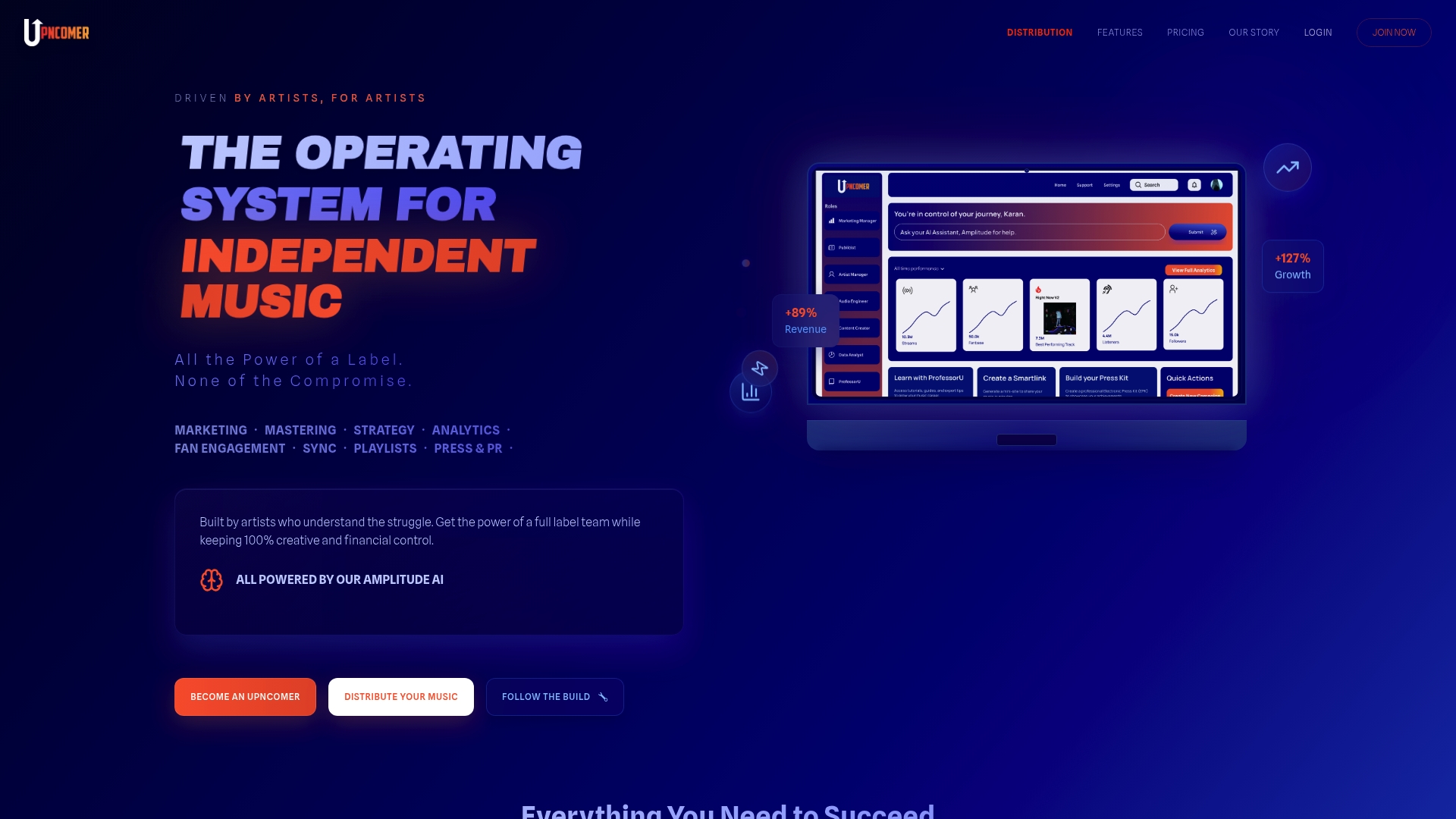
Modules like Growth Engine and Data Analyst give you the operational infrastructure that most independent artists have to piece together manually. Whether you are in your 90-day alignment phase or scaling a release campaign, Upncomer gives you the tools to make decisions based on real data. Check out Upncomer’s community updates to see what is new on the platform, or explore music distribution built specifically for independent artists ready to release on their own terms.
FAQ
What is an artist development program?
An artist development program is a structured, multi-pillar process that builds an independent artist’s creative, business, marketing, and operational skills to create a sustainable music career. It covers everything from songwriting and performance to contracts, release strategy, and fan data management.
How long does an artist development program take?
Artist development programs typically run 6–12 months and focus on measurable progress across creative, marketing, and business domains rather than short-term fixes.
What does an artist development deal include?
An artist development deal example involves a developer investing in an artist over a defined term and earning a revenue share, such as 15% during the term and 10% on revenues after it ends. Contract terms and revenue splits vary widely, so contract literacy is a core skill in any development program.
Do independent artists need a label to access artist development?
No. Independent artists can build their own development program using structured frameworks, artist mentorship programs, and platforms like Upncomer that provide analytics, distribution, and AI-powered career guidance without label involvement.
What is the most important first step in artist development?
The most important first step is a 90-day alignment phase that clarifies your artistic identity, your audience, and your value proposition before you invest in promotion or large-scale marketing.