Why Managers Diversify Artist Income to Protect Commissions

Managers diversify artist income to protect both the artist’s career and their own commission base from the volatility of any single revenue source. The most resilient artists in 2026 combine multiple income streams: touring, publishing and PRO royalties, sync licensing, direct-to-fan sales, merch, session or teaching work, memberships, and brand deals. That’s not a luxury strategy. It’s the operating model.
Priority streams managers build first:
- Touring and live performance — immediate active income, seeds merch and D2F sales
- Publishing and PRO/MLC/SoundExchange registrations — passive, often uncollected royalties worth thousands per year
- Sync and licensing — higher ceiling, longer lead time (6–18 months)
- Direct-to-fan (D2F) stores and bundles — high-margin, fan-relationship building
- Merch — converts live energy into recurring revenue
- Session work and teaching — immediate cash floor while passive streams ramp
- Memberships and subscriptions — predictable monthly income once fan engagement proves
- Brand deals and sponsored content — high upside, requires audience credibility first
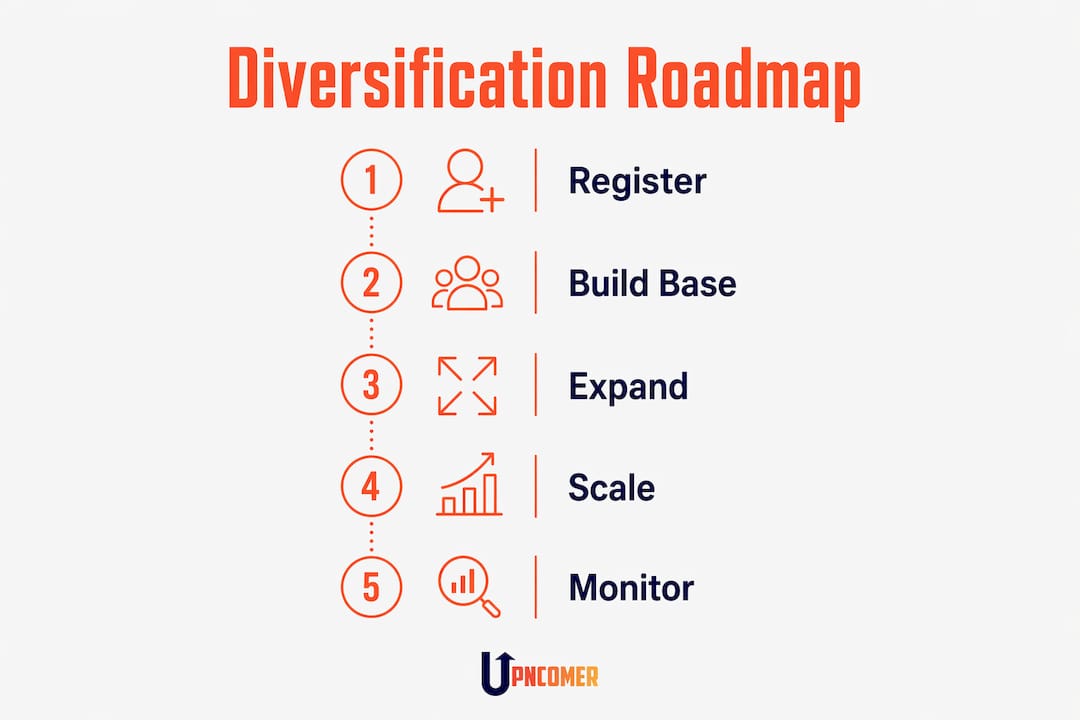
Your first 30 days as a manager: (1) Register every catalog asset with the MLC, your PRO, and SoundExchange. (2) Enable YouTube Content ID on all existing recordings. (3) Open a basic D2F storefront and attach it to the next live show or release.
Table of Contents
- Why diversifying artist income matters more than ever
- The revenue streams managers actually build — and when
- How to implement a diversification roadmap in 90 days and 12 months
- How managers get paid across multiple income streams
- Common mistakes managers make when diversifying income
- What tools help managers track and scale multiple income streams?
- Key Takeaways
- The real reason diversification is a manager’s ethical duty
- Upncomer gives managers one place to run all of it
- Useful sources and further reading
- FAQ
Why diversifying artist income matters more than ever
The structural case for income diversification has never been clearer. Streaming pays a fraction of a cent per play; meaningful income requires enormous volume, and platform rule changes can shift payouts overnight. Playlist algorithms are unpredictable. Touring revenue can evaporate with a single health crisis or venue closure. Any manager who lets an artist depend on one of these channels alone is building on sand.
For artists, the payoff of multiple revenue sources is financial resilience and creative freedom. When teaching income covers rent, the artist doesn’t have to take a bad sync deal or a degrading brand partnership just to stay solvent. That leverage changes every negotiation.
For managers, the math is equally direct. A 15–20% commission on a diversified income base is far more stable than the same percentage on a single volatile stream. More streams mean a larger gross, a smoother monthly commission check, and more negotiating leverage when approaching labels, bookers, or brand partners. Diversification is how managers protect their own livelihoods while genuinely serving the artist.

The modern independent artist increasingly operates a portfolio career, mixing roles as performer, producer, teacher, and rights holder. Your job as a manager is to architect that portfolio deliberately, not let it happen by accident.
The revenue streams managers actually build — and when
Working musicians commonly combine 5–10 income sources to create stability. Here’s how each stream breaks down for a manager evaluating where to focus first.
Core streams at a glance:
- Streaming and recording royalties — Top of the funnel, not a primary income source. Useful for discoverability; meaningful cash only at scale.
- Live and touring — Immediate active income. Also the best environment to drive merch and D2F conversions in the same transaction.
- Merch — On a strong night, merch sales can out-earn the gig fee itself. Low barrier to entry with print-on-demand options.
- Publishing and PRO royalties — Skipping MLC, PRO, and SoundExchange registrations can leave artists with thousands of dollars uncollected per year. High ROI, low effort.
- Sync and licensing — A single placement can generate an upfront fee plus long-term royalties, but meaningful returns typically arrive after 6–18 months of catalog preparation.
- Direct-to-fan sales and bundles — Higher margins than any retail channel. Builds the fan relationship that makes memberships viable later.
- Memberships and subscriptions — Predictable monthly income. Best launched after D2F engagement proves the audience will pay.
- Session work and teaching — Fastest path to a cash floor. Can start generating income within days.
- Brand deals and sponsored content — High upside, but requires genuine audience credibility. Don’t chase these before the fanbase is real.
| Revenue Stream | Time to First Income | Relative Effort | Best For |
|---|---|---|---|
| PRO / MLC / SoundExchange | 3–6 months (passive) | Low | All artists with existing catalog |
| YouTube Content ID | 1–3 months (passive) | Very low | Artists with video content |
| Session / Teaching work | Immediate | Medium | Artists needing a cash floor now |
| Live / Touring | Immediate | High | Artists with regional draw |
| Merch | Immediate (at shows) | Medium | Artists with live audiences |
| D2F store | Days to set up | Low–Medium | All artists |
| Sync / Licensing | 6–18 months | High | Artists with polished catalog |
| Memberships / Patreon | 1–3 months to launch | Medium | Artists with engaged superfans |
| Brand deals | 3–12 months | High | Artists with credible audience |
When to prioritize which stream: An emerging artist with 500 monthly listeners should start with passive registrations and session work, not a Patreon. A mid-level touring artist with 50,000 monthly listeners and a live following should layer in merch bundles, D2F, and a membership tier. Genre matters too: sync is a natural fit for instrumental, cinematic, or production-forward artists; brand deals suit artists with strong visual identity and social engagement.

How to implement a diversification roadmap in 90 days and 12 months
Start with an income audit. Map every current revenue source, note what’s missing from the priority list above, and set a minimum monthly target that covers the artist’s actual living expenses with some buffer. That number is your baseline. Everything you build is measured against it.
The 90-day checklist
- Register with your PRO (ASCAP, BMI, or SESAC), the MLC, and SoundExchange if not already done. These passive registrations begin paying within 3–6 months and require almost no ongoing effort.
- Enable YouTube Content ID on all existing recordings and music videos.
- Launch a basic D2F storefront (Bandcamp, a Shopify store, or a platform with built-in fan CRM). Attach it to the next release or live show announcement.
- Identify one active income stream the artist can start immediately: local gigs, session work, or music lessons. This creates a cash floor while passive streams ramp up.
- Audit existing catalog for sync readiness: clean stems, proper metadata, and split sheets in order. For artist financial planning, this step is often where the most money is being left on the table.
Pro Tip: Don’t wait for the catalog to be “perfect” before registering. Get registered now, then clean up metadata. Every month you delay is a month of royalties you can’t reclaim.
The 12-month plan
Scale one active stream to a meaningful monthly income before adding complexity. That’s the benchmark worth targeting before you layer in a membership platform or intensive sync campaign. Once D2F engagement shows fans will pay directly, launch a membership or Patreon tier with clear value: exclusive content, early access, or behind-the-scenes material.
For sync, start catalog preparation at month three. Submit to music libraries, build relationships with supervisors, and track placements. Expect the first meaningful sync income around months 9–18.
Estimated costs to budget for:
- Distribution setup: $20–$60/year depending on platform
- Publishing/PRO registration: free to low cost, but allow time
- Catalog prep for sync (mixing, mastering, metadata): $200–$1,500+ depending on catalog size; mixing on a budget is achievable with the right tools
- Merch upfront (if not print-on-demand): $300–$1,000 for a first run
- D2F store setup: free to $30/month
How managers get paid across multiple income streams
Artist managers in the U.S. typically earn 15–20% of the artist’s gross income across all revenue streams, with higher percentages common for emerging artists when management workload is disproportionately high. Commissions calculated on gross income protect managers from creative accounting on the artist’s side.
Commission structure basics
Most management agreements apply the commission to all income streams the manager actively develops. That’s the argument for diversification from a pure business standpoint: more streams, larger gross, more stable monthly commission. A manager earning 20% of $3,000/month in streaming-only income earns $600. That same manager earning 20% of $12,000/month across six streams earns $2,400. Same percentage, four times the income.
Common carve-outs and special cases to know:
- Advance recoupment: Commissions on label advances are often deferred until the advance recoups. Clarify this in the contract.
- One-off sync fees: Some agreements carve out sync fees below a threshold (e.g., under $500) to reduce admin friction. Negotiate this carefully.
- Booking agent splits: When a booking agent is involved, their commission (typically 10–15%) comes off the top before the manager’s percentage applies. Understand the difference between talent agency and management roles before signing anything.
- Sub-agent stacking: If you’re engaging sub-agents for specific territories or streams, define clearly whether their fees reduce the gross before your commission is calculated.
Negotiation levers worth using:
- Define the scope of services explicitly: which streams you’re responsible for developing, and which fall outside your commission
- Set a reporting cadence (monthly is standard) and require itemized income statements by stream
- Include a sunset clause: if the artist’s gross income doesn’t reach a defined threshold within 12–18 months, either party can renegotiate terms
- Protect yourself with a post-term commission clause covering income from deals you originated, typically for 12–24 months after the agreement ends
Common mistakes managers make when diversifying income
The biggest mistake is launching too many streams at once. Spreading effort across five new initiatives simultaneously produces mediocre results across all of them. Secure one reliable active income stream first, get it to a meaningful monthly number, then add the next layer.
Other mistakes that cost managers and artists real money:
- Skipping catalog registrations. Unregistered catalog means uncollected royalties. This is the highest-ROI fix available and the most commonly skipped step.
- Poor contract language on merch and brand deals. Exclusivity clauses in merch deals can block future partnerships. Read every clause or have an entertainment attorney review it.
- Ignoring IP hygiene. Missing split sheets, unclear ownership, and unregistered copyrights create legal exposure that can freeze income streams entirely. Protecting artist IP is a core management responsibility, not an afterthought.
- Brand-incoherent deals. A partnership that doesn’t fit the artist’s identity can damage the audience relationship that makes every other stream work. The short-term fee isn’t worth it.
- Ignoring tax and accounting implications. Multiple income streams mean multiple 1099s, self-employment tax exposure, and potentially quarterly estimated payments. Get a music-industry-savvy accountant involved early.
Red flags in partner deals:
- High upfront costs with no guaranteed minimum return
- Exclusivity clauses that lock the artist out of competing opportunities
- Royalty rates below industry standard with no audit rights
- Vague deliverable definitions that create scope creep
Pro Tip: Treat diversification like a staged rollout, not a launch event. Add one new stream per quarter, measure it for 60 days, then decide whether to scale or cut. That pace keeps the artist focused and the manager sane.
What tools help managers track and scale multiple income streams?
Managing six or seven income streams manually is where most managers start losing money, not making it. The admin load of tracking royalties across PROs, MLC, SoundExchange, D2F platforms, merch vendors, and sync libraries can easily consume the hours that should go toward developing the next opportunity.
The capabilities you need in a management stack:
- Royalty and report aggregation across PRO, MLC, SoundExchange, and distribution platforms
- D2F store management with fan CRM built in, so you know who’s buying and can segment for membership upsells
- Campaign analytics for direct sales, so you can see which releases or promotions are driving D2F conversions
- Sync pitching workflows to track catalog submissions, placement status, and royalty collection
- Membership and payment gating for Patreon-style tiers without needing five separate tools
Two workflows that illustrate the difference a unified system makes:
Scaling a membership with campaign automation: You identify your top 200 D2F buyers using fan engagement data, segment them in your CRM, and run a targeted campaign announcing a new membership tier. Without automation, that’s hours of manual export, email list building, and campaign setup. With an integrated platform, it’s a 20-minute workflow. Analytics platforms built for managers make this kind of segmentation routine.
Prepping catalog for sync: You use your distribution dashboard to pull metadata on every track, identify gaps (missing ISRC codes, incomplete split sheets, unmastered versions), and flag them for remediation. Then you track each submission to a sync library and log placement status. That’s a Data Analyst and Artist Manager workflow in one.
Upncomer’s platform maps directly to these needs. The Growth Engine and Amplitude AI handle campaign analytics and fan engagement. The Artist Manager and Data Analyst modules centralize reporting and income tracking. Distribution manages catalog metadata and delivery. Content Creator supports the output needed to keep memberships and D2F stores active. For managers who want to see how these tools work together, the platform is built for exactly this kind of multi-stream operation.
Tool-choice criteria to apply when evaluating any platform:
- Does it aggregate royalty reporting across multiple sources, or does it only show one?
- Does it include fan CRM, or do you need a separate tool for that?
- Can it run and measure D2F campaigns natively?
- Does it support sync pitching workflows or catalog metadata management?
Key Takeaways
Managers who diversify artist income protect both the artist’s career and their own commission base by building 5–10 complementary revenue streams that reduce dependence on any single platform or partner.
| Point | Details |
|---|---|
| Register passive streams first | MLC, PRO, SoundExchange, and YouTube Content ID begin paying within 3–6 months with minimal ongoing effort. |
| Secure one active stream before scaling | Target $1,500–$3,000/month from session work, teaching, or live gigs before adding memberships or sync campaigns. |
| Commission protection starts with gross-based contracts | Artist managers in the U.S. typically earn 15–20% of the artist’s gross income across all revenue streams; carve-outs and scope definitions protect both parties. |
| Avoid launching too many streams at once | Add one new stream per quarter, measure for 60 days, then decide whether to scale or cut. |
| Upncomer centralizes the management workflow | The Artist Manager, Data Analyst, Growth Engine, and Distribution modules aggregate reporting and automate fan monetization across all streams. |
The real reason diversification is a manager’s ethical duty
Here’s the take that most management guides skip: diversification isn’t just a financial strategy. It’s a professional obligation.
When a manager lets an artist depend entirely on streaming income or a single label deal, they’re not just exposing the artist to financial risk. They’re exposing themselves to the kind of career-ending event that no commission clause can protect against. An artist who burns out chasing streams, or who loses a label deal with no backup income, doesn’t just suffer financially. They often leave the industry entirely. And when that happens, the manager’s commission goes to zero permanently.
The managers who build lasting careers are the ones who treat income architecture as seriously as creative development. They’re the ones who register catalogs before anyone asks, who build D2F stores before the artist is “big enough,” and who say no to brand deals that don’t fit because they know the audience relationship is worth more than the short-term fee.
The roadmap in this article isn’t complicated. It’s just disciplined. Passive registrations first. One active stream to a real monthly number. Then memberships, sync, and brand deals in sequence. Track everything. Report monthly. Adjust quarterly.
If you want to implement this with less friction, the data-driven tools built for independent music teams make the tracking and campaign work significantly faster.
Upncomer gives managers one place to run all of it
Running a diversified income strategy across six or seven streams means a lot of moving parts: royalty reports from multiple sources, D2F store analytics, membership campaign performance, sync submission tracking, and fan CRM. Most managers handle this across five or six disconnected tools. That’s where time and money disappear.
Upncomer is built to consolidate that workflow. The platform brings together distribution, streaming analytics, fan engagement, campaign management, and AI-powered career guidance in one place, so you’re not toggling between dashboards to understand what’s working.
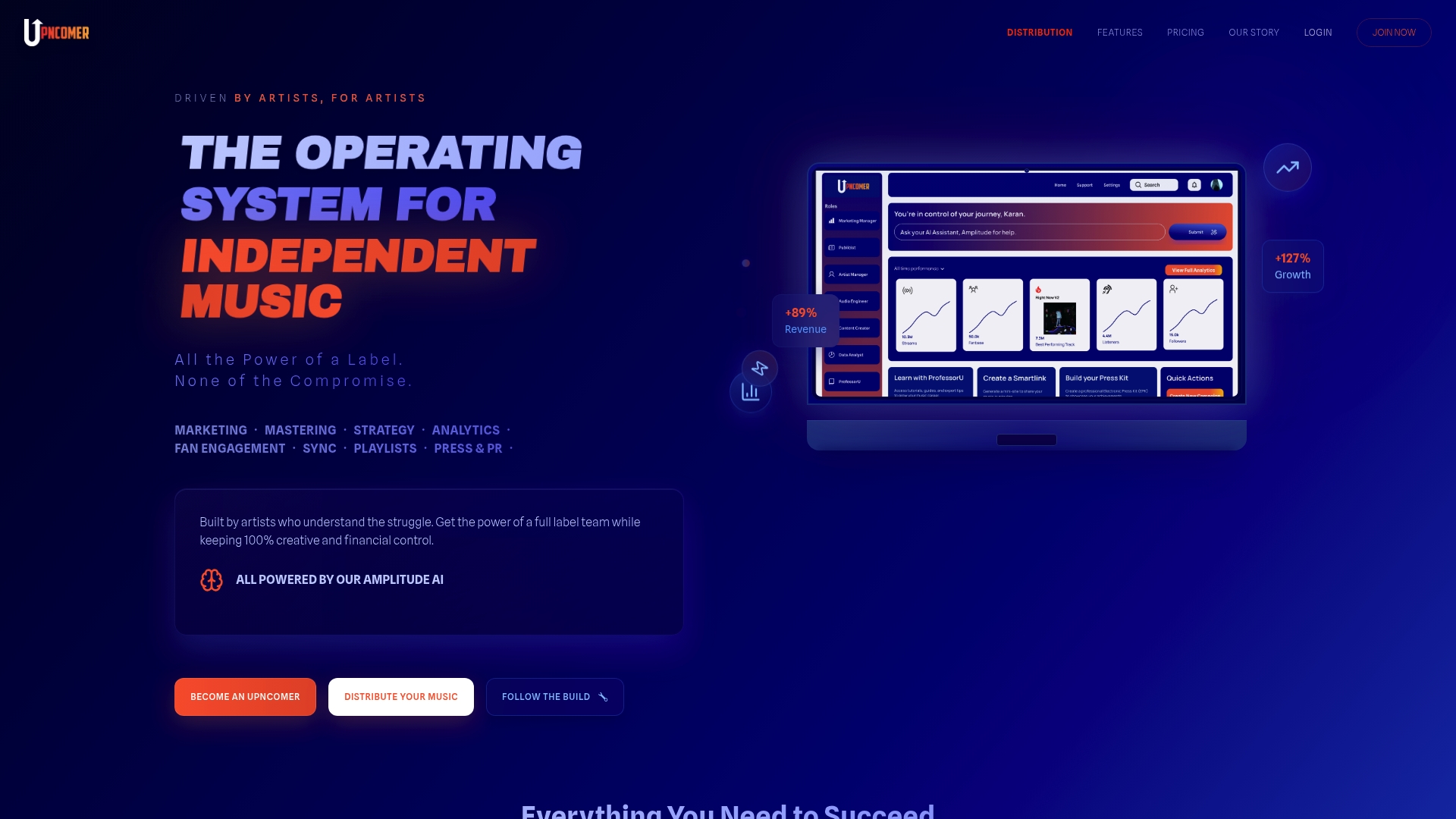
For managers implementing the 90-day roadmap above, that means passive registration tracking, D2F campaign analytics, and fan segmentation for membership upsells all in one system. The Growth Engine and Amplitude AI modules handle the campaign and analytics side. The Artist Manager and Data Analyst modules handle reporting and income tracking. No agency retainer. No fragmented stack.
If you’re ready to build a more resilient income plan for your artist, explore what Upncomer’s community and platform can do for your management workflow.
Useful sources and further reading
Bookmark these for implementation templates, contract guidance, and deeper reading on specific streams:
- Building Multiple Music Revenue Streams: A Real Diversification Guide — Start here for passive registration checklists and the staged rollout framework. Highest priority for managers in the first 30 days.
- Beyond Streaming: A Realistic Guide to How Musicians Make Money in 2026 — Solid grounding on portfolio careers and why single-source dependence fails.
- How to Build a Sustainable Income from Multiple Music Revenue Streams — Practical breakdown of how live, merch, and D2F work together.
- 7 Income Streams Every Musician Should Be Building Right Now — Good on sync timelines and the funding-mechanism framing of diversification.
- How to Manage an Artist in 2025: The Complete Guide — Commission structure norms and management contract basics.
- Artist Financial Planning Explained for Independent Creatives — Upncomer’s guide to setting income targets and building a financial plan. Use this alongside the 90-day roadmap.
- Music Manager Reporting Checklist for 2026 — Practical reporting cadence and metrics checklist for managers tracking multiple streams.
- Why Managers Protect Artist IP: Your Career Depends on It — Essential reading before signing any licensing or brand deal.
FAQ
Why do managers diversify artist income instead of focusing on one stream?
Single-stream dependence exposes both the artist and the manager’s commission to platform volatility, algorithm changes, and market shifts. Diversification creates a stable income base that funds creative work and protects the manager’s earnings across the full career.
How much do artist managers typically earn?
Artist managers in the U.S. typically earn 15–20% of the artist’s gross income across all revenue streams, with higher percentages common for emerging artists when management workload is disproportionately high.
Why do artists struggle financially even with streaming success?
Streaming pays a fraction of a cent per play, so meaningful income requires enormous volume. Artists who rely on streaming alone are exposed to payout volatility and platform rule changes, and many leave significant royalties uncollected by skipping PRO, MLC, and SoundExchange registrations.
What is the 70/30 rule in art?
The rule is a general guideline suggesting artists allocate the majority of their time to creative work and a smaller portion to business development, including income diversification, marketing, and admin. Definitions vary across disciplines, but the principle is to protect creative output while still building the business infrastructure that sustains it.
How much does an artist make from a $100 ticket sale?
After venue fees, booking agent commissions (typically 10–15%), and other deductions, an artist often nets a substantial portion of the face value on a direct ticket sale, though the exact amount depends on the deal structure, venue split, and whether a booking agent is involved.