Emerging Artist Playlists: What They Are and How to Get On Them

An emerging artist playlist is a curated collection of tracks built specifically to surface new, independent, or developing musicians to listeners who are actively looking to discover fresh music. The core purpose is discovery, not passive background listening. If you land a placement on one, you’re not just getting streams — you’re getting in front of first-time listeners, algorithmic signals, and sometimes the editorial teams who decide what gets pushed next. Spotify editorial, indie curators, and platforms like Upncomer all play a role in this ecosystem, and understanding how each one works is the fastest way to build a real pitching strategy.
Table of Contents
- What counts as an emerging artist playlist?
- Who curates these playlists and how accessible are they?
- Why playlist placement matters for your career
- How to get placed: a step-by-step pitching workflow
- Notable playlists to target and how to approach each
- Realistic timeline and mistakes that kill your chances
- Tools and a simple workflow to manage pitching and measure momentum
- Key Takeaways
- The part most artists get wrong about playlist strategy
- Upncomer brings your pitching workflow into one place
- Useful sources
- FAQ
What counts as an emerging artist playlist?
Not every playlist that happens to feature a new artist qualifies. The term refers to playlists designed to spotlight artists early in their careers, before mainstream recognition. They come in a few distinct forms:
- Editorial (flagship discovery): Built and maintained by platform editorial teams. Spotify’s Fresh Finds series is the clearest example — it uses genre feeder playlists that funnel tracks into a flagship discovery list, updated weekly based on tastemaker listening patterns. These reach large audiences but are hard to pitch directly.
- Genre feeder lists: Smaller editorial playlists that act as on-ramps to flagship ones. Getting onto a feeder list is often the realistic first goal.
- Algorithmic playlists: Auto-generated by platform data (Spotify’s Discover Weekly, Release Radar). You don’t pitch these — you earn them by performing well on other playlists.
- Tastemaker / blog-curated lists: Run by music blogs, magazines, and media outlets. Atwood Magazine’s “2026 Artists to Watch” playlist on Spotify is a good example — it’s editorially driven and targets listeners who trust the publication’s taste.
- Community and artist-curated lists: Built by other artists, labels, venues, or fan communities. Lower reach, but often highly engaged audiences.
- Independent curator playlists: Run by individuals or small teams, often genre-specific. These are the most accessible for new artists and the best place to start building proof of demand.
The audience profile matters here. Discovery-focused listeners on editorial and tastemaker playlists are actively seeking new music. Passive mass audiences on mood or activity playlists are less likely to save, follow, or engage — which affects the metrics that actually move your career forward.
Who curates these playlists and how accessible are they?
Knowing who controls a playlist tells you how to approach it. Here’s a practical breakdown:
| Curator type | How selections are made | How to submit | Accessibility |
|---|---|---|---|
| Spotify editorial teams | Algorithmic pre-filtering + human editorial judgment | Spotify for Artists pitch (pre-release) | Low |
| Platform algorithms | Engagement signals (saves, retention, skip rate) | Earn it through performance | Very Low |
| Indie curators (blogs, media) | Tastemaker instinct, genre fit, social buzz | Direct email, submission forms, platforms | Medium–High |
| Artist / label playlists | Relationship-based, genre alignment | DMs, networking, mutual features | Medium |
| Community / venue playlists | Local buzz, community ties | Direct outreach, local press | High |
Editorial teams at Spotify pull thousands of candidate tracks weekly via algorithmic signals, then apply human curation to narrow the final selection. That means your track needs to clear an algorithmic filter before a human ever hears it. Independent curators work differently — they prioritize authentic buzz, social traction, and artistic identity over raw numbers, which makes relationship-building the real currency there.

Smaller, independently curated playlists are the most effective first step for proving audience demand and generating the streaming data that editorial teams eventually monitor. Start there, not at the top.
Why playlist placement matters for your career
The obvious benefit is streams. But the real value runs deeper than play counts.
What placement actually does for you:
- Puts your music in front of first-time listeners who are looking for something new
- Generates saves, follows, and playlist adds — the signals that feed algorithmic playlists
- Builds a streaming track record you can reference in future pitches
- Creates a funnel: listeners who save a track are far more likely to show up at a show or buy merch
- Attracts press attention when a placement is on a recognized tastemaker list
The metrics that editors and algorithms actually watch go beyond stream counts. Saves, listen-through rate, skip rate, shares, and follower growth from a release all tell a story about whether listeners are genuinely connecting with your music. Spotify editorial teams use retention and save rates alongside pitch context to decide which tracks land on playlists like Fresh Finds.
One thing worth understanding: editorial placement amplifies momentum — it doesn’t create it. Editors prefer artists who are already showing traction. That’s why building a base of independent playlist placements first isn’t just a backup plan; it’s the actual strategy. Understanding why data drives music marketing helps you see which numbers to track and which to ignore.
Pro Tip: Skip the vanity metrics. Follower count on a curator’s playlist matters far less than whether their audience saves tracks and follows artists. A 500-follower playlist with a 20% save rate beats a 50,000-follower playlist where listeners skip after 10 seconds.
How to get placed: a step-by-step pitching workflow
Getting placed isn’t random. It follows a repeatable process, and the artists who land placements consistently are the ones who treat it like one.

Pre-release checklist
Before you pitch anything, make sure your release is ready:
- Metadata is complete and accurate (title, artist name, genre, ISRC, UPC)
- Artwork meets platform specs (3000x3000px, no text violations)
- Spotify for Artists profile is updated (bio, photos, tour dates)
- Pre-save campaign is live and linked from your social channels
- Distribution is confirmed with enough lead time for editorial submission
Use a music release checklist to make sure nothing slips through before you start pitching.
The pitching workflow
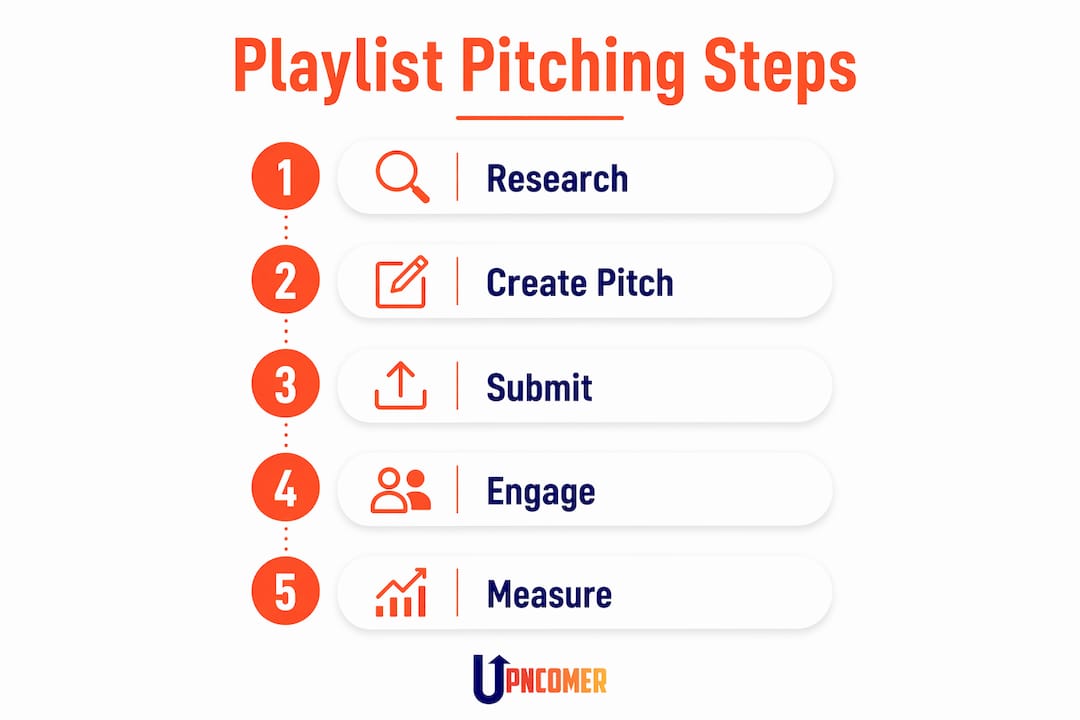
- Research curators — identify 10–15 playlists that fit your genre and career stage. Check their submission preferences before reaching out.
- Write a tailored pitch — one paragraph, specific to that curator’s taste. Generic mass pitches get ignored.
- Submit via the right channel — Spotify for Artists for editorial (submit 7 days before release at minimum, ideally 2–4 weeks out); curator forms or direct email for indie playlists; trusted third-party submission platforms for broader outreach.
- Follow up once — wait 1–2 weeks, then send a single polite follow-up. No more than that.
- Track responses and results — log what worked, what didn’t, and iterate.
Pitch template structure
Subject: [Track Name] — [Genre] — [One-line hook]
Hi [Curator name],
[One sentence on why this track fits their playlist specifically.]
[Track name] is a [genre] track about [theme/mood in one sentence]. It’s out on [release date].
Spotify link: [URL] | Press photo: [URL] | Bio: [URL]
Thanks for your time.
Pro Tip: Lead your pitch with proof of momentum — a recent independent playlist placement, a TikTok clip that got traction, or a press mention. Curators respond to evidence that listeners are already connecting with your music.
Notable playlists to target and how to approach each
Knowing which playlists exist is half the battle. Here’s a practical starting list:
- Spotify Fresh Finds (and genre feeders): The flagship editorial discovery series. You can’t pitch it directly — submit via Spotify for Artists and let the algorithm surface you. Fresh Finds has helped tens of thousands of emerging artists gain discovery, and many artists first added to it later appear on additional editorial playlists.
- Atwood Magazine’s Artists to Watch: A respected tastemaker list updated annually. Approach via Atwood’s editorial contact or music submission page — they respond to well-written pitches with strong press materials.
- BRAND NEW: THE BEST NEW ARTISTS (DMY): An independently curated weekly playlist for DIY artists. The curator accepts submissions — check the playlist description for the current submission link.
- OnesToWatch editorial playlists: OnesToWatch runs genre-specific discovery playlists and editorial features. Submit via their website’s music submission form; they prioritize artists with a clear story and some existing press.
- Indiemono: A well-known independent curator network covering multiple genres. Submit through their website form; they’re transparent about their process and responsive to genuine pitches.
- Genre-specific indie playlists: Search Spotify for playlists in your exact genre with 500–5,000 followers. These are your best starting point for building early streaming data that editorial teams later notice.
Targeting a mix of small, genre-focused playlists and a few feeder editorial lists is the right approach. Smaller playlists often deliver more engaged listeners with higher save and listen-through rates than broad, high-traffic ones.
Realistic timeline and mistakes that kill your chances
What the timeline actually looks like
- 4–8 weeks before release: Finalize metadata, set up pre-saves, confirm distribution, start curator research
- 2–4 weeks before release: Submit to Spotify for Artists editorial; begin indie curator outreach
- 1–2 weeks before release: Follow up on unanswered pitches (once only)
- Release week and after: Monitor metrics, share placements on social, reach out to curators who placed you to say thank you
Common mistakes to avoid
- Mass-blasting generic pitches — curators can tell immediately, and it burns bridges
- Incomplete or wrong metadata — a track with no genre tag or a mismatched artist name won’t clear algorithmic filters
- Pitching too late — Spotify for Artists editorial requires submission before release; missing the window means missing the cycle
- Chasing follower counts — a playlist’s follower count tells you almost nothing about engagement quality
- Buying plays or fake streams — platforms detect this, and it can get your music removed entirely
- Skipping the follow-up — one polite follow-up is expected; zero follow-ups means missed placements
- Ignoring early independent placements — these are your proof of demand; not using them in pitches is a wasted asset
If you’ve already made some of these mistakes, the recovery is straightforward: clean up your metadata, rebuild your pitch approach from scratch, and start with small indie curators to generate fresh, clean streaming data before approaching editorial again.
Tools and a simple workflow to manage pitching and measure momentum
A repeatable workflow beats one-off effort every time. Here’s how to structure it:
Tool categories you need:
- Release planner (timeline, metadata, distribution confirmation)
- Analytics dashboard (saves, retention, skip rate, follower growth)
- Curator CRM (a simple spreadsheet or dedicated tool to track outreach)
- Pitch template library (reusable, customizable per curator)
- Smart link tool (centralize pre-saves and streaming links — smart link options for musicians are worth reviewing)
- Press and distribution dashboard
Workflow in practice:
- Research — use streaming analytics to identify which genres and moods your audience overlaps with, then find playlists in those spaces
- Pitch — use your template library, customize per curator, submit via the right channel
- Measure — track saves, listen-through rate, and follower growth per release in your analytics dashboard
- Iterate — adjust pitch angle, targeting, and timing based on what the data shows
Upncomer maps directly onto this workflow. The Growth Engine handles campaign scheduling and release promotion. Amplitude AI surfaces audience signals so you know which metrics are moving and why. The Distribution module confirms your release is delivered correctly and on time. Publicist manages your PR workflow, and Data Analyst tracks the streaming metrics that matter. Content Creator helps you build pitch assets and social content around each release.
| Upncomer module | What it manages in the pitching workflow |
|---|---|
| Growth Engine | Campaign scheduling, release promotion, pre-save setup |
| Amplitude AI | Audience signals, engagement trends, metric interpretation |
| Distribution | Release delivery, metadata confirmation, platform submission |
| Publicist | PR outreach, press materials, curator communication tracking |
| Data Analyst | Saves, retention, skip rate, follower growth per release |
| Content Creator | Pitch assets, social content, press photos, bio copy |
For a deeper look at the tools side, the music marketing tools guide covers the full independent artist stack.
Key Takeaways
Emerging artist playlists are your most direct route to first-time listeners, algorithmic momentum, and editorial attention — but only if you approach them with the right prep, the right metrics, and a repeatable process.
| Point | Details |
|---|---|
| Start with indie curators | Smaller, genre-focused playlists build the streaming proof that editorial teams look for. |
| Metrics over vanity numbers | Saves, listen-through rate, and skip rate matter more than a playlist’s follower count. |
| Pitch timing is fixed | Submit to Spotify for Artists editorial before release; missing the window means missing the cycle. |
| Momentum first | Editors amplify artists already showing traction — independent placements are your proof of demand. |
| Upncomer as your workflow | Upncomer’s Growth Engine, Amplitude AI, and Data Analyst modules map directly to the research, pitch, measure, and iterate cycle. |
The part most artists get wrong about playlist strategy
Most artists treat playlist pitching as a lottery — send enough pitches and eventually one lands. That framing leads to generic outreach, wasted time, and the kind of streaming data that actually hurts your chances with editorial teams.
The artists who build real momentum from playlist placements treat it as a data loop. You pitch, you measure what the placement actually did (not just streams, but saves and listen-through), and you use that data to sharpen the next pitch. A placement on a 600-follower indie playlist that generates a 25% save rate tells a better story to a Spotify editor than 10,000 streams with a 2% save rate.
There’s also a timing trap worth naming: too many artists pitch editorial before they have any independent placement history. Editors at Spotify are looking for artists who already have momentum, not artists hoping a placement will create it. Build the base first. The pitching tactics guide covers the sequencing in detail if you want to go deeper on the mechanics.
Upncomer brings your pitching workflow into one place
Running a playlist pitching campaign while tracking metrics, managing distribution, and building press materials across five different tools is the kind of friction that slows artists down. Upncomer consolidates the whole workflow — from release planning and pre-save setup through curator outreach, analytics, and post-placement measurement — into one platform built specifically for independent artists.
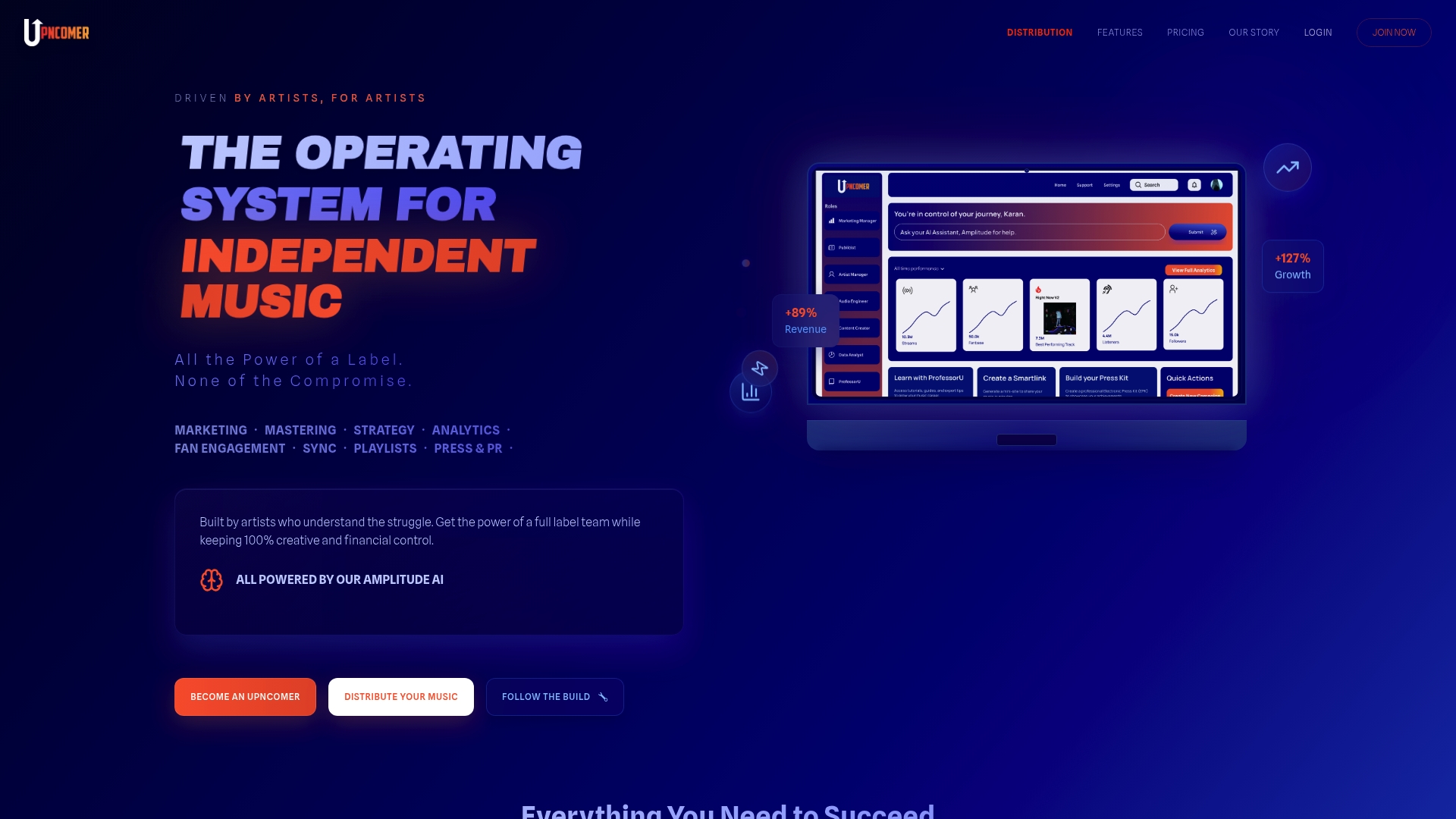
The Growth Engine schedules your campaigns and pre-save rollout. Amplitude AI reads your audience signals so you know which placements are actually moving the needle. The Publicist module keeps your curator outreach organized. And the Data Analyst tracks the saves, retention, and follower growth that tell you whether a placement is working. No agency required, no fragmented tools, no guessing at which metric matters this week.
If you’re ready to run a smarter pitching campaign, join the Upncomer community and get access to the tools, resources, and artist network that make it repeatable.
Useful sources
- All About Fresh Finds — Spotify for Artists: Editorial insight into how Spotify’s flagship discovery series works and what editors look for.
- Celebrating Fresh Finds: A Decade of Discovery — Spotify for Artists: Context on Fresh Finds’ track record and its role as a launchpad for emerging artists.
- Behind the Playlists: Fresh Finds — Spotify for Artists: Detailed breakdown of the metrics and signals Spotify editors use in the selection process.
- The Emerging Artist’s Guide to Spotify Playlists — Sonicbids: Practical pitching guidance covering indie curator outreach and phased playlist strategy.
- How Spotify Fresh Finds Discovers the Next Big Thing — American Songwriter: Industry context on the editorial and algorithmic mechanics behind Fresh Finds.
- Streaming and Discoverability for New Artists — MI.edu: Academic and industry perspective on how playlists drive discoverability for new artists.
- Atwood Magazine’s 2026 Artists to Watch — Spotify: A live example of a respected tastemaker playlist targeting discovery-focused listeners.
- BRAND NEW: THE BEST NEW ARTISTS — DMY on Spotify: An independently curated weekly playlist that accepts DIY artist submissions.
FAQ
What qualifies as an emerging artist?
An emerging artist is typically an independent or developing musician who has released music but has not yet achieved mainstream commercial recognition. Most playlist curators and editorial teams define it by career stage and streaming history rather than a fixed follower count.
What is an emerging artist playlist exactly?
It’s a curated playlist built to surface new or developing artists to listeners actively seeking fresh music. These playlists prioritize discovery over passive listening and are maintained by editorial teams, independent curators, or tastemaker communities.
How do you get your music on an emerging artist playlist?
Submit to Spotify for Artists editorial before your release date, pitch indie curators directly via email or submission forms, and build a base of small playlist placements first to generate the streaming data that larger curators and editors look for.
Does playlist follower count predict how well a placement will perform?
Not reliably. A smaller playlist with a highly engaged, genre-specific audience often delivers better saves and listen-through rates than a large passive one. Focus on audience fit and engagement quality over raw follower numbers.
Can Upncomer help manage playlist pitching campaigns?
Yes. Upncomer’s Growth Engine, Publicist, and Data Analyst modules cover campaign scheduling, curator outreach tracking, and post-placement metric analysis in one platform built for independent artists.