Music Career Sustainability Explained for Independent Artists
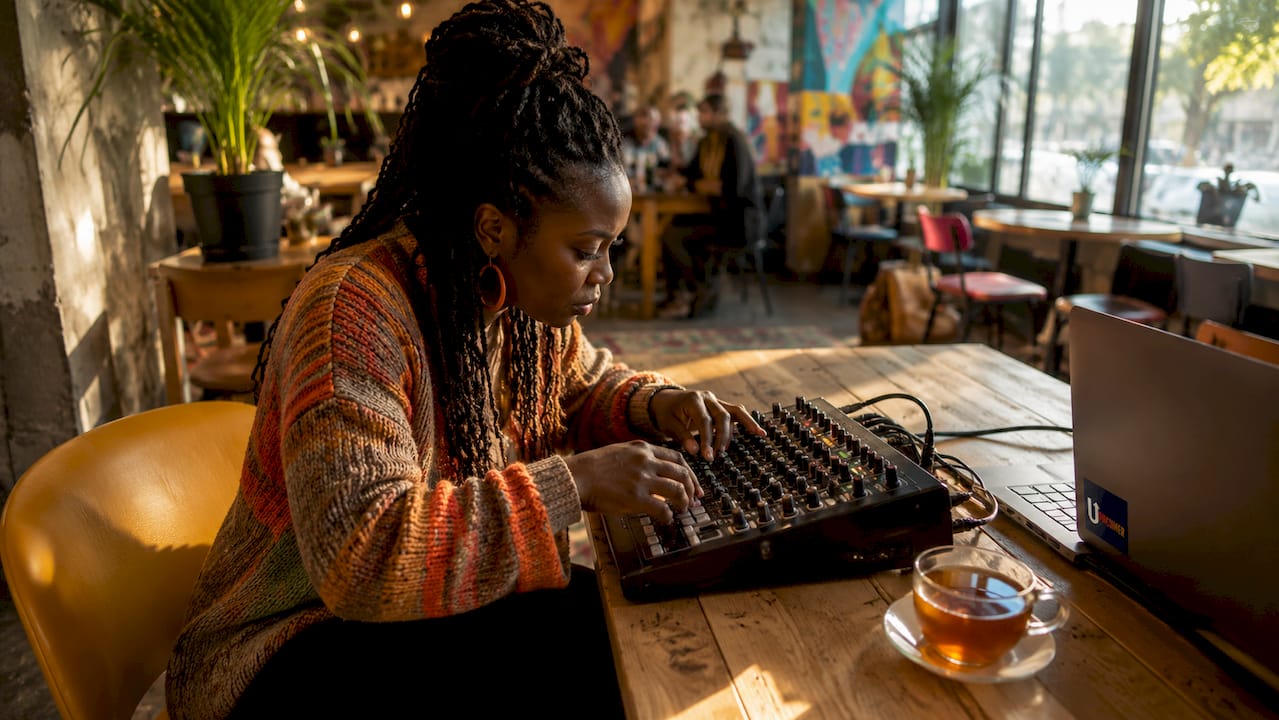
Music career sustainability is defined as the ability to maintain a long-lasting, financially viable, and mentally healthy music profession by diversifying income, treating artistry as a business, and engaging fans directly. The industry term for this framework is “career longevity strategy,” and it covers everything from royalty collection to mental health boundaries. The financial reality is stark: only 13.3% of independent artists earn a full living solely from music, with a median income of around $10,180. That number tells you the old model of “get discovered and get paid” is broken. Building a sustainable music career means replacing that fantasy with a real system.
What is music career sustainability explained in practice?
Music career sustainability is not about going viral. It is about building a career that still exists five years from now, regardless of algorithm changes, label deals, or trending sounds. The artists who last are the ones who treat their music like a business and their fans like a community.
The core components are financial diversification, rights management, mental health, and audience ownership. Strip away any one of these, and the whole structure gets shaky. A musician who earns from only one source is one platform policy change away from losing everything.
The good news is that the framework is learnable. You do not need a manager, a label, or a massive following to start applying it. You need clarity on where your money comes from, where it goes, and how to protect what you build.
What are the main income streams that support sustainable music careers?
Streaming alone cannot sustain artists. Spotify pays between $0.003 and $0.005 per stream, which means you need roughly 300,000 streams to earn $1,000. That is a lot of plays for a modest return. Treat streaming as the top of your funnel, not the bottom line.
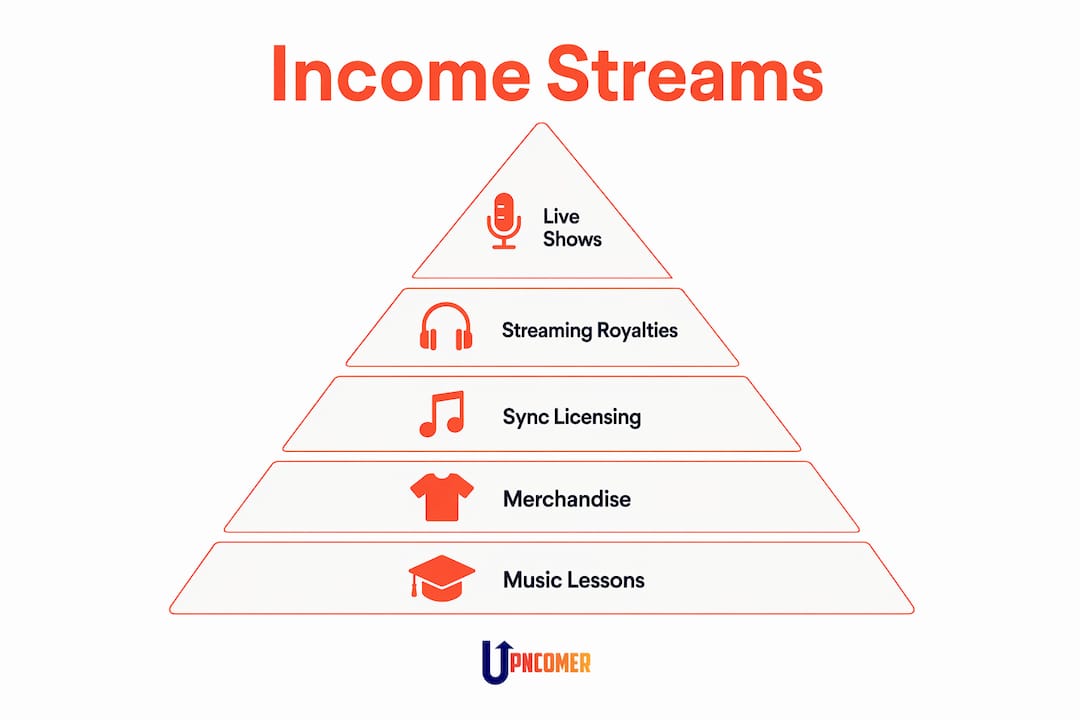
The artists who build real financial stability layer multiple income streams that reinforce each other. Here is how the main categories break down:
| Income Stream | Typical Margin | Role in Career |
|---|---|---|
| Streaming royalties | Low | Discovery and catalog exposure |
| Live performance | High | Primary income for touring artists |
| Merchandise | Medium to high | Direct fan monetization |
| Sync licensing | High | Passive income from TV, film, ads |
| Direct fan support | High | Patreon, memberships, fan clubs |
| Session work / teaching | Medium | Stable supplemental income |
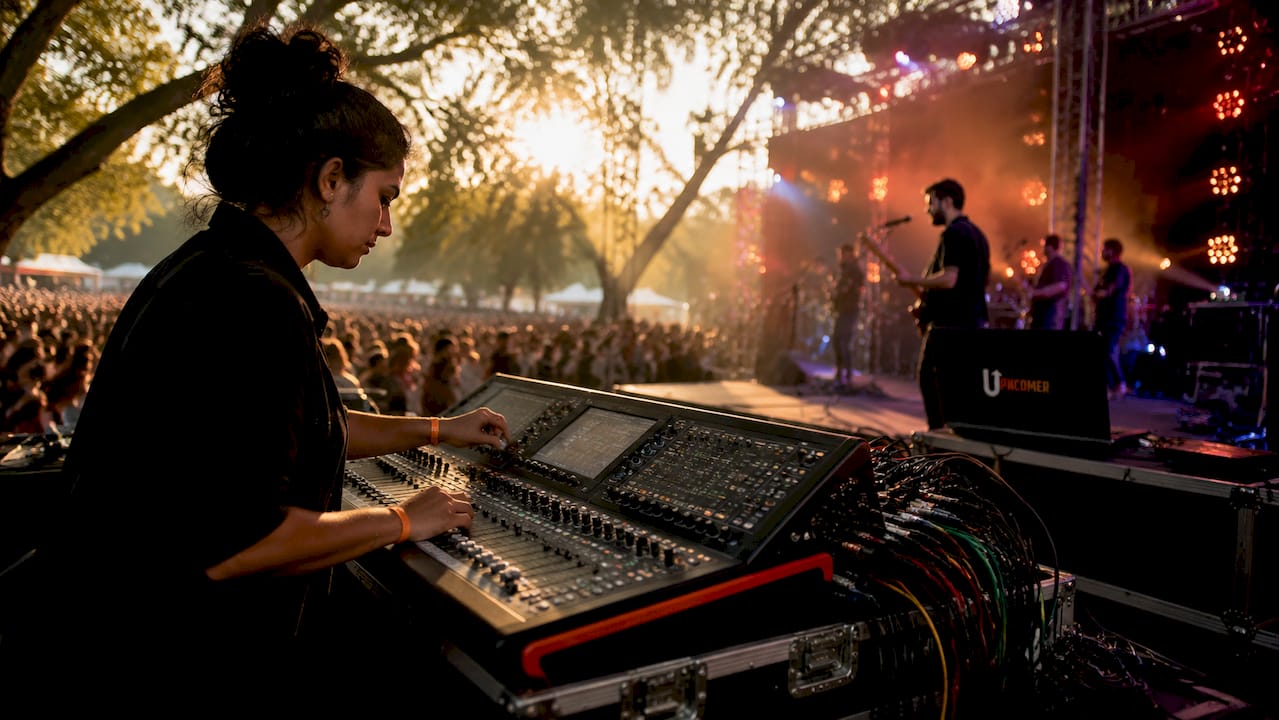
Live performance consistently delivers the highest margin for working musicians. A single well-promoted show can outperform months of streaming revenue. Merchandise sold at shows compounds that effect because fans who just experienced your music live are the most motivated buyers.
Sync licensing is the income stream most independent artists overlook. Placing a track in a TV show, film, or advertisement generates both an upfront sync fee and ongoing performance royalties. The barrier to entry is lower than most artists think, especially with platforms that pitch directly to music supervisors.
Building multiple reinforcing streams over time is more effective than chasing a single big break. Industry leaders consistently emphasize incremental growth over rapid scaling.
Pro Tip: Start with two or three income streams you can realistically manage right now. Add a new one only when the existing streams are stable. Scaling too fast burns you out before the money catches up.
How can independent musicians treat their music career as a sustainable business?
Proper rights management and early business setup separate sustainable artists from struggling peers. This is not optional. It is the difference between collecting every dollar you earn and leaving money on the table permanently.
Here are the non-negotiable business foundations every independent artist needs:
- Register with a PRO. ASCAP, BMI, or SESAC collect performance royalties on your behalf. If you are not registered, those royalties go uncollected.
- Register with The MLC. The Mechanical Licensing Collective collects mechanical royalties from digital streaming. Many artists miss this entirely.
- Clean up your metadata. Every release needs accurate songwriter credits, ISRC codes, and publishing information. Bad metadata means lost royalties.
- Track income and expenses. Use a spreadsheet or accounting software to monitor cash flow. You cannot manage what you do not measure.
- Build an email list. Social platforms can disappear or change their algorithms overnight. An email list is an audience you own.
- Protect your IP. Copyright registration and intellectual property protection are the foundation of every revenue stream you will ever build.
The “Leaky Bucket” problem kills more music careers than lack of talent. You pour energy and money into promotion, but it drains away because you have no system to capture fans, collect royalties, or retain revenue. Fixing the leaks, meaning your metadata, your mailing list, your rights registrations, is more valuable than any marketing campaign.
Upncomer’s Distribution and Growth Engine modules address this directly. Independent artist distribution through a platform that also tracks analytics means you are not just releasing music. You are building a data-informed business.
Pro Tip: Saying no to non-strategic opportunities is a skill. Every yes to a low-value gig or collaboration costs you time you could spend on something that actually moves your career forward.
What mental health and endurance practices contribute to music career sustainability?
Burnout is a chief failure point in sustainable music careers. The music industry glorifies hustle, but the artists who last are the ones who learned to pace themselves. Strategic endurance beats short-term intensity every time.
“Long-term success requires separating your identity from your career outcomes. Your worth as a person is not determined by your stream count, your booking fee, or your follower growth. Artists who internalize this truth are far more resilient when the inevitable slow periods hit.”
The mental health practices that actually work for musicians are practical, not abstract:
- Set work hours. Treat music like a job with a start and end time. Constant availability kills creativity.
- Separate your identity from your output. A bad release is not a bad you. Detachment from outcomes makes you more consistent, not less committed.
- Build a support network. Other independent artists, a therapist familiar with creative industries, or a mentor all reduce isolation.
- Schedule recovery. Rest is not laziness. It is how you sustain output over years, not weeks.
- Audit your commitments quarterly. Drop what is not working. Double down on what is.
The shift from hustle culture to strategic endurance is the single biggest mindset change a musician can make. Hustle culture tells you to say yes to everything. Strategic endurance tells you that your energy is a finite resource, and protecting it is how you stay in the game long enough to win.
How do environmental and social sustainability intersect with a modern music career?
Environmental responsibility is becoming a real expectation in the music industry, not just a talking point. 75% of Music Climate Pact signatories now measure emissions via the Greenhouse Gas Protocol annually. That means labels and artists are being held to measurable carbon reduction standards, and fans are paying attention.
Billie Eilish’s touring model is the clearest example of green touring done at scale. Her tour featured plant-based catering and reusable water bottles, and the collaboration with nonprofits reduced plastic waste by over 100,000 bottles. That is not just good ethics. It is a brand differentiator that deepened fan loyalty.
Independent artists can apply the same principles at a smaller scale:
- Partner with nonprofits like Reverb to offset tour emissions and engage fans around shared values.
- Choose venues that use renewable energy or have existing sustainability programs.
- Reduce merch waste by using print-on-demand instead of bulk inventory.
- Opt for plant-based catering at events when you have input on the menu.
- Communicate your sustainability commitments to your audience. Fans reward authenticity.
The deeper argument here is that environmental sustainability and career sustainability are connected. Artists who align with values their audiences hold build stronger, longer-lasting fan relationships. That translates directly into ticket sales, merch revenue, and direct support. Sustainability in music is not a sacrifice. It is a positioning strategy that pays off.
Key takeaways
A sustainable music career requires diversified income, solid business foundations, mental health boundaries, and values-aligned audience engagement working together.
| Point | Details |
|---|---|
| Streaming is a funnel, not income | Use streams for discovery, then convert listeners to higher-margin revenue like merch and live shows. |
| Register rights early | Join a PRO and The MLC before your first release to avoid permanently losing royalties. |
| Diversify income gradually | Start with two or three streams and add more only when existing ones are stable. |
| Protect your mental health | Set work boundaries and separate your identity from career outcomes to avoid burnout. |
| Sustainability builds fan loyalty | Green touring and values-aligned practices deepen audience relationships and drive direct revenue. |
What I have learned about building a career that actually lasts
The artists I have watched build real longevity share one trait: they stopped waiting for permission. They did not wait for a label, a viral moment, or a manager to hand them a plan. They built the plan themselves, stream by stream, fan by fan, and they treated every business decision with the same care they gave their music.
The biggest mistake I see is overreliance on streaming as a primary income source. Artists spend months chasing playlist placements and then feel crushed when the royalty check is $47. Streaming is real, and it matters for discovery. But audience data and direct fan relationships are what convert that discovery into actual income.
The other thing nobody talks about enough is how much poor business management costs artists over time. Missing royalties from unregistered rights, losing fans because there is no email list, releasing music with broken metadata. These are not small mistakes. They compound over years into significant lost income.
My honest take is this: the music industry will always be hard. But it has never been more possible for an independent artist to build a genuinely sustainable career. The tools exist. The frameworks exist. The only question is whether you are willing to treat your music like the business it already is.
— Karan
How Upncomer helps independent artists build lasting careers
Building a sustainable career means managing a lot of moving parts at once: distribution, analytics, fan engagement, promotion, and more. Most artists try to do this across five or six disconnected tools and end up losing time and money in the gaps.
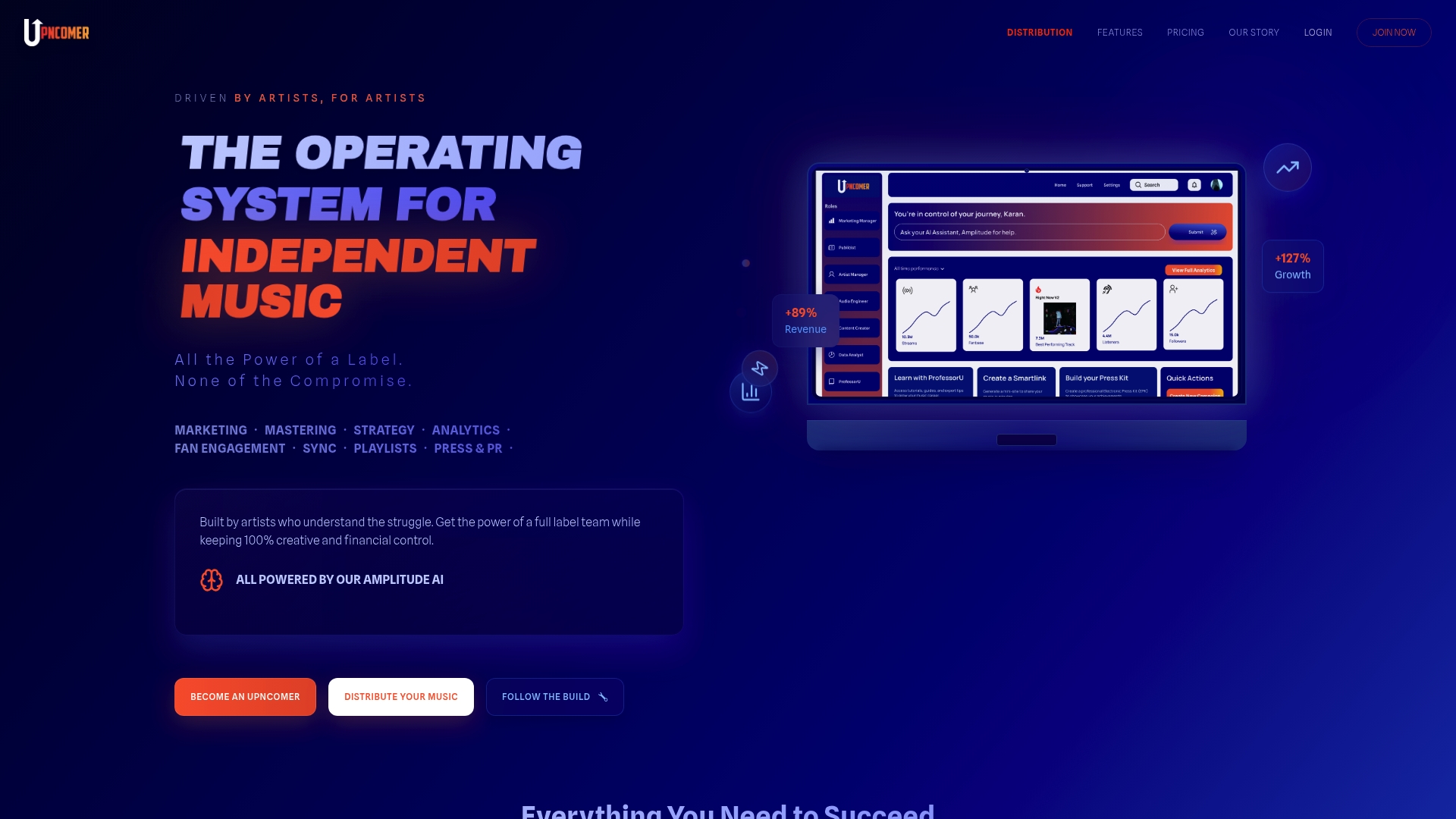
Upncomer brings all of it into one place. The platform’s Growth Engine, Artist Manager, and Distribution modules give independent artists the infrastructure to release music, track performance, and grow their audience without needing a label or a full team behind them. Amplitude AI provides real-time guidance so your decisions are based on data, not guesswork. Stay current with community updates from Upncomer to access ongoing industry insights, resources, and tools built specifically for artists building careers on their own terms.
FAQ
What does music career sustainability mean?
Music career sustainability means building a long-term, financially stable, and mentally healthy music profession through diversified income, rights management, and direct fan relationships. It is the opposite of depending on a single revenue source or a one-time viral moment.
How many income streams do independent artists need?
Most sustainable independent artists maintain at least three to five income streams, including streaming, live performance, merchandise, and either sync licensing or direct fan support. Starting with two or three and scaling gradually reduces burnout risk.
Why is streaming not enough to sustain a music career?
Spotify pays between $0.003 and $0.005 per stream, which means streaming alone rarely generates livable income for independent artists. Streaming works best as a discovery tool that funnels listeners toward higher-margin revenue like live shows and merchandise.
What PRO should an independent artist join?
Independent artists in the United States should register with ASCAP, BMI, or SESAC to collect performance royalties. They should also register with The MLC to collect mechanical royalties from digital streaming platforms.
How does mental health affect music career longevity?
Burnout is one of the most common reasons music careers stall or end prematurely. Setting work boundaries, separating personal identity from career outcomes, and building a support network are the core practices that keep artists productive and resilient over the long term.