Digital Music Team Explained for Independent Artists

A digital music team is the coordinated network of creative, technical, and business roles that powers an independent artist’s career in the modern music industry. Most artists picture this as a producer and maybe an engineer, but the full picture includes distribution managers, royalty administrators, and marketing specialists working in sync. Understanding the digital music team explained in full gives you a real advantage. The independent music sector now accounts for over 80% of new releases and industry jobs globally. That scale means organized, role-aware teams are no longer optional for artists who want to grow.
What are the core roles in a digital music team?
A digital music team is built around four production roles and a layer of business functions that most artists underestimate. Getting clear on who does what prevents costly overlaps and gaps in your workflow.
Creative and technical production roles
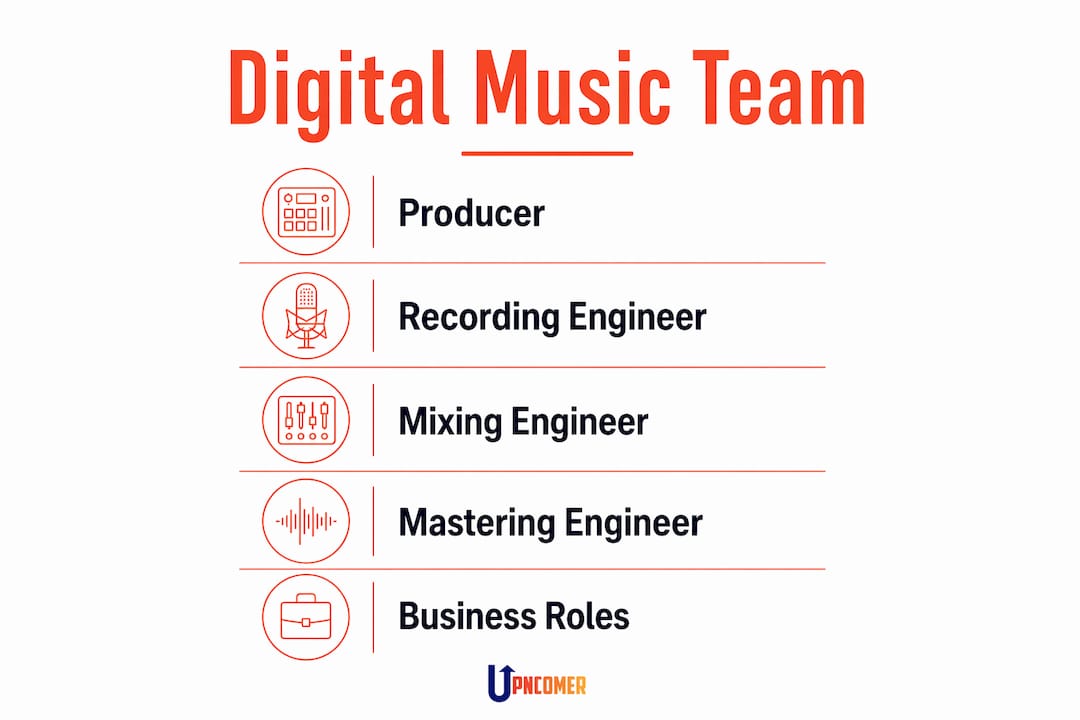
The Producer holds the creative vision for a track or project. This role shapes the sound, guides the artist’s performance, and makes key decisions about arrangement and instrumentation. The Producer is the creative director of your music, not just the person behind the beat.

The Recording Engineer captures sound with technical precision. They set up microphones, manage signal chains, and run the session so the artist can focus on performing. A great recording engineer creates the raw material that every other role depends on.
The Mixing Engineer balances all recorded elements into a cohesive sound. They adjust levels, apply effects, and shape the frequency space so every instrument and vocal sits clearly. Mixing is where a good recording becomes a great record.
The Mastering Engineer prepares the final mix for distribution. Professional-grade mastering is the minimum threshold for streaming distribution quality. That means skipping this step does not just hurt your sound. It can get your release rejected by platforms.
Business and operations roles
Beyond production, a functioning digital music organization needs people covering:
- Distribution manager: Gets your music onto streaming platforms and manages release timelines.
- Royalty administrator: Tracks and collects mechanical, performance, and sync royalties across territories.
- Marketing specialist: Runs campaigns, manages social content, and handles playlist pitching.
- PR and media contact: Manages press outreach and media relationships. A solid press and media strategy is often what separates artists who get covered from those who don’t.
Distinguishing creative leadership from technical execution helps you decide where to invest your own training versus where to hire support. Most emerging artists try to do everything themselves and end up doing none of it well.
Pro Tip: If budget is tight, prioritize outsourcing mixing and mastering before any other role. Outside ears on those two stages improve your final product more than almost any other investment.
How does digital music organization support team efficiency?
A well-organized digital library is the backbone of any functional music team. Without it, contractors waste time hunting for files, metadata errors cause royalty gaps, and releases get delayed.
Consistent metadata tagging is the foundation of smooth cross-platform syncing and royalty management. Every track needs accurate ISRCs, songwriter splits, genre tags, and release dates before it touches a distribution platform. Skipping this step creates problems that compound over time and cost real money to fix.
Here is a practical system for building your master digital library:
- Create a root folder structure organized by project, then by version (stems, mixes, masters).
- Name every file consistently using a format like ArtistName_TrackTitle_Version_Date.
- Tag all metadata at the source before uploading to any platform. Use your DAW’s metadata fields or a dedicated tagging tool.
- Store ISRCs and songwriter splits in a central document linked to each project folder.
- Back up to at least two locations, one local and one cloud-based, after every session.
| Asset type | Key metadata to include | Why it matters |
|---|---|---|
| Master audio file | ISRC, artist name, release date | Required for streaming and royalty tracking |
| Stems and session files | Project name, version, BPM, key | Speeds up contractor onboarding |
| Artwork | Track title, resolution, color profile | Prevents platform rejection |
| Contracts and splits | Contributor names, percentages | Protects against royalty disputes |
Well-structured metadata also feeds directly into streaming analytics and playlist pitching workflows. When your data is clean, tools that track fan engagement and audience insights actually work as intended.
Pro Tip: Set up your metadata template before you start recording, not after. Retrofitting tags across 30 tracks is a nightmare that most artists only make once.
What organizational models help artists build their teams?
The most practical model for emerging artists is the hybrid “as-needed” approach. You contract specialists per project rather than hiring full-time staff. Successful independent artists often act as project managers who coordinate creative, technical, and business contributors on a release-by-release basis. This keeps costs manageable and lets you scale up or down based on your release schedule.
Cross-functional alignment is the key principle behind how digital music teams work at a higher level. Spotify’s Squad Model, which groups small autonomous teams around a shared goal, offers a useful framework for music teams. Applied to your career, this means grouping your Producer, Engineer, and Marketing specialist around a single release goal rather than treating each role as a separate silo.
When you are vetting and onboarding contractors, focus on these areas:
- Portfolio fit: Does their previous work sound like what you are trying to make?
- Communication style: Do they respond quickly and clearly? Slow communication kills release timelines.
- Deliverable clarity: Agree on file formats, revision rounds, and deadlines in writing before work starts.
- Rate transparency: Know the full cost upfront, including revision fees.
- References: Ask for one or two past clients you can contact directly.
A structured release checklist helps you manage these moving parts without letting anything slip through. Treating your release like a project with a timeline and assigned roles is what separates artists who release consistently from those who get stuck in endless “almost ready” cycles.
What is monetization engineering and why does it matter?
Monetization engineering is the backend system that calculates, tracks, and collects royalties accurately across complex contracts and digital platforms. Errors in royalty systems can cause multi-million dollar discrepancies. That is not a problem exclusive to major labels. Independent artists lose real money when their metadata is wrong, their splits are unregistered, or their rights data is inconsistent across platforms.
The core challenge is that digital distribution has multiplied the number of revenue streams an artist needs to track. Streaming royalties, sync fees, mechanical royalties, performance royalties, and neighboring rights all flow through different systems with different rules. Without someone managing this backend, revenue leaks quietly and consistently.
“Artists neglecting backend operations like metadata and royalty management risk revenue loss and legal disputes. Best practices include standardizing metadata and rights data prior to release.”
Practical steps to build monetization readiness into your team:
- Register every track with a Performing Rights Organization (PRO) like ASCAP, BMI, or SESAC before release.
- Assign ISRCs to every recording through your distributor or directly through USISRC.
- Register songwriter splits with your PRO and your distributor simultaneously.
- Use a publishing administrator to collect mechanical royalties you would otherwise miss.
- Audit your streaming revenue quarterly against your registered works to catch discrepancies early.
Metadata standardization covering ISRCs, songwriter splits, and consistent tagging underpins every royalty system you will ever use. Build this habit early and it protects your revenue streams for the entire life of your catalog.
Key Takeaways
A functional digital music team combines creative, technical, and business roles that must operate in sync to protect both your art and your income.
| Point | Details |
|---|---|
| Define roles clearly | Separate creative leadership from technical execution to allocate your budget and time effectively. |
| Build your digital library first | Consistent metadata and file organization prevent royalty gaps and contractor delays. |
| Use the hybrid model | Contract specialists per release rather than hiring full-time staff to stay flexible and cost-efficient. |
| Treat monetization as infrastructure | Register ISRCs, PRO splits, and rights data before every release, not after. |
| Act as project manager | Coordinate your team around a shared release goal with clear deliverables and deadlines in writing. |
What I’ve learned from watching artists build their teams wrong
Most emerging artists I’ve seen build their teams backwards. They spend months perfecting the mix and then release with no metadata, no PRO registration, and no distribution plan. The music sounds great and earns almost nothing because the backend was never set up.
The distinction between creative leadership and technical execution is the most underrated concept in independent music. When you know that the Producer role is about vision and the Engineer role is about execution, you stop trying to be both at once and start making smarter decisions about where your energy goes.
The hybrid model genuinely works. You do not need a full-time team to operate like one. What you need is a trusted roster of contractors you can call on per release, a clean digital library they can plug into immediately, and a project management mindset that keeps everyone aligned. That combination is more powerful than a bloated team with unclear roles.
The artists I’ve seen grow fastest are the ones who treat their backend with the same seriousness as their creative work. Metadata is not glamorous. Royalty registration is not fun. But getting those things right is what turns a good release into a sustainable career.
— Karan
How Upncomer supports your digital music team
Building a digital music team from scratch takes time, money, and a lot of coordination. Upncomer is designed to give independent artists the infrastructure of a full team inside one platform.
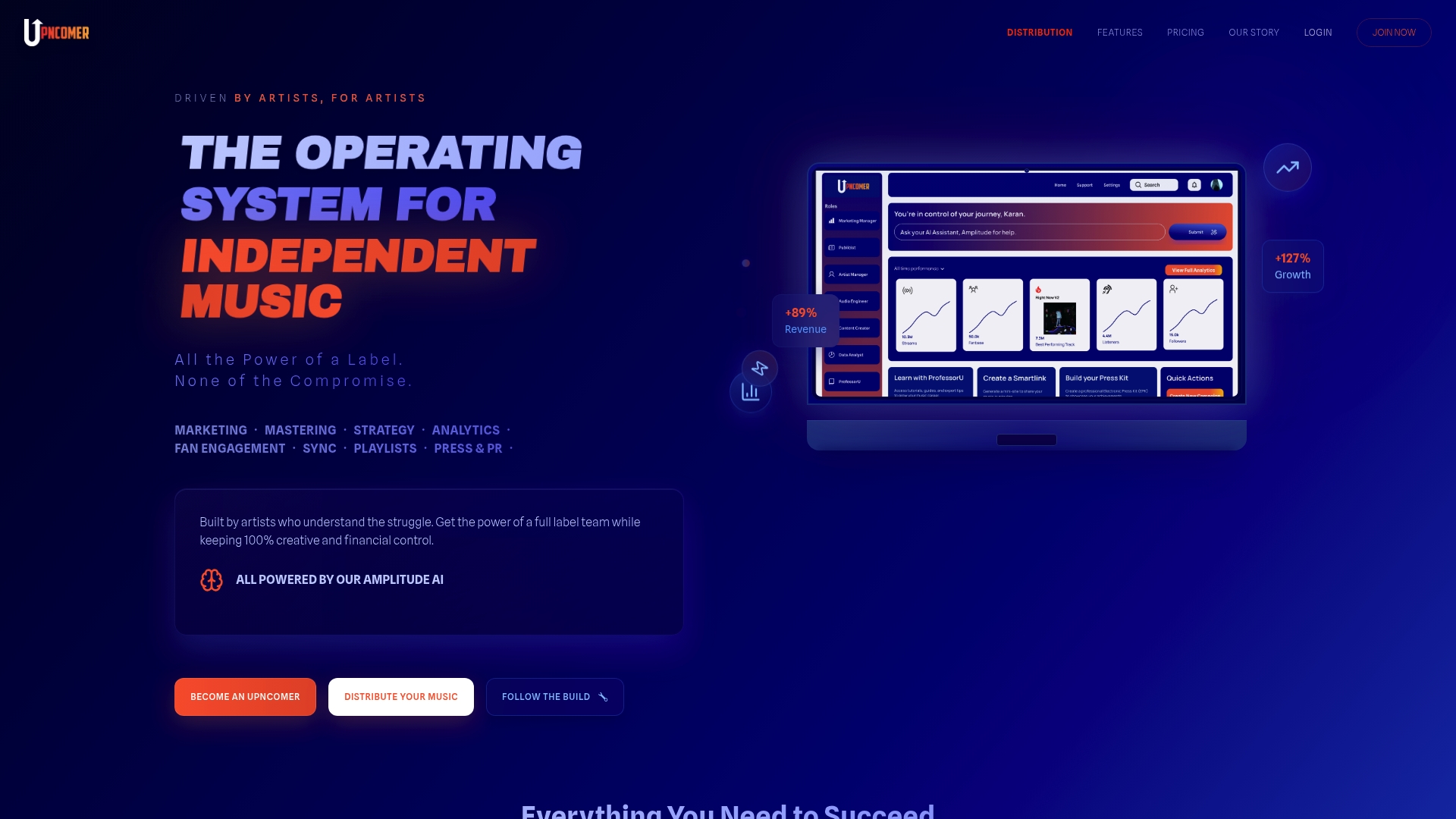
Upncomer’s Growth Engine, Artist Manager, and Amplitude AI modules cover the marketing, analytics, and strategic guidance functions that most independent artists either skip or outsource at high cost. The Distribution module handles release delivery, and UrStudio supports your production workflow. Instead of managing five separate tools and three contractors, you get one system built specifically for how independent artists actually work. Explore the Upncomer community to see how artists are using these tools to build real, data-driven careers without label support.
FAQ
What is a digital music team?
A digital music team is the coordinated group of creative, technical, and business roles that supports an independent artist’s music production, distribution, marketing, and royalty management. It typically includes a Producer, engineers, a distribution manager, and a royalty administrator.
How do independent artists build a music team on a budget?
The hybrid “as-needed” model is the most budget-friendly approach. Artists contract specialists per project and act as their own project manager, coordinating contributors around each release rather than hiring full-time staff.
What does a mastering engineer do in a digital music team?
A mastering engineer prepares the final mix for streaming distribution by adjusting loudness, clarity, and format. Professional mastering is the minimum quality threshold required by most streaming platforms.
Why does metadata matter for music team efficiency?
Accurate metadata, including ISRCs, songwriter splits, and genre tags, prevents royalty errors, platform rejections, and synchronization issues across streaming services. 100% metadata consistency is the standard recommended for smooth cross-platform distribution.
What is monetization engineering in music?
Monetization engineering refers to the backend systems and processes that track and collect royalties accurately across digital platforms and contracts. Errors in these systems can cause significant revenue loss, making it one of the most critical functions in any independent artist’s digital music organization.