How to Manage Artist Press and Media Outreach

Getting media coverage as an independent artist feels impossible sometimes. You’re competing with hundreds of submissions landing in journalists’ inboxes every week, and a generic “check out my new single” pitch gets deleted before anyone reads past the subject line. To genuinely manage artist press and media outreach, you need more than a good song. You need a system: the right story, the right contacts, and the right timing. This guide walks you through exactly that, from building your foundation to landing placements that actually move your career forward.
Table of Contents
- Key takeaways
- How to manage artist press and media outreach effectively
- Executing your outreach campaign
- Building long-term media relationships
- Avoiding pitfalls and measuring results
- My honest take on media outreach for independent artists
- How UpNComer helps you manage press and outreach
- FAQ
Key takeaways
| Point | Details |
|---|---|
| Start with your story angle | Define your unique narrative before reaching out to any journalist or outlet. |
| Build credibility first | Secure 5-7 blog placements before targeting major publications to establish a press track record. |
| Pitch concisely and personally | Keep pitches under 150 words and open with a personalized hook tied to the journalist’s beat. |
| Treat outreach as a system | Align your goals, media list, messaging, and timing so every element works together. |
| Track everything | Use a CRM or spreadsheet to log contacts, pitch dates, and responses so you never duplicate or lose momentum. |
How to manage artist press and media outreach effectively
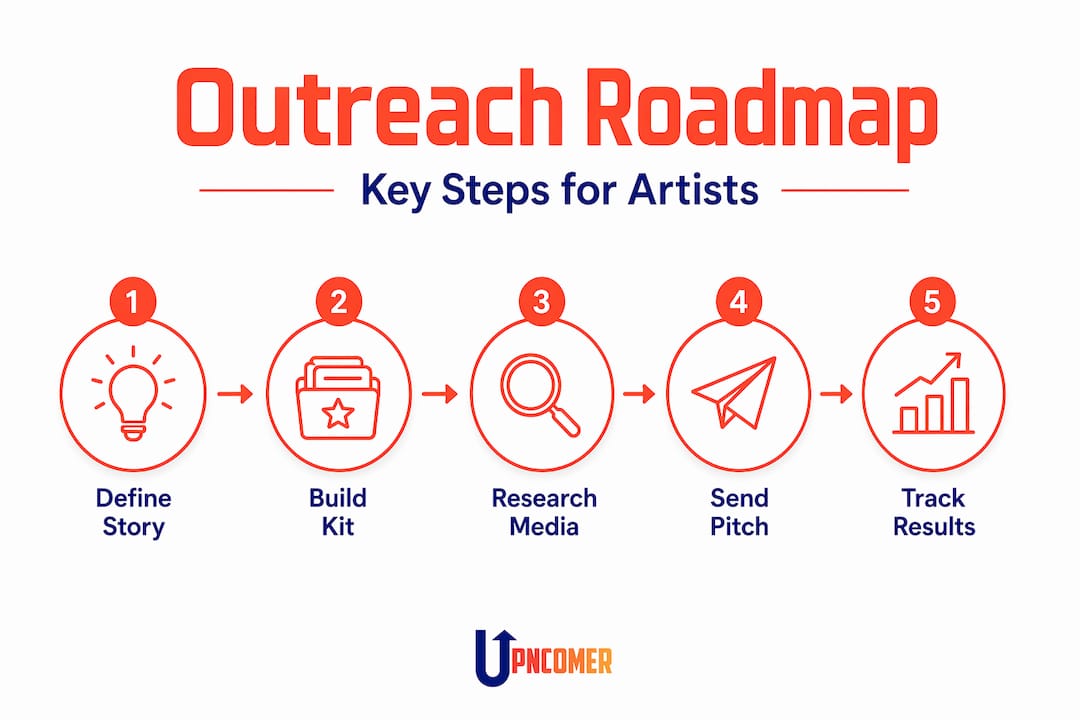
Before you send a single pitch, you need to have your foundation locked in. Most independent artists skip this step and then wonder why nobody writes about them. The truth is, a journalist’s job is to tell interesting stories. Your job is to make that easy for them.
Define your story angle first
Your story angle is not “I released a new song.” It’s the why behind the music that makes a stranger care. Are you a self-taught producer who went from a bedroom studio to licensing deals? Did your latest EP process a specific cultural experience your fanbase relates to deeply? Unique story angle in your opening captures journalists’ attention more effectively than any other element of a pitch. Write that angle down in two sentences before you build anything else.
What your press kit needs to include
Your Electronic Press Kit is your calling card. Think of it like a professional portfolio that lives online and works for you around the clock. It should include:
- A short bio (50-100 words) and a long bio (300-400 words)
- High-resolution press photos in multiple orientations
- Links to streaming profiles and music videos
- A press release for your current release or announcement
- A list of notable placements and quotes from past coverage
- Contact information for press inquiries
Press placements build credibility for Google Knowledge Panels and professional industry recognition, so that placement list matters more than you might think. Keep this kit updated after every campaign cycle.
Build your media list strategically
Not every outlet is right for you. Research which blogs, publications, and journalists actually cover artists at your level and in your genre. A hip-hop blogger who writes about emerging New York artists is a far better target than a national magazine editor who covers major label releases. A focused media list of 30 relevant contacts beats a spray-and-pray list of 300.

Pro Tip: Major print publications require 3-5 months advance notice for album reviews and features. Plan your outreach calendar backward from your release date so your timing matches editorial windows.
Also, start with 5-7 blog placements before going after bigger fish. Those early placements give you social proof and something credible to reference when you eventually pitch higher-profile outlets.
Executing your outreach campaign
With your foundation solid, you can move into actual outreach. This is where a lot of artists either overcomplicate things or underprepare. The goal is simple: get the right message to the right person at the right time. Treating outreach as a connected system based on clear goals and thoughtful timing is what separates the artists who get coverage from those who don’t.
Here is a step-by-step process that works:
-
Research each contact individually. Before writing anything, read at least three recent articles by the journalist you’re targeting. Note what angles they favor, what they ignore, and how they frame their stories.
-
Write a personalized opening line. Reference something specific they wrote. “Loved your piece on [artist] last month” is lazy. “Your take on how [artist] used field recordings to build atmosphere made me think about my own process” shows you actually read it.
-
State your hook in one sentence. What is the story? Not the song, the story. Keep it specific.
-
Explain why it matters to their readers. This is the journalist’s primary concern. Connect your story to a broader trend, cultural moment, or community their audience cares about.
-
Close with a clear call to action. Ask for a specific thing. An interview, a listen, a review consideration. Don’t leave it vague.
-
Keep the whole pitch under 150 words. Concise pitches under 150 words get read far more often than long ones. If you can’t explain your story in that space, your angle isn’t tight enough yet.
-
Follow up once, 3-5 business days later. A single, polite follow-up is standard practice. Follow-ups sent 3-5 business days later remind editors without irritating them. Two follow-ups with no response means move on.
Beyond direct pitching, platforms like Connectively (formerly HARO) give you access to journalist queries in real time. Digital PR platforms like Connectively offer accessible opportunities for beginning artists to build media relationships without needing a PR agency. If a reporter is writing about independent music in your city and asks for sources, that’s your entry point.
Pro Tip: Engage with journalists on social media by sharing and commenting on their work before you ever pitch them. This builds familiarity without being transactional.
Also, use CRM tools or a simple spreadsheet to track every contact, pitch date, and response. Duplicate pitches and missed follow-ups kill your credibility fast. For those learning to get featured in hip-hop news, a well-organized outreach tracker is one of the most practical tools you can set up.
Building long-term media relationships
One placement is nice. A journalist who comes back to you for quotes, covers your next three releases, and introduces you to their editor is the real goal. That kind of relationship doesn’t happen through cold emails alone.
Networking in person complements digital outreach in ways that email never can. Industry showcases, conferences, and even local events put you in the same room as people who write about music for a living. When you meet them, don’t pitch. Ask about their work. Listen. Be a human being first.
Here are the core habits that build lasting media relationships:
- Thank journalists who cover you. Send a genuine message after a placement goes live. Not a form letter, a real one.
- Share their work publicly. If a journalist writes a piece you admire, share it and tag them. It costs nothing and keeps you on their radar.
- Give exclusive access occasionally. Early listens, behind-the-scenes content, or first access to announcements make journalists feel valued and gives them something their competitors don’t have.
- Stay in contact between releases. You don’t need to pitch to check in. A quick message about something relevant to their beat keeps the relationship warm.
- Understand their personality. Some editors are formal. Some are casual. Match their energy and they’ll respond better to you over time.
Think of every media interaction like a job interview, as effective PR depends on treating interactions with professionalism and genuine interest. The artists who get written about consistently are the ones who made editors feel like covering them was actually interesting, not just obligatory.
Avoiding pitfalls and measuring results
Knowing what not to do is just as useful as knowing what to do. Here are the most common mistakes independent artists make with press outreach, and how to fix them.
| Mistake | Fix |
|---|---|
| Generic mass pitches | Write personalized pitches for each contact, referencing their specific work |
| Pitching too early or too late | Map your release timeline and pitch majors 3-5 months out, blogs 4-6 weeks out |
| Giving up after one attempt | One follow-up is fine; silence after two outreach attempts means refine your angle |
| No tracking system | Log every pitch in a spreadsheet or CRM to spot patterns and avoid duplicates |
| Ignoring small placements | Blog coverage builds the track record that gets you into bigger rooms |
Beyond avoiding mistakes, you need to know if your outreach is actually working. Track these indicators after every campaign cycle:
- Number of pitches sent versus responses received
- Placements earned and their estimated audience reach
- Social engagement on coverage (shares, comments, saves)
- New followers or streaming lifts in the weeks after coverage lands
- Inbound inquiries from journalists or industry contacts
Pro Tip: If your open rate is high but responses are low, your subject lines are working but your pitch content isn’t. If nobody opens at all, test different subject lines that focus on the story hook, not your artist name.
Moving away from scattershot pitching to focused, story-driven outreach is the single shift that produces the biggest improvement in results. Quality over volume, every time.
My honest take on media outreach for independent artists
I’ve seen artists spend months and real money on PR campaigns that deliver nothing, and I’ve seen completely independent artists land Rolling Stone adjacents through nothing but patience and smart relationship-building. The difference is almost never talent.
The biggest misconception I encounter is that press coverage should feel easy if your music is good enough. That’s not how it works. Journalists aren’t sitting around waiting to discover you. They’re overwhelmed, working under deadlines, and pitching editors who are equally overwhelmed. Getting their attention requires making their job easier, not harder.
What I’ve learned is that the artists who succeed at media outreach consistently play the long game. They show up at industry events. They comment thoughtfully on journalists’ work. They send genuinely good pitches and then follow up once without desperation. And when they get a small placement, they treat it like a gift and build on it.
My honest advice: start smaller than your ego wants you to. Those early blog placements feel underwhelming, but they’re the proof of concept that opens bigger doors. The media landscape rewards consistency and credibility. There’s no shortcut past either one.
— Karan
How UpNComer helps you manage press and outreach
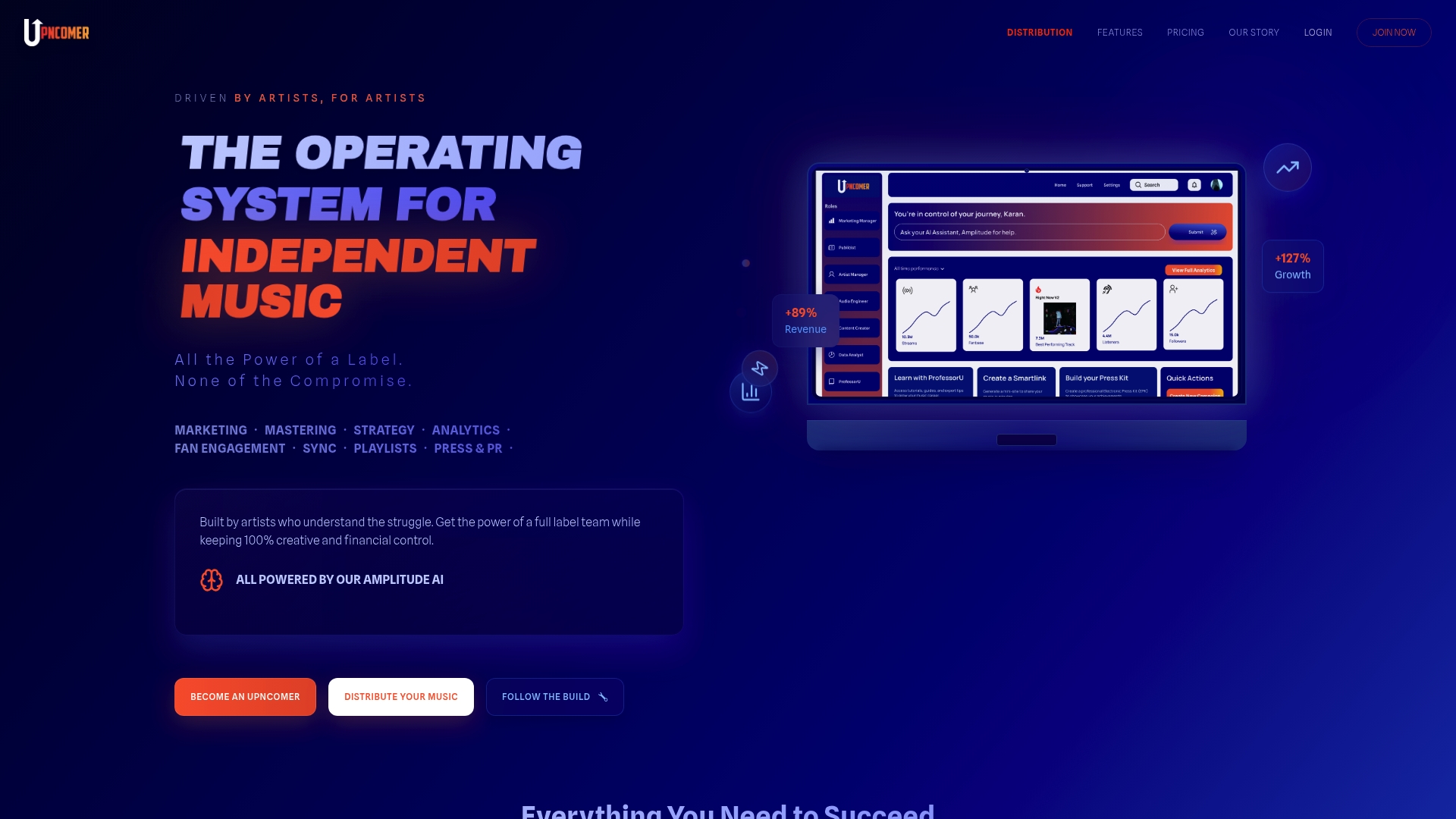
Managing artist press and media outreach on top of writing music, running social media, and handling your own business is a lot for one person. That’s where UpNComer comes in. The platform is built specifically for independent artists who need the kind of infrastructure a full team would normally provide.
UpNComer’s Publicist module helps you organize your press strategy, build out your media assets, and track your outreach in one place. The Artist Manager keeps your release timelines and campaign tasks aligned so nothing falls through the cracks. Amplitude AI gives you real-time guidance on your next best move, whether that’s refining your pitch angle or timing your next announcement for maximum media pick-up. If you want a stronger foundation for your digital music promotion efforts overall, UpNComer’s tools are built to work together instead of pulling you in ten directions at once.
FAQ
What should a press pitch for an independent artist include?
A press pitch should be under 150 words and include a personalized opening, a one-sentence story hook, why it matters to the journalist’s audience, and a clear call to action like a review request or interview ask.
How early should I start media outreach for a music release?
For major print publications, start outreach 3-5 months before your release date. For blogs and digital outlets, 4-6 weeks in advance is generally enough time to land timely coverage.
How many media contacts should I pitch at once?
A focused list of 20-30 highly relevant contacts outperforms a mass list of hundreds. Personalized pitches to the right journalists produce far better results than generic emails sent at scale.
What’s the best way to build media relationships as a new artist?
Start by securing a handful of smaller blog placements to build credibility, engage with journalists on social media before pitching, and treat every interaction with genuine professionalism to create lasting rapport.
How do I know if my press outreach is working?
Track placements earned, response rates, and any audience growth in streaming or social following in the weeks after coverage. Low response rates on opened pitches usually signal a weak story angle, not a bad contact list.