Revenue Streams for Independent Musicians in 2026
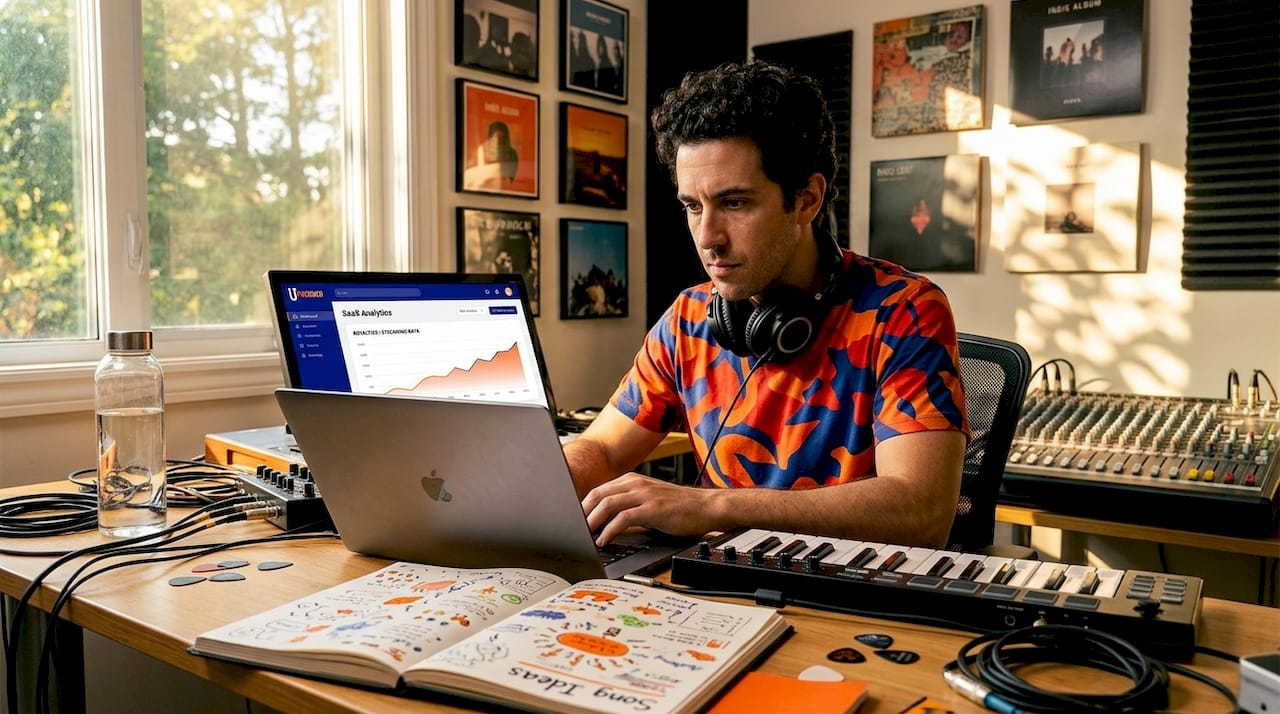
Streaming pays less than most people think. At average Spotify rates, 1 million streams nets an artist somewhere between $2,500 and $3,000 before you pay collaborators or your distributor. If that’s your only income, you’re building a career on sand. The revenue streams independent musicians 2026 need to pursue look very different from the old model of record deals and radio play. This article breaks down what actually works, what pays, and how to think about building a music career like the small business it really is.
Table of Contents
- Key Takeaways
- 1. Revenue streams independent musicians 2026 must understand first
- 2. Direct-to-fan sales and merchandise
- 3. Sync licensing and micro-syncs
- 4. Live performances and virtual shows
- 5. Fan subscriptions, crowdfunding, and content monetization
- 6. Education, side services, and digital assets
- 7. Comparing revenue streams: profitability, effort, and sustainability
- 8. How to decide which revenue streams to prioritize
- My honest take on where independent musician income is heading
- Take control of your music career with UpNComer
- FAQ
Key Takeaways
| Point | Details |
|---|---|
| Streaming alone won’t cut it | Most independent artists earn less than $10k annually from streaming; diversification is non-negotiable. |
| Fan ownership drives revenue | A small group of superfans can generate the bulk of your income through subscriptions, merch, and direct sales. |
| Sync licensing rewards rights literacy | Owning your masters and publishing means you collect both sides of every sync fee placed. |
| Live formats have evolved | Intimate shows with 30 people can gross $2,000+ per night with zero venue overhead. |
| Data should inform every decision | Tracking which streams are actually profitable helps you cut waste and double down on what works. |
1. Revenue streams independent musicians 2026 must understand first
Before you add new income sources, understand how streaming income actually works. Streaming royalties split into two categories: master royalties (paid to whoever owns the recording) and publishing royalties (paid to the songwriter). If you own both, you collect both. If you signed over either to a label or publisher, you’re leaving money on the table every single time someone presses play.
The math is sobering. Streaming grew to 84% of all music revenue in 2026, but the top 1% of Spotify artists capture 90% of all streams. For the rest, it’s less than $10k a year. Streaming is real money only at scale.
That said, streaming data is gold. Your top cities, your listener demographics, which songs keep people coming back — all of that intelligence feeds every other revenue decision you make.
- Pitch playlists using your existing streaming data to identify which tracks over-index in specific markets
- Register with a performance rights organization (PRO) and a publishing administrator to capture 100% of what you’re owed
- Negotiate your distributor’s royalty split before you sign anything; some offer 100% but charge monthly fees, others take a percentage
Pro Tip: If you haven’t claimed your publishing royalties through a PRO like ASCAP, BMI, or SESAC, you are almost certainly leaving money uncollected right now. Set this up before your next release.
2. Direct-to-fan sales and merchandise
This is where independent artists can genuinely compete with major labels, and win. When you sell direct to your fans, you own the customer relationship, the data, and the margin. No middleman takes 30%.
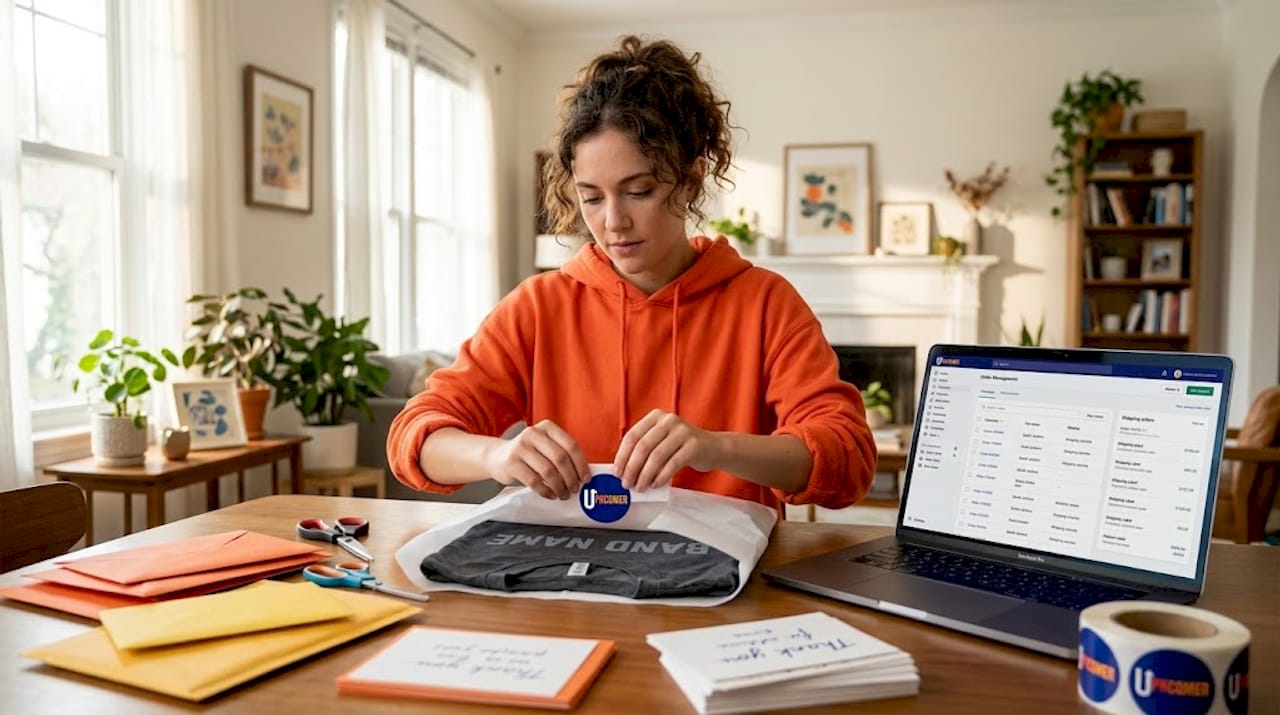
Physical products still sell. Vinyl, cassettes, limited-edition art prints, and hand-signed items command premium prices because they feel personal. Digital merch including avatar skins for gaming and metaverse platforms now offers zero manufacturing costs and near 100% profit margins. That’s a product line worth exploring.
Scarcity works. A drop of 50 signed LPs at $40 each is $2,000 in a weekend, and if you’ve built any kind of fanbase, 50 units is not a stretch.
- Bundle products strategically: vinyl + digital download + exclusive Discord access creates perceived value that justifies higher price points
- Use limited drops instead of always-available stock to create urgency and drive conversion
- Collect emails at every purchase so you can market your next drop directly without depending on an algorithm
Pro Tip: Offer a lower-priced digital product like a $5 sample pack or stems download alongside your physical merch. It widens your audience and creates a purchase habit before fans are ready for bigger buys.
3. Sync licensing and micro-syncs
Sync licensing is one of the highest-earning income sources for musicians, but most independent artists either don’t pursue it or don’t understand how it works. When your song is placed in a film, TV show, ad, video game, or online video, you receive a sync fee. That fee is split 50/50 between the master owner and the publishing owner. If you own both, you collect 100%.
Fees range from $500 for an indie web series to $200,000 or more for a national TV campaign. Most placements fall somewhere in between, but the volume opportunity is real. Micro-sync placements for YouTubers, podcasters, and TikTok creators pay $200 to $1,000 per placement. If you place five tracks a month at that rate, it adds up quickly.
- Register every song with your PRO and a publishing administration company before pitching for sync
- Catalog production music, instrumentals, and stems separately because sync supervisors often need those formats
- Target micro-sync platforms that connect artists directly with content creators looking for licensed music
Pro Tip: Being “rights-literate” is your biggest competitive advantage in sync. If you can prove clean rights ownership quickly, you get placed faster. Many artists lose opportunities simply because their rights paperwork is unclear.
4. Live performances and virtual shows
Traditional touring burns money and artists before it makes them any. Flights, hotels, guarantees that don’t cover costs. That model works for headliners. For emerging independents in 2026, smaller and smarter is winning.
Artists booking intimate shows of 30 people can gross $2,000 or more per night. At $75 a ticket for a living room or backyard concert, the math is clean. Zero venue overhead, a personal experience fans actually remember, and a merch table that feels natural rather than transactional.
Virtual concerts have also matured. Ticketed livestreams reach fans in cities you can’t physically tour, and with the right platform, you keep most of the revenue. Pair that with streaming analytics that show you where your listeners are concentrated and you can plan both physical and virtual shows based on actual demand data rather than guessing.
- Create VIP tiers for live events: soundcheck access, meet-and-greet, or exclusive merch only available at the show
- Sell digital tickets with add-on bundles (album + ticket, or ticket + signed print) to increase average order value
- Use fan location data from your streaming dashboard to identify your top cities before booking
Pro Tip: If you have fans in a city but can’t afford to tour there, a virtual show targeted at that city’s timezone is a low-cost way to monetize that audience and test demand before committing to travel.
5. Fan subscriptions, crowdfunding, and content monetization
Here’s the number that should change how you think about your career: 5% of your superfans generate 80% of your revenue. Two hundred fans paying $40 a month is nearly $96,000 a year. That is a real, livable income from a relatively small community.
Subscription models give you predictable, recurring revenue. You’re not chasing the next release cycle. Instead, you’re building a community that pays because they feel genuinely connected to what you’re creating. The key is giving subscribers something they can’t get anywhere else: early access, behind-the-scenes content, direct Q&As, or even co-creation opportunities.
Building owned communities on platforms like Discord or through direct email lists protects you from algorithm changes that can wipe out your reach overnight. Own that relationship.
- Convert social followers into paid subscribers by offering a free trial or exclusive content they can only access through your membership
- Use crowdfunding for specific projects (new album, music video, tour) rather than general support requests because specificity drives contributions
- Offer tiers that scale: a $5 tier for casual fans, a $20 tier for access, a $50 tier for direct artist interaction
Pro Tip: Your email list is your most valuable asset as an independent musician. One email to 1,000 real fans will consistently outperform an Instagram post to 10,000 followers.
6. Education, side services, and digital assets
You already have skills other musicians want. That’s an income stream you might be ignoring. Workshops, one-on-one coaching, production masterclasses, and online courses all monetize your expertise without requiring you to write a new song.
Selling sound packs, sample libraries, presets, or beats is another category entirely. These are products you build once and sell repeatedly. If you produce your own music, you likely already have raw material you could package and sell to other producers.
Brand deals and endorsements are worth pursuing cautiously. A gear endorsement or a partnership with a music tech brand that aligns with your artist identity can pay well without compromising your credibility. Be selective. One well-aligned partnership beats three generic sponsored posts that make your audience suspicious of everything you say.
Publishing catalog sales are a longer-term option. Selling a portion of your catalog to a publishing company can generate a lump sum, but weigh that against the long-term royalty income you’ll lose. This is a decision to make with proper financial advice, not urgency.
7. Comparing revenue streams: profitability, effort, and sustainability
| Revenue stream | Earnings potential | Effort to start | Ongoing time | Scalability |
|---|---|---|---|---|
| Streaming royalties | Low to moderate | Low | Low | Moderate |
| Direct-to-fan merch | Moderate to high | Moderate | Moderate | High |
| Sync licensing | High | High | Low after setup | High |
| Live performances | Moderate to high | Moderate | High | Moderate |
| Fan subscriptions | High | Moderate | Moderate | High |
| Education and services | Moderate | Low | Moderate | Moderate |
| Digital assets (samples) | Moderate | Moderate | Low | High |
8. How to decide which revenue streams to prioritize
Start with an honest audit of your current situation. What does your fanbase look like? Where do they engage most? What skills do you have beyond performing? The answers shape which income sources for musicians make sense for you right now.
Short-term revenue needs a different solution than long-term stability. Selling merch at a local show generates cash this weekend. Building a subscription community pays off in six months. Most artists need both running simultaneously.
Tracking your actual profitability is non-negotiable. A $500 ad campaign that drives 50 real email subscribers is worth more than one that gets 1,000 views and zero new fans. Measure what actually moves your business forward.
Pro Tip: Focus on fan ownership first. Every revenue stream you build on top of owned fan relationships (email, Discord, direct purchases) is more stable than anything dependent on a third-party algorithm.
My honest take on where independent musician income is heading
I’ve watched artists chase streaming numbers like they’re the scoreboard of their career, and it’s one of the most common and costly mistakes I see. The truth is, the best independent artists treat their music like a small business. They think about customer acquisition, data ownership, and margin, not just monthly listeners.
What I’ve learned from watching the indie music space closely is that the artists who build sustainable income aren’t the ones with the most streams. They’re the ones with the most direct fan relationships. Two hundred superfans who buy everything you release will outperform two million passive listeners every single time.
I also think most artists wait too long to diversify. They assume they need a bigger audience before they can monetize in multiple ways. That’s backwards. Start building these revenue streams at whatever audience size you have now. The habits, systems, and relationships you build at 500 fans will scale to 50,000.
The uncomfortable truth is that diversifying musician income streams requires thinking like a business owner, not just an artist. That mental shift is harder than learning any new platform or strategy. But once you make it, everything else gets clearer.
— Karan
Take control of your music career with UpNComer
Managing streaming analytics, fan engagement, merch drops, sync pitching, and ad campaigns across separate tools is exactly the kind of fragmented workflow that burns you out before you make serious money.
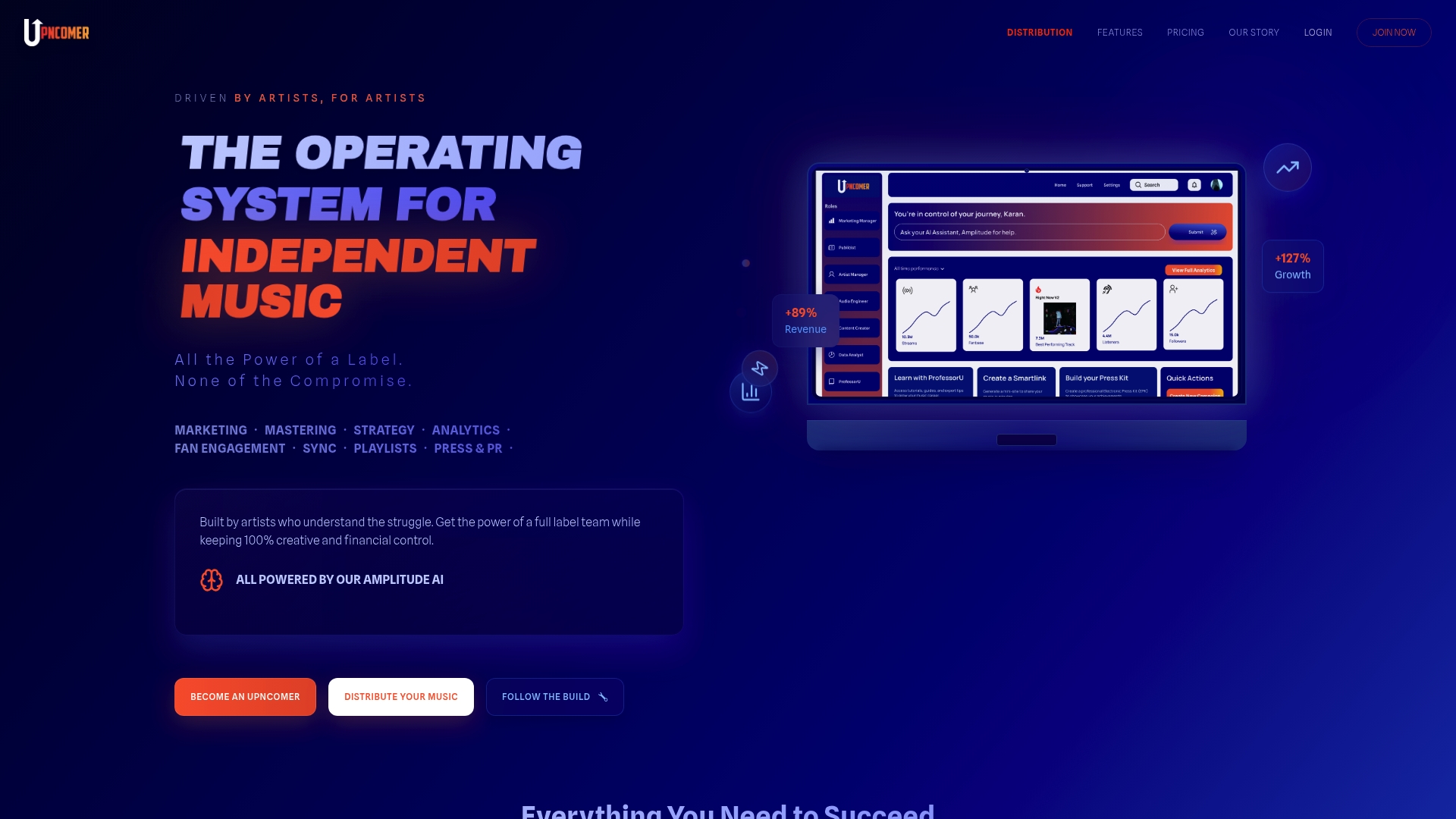
UpNComer brings everything into one place. The Data Analyst module tracks your streaming performance and fan demographics so you know exactly where to focus. Artist Manager and Distribution tools support your release planning and revenue tracking from one dashboard. Amplitude AI gives you the kind of strategic guidance that used to require a full label team. If you’re serious about diversifying your income and owning your career in 2026, UpNComer gives you the infrastructure to do it without the overhead.
FAQ
How much do independent musicians realistically earn in 2026?
Most independent artists earn less than $10,000 annually from streaming alone, but diversified income across merch, sync, live shows, and fan subscriptions can push earnings significantly higher depending on fanbase size and engagement.
What are the best revenue streams for independent musicians?
Fan subscriptions, direct-to-fan merch, sync licensing, and intimate live performances consistently offer higher margins and more control than streaming royalties, making them the most reliable income sources for musicians at any stage.
How does sync licensing work for independent artists?
Sync licensing places your music in film, TV, ads, or online content in exchange for a fee split between the master owner and the publisher. Owning both means you keep the full fee, which can range from $500 to over $200,000 depending on the placement.
How many fans do you need to make a living as an independent musician?
You need fewer fans than you think. A core group of 200 superfans paying $40 a month through a subscription model can generate close to $96,000 annually, which is enough to sustain a full-time music career.
How can independent musicians protect their income from algorithm changes?
Building owned channels like email lists and Discord communities removes your dependence on social media algorithms. Platforms can change their reach rules overnight, but your email list always delivers to the people who chose to hear from you.