Common Artist Management Mistakes That Derail Careers

Most independent musicians know that bad management can hurt a career. What’s less obvious is how many of the most damaging common artist management mistakes happen quietly, without anyone realizing the damage is being done. A manager who talks too much in meetings. A contract with a vague commission base. A team that chases streams instead of fans. These aren’t dramatic failures. They’re slow leaks. And by the time you notice them, you’ve already lost ground.
Table of Contents
- Key takeaways
- 1. Managers who talk more than they listen
- 2. Avoiding hard conversations to keep the client happy
- 3. Unclear commission structures and contract pitfalls
- 4. Treating management as a gut-feeling business
- 5. Over-controlling management that blocks artist development
- 6. Neglecting the financial oversight role
- 7. Ignoring mental health and sustainable workload
- 8. Branding inconsistency and poor fan engagement
- My honest take on why these mistakes keep happening
- Build a smarter management foundation with UpNComer
- FAQ
Key takeaways
| Point | Details |
|---|---|
| Communication balance matters | Managers who dominate conversations reduce artist visibility and weaken their brand voice over time. |
| Contract clarity protects you | Undefined commission bases and missing sunset clauses can cost artists money long after a deal ends. |
| Data beats gut feeling | Chasing vanity metrics instead of real audience signals is one of the most common pitfalls for music managers today. |
| Mental health is career strategy | Burnout is not a badge of honor. Sustainable workflows protect both artist output and long-term earning potential. |
| Branding consistency builds trust | Inconsistent public image and poor fan engagement silently erode the credibility artists spend years building. |
1. Managers who talk more than they listen
One of the most overlooked artist management pitfalls is a manager who dominates every room. When a manager speaks for the artist in meetings, negotiations, or media interactions, they gradually replace the artist’s voice with their own. That’s a problem. Your brand is your voice, and when someone else is always speaking it, industry contacts start forming a relationship with the manager, not with you.
Managers who dominate meetings or rush deals can damage an artist’s brand and long-term positioning. The best managers act as facilitators. They open doors, then step back and let the artist walk through them.
What good communication looks like in practice:
- The manager prepares the artist before meetings instead of speaking for them
- Feedback from labels, promoters, or collaborators goes through the artist first
- The artist’s public voice on social media stays personal, not managed-sounding
- Regular one-on-ones between artist and manager keep alignment tight
Pro Tip: Ask your manager to define their communication style in writing before you sign anything. A manager who resists that conversation is already showing you something important.
2. Avoiding hard conversations to keep the client happy
Fear of losing a client is one of the most destructive forces in artist management. When a manager won’t push back on a bad deal, won’t tell an artist their last release underperformed, or won’t say no to a toxic partnership, everyone loses. Poorly handled negotiations driven by fear of losing clients lead managers to accept deals that harm artists long-term.

The ability to say no strategically is a skill. A manager who can’t do it isn’t protecting you. They’re protecting themselves. And that’s a misalignment of interest that will cost you eventually.
3. Unclear commission structures and contract pitfalls
Money disagreements are the number one reason artist-manager relationships fall apart. And most of them are preventable with clearer contracts upfront.
Standard commission rates range from 15% to 20% of gross income. Anything above that, without a clear explanation of what the manager is investing in return, is above market standard. But the rate itself isn’t always the biggest issue. The bigger trap is how the commission base is defined.
| Contract Element | What to Watch For | Why It Matters |
|---|---|---|
| Commission base | Vague language that includes all income | You could pay commission on revenue the manager had nothing to do with |
| Recoupment clauses | Advances that must be paid back before royalties flow | Artists can get stuck in recoupment purgatory with no income for years |
| Sunset clause | No post-termination reduction in commission | Managers can earn on deals they didn’t create, long after the relationship ends |
| Exclusion clauses | Missing explicit carve-outs for independent income | Your Bandcamp sales or teaching income could be subject to commission |
Failing to define the commission base precisely can lead to paying commission on independent earnings that have nothing to do with the manager’s work. Explicit exclusion clauses are standard practice for a reason.
Sunset clauses protect both artists and managers by setting fair post-contract commission terms, with rates reducing over time and eventually phasing out completely. If your contract doesn’t have one, ask for it.
Pro Tip: Before signing any management deal, run it by an entertainment lawyer. Even a one-hour consultation can save you years of financial headaches. Think of it as the cheapest investment you’ll make in your career.
4. Treating management as a gut-feeling business
The music industry runs on data now. Managers who still rely primarily on instinct and relationships, without backing decisions with real numbers, are leaving their artists exposed. Data literacy is now a critical skill for music managers making informed strategic decisions.
Here’s where the common mistakes in artist management show up most clearly on the data side:
- Chasing vanity metrics. Monthly listeners and follower counts look good in screenshots but tell you almost nothing about genuine fan engagement or purchasing behavior.
- Ignoring playlist quality. A placement on a playlist with 50,000 followers but a 2% save rate is worth less than a smaller playlist with highly engaged listeners. Authentic playlist quality matters more than volume.
- Missing KPI trends. A manager who doesn’t track saves-to-streams ratio, skip rate, or audience retention has no real picture of how a release is performing.
- No campaign ROI tracking. If you’re spending money on ads or promotion and no one is measuring the return, you’re flying blind.
Tools like UpNComer’s Data Analyst and Growth Engine modules give independent artists access to the kind of music campaign analytics that used to require a full label team. You don’t need to guess anymore.
5. Over-controlling management that blocks artist development
There’s a version of management that looks like dedication but functions like a cage. Managers who filter every relationship, approve every collaboration, and gatekeep every conversation aren’t protecting the artist. They’re stunting them.
Artist development happens through exposure, experimentation, and connection. When a manager blocks an artist from building their own industry relationships, the artist becomes dependent on the manager for every opportunity. That’s not a career. That’s a dependency. And if the relationship ends, the artist is left with nothing but the manager’s rolodex.
Great managers act as bridges, enabling artist visibility and strategic patience. They introduce you to people and then let you build the relationship yourself.
6. Neglecting the financial oversight role
A manager’s financial responsibilities go well beyond collecting a commission check. Managers must act as the CFO of the artist’s career, overseeing multiple income streams and maintaining budget transparency. When this doesn’t happen, artists often discover financial problems too late to fix them.
Common financial oversights include missing royalty collection registrations, untracked sync licensing opportunities, and no clear picture of where money is actually coming from. Understanding your music income streams is something every artist needs to own, even if a manager handles the day-to-day.
7. Ignoring mental health and sustainable workload
This one doesn’t get talked about enough. 73% of independent musicians experience stress, anxiety, or depression, and music professionals are three times more likely to face depression than the general population. Burnout is not a productivity problem. It’s a health crisis that happens to affect careers.
Managers contribute to this more than they realize. Overloading release schedules, normalizing 24/7 availability, and treating every slow period as a crisis all add up. Sustainable careers require treating artists as whole people, not output machines.
“The most successful long-term artist-manager relationships are built on trust, boundaries, and the shared understanding that the artist’s wellbeing is the foundation of everything else.”
Pro Tip: Build recovery time into your release calendar the same way you build in promotion windows. Rest is not the absence of work. It’s what makes the work sustainable.
Practical ways to protect mental health in artist management:
- Schedule regular check-ins that include wellbeing, not just career updates
- Set clear boundaries around response times and off-hours communication
- Use workflow automation to reduce the administrative load that causes the most low-grade stress
- Normalize saying “I need a break” before it becomes “I’m burning out”
8. Branding inconsistency and poor fan engagement
Your brand is the promise you make to your audience. When that promise is inconsistent, fans disengage. Brand inconsistency, ignoring fan engagement, and poor social media management damages artist credibility in ways that are slow to build and fast to unravel.
Here are the most common errors in managing artists’ public image:
- Inconsistent visual identity. Switching aesthetics with every release confuses fans and makes your catalog feel disconnected.
- Ghosting your audience. Long silences between releases, with no communication, train fans to forget you exist.
- Poorly vetted partnerships. Associating with brands or artists whose values conflict with yours creates confusion at best and backlash at worst.
- Letting the manager run your social voice. Fans can tell when posts don’t sound like you. Authenticity is the whole point.
| Branding Error | Impact | Fix |
|---|---|---|
| Inconsistent visual style | Fans can’t recognize your content in a feed | Build a simple style guide and stick to it |
| No fan engagement strategy | Low comment and save rates signal low loyalty | Reply, ask questions, and show up consistently |
| Reactive crisis management | One bad post can undo years of goodwill | Have a communication plan before problems arise |
| Misaligned brand partnerships | Confuses your audience and dilutes trust | Vet every partnership against your core values |
Ethical, authentic branding isn’t a marketing exercise. It’s the foundation of long-term fan loyalty. And fan loyalty is what turns streams into a real career.
My honest take on why these mistakes keep happening
I’ve watched artist-manager relationships fall apart for years, and the pattern is almost always the same. The mistakes aren’t usually about bad intentions. They’re about misaligned expectations and the absence of hard conversations.
What I’ve found is that the managers who create the most sustainable careers for their artists are the ones who think like emotional translators, data analysts, and trusted advisors all at once. They’re not just booking shows or sending emails. They’re reading the signals the artist can’t see because they’re too close to their own work.
The uncomfortable truth is that most artist management pitfalls are visible in the first 90 days of a relationship. The commission clause that feels fine now becomes a problem in year three. The manager who talks over you in the first meeting will keep doing it. The team that never looks at streaming data will keep making decisions based on vibes.
What I’d tell any independent musician is this: treat your management relationship like a business partnership, because that’s exactly what it is. Read the contract. Ask for data. Set expectations in writing. And if your manager can’t handle those conversations, that’s your answer before you’ve signed anything.
The artists I’ve seen build real, lasting careers are the ones who stayed curious, stayed informed, and never outsourced their judgment entirely. Your manager should make you more capable, not more dependent.
— Karan
Build a smarter management foundation with UpNComer
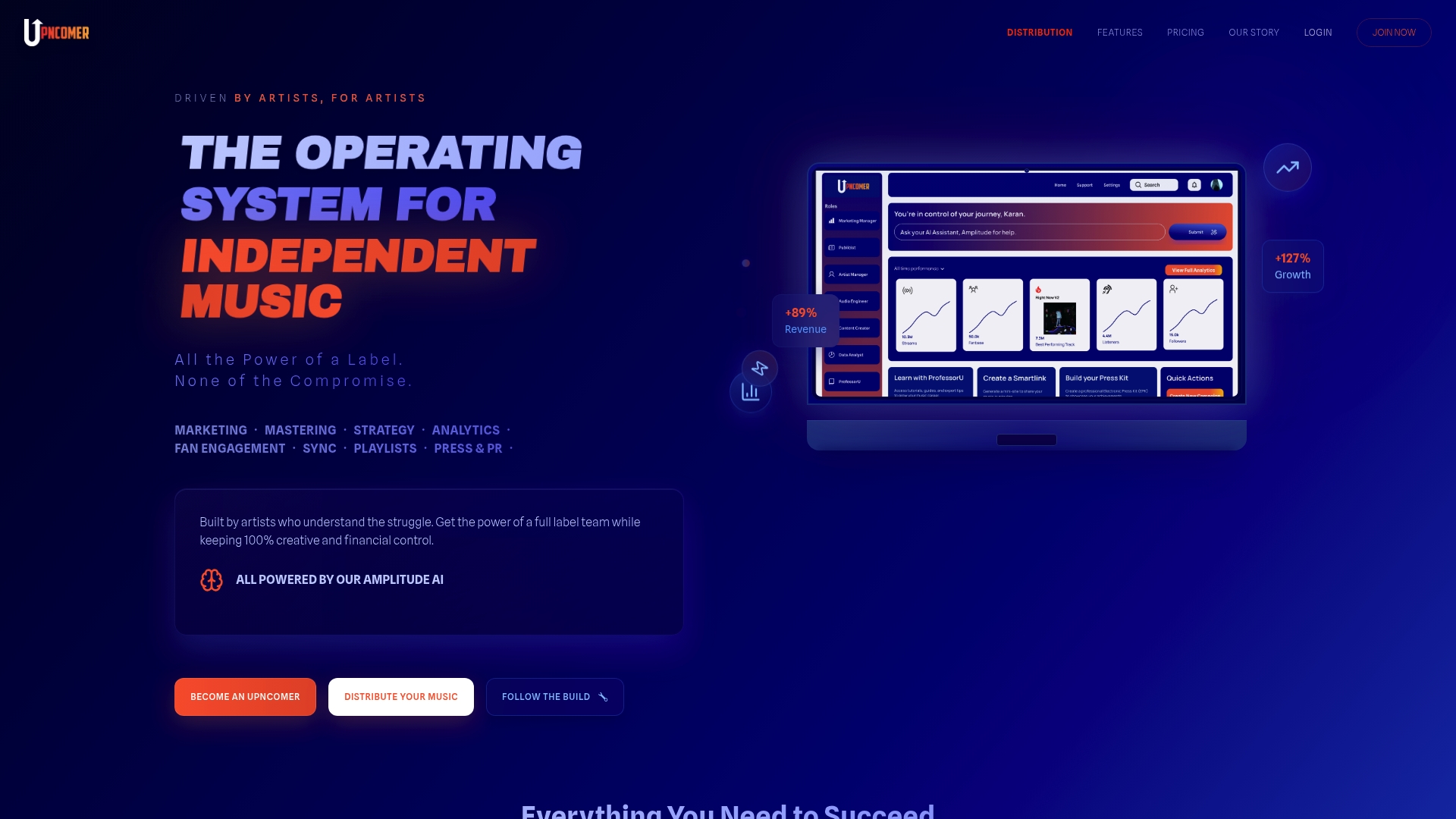
Avoiding the most common artist management mistakes gets a lot easier when you have the right tools working for you. UpNComer is built specifically for independent artists who want to manage their careers with the same resources major-label artists have access to. From tracking your streaming analytics with the Data Analyst module to planning releases with Artist Manager and running campaigns through the Growth Engine, everything lives in one place. Amplitude AI gives you real-time guidance so you’re never making decisions blind. If you’re ready to stop guessing and start growing, explore UpNComer and see what a full digital music team actually looks like.
FAQ
What are the most common artist management mistakes?
The most common artist management mistakes include poor communication, vague commission contracts, ignoring streaming data, over-controlling artist relationships, and neglecting mental health. Each of these can quietly derail career growth over time.
What commission rate should a music manager charge?
Standard artist manager commission rates range from 15% to 20% of gross income. Rates above this are above market standard unless the manager is making significant financial investments in the artist’s career.
Why do managers need to understand streaming data?
Data literacy is now a critical skill for music managers because it allows them to distinguish real fan engagement from vanity metrics, measure campaign ROI, and make strategic decisions based on actual audience behavior rather than gut feeling.
What is a sunset clause in a music management contract?
A sunset clause sets the terms for commission payments after a management contract ends, with rates reducing over time until they phase out completely. Without one, a manager can continue earning commissions on deals they had no part in creating.
How does burnout affect artist careers?
73% of independent musicians experience stress, anxiety, or depression, making burnout a serious career threat. When managers normalize unsustainable workloads, they risk reducing both the artist’s output quality and their long-term earning potential.