How to attract independent artists to your recording studio
You’ve invested thousands in gear, acoustic treatment, and the perfect room, but the bookings aren’t filling up the way you imagined. That’s the quiet frustration a lot of studio owners sit with. Independent artists are the most active recording demographic right now, and they’re hungry for the right environment. The challenge is that they’re also self-sufficient, budget-conscious, and highly selective about where they spend their limited resources. This guide breaks down exactly how to position your studio so that indie musicians not only find you but choose you over and over again.
Table of Contents
Key Takeaways
| Point | Details |
|---|---|
| Know indie artist needs | Studios should understand indie musicians’ self-managed habits and seek to address their budget and creative preferences. |
| Offer specialized packages | Affordable, genre-specific deals are highly effective for attracting up-and-coming bands to your studio. |
| Leverage referrals | Strategic partnerships and incentivized referral networks quickly generate bookings from local artists. |
| Monitor utilization rates | Tracking usage helps verify marketing effectiveness and prompts timely adjustment of outreach strategies. |
| Balance organic and paid tactics | A mix of trusted referral outreach and targeted ads maximizes studio bookings and sustainable growth. |
Understand the needs of independent artists
Before you can attract indie artists, you need to genuinely understand how they operate. These aren’t artists with A&R reps handling logistics or label budgets covering studio time. They’re running everything themselves, which shapes every decision they make about where to record.
Indie music industry data shows that 72% of indie artists are self-managed, spending roughly 12 hours per week on marketing alone and around $500 per release on ads. Only 18% own home studios, which means the vast majority still need professional recording spaces. That’s your market. And it’s a significant one, considering indie artists now account for 43.1% of the overall music market with $10 billion in annual revenue.
What does this tell you? These artists are stretched thin. They’re balancing creative work with the operational grind of running a one-person music business. Time and money are their most guarded resources. When they’re evaluating a studio, they’re not just asking “does this place sound good?” They’re asking “will this fit my budget, my schedule, and my creative vision?”
Here’s a breakdown of what independent artists typically prioritize when choosing a studio:
-
Affordable pricing with clear, transparent packages (no hidden fees)
-
Flexible booking including evenings, weekends, and short-notice slots
-
Genre-relevant experience from the engineer or producer on staff
-
Creative collaboration opportunities, not just a room and a clock running
-
Fast turnaround on mixing and mastering after sessions
-
A welcoming, low-pressure atmosphere that doesn’t make them feel like a transaction
Understanding independent musician preferences means recognizing that many indie artists have had bad experiences with studios that felt cold or transactional. They talk to each other constantly. Word travels fast in local music communities, and a reputation for genuinely supporting artists is worth more than any ad campaign.
| Artist priority | Why it matters | Studio action |
|---|---|---|
| Affordable packages | Limited release budgets | Offer tiered pricing |
| Flexible scheduling | Self-managed schedules | Add evening/weekend slots |
| Genre experience | Trust in the engineer | Highlight specializations |
| Creative input | Artistic ownership | Offer producer collaboration |
| Fast delivery | Release timelines | Set clear turnaround windows |
Pro Tip: Build a “starter bundle” specifically for first-time clients. Include a short session, a rough mix, and a brief consultation. This lowers the barrier to entry and gives artists a taste of what working with you feels like before they commit to a full project.
Build specialized offers and packages
Once you understand what indie artists need, the next step is building offers that speak directly to those needs. Generic pricing pages don’t convert. Specific, clearly named packages do.
Effective studio promotion research confirms that targeting indie artists with specialized offers, including affordable packages for vocals and mixing alongside genre-specific services, is one of the most reliable ways to fill your calendar. The key word here is specialized. An indie hip-hop artist and an indie folk singer-songwriter have completely different session needs, and your packages should reflect that.
Here’s how to build and promote genre-specific packages step by step:
-
Identify your top three genres. Look at who’s already booking with you and who’s active in your local scene. Focus your initial packages around those genres.
-
Define what each genre needs most. Hip-hop artists often need vocal booth time and beat playback. Singer-songwriters may want live room space and acoustic guitar miking. Bands need full tracking setups.
-
Name your packages with clarity. “Indie Vocal Bundle” or “Singer-Songwriter Session” tells the artist immediately that this offer was built for them.
-
Price competitively but sustainably. Research what comparable studios in your area charge and position your entry-level packages slightly below or at parity, with clear upgrade paths.
-
Promote the packages where indie artists actually are. That means Instagram, TikTok, local Facebook groups, and music community forums, not just your website.
Here’s a quick comparison of how basic and premium packages can be structured:
| Package type | Included services | Target artist | Price range |
|---|---|---|---|
| Basic vocal session | 2 hours tracking, rough mix | Solo vocalists, demo artists | $80 to $150 |
| Singer-songwriter bundle | 4 hours, acoustic tracking, mix | Folk, indie pop | $200 to $350 |
| Full production package | 8+ hours, mixing, mastering | Bands, EP projects | $500 to $900 |
| Genre-specific add-on | Beat playback, live room, overdubs | Hip-hop, R&B, rock | Custom pricing |
One thing studios often overlook is the power of a limited-time offer. Running a “new artist discount” for first-time bookings or a seasonal package creates urgency without permanently cutting your rates. Indie artists respond to deals because their budgets are tight, not because they don’t value quality.
Leverage partnerships and referrals
You can have the best packages in town and still struggle to fill your calendar if no one knows you exist. That’s where partnerships and referrals become essential. These strategies are low-cost and high-trust, which is exactly what works in the indie music world.
“Reaching out to 10 local contacts typically produces at least one solid lead. That ratio might sound slow, but it compounds quickly when those leads become clients who refer others.”
Building a recording studio business guidance consistently points to local artist networks and influencer partnerships as the most reliable path to first clients. The logic is simple: indie artists trust other indie artists. A recommendation from a local musician carries more weight than any paid ad.
Here are the types of local collaborators worth building relationships with:
-
Local musicians and bands who are already active in the scene
-
Music teachers and vocal coaches who have students ready to record
-
Open mic hosts and venue bookers who interact with artists weekly
-
Local music bloggers and playlist curators with engaged followings
-
Instrument shops and rehearsal spaces that serve the same audience
-
College music programs with students working on projects
The approach doesn’t need to be complicated. Show up at local gigs. Introduce yourself. Offer a free or discounted session to a well-connected local artist in exchange for an honest review and a shoutout. That single session can generate five new bookings if the artist has an active community around them.
You should also think about networking tips for artists as a two-way street. When you genuinely support local musicians, share their releases, attend their shows, and celebrate their wins, they become advocates for your studio without you ever having to ask.
Pro Tip: Create a formal referral program. Offer existing clients a free hour of studio time or a discount on their next session for every new client they send your way. Even a small incentive dramatically increases the likelihood that happy clients will actively recommend you.
Optimize studio utilization and track performance
Attracting artists is only half the equation. Keeping your calendar consistently full requires ongoing measurement and adjustment. Studio utilization, meaning the percentage of available booking hours that are actually filled, is the clearest indicator of whether your marketing is working.
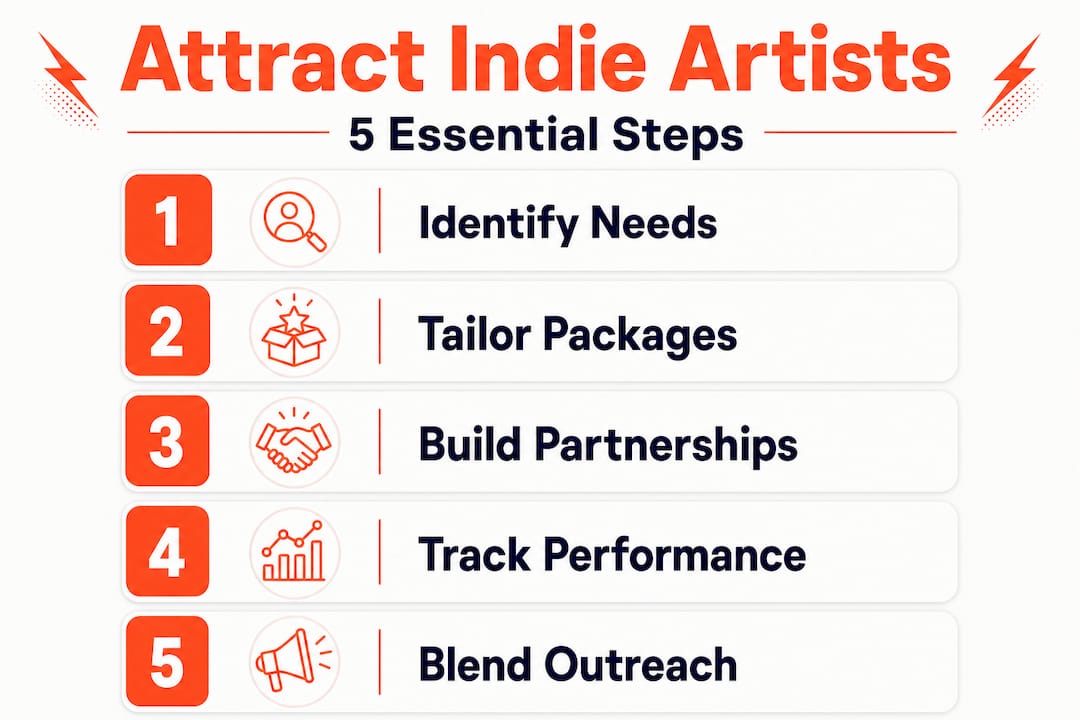
Studio management best practices set the benchmark at 70 to 80% utilization as the target for a healthy, sustainable studio operation. If you’re consistently below 60%, that’s a signal your marketing strategy has gaps that need addressing, not just a slow season.
Here’s a step-by-step framework for tracking and improving your utilization:
-
Calculate your available hours. Determine how many bookable hours you have per week across all rooms and engineers.
-
Log every booking accurately. Use a booking system that tracks session length, client type, and revenue per session.
-
Calculate weekly and monthly utilization rates. Divide booked hours by available hours and multiply by 100.
-
Identify your low-traffic windows. Most studios see dips on weekday mornings. These are your prime targets for promotional offers.
-
Test one marketing channel per month. Run a targeted Instagram campaign one month, a referral push the next, and compare which drives more bookings.
-
Review and adjust quarterly. Look at which packages, genres, and client types generate the most repeat business and double down on those.
Here’s how organic and paid marketing strategies compare in terms of outcomes for studios:
| Strategy type | Cost | Lead time | Trust level | Best for |
|---|---|---|---|---|
| Referral programs | Low | Medium | Very high | Repeat bookings |
| Social media content | Low to medium | Slow build | High | Brand awareness |
| Local partnerships | Very low | Medium | High | First clients |
| Paid social ads | Medium to high | Fast | Medium | Local reach, quick leads |
| Google Ads | High | Fast | Medium | Search intent traffic |
| Video reviews/testimonials | Low | Slow build | Very high | Long-term credibility |
Studios below 60% utilization should prioritize paid ads for quick local visibility while simultaneously building organic trust through referrals and video content. The two approaches work best together, not as either-or choices.
Why balancing organic outreach and paid ads matters
Here’s something most studio marketing advice gets wrong: it treats organic and paid strategies as competing options. Pick one, commit to it, and scale. But that’s not how successful studios actually operate.
The studios that consistently maintain strong bookings use both approaches in a deliberate rhythm. They run paid ads to generate immediate local awareness, especially when utilization dips below their target threshold. At the same time, they invest steadily in organic trust-building through video testimonials, behind-the-scenes content, and genuine community involvement. Tracking utilization data is what makes this balance possible because it gives you a real signal for when to push harder on paid campaigns and when organic momentum is doing the work.
The uncomfortable truth is that most studios over-rely on one method because it feels safer. Some owners love the community-building side and resist paid advertising because it feels inauthentic. Others run ads constantly but never build the organic credibility that turns one-time clients into loyal regulars. Neither extreme works long-term.
Consider two real scenarios. A studio running only paid ads might fill a few sessions quickly but struggles to retain clients because there’s no community or trust built around the brand. A studio relying purely on word-of-mouth grows slowly and inconsistently, leaving revenue on the table during slow months. The studios that scale sustainably are the ones treating utilization data as a dial, not a scoreboard. When numbers drop, they turn up the paid spend. When organic momentum builds, they redirect that budget into better gear or additional session slots.
Understanding independent artist marketing strategies also helps studios see that their clients are navigating the exact same balance. Indie artists who understand how to mix organic fan-building with targeted ad campaigns grow faster than those who rely on one approach. That shared challenge creates genuine common ground between studios and the artists they serve.
Take your studio’s artist attraction strategy further
Applying all of these strategies takes time, and doing it across multiple channels while also running sessions can feel overwhelming fast.
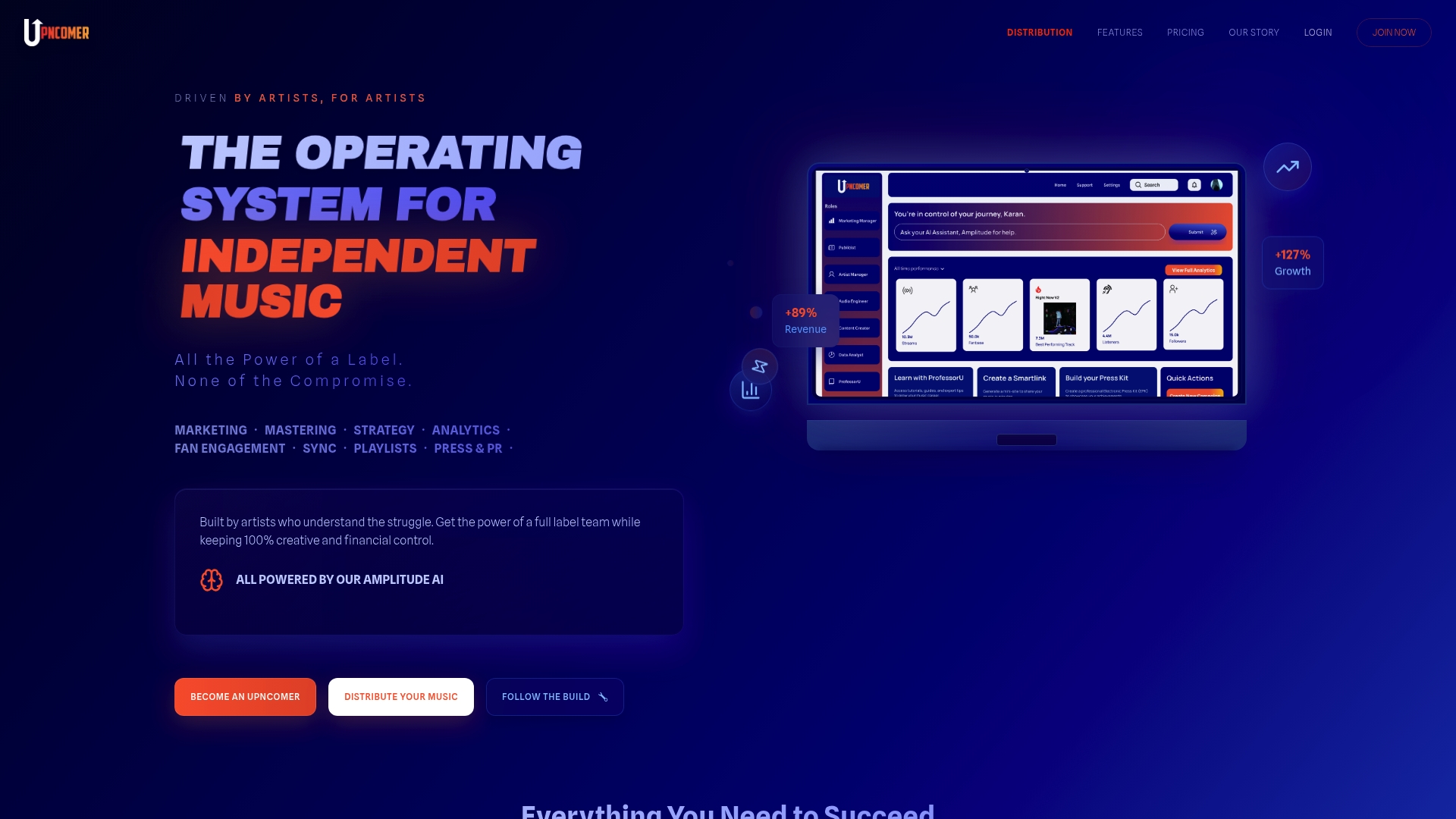
That’s exactly where UpNComer comes in. Built specifically for independent artists and the teams that support them, UpNComer studio solutions bring together the tools you need to manage marketing, track performance, and engage your audience without juggling a dozen separate platforms. Whether you’re an artist looking to grow your career or a studio owner trying to attract more indie clients, UpNComer’s AI-powered ecosystem gives you the data, strategy, and execution tools to make smarter decisions and fill more sessions. Stop guessing what’s working and start building with real insights behind every move.
Frequently asked questions
What is the most effective way to market a studio to indie artists?
Tailored package offers and genre-specific services attract most indie artists, especially those seeking affordable vocal and mixing solutions that fit tight release budgets.
How important is studio utilization rate for success?
Maintaining 70 to 80% utilization is crucial for a sustainable studio business, and rates consistently below 60% are a clear indicator of marketing gaps that need immediate attention.
How do indie artists typically find studios?
Many discover studios through referrals from local artists or influencers and respond especially well to direct partnership offers and community-based recommendations over paid advertising.
What’s the indie music market size and growth rate?
Indie artists account for 43.1% of the music market with $10 billion in annual revenue, and most spend significant time and personal funds self-managing their releases without label support.