What are music income streams? A guide for independent artists

Streaming dominates the music industry at a massive scale, yet most independent musicians still struggle to pay rent from it. That contradiction sits at the heart of what is music income streams — and understanding it could change how you approach your entire career. If you have ever felt confused about where money actually comes from in this industry, you are not alone. This guide breaks down every major music revenue source, explains how royalties work, and gives you a practical framework for building income that does not depend on any single platform or algorithm deciding your fate.
Table of Contents
- Breaking down music income streams: key categories explained
- Understanding streaming revenue and its limits for independent artists
- Unlocking rights and royalties: performance and mechanical income streams
- Diversifying beyond royalties: live performances, merchandise, and fan subscriptions
- Applying income strategies: building a sustainable music revenue portfolio
- Why the conventional wisdom about music income streams is outdated for independent artists
- How UpNComer helps independent musicians maximize income streams
- Frequently asked questions
Key Takeaways
| Point | Details |
|---|---|
| Streaming dominance | Streaming accounts for nearly 70% of recorded music income but yields small per-stream payouts for artists. |
| Multiple royalties | Performance and mechanical royalties require separate registrations to fully collect music income. |
| Diversify income | Independent musicians should combine royalties, live shows, merch, and subscriptions for financial resilience. |
| Direct fan relationship | Owning your audience through subscriptions and merch boosts predictable, controllable revenue. |
| Data management | Tracking income streams and registrations carefully helps prevent lost royalties and maximizes earnings. |
Breaking down music income streams: key categories explained
Music income streams are the different channels through which artists earn money from their music and brand. Think of them like legs on a chair. The more legs you have, the more stable your position. Rely on just one and you are one algorithm update away from losing everything.
Streaming accounts for 69.6% of global recorded music income in 2025. That number sounds reassuring until you realize how little of that trickles down to the individual independent artist. Building multiple income streams from day one is not a luxury — it is the baseline.
Here are the primary categories every independent musician should know:
- Streaming royalties: Paid by platforms each time your track is played. Split into performance (neighboring rights) and mechanical components depending on your role.
- Performance royalties: Generated when your music is publicly performed or broadcast on radio, in venues, or across digital platforms.
- Mechanical royalties: Paid for the reproduction of your composition, including streaming and downloads.
- Live performance income: Revenue from ticket sales, performance fees, and touring.
- Merchandise: Physical and digital products sold directly to fans, from T-shirts to sample packs.
- Sync licensing: Fees paid when your music is used in film, TV, ads, or video games.
- Fan subscriptions: Monthly income from platforms where fans pay directly to support you.
| Income stream | Type | Predictability | Control level |
|---|---|---|---|
| Streaming royalties | Platform-dependent | Low | Low |
| Performance royalties | Rights-based | Medium | Medium |
| Mechanical royalties | Rights-based | Medium | Medium |
| Live performances | Active | Variable | High |
| Merchandise | Owned audience | Medium-High | High |
| Sync licensing | Rights-based | Variable | Medium |
| Fan subscriptions | Owned audience | High | High |
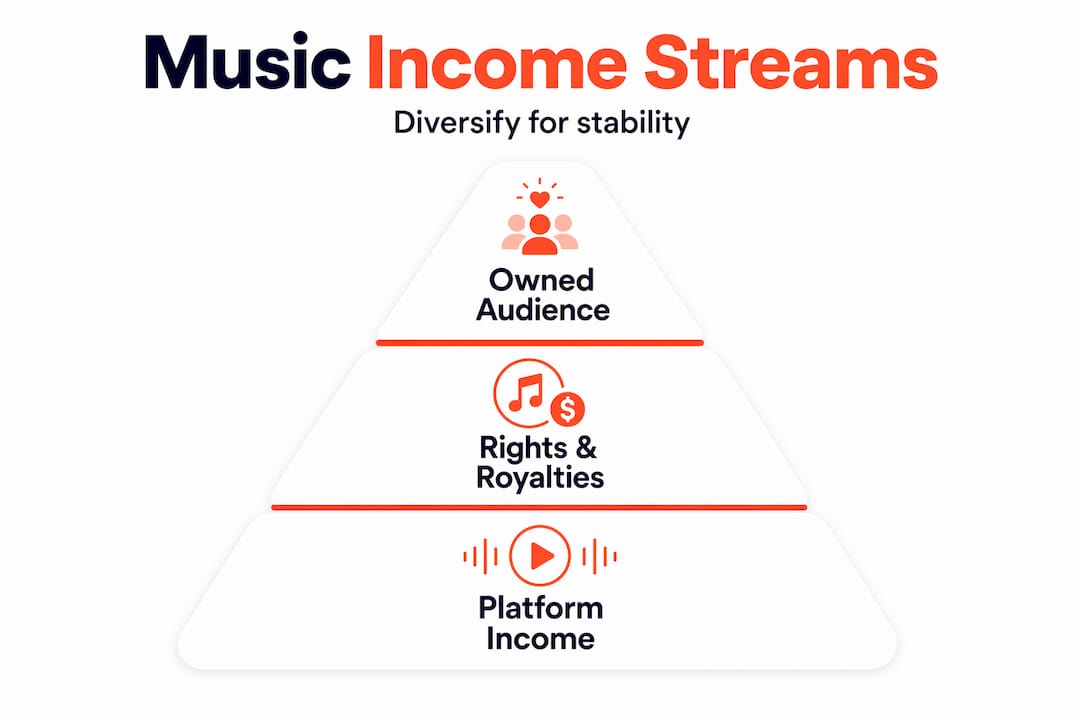
Pro Tip: Categorize your income sources into three buckets: platform-dependent, rights-based, and owned-audience. Building in all three protects you when one bucket dries up.
Understanding streaming revenue and its limits for independent artists
Streaming is the top of your funnel. It is where people discover you, follow you, and start caring about your work. But confusing discovery with income is one of the most common and costly mistakes in the DIY music world.
Streaming revenues surpassed $22 billion globally in 2025, with paid subscriptions accounting for 52.4% of that total. The ad-supported tier is declining as a revenue contributor. Yet even as the global pot grows, per-stream payouts remain a fraction of a cent — and most of that money goes to the artists with the largest listener bases.
RIAA data confirms that streaming-based income streams dominate the industry but often are not enough for individual artists alone. That is not a knock on streaming. It is just the reality of how the math works at smaller audience sizes.
Streaming income is a reward for past work. It grows slowly, compounds over time, and builds a baseline. It should never be your only financial plan.
Here is what streaming income insights from working artists consistently show:
- Most independent artists with under 100K monthly listeners earn less than $500 per month from streaming alone.
- Artists who treat streaming as discovery, then convert listeners into merchandise buyers or subscribers, dramatically increase their revenue per fan.
- Releasing consistently keeps your catalog earning passively, even when you are not actively promoting.
The move is to treat streaming like a long-term savings account. Deposits go in slowly, but they compound. Meanwhile, your active income comes from other streams you control.
Unlocking rights and royalties: performance and mechanical income streams
Royalties are one of the least understood areas of music monetization, and that confusion is costing independent artists real money right now. Let’s clear it up.
There are two fundamental royalty types you need to know: performance royalties and mechanical royalties. They are separate, collected by different organizations, and often missed entirely because artists only register with one type of rights entity.
Performance royalties are generated whenever your music is publicly performed or broadcast. That includes radio airplay, streaming plays, venues, TV, and even a bar playing your track over speakers. In the U.S., these are collected by Performing Rights Organizations (PROs) like ASCAP, BMI, or SESAC.
Mechanical royalties are paid for the reproduction of your musical composition. Every time someone streams or downloads your song, a mechanical royalty is generated. In the U.S., PROs handle performance royalties, while the Mechanical Licensing Collective (the MLC) manages digital mechanical royalties on behalf of songwriters and publishers.
Here is the step-by-step royalty collection basics every independent artist should follow:
- Register as a songwriter and publisher with a PRO. Choose ASCAP, BMI, or SESAC and register all your works.
- Claim your royalties with the MLC. If you write your own songs, you are entitled to mechanical royalties from digital streams and downloads. Register at themlc.com.
- Use a publishing administrator. Services that collect international royalties on your behalf fill gaps that U.S.-only registrations miss.
- Register all song metadata accurately. ISRC codes, ISWC codes, split agreements, and co-writer credits all need to be correct or royalties get lost.
- Audit your catalog annually. Check for unclaimed royalties, especially on older releases.
Many artists miss mechanical royalty income entirely because they assume their distributor handles it. Most do not.
Pro Tip: Maintain a master spreadsheet of every song in your catalog with its ISRC code, PRO registration status, MLC registration status, and split percentages. One missing field can mean missed royalties for years.
Diversifying beyond royalties: live performances, merchandise, and fan subscriptions
Royalties are important. But they are rarely what pays the bills in the early years. These three income streams often generate more cash per fan than any platform-based royalty check.
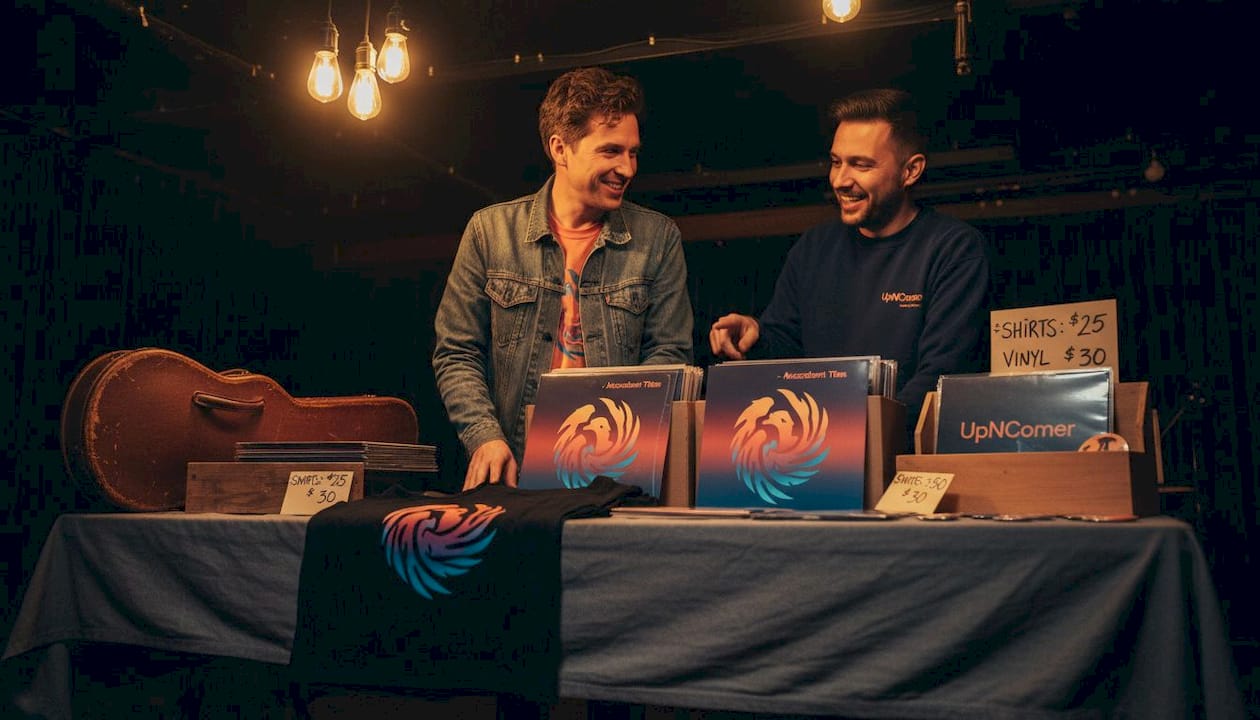
Live performance revenues and merchandise offer vital income to counterbalance the unpredictability of streaming royalties. Here is how each one actually works for independent artists today.
Live performances remain powerful, but they are not passive. They require travel, logistics, upfront costs, and real energy. The key is treating every show as a revenue event, not just a performance. Sell merchandise at shows. Collect emails. Convert every attendee into a longer-term fan relationship.
Merchandise has shifted fundamentally. It is no longer just tour T-shirts. Independent artists now run year-round e-commerce stores selling vinyl, limited drops, art prints, and digital products. The margins on merch can be genuinely good when you control production and sell direct.
Fan subscriptions are arguably the most underused income stream in the DIY space. Platforms let fans pay a monthly fee for exclusive content, early access, or direct interaction. The income is predictable. The relationship is deeper. Even 100 paying fans at $5 per month is $500 recurring revenue, every single month, regardless of what any algorithm does.
| Income stream | Revenue potential | Audience size needed | Passive or active | Fan engagement |
|---|---|---|---|---|
| Live performances | High per show | Medium | Active | Very high |
| Merchandise | Medium-High | Small to Medium | Mixed | High |
| Fan subscriptions | Predictable and growing | Small | Mixed | Very high |
Pro Tip: Treat merch and subscriptions as audience-building first, revenue second. The artists who make the most from both are the ones whose fans feel genuinely connected to them — not just customers.
Applying income strategies: building a sustainable music revenue portfolio
Now that you understand the types, here is how to actually build a revenue portfolio that grows over time. The goal is not to do everything at once. That will burn you out before you see any real return. The goal is to add streams in a logical order.
Here is the framework:
- Get your rights registrations sorted first. Join a PRO. Register with the MLC. Set up a publishing admin. This is non-negotiable because it is passive income you are already entitled to.
- Maximize your streaming presence. Release consistently, pitch to playlists, and use your streaming profiles to funnel people toward your direct channels.
- Launch a simple merch offering. Start with one or two items your audience actually wants. Test before you invest in large print runs.
- Build a direct fan channel. Email list, fan subscription, Patreon, or a combination. Own the relationship.
- Explore sync licensing. Register your catalog with a sync licensing platform and submit music where it fits. One placement can generate more income than months of streaming.
Independent artists need a blend of platform-dependent, rights-based, and owned-audience income streams to build real career resilience.
When prioritizing, match the stream to your current audience size. Small but loyal audience? Fan subscriptions and merch will outperform streaming. Growing audience with strong discovery? Maximize catalog depth and sync opportunities. Track everything. Without data, you are guessing.
| Stream | Effort level | Revenue potential | Your control |
|---|---|---|---|
| Streaming royalties | Low ongoing | Low to Medium | Low |
| Performance royalties | Low once registered | Medium | Medium |
| Mechanical royalties | Low once registered | Medium | Medium |
| Merchandise | Medium | Medium-High | High |
| Fan subscriptions | Medium | Predictable and High | High |
| Sync licensing | Medium-High | Variable and High | Medium |
| Live performances | High | High per event | High |
Pro Tip: Reinvest your first reliable income, whether from merch or subscriptions, into growing your owned channels. An email list of 1,000 true fans is worth more than 50,000 passive stream listeners.
Why the conventional wisdom about music income streams is outdated for independent artists
Here is the uncomfortable truth: the common advice to “just focus on getting more streams” was probably always bad advice for independent artists, and it is worse now.
The industry narrative around streaming as a career foundation was mostly useful to rights holders with massive catalogs and major-label negotiating power. For independent artists, RIAA data reinforces that streaming income alone is not sufficient for individual income stability. That is not cynicism. It is math.
The artists building real, sustainable income in 2026 are not the ones with the most monthly listeners. They are the ones who have built direct relationships with their fans, own their merch, run subscriptions, and treat sync licensing as a serious part of their catalog strategy. Streaming feeds their funnel. Everything else pays for their life.
What has changed is that the tools to build this kind of diversified career are more accessible than ever. You do not need a manager, a label, or a team of five people to run a merch store, collect your royalties, or launch a fan subscription. What you need is a clear understanding of how each stream works and a plan for activating them in the right order.
The most important mindset shift is this: stop thinking about music income as something that happens to you based on how many people press play. Start thinking of it as something you build, intentionally, through audience ownership and rights management. Check out artist income strategies to see how other independent artists are putting this into practice.
Platform rules change. Algorithms shift. But the fans who trust you, the rights you own, and the catalog you build are yours. That is where sustainable income actually lives.
How UpNComer helps independent musicians maximize income streams
Understanding music income streams is one thing. Having the tools to act on that knowledge is another.
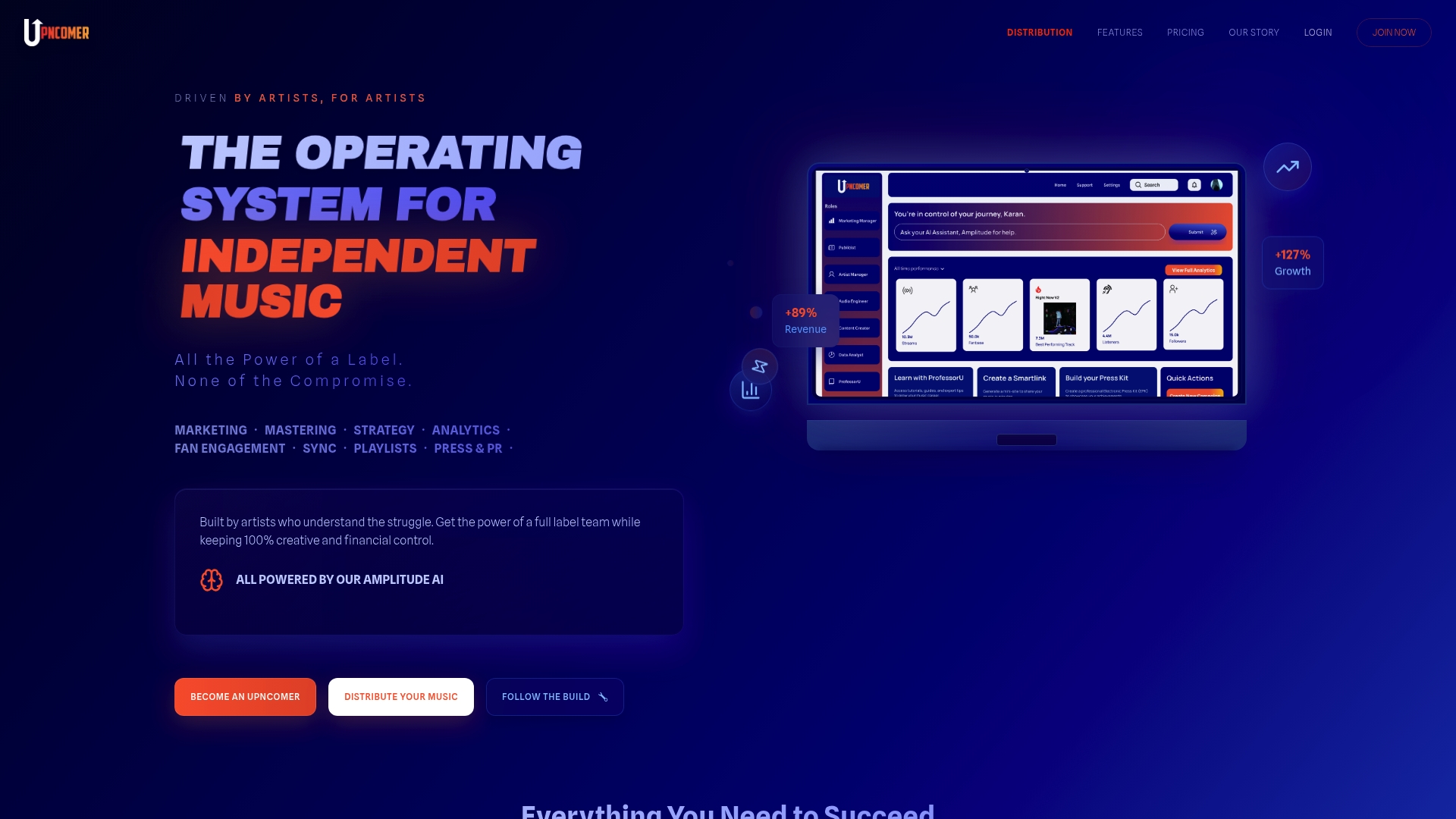
UpNComer is built specifically for independent artists who want to manage and grow their career without a major label or fragmented stack of unconnected tools. Inside the platform, you can track your streaming analytics, manage fan engagement, run ad campaigns, access AI mastering, and connect the dots between your income sources all in one place. The educational resources are built for DIY artists, not industry executives. Whether you are trying to figure out your first merch drop, optimize your release strategy, or understand where your royalties are coming from, UpNComer gives you the infrastructure to move from guessing to knowing.
Frequently asked questions
What are the main types of music income streams for independent artists?
The main types include streaming royalties, performance royalties, mechanical royalties, live performances, merchandise sales, and fan subscriptions. Streaming accounts for 69.6% of global recorded music income, but independent artists typically need all six categories working together.
How do performance and mechanical royalties differ?
Performance royalties pay when your music is publicly played or broadcast, while mechanical royalties pay for reproductions like digital downloads and streaming. PROs collect performance royalties while the Mechanical Licensing Collective administers digital mechanical royalties in the U.S.
Can I rely on streaming income alone as an independent musician?
No. Streaming dominates but isn’t sufficient for individual artists on its own. Most independent musicians combine streaming with merchandise, royalties, live income, and fan subscriptions to build financial stability.
What steps should I take to start collecting all possible royalties?
Register with both a PRO and the Mechanical Licensing Collective to cover both royalty types. Registering with only one rights entity risks missing a significant portion of your eligible income.
How can merchandise and fan subscriptions help my income?
Merchandise and subscriptions create direct, predictable income while building stronger fan relationships that go beyond what royalties alone can offer. Fan subscriptions and merch provide vital complementary income streams that you control, regardless of platform changes.