Music campaign management strategies for independent artists

You can hit a million streams and still have no real career momentum. It sounds counterintuitive, but streaming numbers without genuine fan engagement are like a packed venue where nobody buys merch, follows you home online, or comes back next time. The missing link for most independent artists is not talent or even reach. It is strategic campaign management — the coordinated system that turns a release into a real career-building event. This article breaks down exactly what music campaign management means, how to structure it, and how to make it work without a major label budget.
Table of Contents
-
Core strategies for indies: Structure, rollout, and audience targeting
-
The uncomfortable truth most artists miss about campaign management
Key Takeaways
| Point | Details |
|---|---|
| Strategy beats streams | Focusing solely on streaming numbers can undermine real fan engagement and lasting growth. |
| Phased campaigns win | Pre-release planning, launch tactics, and post-release engagement are all vital for maximum impact. |
| Mix organic and paid | Blending loyal audience-building with targeted ads creates momentum and sustainable reach. |
| Systems drive results | Repeatable processes and meaningful KPIs let indie artists scale without big label budgets. |
| Engagement over vanity | Qualitative signals like shares and comments matter more for longevity than follower counts alone. |
Defining music campaign management
Let’s clear something up first. A lot of artists treat a release like a single moment: drop the track, post about it, hope for the best. That is not a campaign. That is a prayer.
Music campaign management is the strategic planning, execution, and oversight of coordinated promotional efforts for music releases, typically spanning pre-release, release, and post-release phases to drive streams, engagement, and fan growth. It is a structured process, not a single post or a playlist pitch.
Here is how the three phases break down in practice:
-
Pre-release: This is where you build anticipation. Think teaser content, press outreach, playlist pitching, email list warm-ups, and ad creative preparation. This phase can start anywhere from two weeks to three months before your release date, depending on the scale of the project.
-
Release week: This is your velocity window. Streaming algorithms pay close attention to early momentum, so every action in the first 48 to 72 hours matters. You want saves, playlist adds, social shares, and genuine fan interaction happening simultaneously.
-
Post-release: Most artists abandon a song after week one. That is a huge mistake. The post-release phase is where you sustain momentum through content repurposing, fan engagement, ad retargeting, and building toward your next release.
“A release without a campaign is just noise. A campaign without a release is just marketing. The magic happens when both work together with intention.” — A core principle behind every successful independent release strategy.
The goal across all three phases is not just streams. It is building a fanbase that sticks around, buys tickets, shares your music because they love it, and comes back for the next release. You want to apply label-level campaign tactics to your own releases, even when you are doing it solo.
Core strategies for indies: Structure, rollout, and audience targeting
Now that you know what a campaign is, let’s talk about how to actually build one. The good news is that you do not need a team of twenty people or a massive budget. You need a repeatable structure.
Proven methodologies for independent artists include structured phased rollouts using 90-day plans with pre-release infrastructure, release week velocity tactics, and post-release sustain strategies. Experts also recommend consistent single releases every 6 to 8 weeks, content batching where one track generates up to 30 assets, audience tiering across superfans, engaged listeners, and casual followers, and building owned channels like email lists rather than relying solely on social platforms.
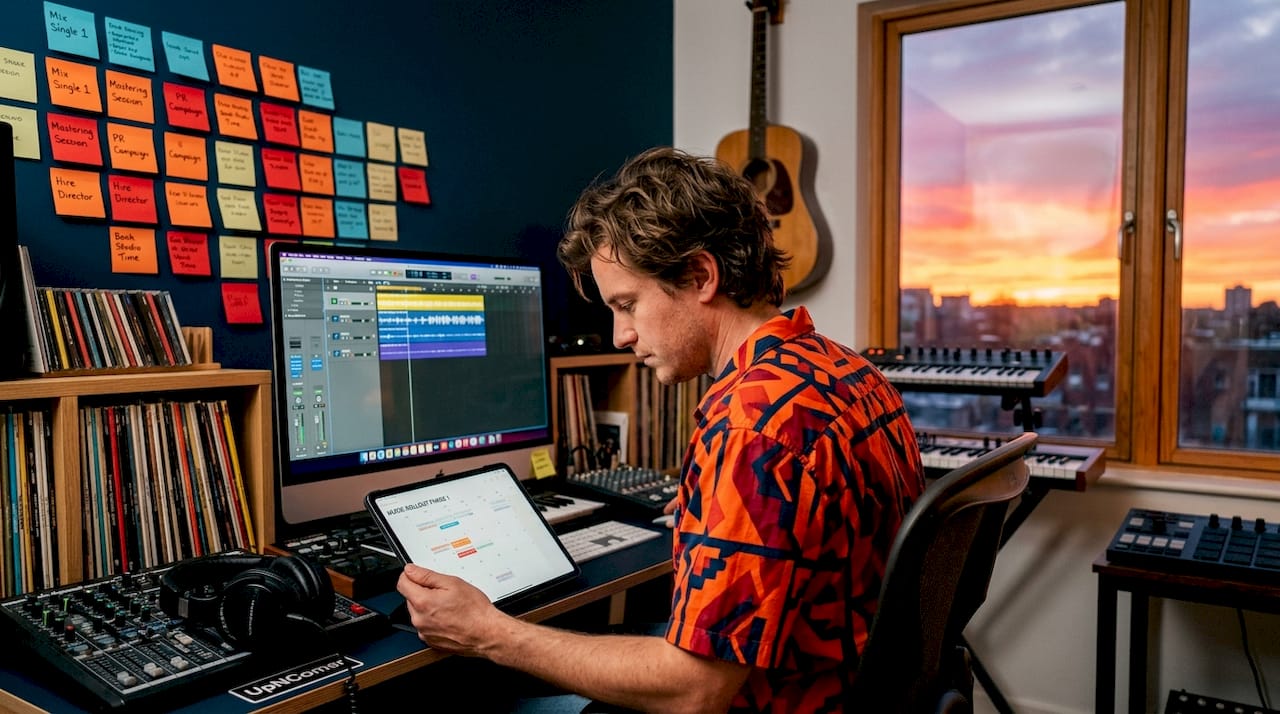
That last point is critical. Social algorithms are rented land. Your email list is owned territory. When you are using release timelines built around owned channels, you are not at the mercy of a platform deciding who sees your content that week.
Here is a practical numbered rollout you can follow for any release:
-
Week 1 to 4 before release: Lock in your assets. Record your track, finalize artwork, write your pitch copy for playlists and press, and batch your content. One song should generate short video clips, behind-the-scenes footage, lyric graphics, quote cards, and at least two or three longer-form pieces.
-
Week 2 to 3 before release: Start warming up your audience. Send a teaser email to your list. Post a snippet. Pitch to playlist curators. If you are running ads, build your audiences now so the pixel has data before you spend real money.
-
Release week: Go all in. Activate every channel simultaneously. Post on social, send your email, ask superfans to share, engage in the comments, and monitor your numbers daily.
-
Weeks 1 to 4 after release: Keep the conversation going. Respond to comments, reshare fan reactions, run a targeted ad to people who engaged but did not save the track, and start teasing your next release.
Here is a comparison of two common approaches so you can see why structure wins:
| Approach | What it looks like | Typical outcome |
|---|---|---|
| Reactive release | Drop track, post once or twice, wait | Short spike, no sustained growth |
| Structured campaign | 90-day plan, batched content, phased rollout | Compounding momentum across releases |
| Label-style system | Coordinated team, data-driven decisions, owned channels | Scalable, sustainable career growth |
Audience tiering is another strategy most indie artists overlook. Not all fans are equal, and that is okay. Your superfans (the ones who comment on everything, buy merch, and share your music unprompted) need different content and communication than someone who streamed one song six months ago. Segmenting your outreach by fan tier means your messaging lands harder and your budget goes further.
Pro Tip: Batch your content creation at the start of each release cycle. Spend one focused day creating 20 to 30 pieces of content from a single song, then schedule them out over the campaign window. This keeps your output consistent without burning you out.
Balancing organic growth and paid promotion
Here is a question almost every independent artist wrestles with: should you spend money on ads, or focus on organic growth? The honest answer is both, but in the right order.
Organic builds loyalty while paid amplifies reach, and combining both strategies delivers the strongest results. Relying solely on streams without fan retention is misleading, and short campaigns risk no momentum while campaigns that run too long dilute urgency.
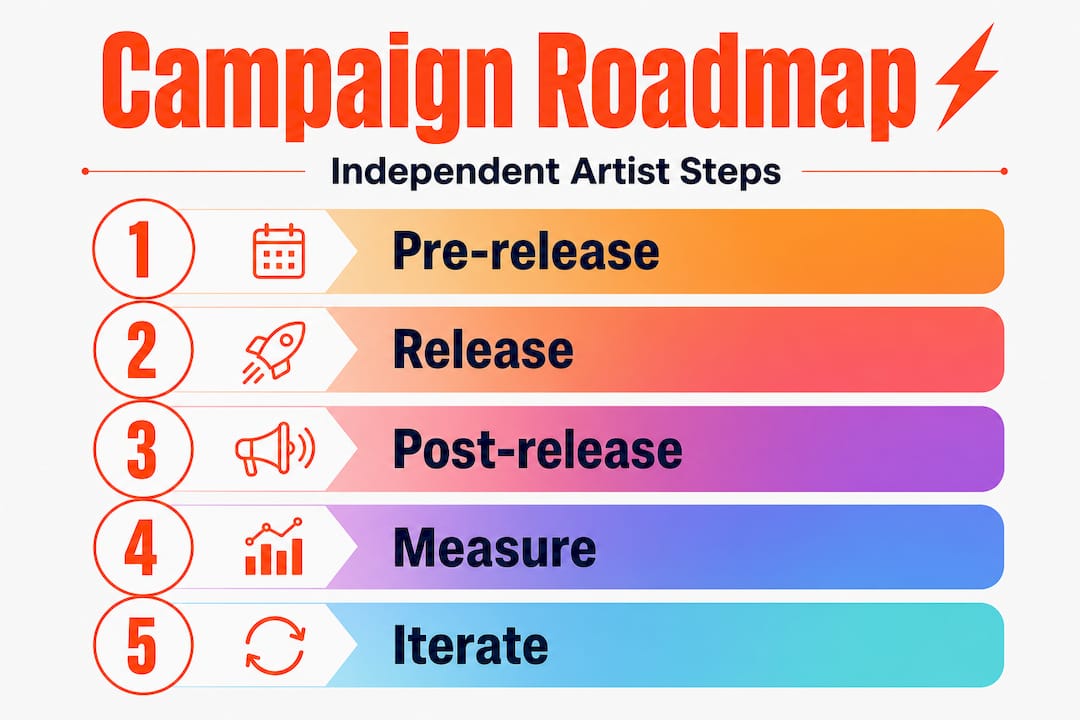
Think of organic growth as your foundation. When fans discover you through a genuine recommendation, a viral clip, or a well-placed playlist feature, they tend to be more invested. They followed you because something resonated. Paid promotion, on the other hand, is a volume lever. It gets your music in front of more people faster, but it does not guarantee those people will care.
The risks of each approach in isolation are real:
-
Organic only: Slower growth, heavily dependent on algorithm favor and word of mouth. You can create incredible content and still get buried if you do not have distribution behind it.
-
Paid only: You can burn through a budget quickly with nothing to show for it if your targeting is off or your creative does not convert. Worse, you can inflate your stream count without building any real connection.
The sweet spot is sequencing them correctly. Build your organic foundation first. Get your email list growing, your social content consistent, and your superfan relationships warm. Then use paid promotion to amplify what is already working. If a post is getting strong organic engagement, that is the one you put budget behind. You are not guessing at that point. You are accelerating something that already has proof.
| Channel type | Strength | Weakness |
|---|---|---|
| Organic social | Authentic engagement, no cost | Algorithm-dependent, slow reach |
| Email list | Direct access, high open rates | Takes time to build |
| Paid ads | Fast reach, precise targeting | Costs money, no loyalty guarantee |
| Playlist pitching | Streaming visibility | Competitive, not always converting |
Campaign timing matters too. A release campaign that runs for only three days will not build enough momentum. But one that drags on for three months without a clear structure will lose urgency and audience attention. A focused four to six week campaign window with a clear pre, during, and post structure tends to hit the right balance for most independent releases.
Pro Tip: Before running paid ads, make sure your KPI-driven music promotion framework is in place. Know what a successful ad looks like before you spend a dollar, whether that is a cost per save, a cost per stream, or a cost per email sign-up.
Systems, measurement, and what most artists miss
Here is where things get really interesting. The artists who grow consistently are not necessarily the most talented. They are the most systematic.
Repeatable systems including timelines, KPIs, and testing allow independent artists to mimic label efficiency without big budgets, turning each release into a compounding engine rather than a one-off event. That word “compounding” is important. Each release builds on the last when you have a system behind it.
KPIs, or key performance indicators, are the specific metrics you track to know if your campaign is working. Here is a practical numbered list of the most important ones to monitor:
-
Saves to streams ratio: If people are streaming but not saving, they are not invested. A healthy save rate signals real fan interest.
-
Playlist adds: How many curators added your track, and how much traffic are those playlists actually driving?
-
Email list growth: Did your release bring new subscribers? This is one of the clearest signs your campaign is converting casual listeners into real fans.
-
Social engagement rate: Not follower count. Engagement rate. Are people commenting, sharing, and responding to your content?
-
Ad conversion metrics: If you ran paid ads, what was your cost per result, and did those results translate to real fan actions?
But here is what most artists miss entirely: the qualitative signals. Qualitative indicators like comments and shares predict long-term sustainability better than raw stream counts. A comment that says “this song got me through something hard” is worth more than a thousand passive streams. Those are your superfans in the making.
“Real fan experiences matter more than stream counts. The artists who build lasting careers are the ones who make people feel something, then give those people a way to stay connected.” — Insight from modern music marketing research.
Iteration is the other piece most artists skip. After every campaign, you should be asking: what worked, what did not, and what would you do differently? That debrief becomes the foundation of your next campaign. Over time, your campaigns get sharper, your audience gets warmer, and your releases start to compound rather than reset.
Pro Tip: Track your music campaign KPIs in a simple spreadsheet after every release. Even basic tracking across three or four releases will show you patterns you would never notice otherwise, like which content format drives the most saves or which ad audience converts best.
The uncomfortable truth most artists miss about campaign management
Here is something we see constantly: artists who follow every strategy perfectly and still wonder why their campaigns feel flat. They have the 90-day plan, the content batching, the paid ads running. But the results are underwhelming.
The uncomfortable truth is that data and systems are only half the equation. The other half is personalization and genuine human connection. Automated campaigns can reach thousands of people, but they cannot replicate the feeling of an artist who actually shows up for their fans.
The campaigns that consistently outperform are the ones built around real fan relationships. That means responding to comments personally, not just liking them. It means remembering the names of the people who show up to every show. It means creating content that feels like it was made for a specific person, not broadcast to a generic audience.
Short-term wins are seductive. A viral moment, a big playlist add, a spike in streams — these feel like proof that something is working. But sustainable careers are built on the fans who stick around after the spike. The lessons from successful independent artists consistently point to one thing: the artists who last are the ones who treat fan relationships as long-term investments, not campaign assets.
Most artists also ignore the qualitative signals until it is too late. A drop in comments, fewer shares, less emotional response in your DMs — these are early warning signs that your audience is disengaging, long before your stream numbers reflect it. Pay attention to those signals. They are telling you something your analytics dashboard cannot.
The real shift happens when you stop thinking about campaigns as isolated events and start thinking about them as chapters in an ongoing story with your fans. Each release is a new chapter. The campaign is how you tell it.
Streamline your next campaign with professional tools
Knowing the strategy is one thing. Having the infrastructure to execute it consistently is another.
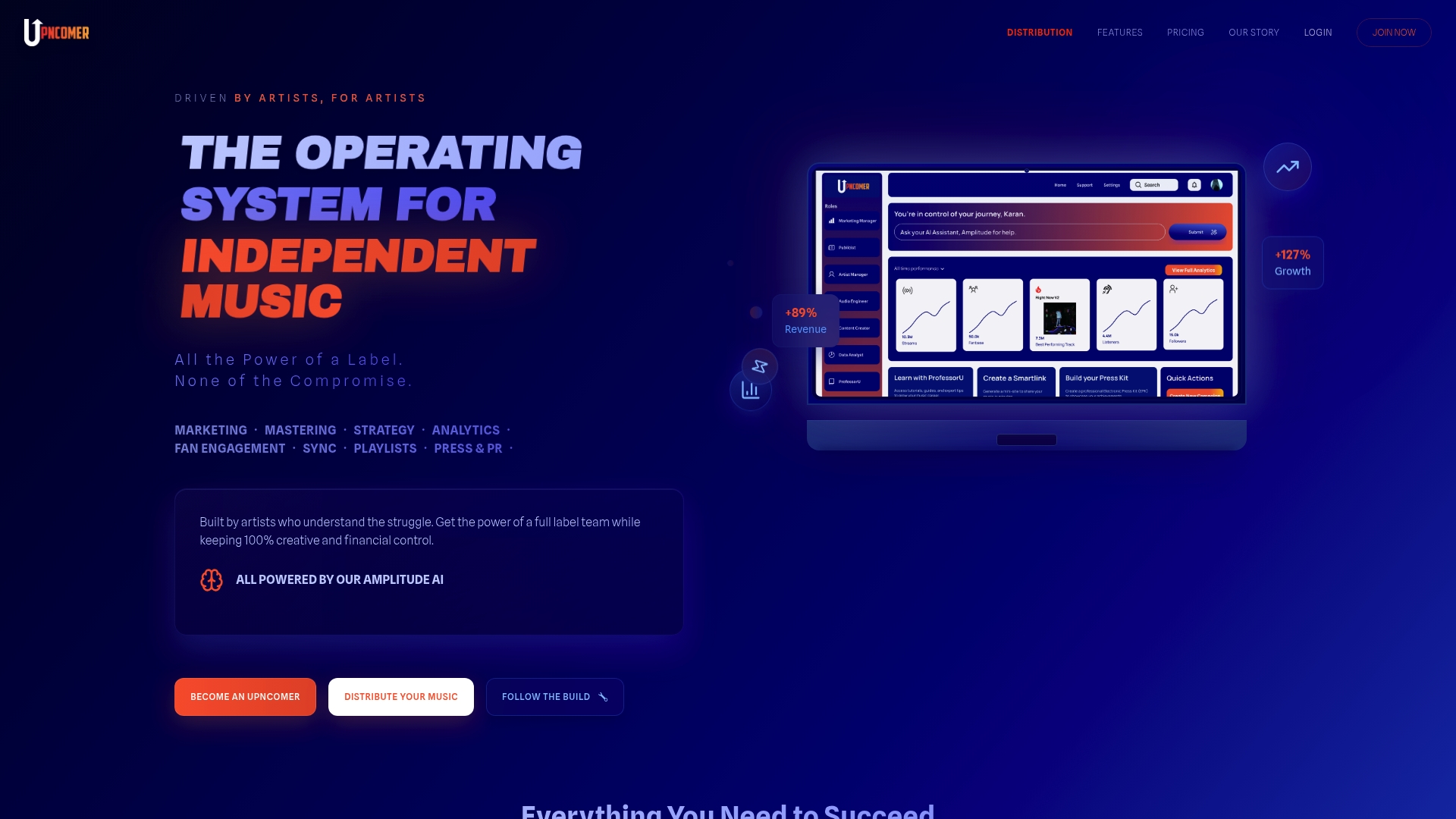
UpNComer is built specifically for independent artists who want to run campaigns like a label without the overhead. The UpNComer platform brings together campaign management, streaming analytics, audience insights, ad tools, AI mastering, and fan engagement systems into one place. Instead of juggling five different apps and losing track of what is working, you get a unified view of your entire release strategy. Whether you are planning your next 90-day rollout, tracking your KPIs, or building your superfan list, UpNComer gives you the tools to do it with clarity and confidence. If you are ready to stop guessing and start building, this is where to start.
Frequently asked questions
What are the main phases of a music marketing campaign?
The three key stages are pre-release planning, release execution, and post-release engagement to build and maintain momentum across your audience.
How often should independent artists release new music to keep fans engaged?
Experts recommend releasing singles every 6 to 8 weeks to maintain audience interest and stay favorable with streaming platform algorithms.
What’s the best way to measure campaign success beyond streams?
Look at qualitative signals like comments and shares alongside saves and email sign-ups for a fuller picture of real fan engagement.
Do paid ads or organic promotion deliver better results for new releases?
Combining organic and paid strategies consistently outperforms either approach alone, since organic builds loyalty while paid expands your reach to new audiences.