Why independent artists need automation
Managing your music career manually is burning you out, and probably costing you money. Royalty management alone can eat up to 100 hours a year — that’s weeks of full-time work that never touches your actual music. This is exactly why independent artists need automation: not to hand over creative control, but to stop drowning in spreadsheets, statement downloads, and repetitive data entry. The good news is that automation, done right, supports the way you already work. This guide breaks down how it works, what it looks like in practice, and how to start without losing what makes your music yours.
Table of Contents
- The complexity of managing independent artist workflows
- How semi-automation preserves artistic control and quality
- Practical automation workflows for independent artists
- Comparing full automation, semi-automation, and manual workflows
- Applying automation to sustain and grow your music career
- Why semi-automation is the independent artist’s secret advantage
- Explore UpNComer for automation tools designed for independent artists
- Frequently asked questions
Key Takeaways
| Point | Details |
|---|---|
| Manual workflows consume weeks | Independent artists spend up to 100 hours annually on manual royalty and rights management tasks that don’t scale. |
| Semi-automation preserves control | Automation complements, not replaces, artists by handling repetitive tasks while they retain creative decision power. |
| Automation reduces errors | Automated workflows cut error rates by up to 75%, preventing costly royalty disputes and data mistakes. |
| Saturated markets demand automation | Automation helps artists stay consistent and competitive in crowded, algorithm-driven music platforms. |
| Start small, scale up | Begin automating one workflow, review outputs, and expand gradually to maximize creative and business benefits. |
The complexity of managing independent artist workflows
Let’s be honest about what running an indie career actually looks like day to day. It’s not just writing and recording.
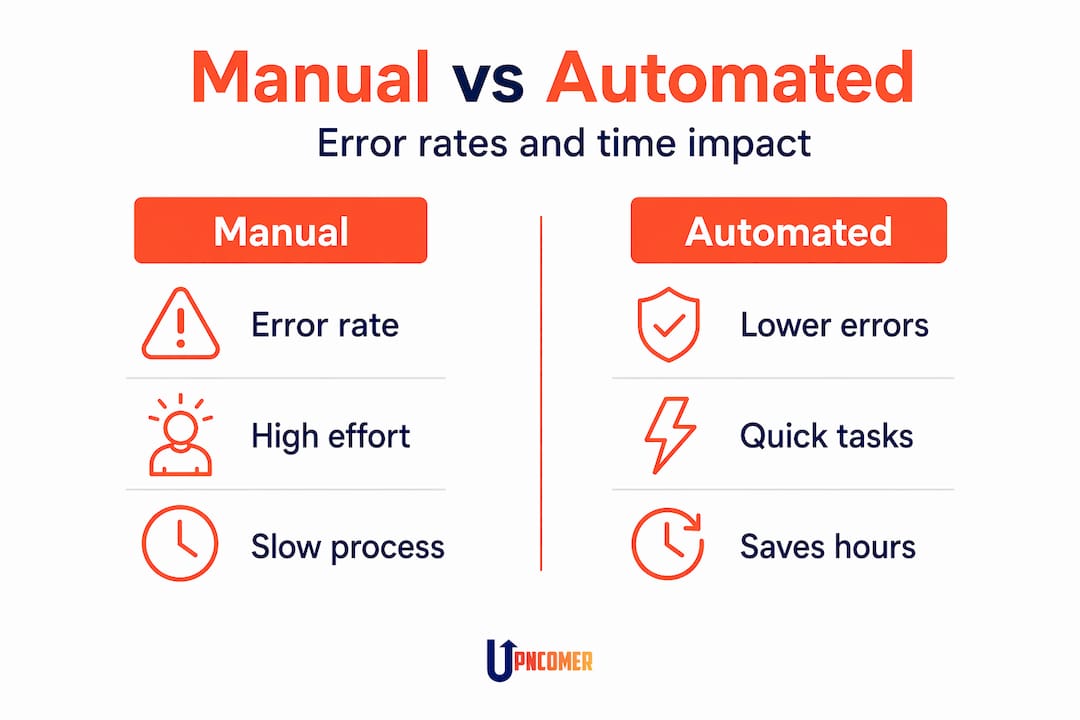
One artist managing releases across major platforms can easily be handling royalty uploads from 10 digital service providers, generating around 120 statements yearly and 80 to 100 hours of manual work. That’s before you factor in error checking, re-uploading files, or chasing missing payments.
The breakdown of a typical royalty management cycle looks something like this:
- Download statements from each DSP separately
- Format the data to match your accounting system
- Check for errors, duplicates, or missing fields
- Re-upload corrected files
- Reconcile totals against expected payments
- Repeat next month for every single platform
Every step is repetitive. Every step carries risk. Manual data entry carries error rates of 1 to 5%, which sounds small until it’s your royalty check that’s wrong.
Beyond royalties, the digital landscape itself is getting harder. Algorithm changes and AI-generated content are flooding platforms, pushing independent artists further down discovery feeds unless they stay consistent and move fast. That speed and consistency is almost impossible to maintain manually.
Here’s what independent artists are typically juggling on top of royalties:
- Pitching playlists and scheduling releases on multiple platforms
- Creating and posting content across social channels
- Responding to fan messages and managing email lists
- Running ad campaigns and tracking performance data
- Coordinating with collaborators and keeping up with artist development stages
Each of these tasks matters. But doing all of them manually, every week, will grind you down before your career gains real momentum. This is where understanding the impact of automation on art, and on artists’ time, becomes critical.
How semi-automation preserves artistic control and quality
Here’s the thing most artists get wrong about automation. They picture a machine making creative decisions for them. That’s not how it works, and frankly, that’s not how good automation is designed.
Full automation is not the goal. Semi-automation integrated into your existing workflow is where the real value lives. It handles the repetitive, technical, and time-sensitive tasks while leaving the judgment calls to you.
Think about it this way:
“Automation takes care of the grunt work. You still decide what matters.”
That’s the core principle behind how automation tools for independent musicians are built when they’re done right. The technology blends into the background. You’re still in the driver’s seat; you’re just not changing your own oil anymore.
What semi-automation looks like in practice:
- Automated file ingestion: Statements are pulled and formatted automatically, but you review totals before anything is finalized
- Scheduled content posting: You create the posts, automation handles the timing and distribution
- AI-assisted campaign suggestions: The tool surfaces recommendations, you approve or adjust them
- Analytics dashboards: Data is compiled automatically, but you decide what to act on
Pro Tip: Build automation into moments that cost you time but not creativity. Scheduling, uploading, and reporting are all fair game. Hooks, lyrics, and fan messaging should stay in your hands.
The importance of automation in music isn’t about replacing your voice. It’s about giving you more time and energy to actually use it. When you build automation around a solid music campaign strategy, you get consistency without burning out.
Practical automation workflows for independent artists
Let’s get specific. Here are three workflows where automation delivers immediate, measurable results for indie artists.
Workflow 1: Automated royalty file ingestion
Without automation, processing a single distributor statement takes 2 to 5 hours depending on complexity. With automation, that drops to 10 to 15 minutes. The system pulls the file, maps the data fields, flags anomalies, and presents a clean summary for your review. You confirm and move on.
Workflow 2: Catalog audits
An automated catalog audit scans your entire release history for missing ISRCs (International Standard Recording Codes, the unique IDs for each track), gaps in split coverage, and duplicate entries. Tools like Royalti’s Ask Roy assistant can run these checks and surface issues with user confirmation required before any changes are made. No silent errors, no blind corrections.
Workflow 3: Natural language analytics queries
Instead of building custom reports manually, some platforms let you type a plain-English question like “which track earned the most in Q1?” and return the answer instantly. That kind of query used to take up to 100 minutes of manual data crunching. Now it takes seconds.
Here’s a quick comparison of time savings across common workflows:
| Task | Manual time | Automated time | Time saved |
|---|---|---|---|
| Royalty file ingestion | 2 to 5 hours | 10 to 15 minutes | Up to 90% |
| Catalog audit | 3 to 4 hours | 20 to 30 minutes | Up to 85% |
| Analytics reporting | 60 to 100 minutes | Under 1 minute | 95%+ |
| Content scheduling | 1 to 2 hours/week | 15 minutes setup | 80%+ |
Pro Tip: Automate ingestion and data mapping before you try to automate calculations. Inconsistent file formats from different distributors are the number one cause of errors. Get the input clean first.
Using these workflows progressively, you can realistically automate around 80% of repetitive administrative tasks. That’s not a small gain — that’s entire weeks of your year returned to you. For more context on tools that support these workflows, explore these automation alternatives worth knowing about.
Comparing full automation, semi-automation, and manual workflows
Not every level of automation is right for every artist or every task. Understanding the differences helps you make smarter choices.
| Approach | Speed | Error risk | Creative control | Best for |
|---|---|---|---|---|
| Manual | Slow | High (1 to 5%) | Maximum | Nothing, honestly |
| Full automation | Very fast | Medium (missed edge cases) | Low | Bulk, low-stakes tasks |
| Semi-automation | Fast | Low (40 to 75% fewer errors) | High | Most artist workflows |
Manual workflows are error-prone and time-consuming. Full automation can miss context that matters artistically. Semi-automation, where you stay in the loop for key decisions, is the approach that creative industries are moving toward because it protects quality while dramatically improving efficiency.
Here’s a clear-eyed breakdown of each approach:
Manual
- You control every decision
- Errors compound over time
- Not scalable as your catalog grows
- Consumes time better spent on music
Full automation
- Fast and consistent for routine tasks
- Risk of propagating errors across your entire catalog without you noticing
- Can depersonalize your marketing and fan communication if misapplied
Semi-automation
- Handles the repetitive and technical
- You review outputs before they’re finalized
- Scales with your career without sacrificing your instincts
- Supported by most platforms designed for independents
The right music business plan will map out which tasks belong in each category. That’s how you build something sustainable rather than just reactive.
Applying automation to sustain and grow your music career
You don’t need to automate everything at once. Starting with one workflow, doing it well, and expanding from there is how this actually sticks.
Here’s a practical path forward:
- Start with royalty ingestion or catalog audits. These are high-effort, low-creativity tasks. Getting them automated first gives you the most immediate time return.
- Use the time you save deliberately. Six to nine hours a month is a real number. Use it for fan engagement, content creation, or planning your next release properly.
- Combine automation data with direct-to-fan strategies. Automation surfaces insights. You use those insights to build real relationships with your audience, not just post more content.
- Choose tools that respect your workflow. The best automation tools for independent musicians don’t force you into a rigid process. They adapt to how you already work.
Artists who move quickly and stay authentic are the ones building real fan relationships in 2026. Automation gives you the capacity to do both without burning out.
Pro Tip: Review your automation outputs monthly. Not because the tools are unreliable, but because staying close to your data keeps you sharp and in control of your own career trajectory.
You can also use automation to stay consistent across music campaigns without needing a full team behind you. Paired with deeper work on your artist development components, automation becomes a career-building tool, not just an admin fix. The rap and hip-hop world has already seen what happens when artists embrace technology early; the independents who adapt fastest tend to win. Same goes for artists exploring new revenue channels that require consistent infrastructure to manage well.
Why semi-automation is the independent artist’s secret advantage
Here’s the take most automation articles won’t give you. Full automation is not the goal. Chasing it might actually slow you down.
A lot of artists assume that more automation means less work. That’s partially true. But there’s a version of over-automation that disconnects you from your own career. When you stop reviewing your royalty data, you miss patterns. When you fully automate your fan communication, it stops feeling real, and fans notice. The goal isn’t to remove yourself from your career; it’s to remove the tasks that don’t require you.
Semi-automation, when integrated into your natural workflow, gives you something full automation can’t: creative agility. You still make the calls. You just make them faster and with better information.
Here’s the contrarian truth. Independent artists actually have an advantage over major-label acts when it comes to automation adoption. Majors move slowly. Their systems are legacy-heavy and built for scale, not flexibility. You can adopt a semi-automated workflow this week, test it, and adjust it by next month. A label can’t do that.
That agility is a genuine competitive edge. The artists who figure this out early, who treat automation as a collaborative partner rather than a replacement, are the ones who will still be building careers five years from now. Explore the artist development insights that help frame this kind of long-game thinking.
Pro Tip: View every automation tool you adopt as a bandmate, not a manager. It contributes to the process. You still lead.
Explore UpNComer for automation tools designed for independent artists
Now that you understand why independent artists need automation and how to apply it without losing your edge, the next step is finding the right platform to make it real.
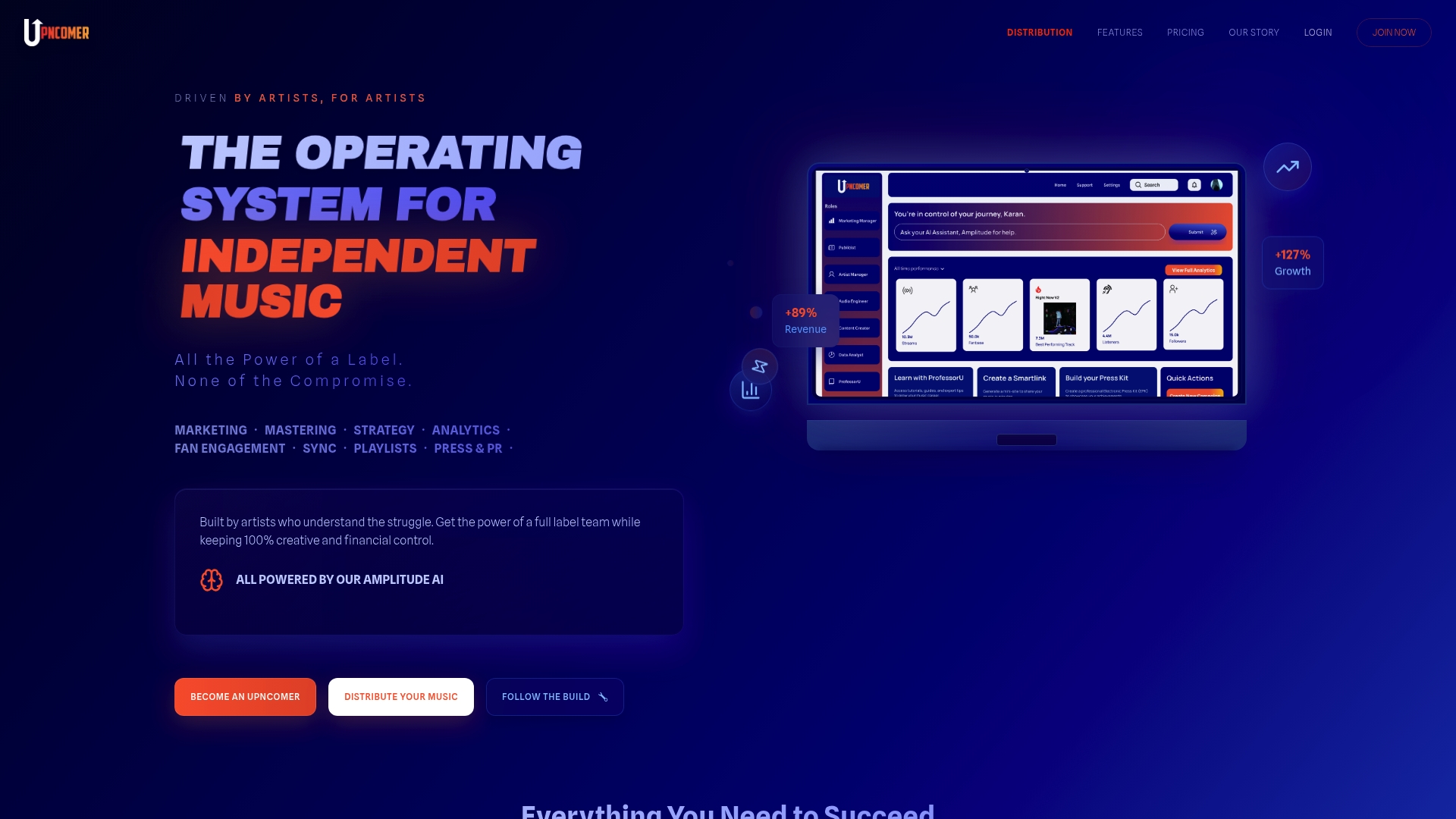
UpNComer is built specifically for independent artists who want to stop juggling a dozen disconnected tools. It brings together royalty and analytics tracking, campaign management, fan engagement, AI mastering, content creation, and release promotion inside one place. The platform is designed around semi-automation principles, so you stay in control of your creative and business decisions while the platform handles the heavy lifting. Start with one workflow, see the time savings, and scale from there. Your music deserves that kind of infrastructure.
Frequently asked questions
Why do independent artists need automation in 2026?
Because managing royalties, rights, and marketing manually demands over 80 hours annually and is prone to costly errors; automation saves significant time and improves accuracy while keeping creative control firmly with the artist.
Does automation mean artists lose creative control?
No. Best practices point toward semi-automation, where artists review and approve changes before they’re finalized, keeping critical creative and business decisions in human hands throughout.
What are the main benefits of using automation for independent artists?
Automation reduces repetitive work by up to 90%, lowers data errors by up to 75%, cuts royalty processing from hours to minutes, and returns 6 to 9 hours per month for creative work, marketing, and fan engagement.
How does semi-automation fit into an artist’s natural workflow?
It takes over technical tasks like data uploads, catalog audits, and reporting while letting you make the artistic and strategic calls, so quality and authenticity stay intact.
Can automation help independent artists compete in a crowded digital market?
Yes. Consistent distribution and faster marketing execution, both powered by automation, are now essential for standing out when algorithm changes and AI-generated content are constantly shifting the landscape.