Why playlist pitching matters for independent musicians
Most emerging artists treat playlist pitching like a lottery ticket: submit and hope for streams. That’s the wrong mental model, and it’s costing you real growth. Understanding why playlist pitching matters goes much deeper than chasing numbers. Done right, it shapes how new listeners discover you, how algorithms decide to amplify your music, and how you build a fanbase that actually sticks around. This article breaks down the real strategic value of playlist pitching so you can stop guessing and start making moves that compound over time.
Table of Contents
- How playlist pitching fuels independent artist growth
- Timing and targeting: keys to successful playlist pitching
- Playlist engagement metrics that drive algorithmic growth
- Common pitfalls and expert tips for indie artists pitching playlists
- How to integrate playlist pitching into your broader artist development plan
- The overlooked truth about playlist pitching every independent artist should know
- Grow your music career with UpNComer’s expert support
- Frequently asked questions
Key Takeaways
| Point | Details |
|---|---|
| Playlists drive discovery | Playlists are the modern equivalent of radio, key to exposing your music to new listeners. |
| Pitch early and target wisely | Submitting your tracks 3-6 weeks before release and matching playlist style increases placement chances. |
| Engagement over streams | High save rates and low skip rates matter more than raw stream counts to algorithms. |
| Avoid passive listener traps | Smaller engaged playlists provide better growth than large passive or fake listener playlists. |
| Pitching is top-of-funnel | Convert playlist exposure into active fans using additional marketing and engagement strategies. |
How playlist pitching fuels independent artist growth
Understanding why playlist pitching matters starts with seeing its impact on discovery and audience reach. Think of playlists as the new radio. They are the first place millions of people encounter music they have never heard before, and for independent artists without a label pushing their name, that kind of exposure is everything.
Playlist pitching remains a critical component of independent artist promotion because playlists function as the primary engine for music discovery, exposing tracks to millions of listeners instantly. A single editorial placement on a well-curated playlist can do what months of social media posting sometimes cannot: put your song in front of genuinely interested ears.
But the importance of playlist pitching stretches beyond pure stream counts. Getting featured builds social proof. When a new listener sees your track on a credible playlist, you borrow authority from that curator. It signals: this artist is worth your time. That credibility then compounds when algorithms take notice.
Here is what playlist pitching actually moves for independent artists:
- Music discovery: Playlists reach audiences who would never search for you by name.
- Social proof: Placement on respected playlists signals quality to casual browsers.
- Algorithmic triggers: Consistent engagement from playlist listeners feeds Spotify’s personalized playlists like Discover Weekly and Radio.
- Catalog growth: Each placement adds to your track record and curator relationships for future releases.
“Playlists have replaced traditional radio as the dominant discovery channel for recorded music, making playlist pitching an essential tool for any artist serious about independent growth.”
Pro Tip: Do not pitch only your newest release. If an older track fits a curator’s theme perfectly, pitch it. Curators care about fit, not just freshness.
Timing and targeting: keys to successful playlist pitching
With the importance of playlist pitching clear, the next step is mastering the timing and targeting for best results. Here is something most artists get wrong: they finish a track, feel the excitement, and submit it days before release. That window is almost always too late.
The data is blunt. Submissions 21 to 40 days before release carry an 18% acceptance rate, while pitching just one to three days before drops that to 4%. The absolute minimum for editorial consideration is seven days pre-release. Timing is not just a best practice. It is the difference between getting considered and getting ignored.
Here is a proven pitching timeline to follow:
- Week 6 before release: Finalize your track, make sure metadata is clean, and draft personalized pitch notes for each curator.
- Weeks 5 to 4 before release (the 21 to 40-day window): Submit to Spotify for Artists editorial pitching. This is your highest-leverage window.
- Weeks 3 to 2 before release: Pitch independent curators and blog-based playlists relevant to your genre and mood.
- Release week: Follow up with curators who have not responded, and focus on social and fan engagement to boost early engagement signals.
Targeting matters just as much as timing. A lot of artists go for the biggest playlists they can find, regardless of fit. That is a waste of energy. A niche playlist with 8,000 loyal followers who love exactly your genre will outperform a 200,000-follower general playlist where your track disappears in the noise.
| Playlist type | Follower range | Engagement level | Best for |
|---|---|---|---|
| Major editorial | 500K+ | Variable | Brand awareness, credibility |
| Mid-tier niche | 10K to 100K | High | Genre fans, algorithmic signals |
| Small curated | Under 10K | Very high | Superfan discovery, data quality |
| Algorithmic (auto) | Personalized | Highest | Long-term algorithmic amplification |
Pro Tip: When pitching to independent curators, use playlist pitching timing strategies as part of your full campaign calendar so pitching never happens in isolation from your other promo activities.
Playlist engagement metrics that drive algorithmic growth
Beyond pitching timing and targeting, understanding engagement metrics reveals why some playlist efforts fuel lasting growth while others do not.
Here is the reality: Spotify does not reward plays. It rewards attention. Getting 50,000 streams means very little if listeners skip your track in the first 30 seconds or never save it. The platform is watching for signals that tell it your music is genuinely connecting.

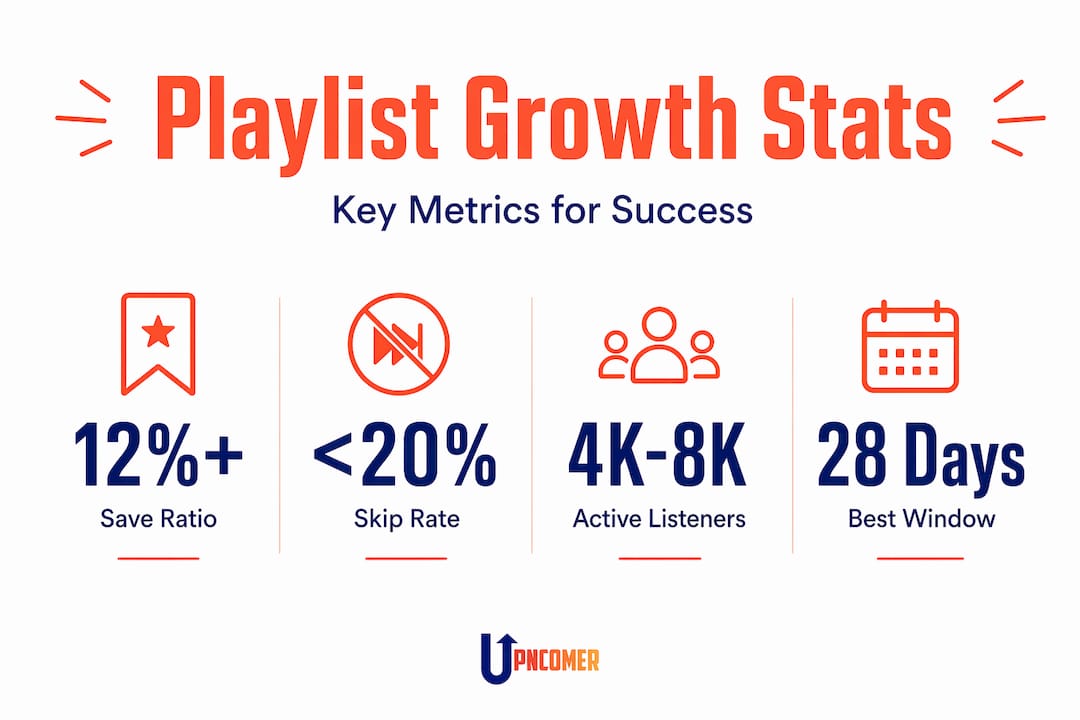
Spotify prioritizes engagement signals over raw streams; a save-to-stream ratio of 12% or higher and a skip rate below 20% are what trigger Discover Weekly and similar algorithmic features. These are the key playlist engagement metrics you need to track from day one.
What does that look like practically? If your track gets 1,000 streams from a playlist, you want at least 120 of those listeners to save it to their library. And you want fewer than 200 skipping it before the 30-second mark.
The metrics that matter most:
- Save-to-stream ratio: Target 12% or above. This is your most important signal.
- Skip rate: Keep it below 20%, especially in the first 30 seconds.
- Listener-to-stream ratio: Healthy repeat listening shows genuine connection.
- Playlist adds by listeners: When people add your track to their own playlists, that compounds your reach.
“A track with strong engagement metrics from a small playlist will travel further algorithmically than a track with weak engagement from a massive one.”
Here is how the numbers play out across different scenarios:
| Metric | Weak performance | Strong performance |
|---|---|---|
| Save-to-stream ratio | Below 8% | 12% and above |
| Skip rate (first 30s) | Above 30% | Below 20% |
| Active listeners (28 days) | Under 2,000 | 4,000 to 8,000+ |
| Playlist adds by users | Rare | Frequent |
Data shows that maintaining 4,000 to 8,000 active listeners within a 28-day window gives your track the best chance of staying in Discover Weekly rotation. That is not a vanity metric. It is the engine behind algorithmic playlist inclusion.
Common pitfalls and expert tips for indie artists pitching playlists
Having learned what engagement matters, it is crucial to avoid common mistakes and use smart strategies for authentic growth.
The single most dangerous trap in playlist pitching is the pay-for-placement scam. These services promise guaranteed playlist placements for a fee. What they often deliver is a flood of streams from passive listeners, bots, or click farms. Pay-for-placement and botted playlists often deliver fake streams and passive listeners that can harm your algorithmic growth, while smaller, engaged playlists consistently outperform large passive ones.
Why does that matter beyond wasted money? Fake streams poison your data. When Spotify sees high play counts but terrible engagement ratios, its algorithms deprioritize your music. You pay to actively hurt your own career.
Here are the pitfalls to avoid and the moves that actually work:
- Avoid paid placement with no transparency: If a service will not tell you which playlists they use or who curates them, walk away.
- Skip playlists with suspicious follower-to-engagement ratios: A playlist with 100,000 followers but only 200 monthly listeners is a red flag.
- Do not blast the same generic pitch to every curator: Curators delete those immediately. Personalize every submission.
- Avoid ignoring smaller playlists: A playlist with 3,000 highly engaged genre fans is often worth more than one with 300,000 passive followers.
- Build real curator relationships: Comment on their playlists, engage with their content, and pitch like a fellow music fan, not a marketer.
Pro Tip: Think of playlist pitching as the top of your marketing funnel. Use it to get discovery, then pull those listeners toward avoiding playlist pitching pitfalls and toward deeper engagement: your social media, email list, and merch. Passive streams alone will not build a career.
How to integrate playlist pitching into your broader artist development plan
With pitfalls avoided, it is time to see how playlist pitching fits into a sustainable artist growth strategy.
A one-off pitch for a single release is not a strategy. It is a gamble. Real momentum comes from treating playlist pitching as an ongoing pillar of your career, not a one-time task you rush through before a release date.
A multi-pronged approach with consistent releases, strong branding, and targeted pitching to playlists aligned to your sound yields enduring artist momentum. Here is how to build that into your day-to-day:
- Plan releases on a calendar 3 months out. This gives you enough runway to hit the 21 to 40-day pitch window every single time, not just when it is convenient.
- Audit your metadata before every pitch. Make sure your genre tags, mood labels, and artist bio are accurate and current. Curators use that information to decide fit.
- Pair every pitch with a social push. Tease the release, share the story behind the song, and give potential listeners a reason to care before the track even drops.
- Run targeted ads to playlisted tracks. Once you land a placement, a small ad spend driving traffic to that specific track can dramatically boost engagement metrics.
- Follow up with curators after placement. Thank them, share the results if positive, and nurture that relationship for your next release.
The playlist pitching in artist development conversation is really about consistency. Artists who pitch once and disappear rarely build lasting curator relationships. The ones who treat curators as long-term collaborators keep showing up on playlists.
Pro Tip: Keep a simple spreadsheet tracking every curator you pitch: their name, playlist name, genre focus, submission method, pitch date, and response. After a few releases, you will have a curated network you can activate with each new track.
The overlooked truth about playlist pitching every independent artist should know
Here is an uncomfortable reality that most playlist pitching guides skip over: landing a playlist placement does not make you a music star. It makes you a stranger on someone else’s speakers. What you do with that stranger’s attention in the next 48 hours is what actually determines whether your career grows.
Most artists see a playlist placement and treat it as a finish line. It is not. It is an entry point. Playlist pitching is a top-of-funnel method; without follow-up engagement tactics, playlist listeners remain passive and do not fuel algorithmic growth. They heard your song. Now what?
The artists who turn playlist placements into real fanbases are doing something most emerging artists are not: they are running active campaigns alongside their pitch efforts. When a track goes live on a playlist, they are also running Instagram ads, posting behind-the-scenes content, engaging comments, and making it easy for curious listeners to find them on every platform.
Think about it from the listener’s perspective. They heard your song on a playlist. If they search your name and find a half-finished profile with three posts from 2023, they move on. If they find a vibrant artist with a clear identity and fresh content, they follow. One of those outcomes builds a fanbase. The other just adds to your stream count without any lasting value.
The playlist pitching as top-of-funnel framework changes how you budget time and money. Instead of spending every resource on landing a placement, you allocate energy to what happens after the placement. Email capture, social retargeting, smart links that track listener behavior — these are the tools that turn a curious stream into a paying fan at a show.
Playlist pitching is powerful. But it is only one gear in a larger machine. The independent artists building real careers in 2026 are the ones who treat every placement as a spark, not a solution.
Grow your music career with UpNComer’s expert support
Now that you understand why playlist pitching matters, the next question is whether you have the tools to execute it consistently and smartly. Most independent artists are managing this across five different apps, a spreadsheet, and a lot of guesswork.
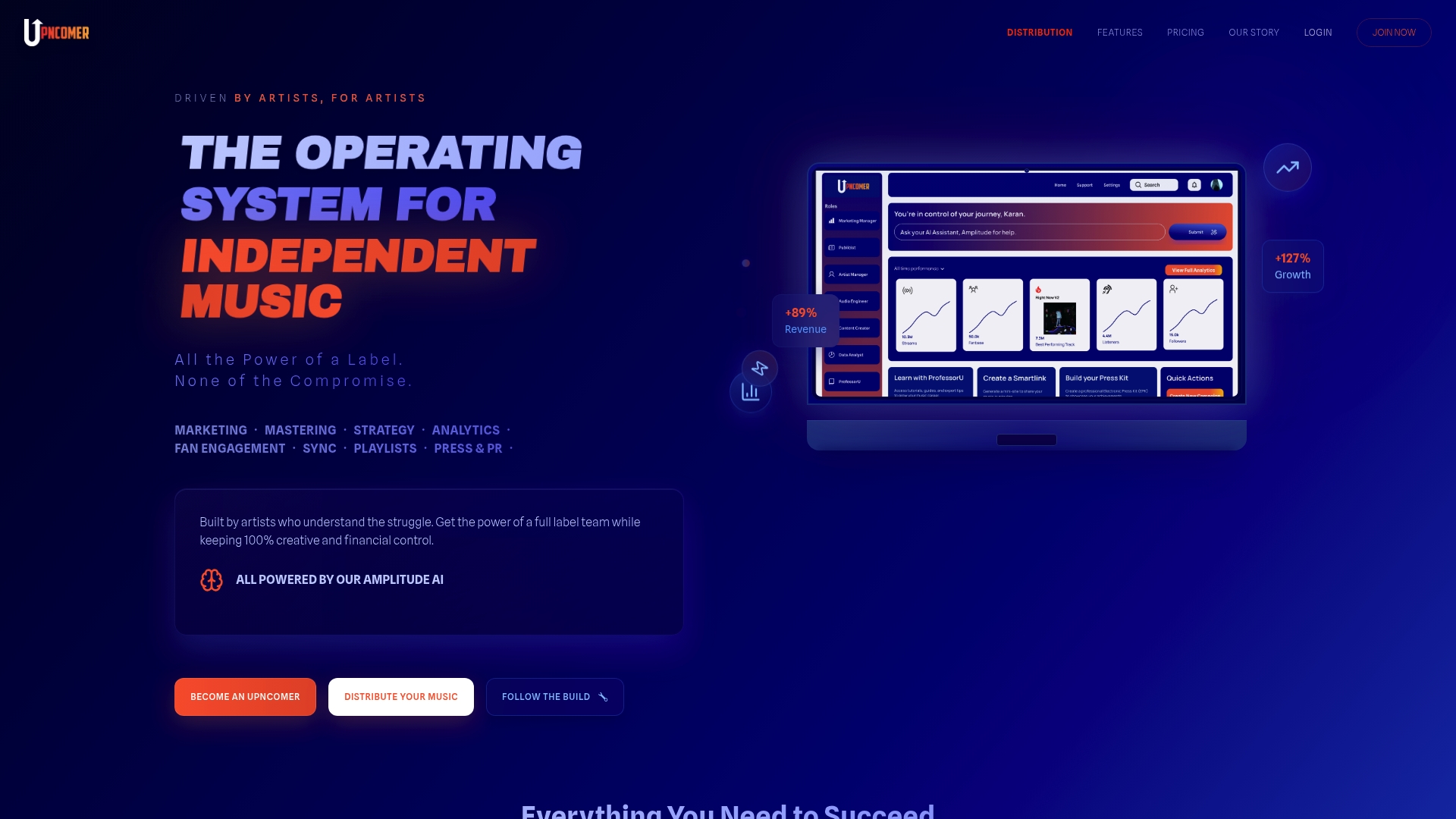
UpNComer brings everything into one place. From release planning and campaign management to streaming analytics and Amplitude AI guidance, the platform is built to help you pitch smarter, track engagement, and convert playlist exposure into real fanbase growth. You get the kind of infrastructure that major-label artists take for granted, without giving up your creative control or cutting a check to an agency. If you are serious about building a music career with intention, explore music campaign strategies inside the UpNComer ecosystem and see how the pieces fit together.
Frequently asked questions
What is playlist pitching and why is it important for independent artists?
Playlist pitching is the process of submitting your music to playlist curators to get featured; it matters because playlists drive music discovery and can expose your music to millions of new listeners who would never find you on their own.
When is the best time to pitch my music to playlists?
The best time to pitch is 21 to 40 days before your release, a window where submissions reach 18% acceptance, compared to just 4% when you pitch one to three days out.
How do engagement metrics affect my chances of playlist success?
Engagement metrics like a save-to-stream ratio above 12% and skip rates below 20% tell algorithms your music resonates, and Spotify prioritizes these signals over raw play counts when deciding which tracks to surface in Discover Weekly.
Are big playlists always better for my music?
No. A placement on a smaller niche playlist with engaged real listeners will generate stronger engagement signals and better algorithmic outcomes than a large playlist filled with passive or fake streams.
Can playlist pitching alone grow my fanbase?
Playlist pitching is only the entry point; without targeted follow-up tactics like social engagement, retargeting ads, and email capture, those playlist listeners stay passive and your fanbase stays flat.