Artist Fanbase Growth: A Real Guide for Indie Musicians

Artist fanbase growth is the deliberate process of transforming casual listeners into a loyal, engaged community that supports your music career consistently. Most independent artists confuse follower counts with actual fans, but the two are very different things. A passive follower presses play once and forgets you exist. A real fan buys your merch, shares your releases, and shows up to your shows. Meaningful growth is typically defined as reaching 1,000+ monthly Spotify listeners and 500+ social followers within 6–12 months of consistent effort. That benchmark matters because it signals you have built a real audience, not just an algorithm blip.
What foundational elements drive artist fanbase growth?
The single most important shift you can make is treating audience building as a separate job from music creation. Most artists treat releases as the growth engine rather than allocating dedicated time to fanbase building. That approach consistently fails. Releasing great music is necessary, but it is not sufficient. You need scheduled, recurring tasks focused purely on growing and nurturing your community.
The 80/20 principle applies directly here. A small group of superfans drives the majority of your support, revenue, and word-of-mouth. Superfans spend an average of $113 per month on music experiences and merchandise. That is 66% more than the average listener. Building toward even a few hundred of these people changes your financial reality completely.
The other foundational concept is emotional equity. Emotional equity is built through direct, two-way interactions with fans. It is the key differentiator between someone who follows you and someone who actually cares about your career. Replying to comments, sharing your creative process, and making fans feel seen are not optional extras. They are the core of the work.
Here is what the foundation actually looks like in practice:
- Separate your calendar. Block time each week for audience building tasks: replying to fans, posting content, analyzing data, and running campaigns.
- Know your identity alignment. Fans follow artists whose values, aesthetics, and stories resonate with their own. Get clear on what you represent beyond the music.
- Stop chasing reach. One deeply engaged fan is worth more than 100 passive followers. Prioritize depth over breadth, especially early on.
- Build toward superfans. Every piece of content and every interaction should move someone one step closer to becoming a true supporter.
Pro Tip: Set a recurring 90-minute block each week specifically for fan engagement tasks. Treat it like a rehearsal. It does not happen consistently unless it is scheduled.
Which platforms and tools should artists prioritize?
Spreading yourself across every platform is one of the fastest ways to burn out and see zero results. Pick one or two platforms where your audience actually lives and go deep there. For most independent artists in 2026, that means choosing between Instagram, TikTok, and YouTube Shorts for discovery, then building a secondary channel for direct communication.
The real infrastructure play is building cross-channel owned channels: email lists, SMS lists, pre-save flows, and community spaces. Owning direct channels protects you from algorithm changes. When a platform shifts its reach rules overnight, your email list still works. Your SMS list still delivers. That predictability is what makes every future release campaign more effective.
Analytics matter more than most artists realize. Raw follower numbers are far less useful than engagement metrics like save rates, click-through rates, and streaming retention. These numbers tell you whether people actually care, not just whether they stumbled across your profile.
| Channel type | Primary purpose | Key metric to track |
|---|---|---|
| Streaming platforms | Discovery and reach | Save rate, monthly listeners |
| Social media (1–2 platforms) | Engagement and identity building | Comments, shares, story replies |
| Email and SMS list | Direct communication and retention | Open rate, click-through rate |
| Community spaces | Superfan nurturing | Active participation, repeat engagement |

Upncomer’s Growth Engine and Amplitude AI modules are built specifically for this kind of data-driven approach. Instead of guessing which campaigns are working, you get real-time audience insights, ad campaign management, and streaming analytics in one place. The Artist Manager module helps you stay on top of release planning and fan engagement workflows without needing a full team behind you.
Pro Tip: Start collecting emails before your next release. A pre-save campaign that captures email addresses gives you a direct line to your most interested listeners, completely independent of any algorithm.
How do you turn casual listeners into superfans?
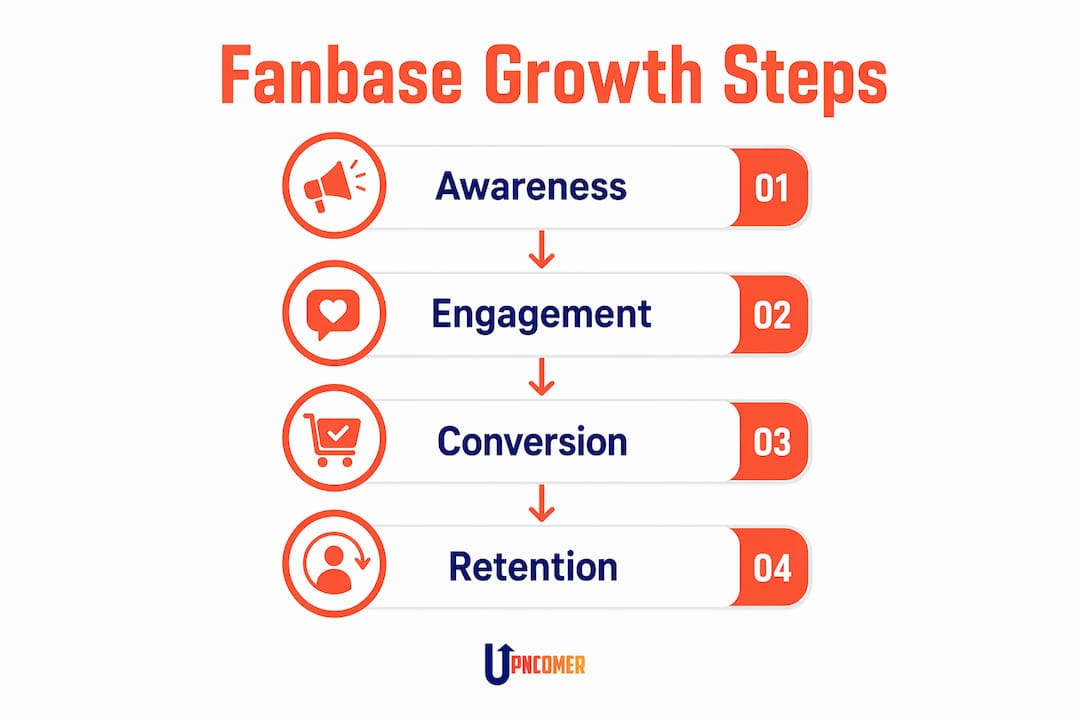
This is where most artists get stuck. They have some listeners, but those listeners never seem to go deeper. The answer is a clear, repeatable process that moves people through four stages.
Step 1: Awareness and discovery
Your music is the top of the funnel. Releases, playlist placements, and social content bring new ears to your work. Playlist pitching is one of the most effective discovery tools available to independent artists. Getting placed on editorial or independent playlists puts your music in front of listeners who are already in the right headspace to engage.
Pay close attention to your save rate at this stage. Tracks with save rates above 7% tend to see compounding algorithmic reach. The median sits around 6.8%, so even a small improvement pushes you into a stronger growth position.
Step 2: Engagement and identity alignment
Once someone discovers your music, the next job is making them care about you, not just the song. This means content that reveals your personality, your process, and your perspective. Behind-the-scenes clips, voice notes explaining a lyric, or a candid post about a creative struggle all build the kind of connection that turns a listener into a follower who pays attention.
Targeting ready-made audiences and retargeting engaged listeners deepens this connection further. If someone watched 75% of your last video, they are telling you they are interested. Retargeting that person with your next piece of content is far more efficient than chasing cold audiences.
Step 3: Conversion to active supporter
This is where casual fans become paying supporters. Exclusive offers, early access to releases, limited merch drops, and direct communication through email or SMS all serve this purpose. Superfans are 2.8 times more likely to purchase merchandise than average listeners. That stat means your conversion efforts should focus on the people already showing high engagement, not on convincing cold audiences to spend money.
The music marketing funnel is a useful framework here. Think of each stage as a filter: many people enter at awareness, fewer reach engagement, and a committed group converts. Your job is to make each transition as frictionless as possible.
Step 4: Retention and community
Keeping superfans engaged over time requires ongoing interaction. Regular updates, community spaces, and exclusive content keep your most loyal supporters feeling valued. This is not about constant output. It is about consistent presence and genuine connection.
What mistakes slow down your fanbase growth?
The most common mistakes are predictable, and knowing them in advance saves you months of wasted effort.
- Chasing vanity metrics. A high follower count with low engagement is a liability, not an asset. Focus on the people who actually interact with your content.
- Relying only on algorithms. Algorithmic discovery is unpredictable. Building owned channels like email and SMS lists gives you control that no platform can take away.
- Quitting too early. Consistent execution over 12–18 months is the standard recommendation for meaningful results. Most artists abandon their strategy after a few weeks of slow progress.
- Ignoring your data. If you are not tracking save rates, engagement rates, and conversion metrics, you are flying blind. The numbers tell you exactly where your funnel is leaking.
“Visibility alone does not equate to a fanbase. True growth requires emotional connection and consistent direct engagement. Most artists fail by abandoning efforts after short-term viral attempts rather than committing to the long game.”
The artists who grow sustainably treat fanbase building as an operational role with scheduled tasks, not a side effect of releasing music. Data analysis, retargeting, and community management all require dedicated attention, separate from your time in the studio.
Key Takeaways
Sustainable artist fanbase growth requires owned channels, consistent engagement, and a clear system for moving listeners through each stage of the fan relationship.
| Point | Details |
|---|---|
| Separate growth from creation | Schedule dedicated time for audience building tasks, distinct from music production. |
| Superfans drive revenue | Superfans spend 66% more monthly than average listeners and are 2.8x more likely to buy merch. |
| Own your channels | Email and SMS lists protect your audience from algorithm changes and power every future campaign. |
| Track the right metrics | Save rates, engagement rates, and conversion data matter far more than raw follower counts. |
| Commit to the timeline | Meaningful growth typically takes 6–12 months of consistent effort. Quitting early is the most common failure point. |
Why I think most artists are building their fanbases backward
After years of watching independent artists work through this, the pattern is clear. Artists pour everything into the music and expect the audience to follow naturally. When it does not, they assume the music is not good enough. That is almost never the diagnosis.
The real issue is that building a fanbase is a systems problem, not a talent problem. The artists who grow consistently are not always the most gifted. They are the ones who treat audience development like a discipline, with recurring tasks, data review, and a long-term view.
The shift from chasing exposure to owning your audience is the most important strategic move an independent artist can make. Exposure is rented. An email list is yours. A community space is yours. Every campaign you run becomes more effective when you have a direct line to people who already care about your work.
I also think most artists underestimate how much patience this requires. The 12–18 month timeline for meaningful results is not a discouraging number. It is a clarifying one. It tells you that the artists who show up consistently for a year will be in a completely different position than those who tried for six weeks and gave up. That gap is where real careers are built.
— Karan
How Upncomer supports your fanbase growth
Building a fanbase without the right infrastructure is like trying to fill a bucket with a hole in it. Upncomer gives independent artists the tools to plug those gaps and grow with real data behind every decision.
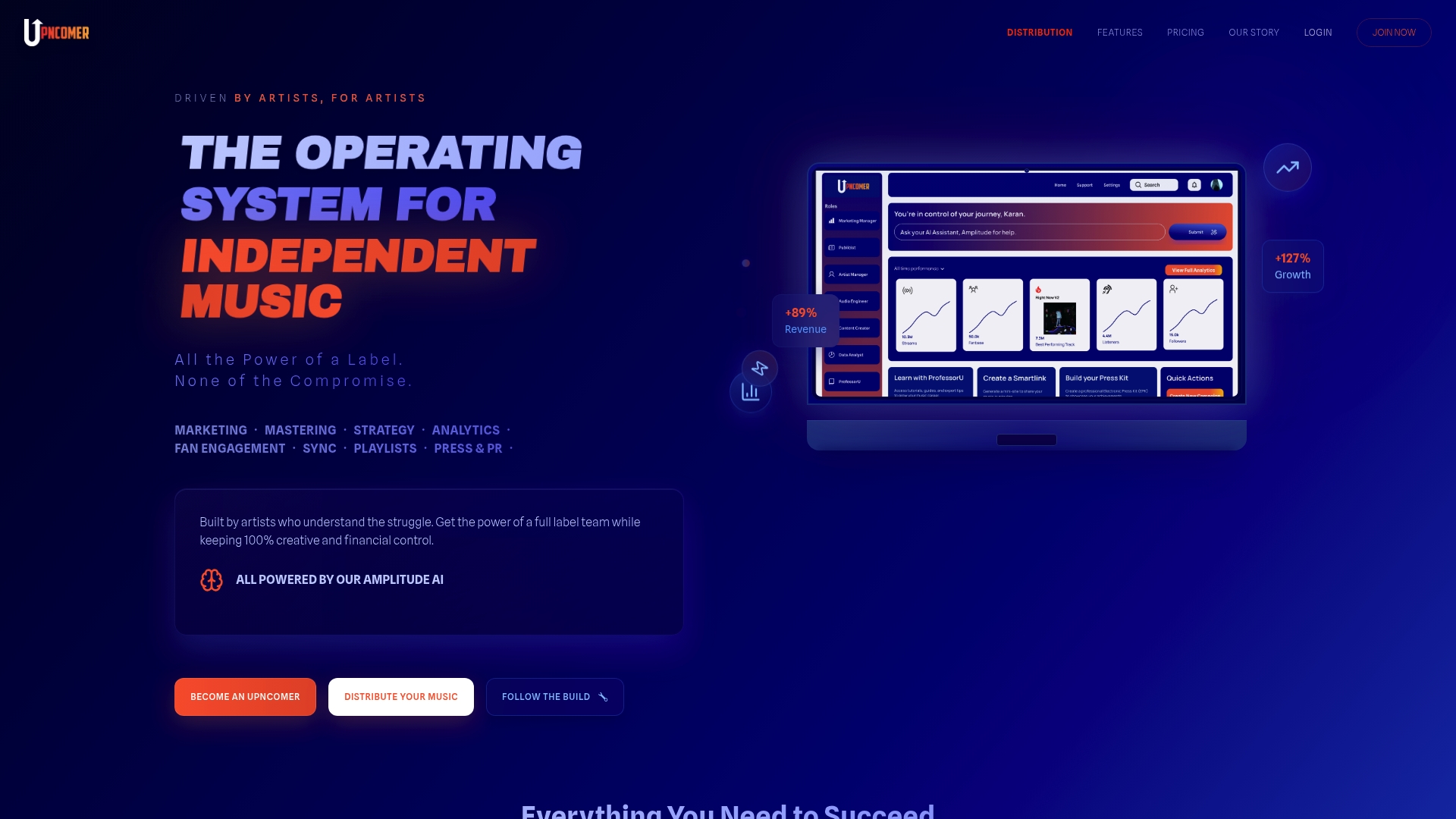
Upncomer’s Growth Engine and Amplitude AI modules put streaming analytics, audience insights, and ad campaign management in one place. You stop guessing and start acting on what your numbers actually show. The Artist Manager module keeps your release planning and fan engagement workflows organized without requiring a full team. Whether you are just starting to build your community or ready to scale what is already working, the Upncomer community is where independent artists get the support and resources to make it happen. You can also read about real artist results from musicians who have used the platform to grow their careers.
FAQ
What is artist fanbase growth?
Artist fanbase growth is the process of converting casual listeners into an engaged, loyal community that actively supports your music career through purchases, shares, and attendance.
How long does it take to build a music fanbase?
Most independent artists reach meaningful benchmarks, such as 1,000+ monthly Spotify listeners and 500+ social followers, within 6–12 months of consistent audience-building effort.
What is a superfan and why do they matter?
A superfan is a highly engaged listener who spends significantly more on music experiences and merchandise than the average fan. Superfans spend around $113 per month and are 2.8 times more likely to buy merch.
What metrics should I track for fanbase growth?
Track save rates, engagement rates, email open rates, and conversion metrics rather than raw follower counts. A save rate above 7% on Spotify signals strong algorithmic growth potential.
How do I keep fans engaged long term?
Consistent direct communication through email, SMS, and community spaces keeps superfans active. Regular exclusive content and genuine two-way interaction sustain the emotional connection that turns followers into long-term supporters.