Build a music business plan that actually works

Most indie musicians treat a business plan like homework they’ll get to eventually, or they download a generic template and call it done. Neither approach works. The music industry moves fast, revenue streams shift constantly, and the difference between artists who build sustainable careers and those who burn out after one or two releases often comes down to one thing: a real, working plan. Not a document that sits in a folder. A living strategy that tells you where your money comes from, where it goes, and what you’re doing next month and next year.
Table of Contents
- What actually goes into an indie music business plan?
- Every musician needs a release and marketing cadence
- Budgeting: Cash flow, expenses, and risk
- Asset ownership: Building a durable music business
- Why most indie business plans fail — and what really works
- Take your plan further with UpNComer
- Frequently asked questions
Key Takeaways
| Point | Details |
|---|---|
| Core plan structure | A successful indie music business plan covers mission, market, revenue, team, and a multi-year financial forecast. |
| Consistent release cadence | Releasing singles every six to eight weeks fuels discovery and growth for independent artists. |
| Budget for risks | Plan your cash flow and budget for all expense categories to avoid surprises and keep your music career sustainable. |
| Own your assets | Ownership of creative work and brand identity is crucial for long-term independence and adaptability. |
| Keep plans actionable | Start with a lean, practical plan and adapt as you grow rather than waiting for perfection. |
What actually goes into an indie music business plan?
With expectations set, let’s break down the core ingredients every serious music business plan needs.
A lot of artists think a business plan means writing a mission statement and listing some goals. That’s a start, but it’s barely scratching the surface. A solid indie music business plan has real structure, and each section does specific work for your career.
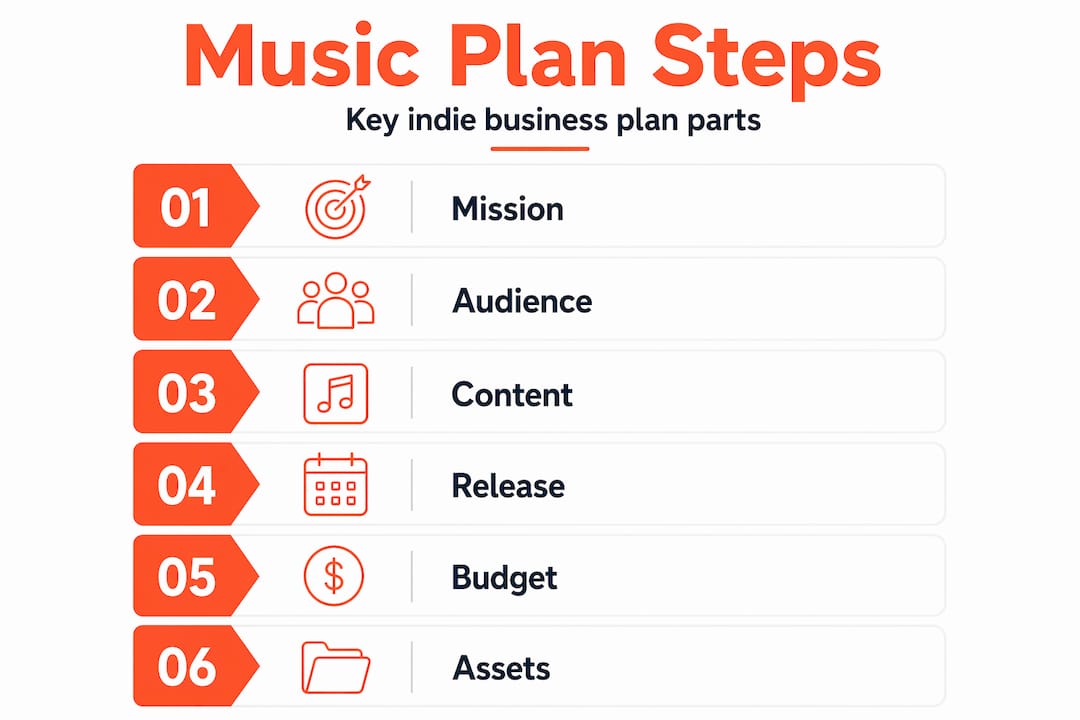
Here’s what a practical, music business plan elements framework looks like, broken into plain language:
- Mission and concept: Who you are as an artist, what genre you operate in, what makes you different, and what you’re trying to build long term.
- Market analysis: Who your audience is, where they hang out, what similar artists are doing, and where the real opportunities are in your niche.
- Release and acquisition strategy: How often you’ll release music, how you’ll grow your fanbase, and what milestones you’re targeting.
- Revenue and promotion plan: Every income stream you’re building, from streaming royalties and sync licensing to merch, live shows, and direct fan support.
- Team and management: Who’s in your corner, whether that’s a manager, a publicist, a booking agent, or a small team of collaborators handling specific tasks.
- Multi-year financial forecast: A realistic projection of income and expenses over three to five years, including how much capital you need to start and when you expect to break even.
That last point is where most indie plans fall apart. Artists skip the numbers because they feel intimidating. But a structured indie music label plan typically includes a five-year forecast, a 14-month breakeven timeline, and a minimum capital requirement (one example model cites $757,000 for a label-level operation). Even if you’re a solo artist and your numbers are much smaller, the discipline of forecasting is what separates guessing from planning.
Here’s a quick comparison of what a weak plan looks like versus a strong one:
| Plan element | Weak plan | Strong plan |
|---|---|---|
| Mission | Vague (“make great music”) | Specific niche, target audience, unique positioning |
| Market analysis | Skipped | Audience demographics, competitor research, platform data |
| Revenue streams | “Streaming and shows” | Itemized: royalties, merch, sync, Patreon, live, licensing |
| Financial forecast | None | 3 to 5 year projection with breakeven timeline |
| Release strategy | “Drop music when ready” | Scheduled cadence with marketing windows |
| Team | Solo, no structure | Defined roles, even if it’s just you wearing multiple hats |
The point isn’t to make your plan look impressive. It’s to make it functional. Every section should answer a question you’ll actually face in the next 12 months.
Every musician needs a release and marketing cadence
Once you understand the sections of your plan, it’s crucial to focus on the marketing and release rhythm that keeps momentum alive.

Here’s a hard truth: one great release won’t build a career. The artists who grow consistently are the ones who show up consistently. That means your business plan needs a release and marketing cadence baked into it from day one.
Berklee recommends a steady release schedule of roughly one single every six to eight weeks to keep audiences engaged and support discovery on DSPs (digital streaming platforms) and social platforms. This isn’t about flooding the market. It’s about staying in the algorithm’s good graces and giving fans something to talk about on a regular basis.
Here’s how to build your release and promotion cadence into your business plan:
- Map out 12 months of releases. Decide how many singles, EPs, or albums you’re targeting. Work backward from release dates to plan recording, mixing, mastering, and artwork deadlines.
- Assign a marketing window to each release. Typically, this means four to six weeks of pre-release activity (teasers, playlist pitching, press outreach) and two to four weeks of post-release push (ads, social content, fan engagement).
- Plan your content calendar alongside your music calendar. Every release needs content: behind-the-scenes clips, lyric videos, short-form social posts, email newsletters. Build this into the plan, not as an afterthought.
- Include visibility tactics that work between releases. Covers, collaborations, live sessions, and playlist features keep you discoverable even when you’re not dropping new music.
- Set measurable goals for each release. Streams, saves, playlist adds, email subscribers gained. These numbers tell you what’s working and what to adjust.
Pro Tip: Think of your streaming presence as the top of your funnel. Discovery happens there, but conversion (superfans, merch buyers, ticket purchasers) happens through direct channels like email lists and fan communities. Your marketing plan should feed both. For more on building music campaign management strategies, it’s worth studying how artists structure their full campaign workflow.
The biggest mistake artists make here is treating each release like a standalone event. Your plan should treat every release as part of a larger narrative arc that builds your audience over time. Indie music marketing tactics that work long term are the ones rooted in consistency, not one-off viral moments.
Budgeting: Cash flow, expenses, and risk
A steady marketing and release routine is only sustainable if your finances are mapped and risks properly planned. Let’s dig into the budgeting specifics.
This is the section most artists dread, but it’s also the one that saves careers. Budgeting for an independent musician isn’t just about knowing how much a recording session costs. It’s about understanding when money comes in, when it goes out, and how to stay solvent in between.
Here’s a realistic breakdown of common expense categories and income sources for an independent artist:
| Category | Expense examples | Typical timing |
|---|---|---|
| Recording and production | Studio time, session musicians, producer fees | Before release |
| Mixing and mastering | Engineer fees, AI mastering tools | Before release |
| Distribution | Annual platform fees or per-release costs | Before or at release |
| Marketing and ads | Social media ads, playlist pitching services | During release window |
| Touring and live | Travel, accommodation, gear, venue costs | Ongoing |
| Legal and accounting | Contracts, copyright registration, tax prep | Ongoing |
| Merch | Design, printing, fulfillment | Variable |
On the income side, your plan should map out: streaming royalties (which arrive 30 to 90 days after release), sync licensing fees, live performance income, merch revenue, and direct fan support platforms. The timing mismatch between expenses and income is where most indie artists hit cash flow problems.
Making A Scene emphasizes building a cash flow timeline that shows income versus expenses side by side, and warns specifically against treating touring as a vacation. Touring is an operational cost. Every mile, every hotel, every meal on the road needs to be budgeted as a business expense, not a personal adventure.
Here’s a simple cash flow planning process to include in your business plan:
- List every expense for the next 12 months with estimated amounts and timing.
- List every expected income source with realistic amounts and when you’ll actually receive the money.
- Identify the months where expenses exceed income and plan how you’ll cover the gap (savings, advance bookings, merch pre-orders).
- Build a small emergency buffer, ideally one to two months of operating expenses, so one bad month doesn’t derail everything.
Pro Tip: Separate your personal finances from your music business finances from day one. Open a dedicated business checking account, even if you’re a solo artist. It makes tax time cleaner and helps you see your music business clearly as the operation it is, not just a side project.
For deeper guidance on music finance strategies and how to structure your financial planning as an independent artist, the resources available to you have never been more accessible.
Asset ownership: Building a durable music business
Financial planning is essential, but your ownership strategy can make or break your business, especially as industry structures shift.
Here’s something that doesn’t get talked about enough in indie music circles: the artists who build lasting careers aren’t just the most talented ones. They’re the ones who own their assets. And in music, assets mean masters, publishing rights, brand identity, and direct-to-fan channels.
“Independent artists succeed not just by creating great music, but by combining creative output with smart business structuring and ownership of masters, publishing, and brand identity.” This framing, supported by The Source’s analysis of how indie artists are building global brands, is central to building a durable music business.
Why does ownership matter so much? Because platforms change. Algorithms shift. Streaming payouts fluctuate. A deal that looks great today might look terrible in three years. But if you own your masters, you control how your music is licensed, distributed, and monetized. If you own your publishing, you collect royalties every time your music is performed, synced, or covered. These aren’t abstract concepts. They’re income streams that compound over time.
Here are the core ownership assets every indie artist’s business plan should address:
- Masters: Who owns the recordings? If you’re self-releasing, you do. Protect this by keeping your recording agreements clear and avoiding deals that sign away master rights without fair compensation.
- Publishing: Register your songs with a performing rights organization (PRO) like ASCAP or BMI. Consider setting up your own publishing entity to collect all publishing revenue directly.
- Intellectual property (IP): Trademark your artist name and logo if you’re building a brand with real commercial value. This protects you from copycats and strengthens licensing opportunities.
- Direct-to-fan channels: Your email list, your website, your fan community. These are assets you own outright, unlike your social media following, which can disappear if a platform changes its algorithm or policies.
For a deeper look at artist development strategies that incorporate ownership thinking, the most successful indie artists treat their catalog as a long-term investment, not just a creative output. Understanding music asset management tips can also help you think about how to maximize the value of every piece of content you create.
Why most indie business plans fail — and what really works
With core strategies covered, it’s time to address the most common mistakes and what experience really teaches.
Here’s the uncomfortable truth: most indie music business plans fail not because the artist lacked talent or ambition, but because the plan itself was built to impress rather than to operate. Artists spend weeks crafting a beautiful 40-page document, then never look at it again. Or they skip the plan entirely and wing it, hoping momentum will carry them through.
Neither works. Here’s what actually goes wrong, and what to do instead.
Overbuilding the plan. A 40-page business plan sounds thorough. In practice, it’s usually a procrastination tool. The more complex your plan, the less likely you are to follow it. A one-page plan with clear goals, a realistic budget, and a 12-month action calendar will outperform a sprawling document every time. Start lean. Add detail as your business grows and you understand what actually matters.
Ignoring cash flow. Revenue projections are fun to write. Cash flow timelines are not. But cash flow is what keeps the lights on. If you don’t know when money is coming in versus when bills are due, you’ll hit a wall fast. Build the cash flow timeline first, then work backward to figure out what revenue you need to generate.
Skipping asset ownership. A lot of indie artists focus entirely on getting streams and followers, treating ownership as something to deal with later. Later never comes, and then a platform tanks or a deal goes sideways and there’s nothing to fall back on. Ownership should be in your plan from the start, even if it’s just a checklist of steps to take in the next 90 days.
Perfectionism over consistency. The artists who win long term aren’t the ones who release perfect music. They’re the ones who release consistently, learn from every campaign, and iterate. Your campaign management insights will improve dramatically once you have real data from real releases to work with.
Pro Tip: Write your business plan in a format you’ll actually revisit. A shared Google Doc, a Notion page, a simple spreadsheet. Whatever format makes it easy to update monthly. A plan that evolves with your career is infinitely more valuable than a polished document that collects digital dust.
The lesson here is straightforward. Operational consistency beats perfectionism. A plan that’s 70% right and actually followed will outperform a perfect plan that never gets executed.
Take your plan further with UpNComer
After exploring the core planning strategies and pitfalls, here’s how UpNComer can help you take the next step.
Building a real music business plan takes clarity, tools, and ongoing support. You don’t have to figure it all out alone.
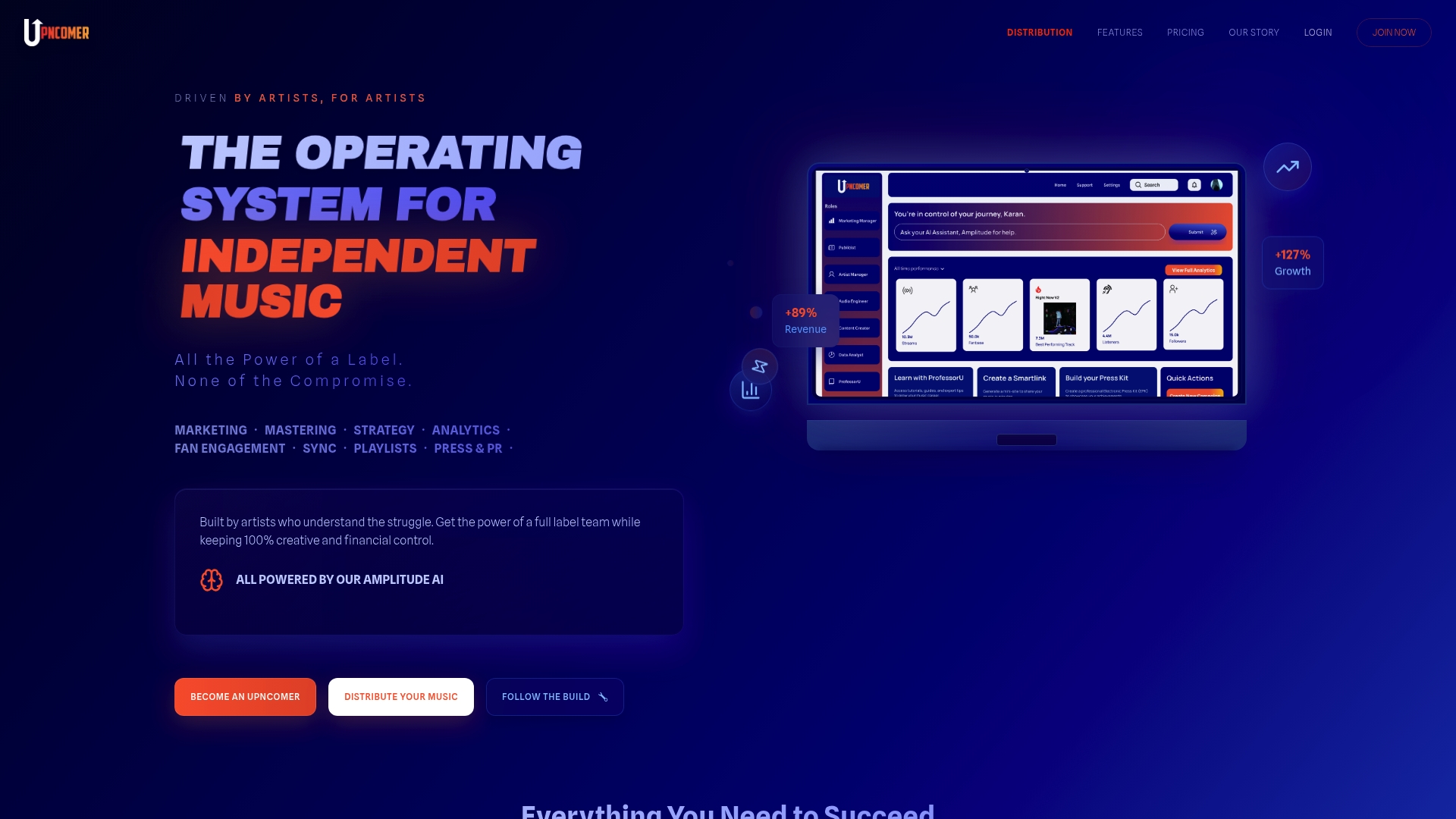
UpNComer is built specifically for independent artists and music teams who want to grow sustainable careers without the chaos of juggling ten different platforms. From AI-powered campaign management and streaming analytics to fan engagement tools, release promotion, and educational resources, everything you need to execute your business plan lives in one place. Whether you’re mapping out your first 12-month release calendar or analyzing which revenue streams are actually working, UpNComer gives you the infrastructure to act on your plan, not just write it.
Frequently asked questions
What is the minimum cash needed to launch an independent music business?
A practical example model cites $757,000 as a minimum for a label-level operation, but solo artists can start with far less depending on their scope and how they prioritize spending.
How often should independent artists release singles?
One single every six to eight weeks is the recommended cadence to sustain fan engagement and support algorithmic discovery on streaming platforms.
Why is asset ownership important for indie musicians?
Owning masters, publishing, and IP protects you from platform changes and deal shifts, and gives you direct control over how your music is monetized now and in the future.
Should a music business plan be long and detailed?
A concise, actionable plan is almost always more effective than a lengthy document. Focus on clarity, realistic numbers, and a 12-month action calendar you’ll actually follow.