Why Artist Development Includes Marketing for Indie Artists

Most independent musicians treat marketing like a tax return. Necessary, uncomfortable, and best handled after the real work is done. But understanding why artist development includes marketing changes everything about how you grow as an artist. Your music can be extraordinary, but without a system for visibility, story, and fan connection, it exists in a vacuum. Marketing is not the opposite of art. It is the infrastructure that lets your art find the people who need it most. This article breaks down how marketing fits inside artist development, not beside it.
Table of Contents
- Key takeaways
- Why artist development includes marketing
- Marketing as part of your creative voice
- Practical strategies that connect marketing to development
- Traditional development vs. modern integrated approach
- My take: marketing is how you honor your music
- Take your artist development further with UpNComer
- FAQ
Key takeaways
| Point | Details |
|---|---|
| Marketing is part of development | Artist development includes identity, business strategy, and visibility, not just music skills. |
| Authenticity drives fan loyalty | High streams without loyal fans result from chasing trends over building a real artist identity. |
| Marketing is relationship-building | Structured marketing helps the right listeners find your work and builds trust over time. |
| Data sharpens your strategy | Streaming analytics and fan engagement metrics let you refine your approach without guessing. |
| Focus beats spreading thin | Consistent messaging on one or two platforms outperforms trying to be everywhere at once. |
Why artist development includes marketing
Most people define artist development as getting better at your craft. Vocal coaching, production skills, stage presence. That matters. But it is only one part of the picture.
True artist development covers four interconnected areas: your music, your identity, your business strategy, and your visibility. Strip any one of those out and the whole structure weakens. Marketing is where identity and visibility live. You cannot separate them from development without stunting your career.
Here is what marketing actually does for an artist at the development stage:
- Positioning: It defines who you are for listeners who have never heard of you. What genre, what vibe, what story.
- Visibility: It gets your music in front of people consistently, not just at release time.
- Trust: It builds familiarity. Fans do not support strangers. They support artists they feel they know.
- Systems: It creates repeatable structures, email lists, content rhythms, campaign workflows, that carry your career forward without reinventing the wheel every release cycle.
Marketing builds awareness and trust through consistent, coherent communication that aligns with who you are as an artist. Without that alignment, you might accumulate streams but struggle to build a real fanbase. The role of marketing in artist growth is not cosmetic. It is structural.
Marketing as part of your creative voice
Here is the reframe that unlocks everything. Marketing is not a business task that interrupts your creative life. It is a creative task that extends it.

Every piece of content you put into the world, a caption, a short video, a photo from the studio, tells your story. That story is your brand. And your brand is inseparable from your music. When Olivia Dean built her career, she did not treat marketing as a separate department. Her social presence, her visual identity, her candid communication with fans all carried the same emotional warmth as her songs. The result? Emotionally resonant marketing aligned with her core story produced long-term, meaningful fan engagement.
That is the standard to aim for. Not volume. Alignment.
“Artists building sustainable careers frame marketing as a natural part of their creative lives, not a separate burden.” — Shelby Leigh
When you write a caption, think of it as a micro-story. When you post a behind-the-scenes clip, you are giving fans access to your world. That is not promotion. That is connection. And marketing as creative work rather than a chore actually protects your mental well-being as an artist, because it stops feeling like performance and starts feeling like expression.
Pro Tip: Pick the one or two platforms where your listeners already spend time and build depth there before going wider. Trying to be active on five platforms at once will drain you without paying off.
A newsletter, a website, and one strong social platform is enough to build a real audience. These tools support rather than interrupt your creative process when you treat them as natural extensions of what you make.
Practical strategies that connect marketing to development
Now let us get specific. Here is a practical framework for weaving marketing into your artist development without losing creative momentum.
- Define your narrative arc before your next release. What is the emotional journey of the project? What do you want fans to feel and understand? Map that out first. Every piece of content, every pitch, every caption then serves that single story.
- Use streaming analytics to guide your next move. Which songs are getting saves? Where are listeners dropping off? This data tells you what is resonating before you commit your next creative cycle to a direction. Platforms built for independent artist growth make this kind of analysis accessible without needing a team.
- Pitch playlists with intent. Playlist pitching is not just about streams. It is about reaching communities of listeners who are already primed for your sound. A focused pitch to ten relevant playlists beats a spray-and-pray approach to one hundred.
- Build direct fan relationships. Email lists, Patreon, Discord communities. These are your most important long-term marketing assets. Budgeting consistently for marketing and direct fan systems builds real competitive advantage over time.
- Collaborate with intent. Features, co-writes, and live events all compress the relationship-building timeline. Events create authentic connection and accelerate trust in a way that digital content alone cannot replicate.
Here is a quick comparison of high-impact vs. low-impact marketing activities for artists in active development:
| Activity | Impact level | Why it matters |
|---|---|---|
| Building an email list | High | You own the channel. No algorithm can cut your reach. |
| Posting without a strategy | Low | Visibility without narrative does not convert to fans. |
| Playlist pitching with context | High | Gets music to primed listeners who want your sound. |
| Copying trends or other artists | Low | Overextending on platforms and copying others kills brand clarity. |
| Consistent release campaigns | High | Builds familiarity, trust, and streaming momentum over time. |
| One-off viral attempts | Low | Short spikes rarely translate to lasting fan loyalty. |
For more on planning campaigns that actually move the needle, the music campaign management guide at UpNComer breaks down practical workflows you can apply immediately.
Traditional development vs. modern integrated approach
The way artist development was structured a generation ago looks very different from what it takes to thrive as an independent artist today.
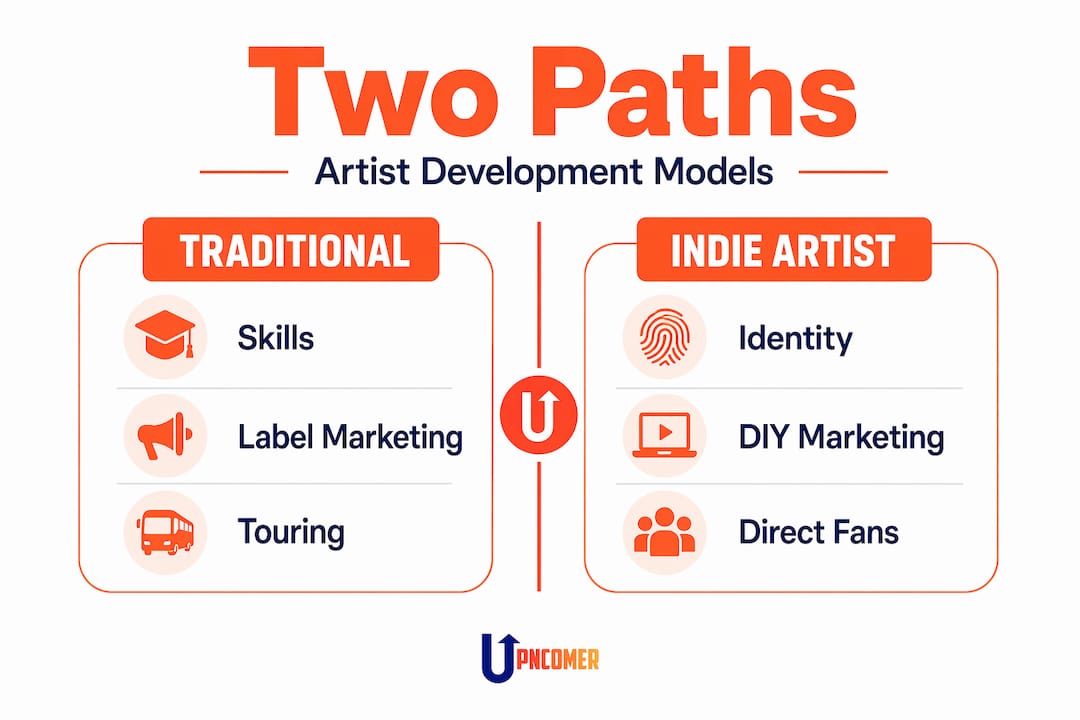
Under the old model, a label handled marketing entirely. Artists focused on recording, touring, and being presentable. Business strategy was someone else’s department. That system had obvious flaws. It also meant artists had almost no ownership over how their story was told or how their audience was built.
Here is how the two models compare:
| Dimension | Traditional model | Modern independent model |
|---|---|---|
| Who handles marketing | Label and management | The artist, with support from tools and platforms |
| Fan relationship ownership | Label-controlled | Artist-owned through direct channels |
| Data access | Limited or filtered | Real-time, artist-facing analytics |
| Identity development | Label-shaped | Artist-defined, audience-tested |
| Career sustainability | Label-dependent | Built on owned audience and revenue systems |
The shift is clear. Today, the importance of marketing for artists is not about hiring an agency. It is about understanding the tools and building the habits. Independent artists who treat marketing as someone else’s problem consistently stall. They release good music into a void and wonder why nothing is gaining traction.
The risk is real. Low visibility, weak fan loyalty, and stalled momentum are not signs of bad music. They are usually signs of underdeveloped marketing systems. Great music and a smart marketing approach are not in tension. They amplify each other.
A hip-hop marketing workflow built around consistent brand story, direct fan access, and data-informed decisions represents exactly the kind of integrated thinking every independent artist needs to adopt, regardless of genre.
My take: marketing is how you honor your music
I have spent years watching incredibly talented independent artists release music that deserved far more attention than it received. And in almost every case, the gap was not talent. It was the absence of a marketing mindset.
Here is what I have come to believe. Marketing is not selling out. It is respecting your work enough to help the right people find it. When you put real effort into a song, leaving its success entirely to luck is not humility. It is neglect.
The artists I have seen build genuinely sustainable careers all share one trait. They treat marketing as creative and strategic work simultaneously. They ask: “Who is this for?” and “How will they find it?” right alongside “What does this sound like?” and “What am I trying to say?”
What most independent artists miss is that relationship-building takes patience. Marketing does not always pay off in the first week or even the first release cycle. The artists who stay consistent, communicate authentically, and build real systems over time are the ones who look unstoppable two years down the line.
My honest advice? Stop treating marketing as the thing you do after the music is done. Let it inform how you make the music, how you release it, and how you talk about it. That is where the real synergy lives.
— Karan
Take your artist development further with UpNComer
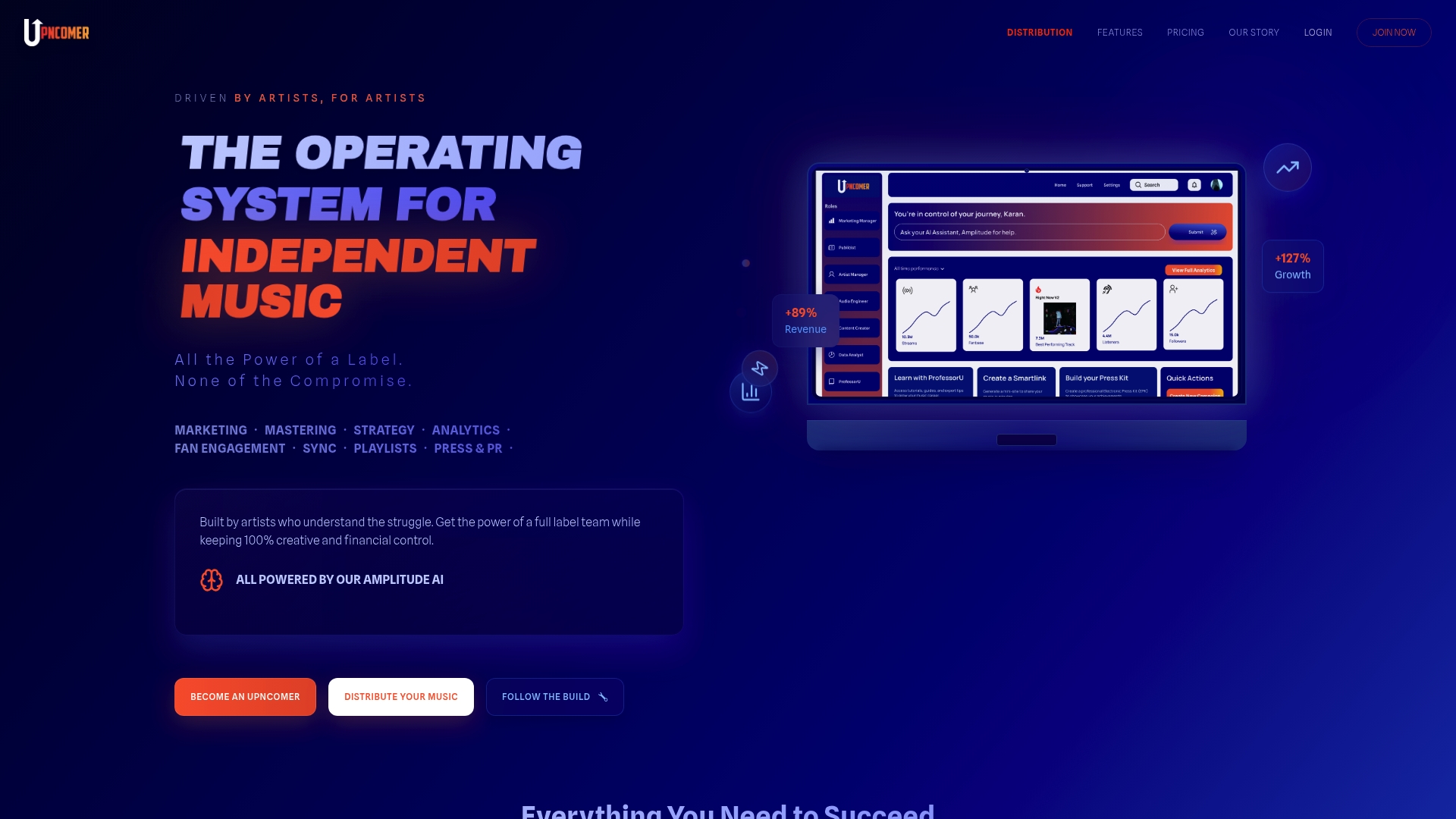
If this article made you think differently about the relationship between development and marketing, UpNComer was built to put those ideas into practice. It is an AI-powered platform designed specifically for independent artists who want to grow without losing creative control.
Inside UpNComer, you get access to Amplitude AI for strategic guidance, Growth Engine for audience building, streaming analytics for data-driven decisions, playlist pitching tools, fan engagement systems, ad campaign management, and release promotion workflows. Everything you need to embed marketing into your development process lives in one place.
Stop patching together disconnected tools and start building a real career. Explore UpNComer today and see how it supports every stage of your growth.
FAQ
What does artist development actually include?
Artist development covers music skills, identity, business strategy, and visibility. Marketing sits at the intersection of identity and visibility, making it a core part of the development process rather than an optional add-on.
Why does marketing matter for independent artists specifically?
Independent artists do not have labels handling visibility and fan relationships on their behalf. Marketing gives you the tools to build and own your audience directly, which is what creates a sustainable, label-free career.
How do I start marketing without losing my creative focus?
Start by treating marketing as storytelling rather than promotion. Pick one or two platforms, build a content rhythm that mirrors your creative process, and focus on consistency over volume. Your newsletter and social presence are extensions of your music, not distractions from it.
Can bad marketing hurt an artist’s development?
Absolutely. Chasing trends without a clear identity produces streams without fan loyalty. Overextending across platforms without a focused message dilutes your brand. Inconsistent communication breaks the trust that turns casual listeners into real supporters.
How does data fit into artist marketing and development?
Streaming analytics and fan engagement metrics tell you which songs connect, where listeners come from, and what content drives action. Using that data at every stage of development means your next creative and marketing decisions are informed by real audience behavior, not guesswork.