Merch Drops: Track ARPF, Not Follower Counts, as an Indie Artist

Yes, run a merch drop, and keep it small. A merch drop is a limited-time or limited-quantity release that gives your fans a reason to act now. The model that works for most independent artists is a small, data-validated run, backed by a waitlist, a short pre-launch build, and fairness controls so your real fans get the product, not bots.
TL;DR:
- Set production quantity from waitlist signups multiplied by your own past conversion rate; if none exists, use a low estimate and round down.
- Match merch to the goal: tees or caps broaden reach, hoodies support revenue, and numbered pieces attract collectors; start with one or two products.
- Give waitlist members a clearly timed VIP window before public sales, and use purchase limits or a raffle for highly sought after small runs.
- Use waitlist size, conversion, and repeat purchases to guide restocks: strong sales plus alerts support another run, while weak sales call for a different product.
Table of Contents
- What a merch drop is and when you should use one
- Set clear goals and pick merch that fits your fans
- Plan inventory, pricing, and fairness
- Pre-launch playbook: timeline, cadence, and list building
- Promotion channels and creative launch tactics that convert
- Tech stack and bot protection: get checkout ready
- Launch day operations: sequencing, support, and the first hours
- After the drop: retention, restocks, and next-drop data
- Artist-focused metrics: ARPF and the value of every signup
- Legal considerations: copyright, licensing, and fair marketing
- Integrating AI tools to optimize merchandise design and marketing
- Collaborations and cross-promotions with other artists or brands
- Our checklist and quick wins for your first drop
- How we help you run data-led merch drops
- FAQ
What a merch drop is and when you should use one
A drop is a controlled demand experiment. Instead of leaving a store open all year, you release a defined batch for a defined window. Shopify’s guidance on limited drops describes this as scarcity marketing rooted in streetwear culture, useful for testing ideas and rewarding loyal buyers without leaning on discounts.
The psychology is simple. When supply is limited and the window is short, fans stop browsing and start deciding. That urgency only works when the scarcity is real, which means genuine quantity caps or genuine shipping deadlines. Fake countdown timers might spike a day of sales, but they cost you trust that is hard to earn back.
Drops fit independent artists in a few clear situations:
- Rewarding superfans: give your most engaged listeners first access to something special.
- Testing a new product: see whether a hoodie or cap sells before you commit to a bigger run.
- Creating attention around a moment: a single release, a tour announcement, or an anniversary.
Frequency matters too. If you drop too often, nothing feels special, and you burn yourself out before you learn anything. Treat drops as occasional events tied to real moments in your release planning, and keep the rest of the calendar for building your list.
Set clear goals and pick merch that fits your fans
Start with the goal, then choose the product. If your goal is revenue from your core fans, lean toward a heavyweight hoodie or a bundle. If your goal is reach, an everyday tee or cap travels further because fans actually wear it. If your goal is hype, a numbered collector piece does more than any ad.
Shopify’s drop guidance puts goal-setting first, and it is the step artists skip most. Without a goal, you can’t tell afterward whether the drop worked.
Formats that commonly sell in artist drops include:
- Oversized tees: low risk, easy sizing, strong repeat potential.
- Heavyweight hoodies: higher price point and higher perceived value.
- Caps: a cheap entry point for fans who aren’t ready for a hoodie.
- Limited collector pieces: small runs that signal “this is for the real ones.”
Design is where drops become collectible. Tie the item to a story your fans already know: a lyric, a tour city, an album era, an inside joke from your community. Add a detail that can’t be reproduced later, like a dated tag, a numbered label, or a colorway you won’t print again. Superfans don’t buy a shirt, they buy proof they were there.
Keep your first run to one or two products. Fewer choices make for faster decisions at checkout and cleaner data afterward.
Plan inventory, pricing, and fairness
Don’t guess quantities. Let your fans tell you.
Shopify notes that a waitlist works like a preorder tool, validating demand while the product is still in development. That is your safest path to a production number. Here is a conservative way to use it:
- Open a waitlist before you place any production order, and record how many fans sign up.
- Apply a conservative conversion estimate. Use your own past conversion rate from shows, emails, or earlier sales. If you have no history, assume a low rate and round down.
- Calculate your baseline run from signups multiplied by that rate, then add a small buffer for walk-up buyers.
- Decide your sizing split using what your fans have actually ordered before, not generic charts.
- Confirm production minimums with your printer before announcing a final quantity.
On production, small-run minimums shape everything. Shay’s Print Shop shares vendor-tested merch ideas and preorder guidance for small runs, which is useful when you’re deciding how few pieces you can responsibly order.
For pricing, charge what the item is worth to a fan who wants it, not what feels safe. Limited items can carry a modest premium, but be honest about why: state the exact print quantity only if it is accurate.
Pro Tip: Tell fans your exact quantity and your shipping deadline in the announcement. Real numbers build more trust than hype ever will.
Pre-launch playbook: timeline, cadence, and list building
A pre-launch window gives you time to collect high-intent signups you can actually reach. The goal of pre-launch is not to shout louder, it is to collect high-intent signups you can actually reach. A small, engaged list beats a large, passive following, and our guide on direct-to-fan sales shows how a modest list can turn into real merch revenue.
Here is a sample cadence you can adapt:
- Tease: post short-video glimpses of the design process, a texture shot, or a color test. Don’t show the full item yet.
- Open the waitlist: use a gated signup with a clear promise, like “first access and a VIP window.” Add a QR code at shows and a link in your bio.
- Reveal: show the full product and the story behind it. Confirm the drop date and quantity.
- Nudge: send email and SMS reminders that give fans something new each time, such as a behind-the-scenes clip or a sizing guide.
- Countdown: run a short content series, then give your waitlist a VIP early-access window before the public release.
Be clear about tiers. Tell fans exactly who gets access when, for example “waitlist opens at 6 PM, public at 8 PM.” Confusion about access is the fastest way to turn excitement into frustration. If you want a longer runway tied to a music release, our artist rollout plan lays out a structure, and our musician email marketing guide covers moving fans from signup to sale.
Promotion channels and creative launch tactics that convert
Your best channels are the ones that reach people who already care. Email and SMS go straight to high-intent fans. Short-form video on Instagram and TikTok builds the story. Live shows and merch tables turn a captive audience into signups on the spot.
A practical channel priority:
- Email: your highest-converting channel, so protect it and write like a person.
- SMS: use sparingly, for the VIP window and last-call reminders only.
- Short video: teasers, process clips, and the reveal.
- Live events: a merch table with a QR code that feeds your waitlist.
On the creative side, a few tactics reliably help. Seed a handful of pieces with fans or creators who genuinely fit your world. Run a countdown content series so each post gives people a reason to come back. Offer an exclusive bundle, like a tee plus a signed insert, that only exists during the drop. Shopify’s product-drop guidance also stresses segmenting who gets access and when, which pairs well with these tactics.
Balance organic and paid carefully. Organic content builds the story and the list. Paid promotion works best late, pointed at people who already engaged, so you’re paying to convert warm fans rather than chase strangers.
Pro Tip: Send your email before your public social post. Your list should always hear about it first, because that is what makes joining it worth it.
Tech stack and bot protection: get checkout ready
A drop concentrates traffic into a few minutes. If your site stumbles, you lose the exact fans you spent weeks warming up. Shopify’s drop guidance calls out preparing the tech stack for traffic surges, bot protection, and checkout speed as core steps.
Run through this before launch day:
- Load test your store: open it on mobile and desktop at the same time and click through checkout the way a rushed fan would.
- Turn on accelerated checkout: fewer fields and saved payment options mean fewer abandoned carts.
- Add bot protection: CAPTCHAs, account-required access, and per-customer purchase limits all make scalping harder.
- Consider a raffle or lottery: for a very small, very hyped run, a random draw among waitlist members can be fairer than a race.
- Sync inventory in real time: make sure the number on the page matches the number you can ship.
- Write your oversell plan: decide in advance whether you’ll refund, backorder, or offer a swap.
- Publish shipping timelines: put them on the product page and in the confirmation email.
None of this is glamorous, but it protects your fans and your reputation. A calm, working checkout is part of the product.
Launch day operations: sequencing, support, and the first hours
Launch day goes best when the order of events is decided before anyone is nervous. Follow a simple, timed sequence and keep one person watching the store and another watching messages.
- Open the VIP window first for waitlist members, with a short, clear time frame.
- Send the email right as the window opens so your list knows to act.
- Release publicly after the VIP window closes, and post to social at that point.
- Send instant order confirmations with shipping expectations spelled out.
- Staff your inbox and DMs for the first few hours, since questions come fast.
- Triage problems in order: if the site slows down, pause promotion before adding more traffic; if payments glitch, post a clear status update; if you oversell, contact buyers quickly with your pre-written plan.
Timing deserves a thought. Pick a slot when your audience is online, not when it’s convenient for you. If your release also lines up with new music, our music release checklist can help you sequence both without them stepping on each other.
Silence is the real enemy on launch day. Fans forgive a hiccup they hear about and resent one they don’t.
After the drop: retention, restocks, and next-drop data
The drop isn’t over when it sells out. The next few weeks decide whether buyers become repeat fans.
Build a simple post-purchase flow:
- Shipping updates: short, honest, and on schedule.
- A review or photo request: invite buyers to share the item in the wild, which becomes your next round of content.
- Next-drop priority: give this drop’s buyers first access next time, so buying feels like joining something.
- A restock decision: based on evidence, not emotion.
Shopify recommends using drops to generate data: track average order value, repeat purchases, and waitlist size. Read them together. A big waitlist with low conversion means interest without urgency. A small waitlist with high conversion means a loyal core worth serving better. Strong sell-through plus a long “notify me” list points toward a restock or a second run; weak sell-through points toward a different product, not a bigger discount.
Over time, buyer data lets you create tiered offers and grow your average revenue per fan. The point of every drop is to make the next one smarter, a habit our piece on why data drives music marketing explains well.
Artist-focused metrics: ARPF and the value of every signup
For independent artists, average revenue per fan (ARPF) is a better scoreboard than follower counts or monthly listeners. It asks a blunt question: how much does each real fan contribute to your career? Merch is one of the clearest ways to raise it, because a fan who buys a hoodie is worth far more directly than a fan who streams a track once.
Small lists punish vanity and reward focus. A modest, engaged list often outperforms a big passive following, which is why every signup counts as a data point. Use your waitlist to set production quantities instead of guessing, and track average order value and repeat purchases across drops.
Shopify’s drop guidance recommends tracking average order value, repeat purchases, and waitlist size. Those three signals tell you whether a drop built real demand or just a spike of attention.
Check your numbers after every drop and write them down. Patterns can emerge across drops.
Legal considerations: copyright, licensing, and fair marketing
Before you print anything, make sure you own what’s on it. That sounds obvious, but it trips up many small creators.
Start with your design. If you made it, you generally control it. If a freelancer made it, get a written agreement that says what you can use it for, and for how long. If you’re using a sample, a photo, a font, or a character you didn’t create, you likely need a license, and “it’s just merch” is not a defense.
Your artwork and your brand name are also worth protecting. Keep dated files of your original designs, and consider registering a trademark for a name you plan to build on. Talk to a qualified attorney for your situation, especially for collaborations that involve another party’s logo or likeness.
Marketing claims count too. Don’t promise limited quantities you don’t have, and don’t invent urgency. Fairness and honesty are legal matters as well as trust matters, and THE GURLZ’ 14-day plan on avoiding FTC complaints is a practical look at keeping limited drops clean.
A quick habit helps: keep a folder for every drop with your design files, license agreements, supplier confirmations, and the exact wording of your announcements. If a question ever comes up, you’ll have answers ready.
Integrating AI tools to optimize merchandise design and marketing
AI tools are most useful for the unglamorous parts of a drop. They speed up the work so you have more time for the creative decisions only you can make.
On the design side, AI image tools can help you explore mood boards, color directions, and layout ideas before you pay a designer or a printer. Treat the output as a sketch, not a finished product. Check the rights and licensing terms of any tool you use before printing its output, and avoid anything that imitates another artist’s recognizable style.
On the marketing side, AI can draft first versions of captions, email subject lines, and teaser scripts, which you then rewrite in your own voice. It can also help you sort your waitlist and past buyers into segments, so the right message reaches the right fans.
Where it really earns its keep is analysis. Reading waitlist size, conversion, and order value across drops is exactly the kind of pattern work software does well. Inside UpNComer, Amplitude AI guides decisions with your own data, the Data Analyst module helps you read streaming and audience numbers, and the Content Creator module helps you turn one set of drop assets into a series of posts. Those are the AI music tools we built for exactly this kind of workflow.
Keep one rule: AI drafts, you decide. Fans can tell when a drop has a point of view, so let the tools carry the busywork and keep the story yours.

Collaborations and cross-promotions with other artists or brands
A collaboration can double your audience and double your story. It works best when the other party’s fans already overlap with yours and the product feels like a real meeting of two worlds, not a logo swap.
Mainstream examples show the pattern. High-profile brand collaborations often sell out quickly, with timed exclusives and restocks built into the plan, as in Marie Claire’s report on the BÉIS and Rare Beauty collection. You don’t need that scale. A shared tee with a fellow independent artist, or a limited bundle with a local brand, uses the same logic.
Agree on the details in writing before you announce anything:
- Who designs what, and who owns the finished artwork.
- Who pays for production, and how revenue is split.
- Who handles fulfillment and customer messages.
- How each side will promote, and on what dates.
- What happens to unsold stock.
Cross-promotion is the real prize. Each partner shares the drop with their own list, which is how a small run reaches fans who have never heard of you. Give both audiences a reason to care: a joint story, a paired VIP window, or an item that only exists because the two of you made it together.
Choose partners for fit, not follower count. A smaller, aligned collaborator will move more product than a bigger name your fans don’t connect with.
Our checklist and quick wins for your first drop
I treat a first drop as an experiment, not a verdict. Before launch, confirm quantity, shipping dates, and your oversell plan. On the day, watch the store, the inbox, and your timeline. Afterward, write down your numbers. Three quick wins for small teams: build the waitlist first, keep the run limited, and promise shipping dates you can keep. Every drop teaches you something, and that is how the next one gets easier.
— Karan
How we help you run data-led merch drops
A good drop is a sequence: waitlist, teasers, VIP window, launch, follow-up. We built UpNComer to bring together the tools, strategy, data, and infrastructure artists need in one unified ecosystem. Growth Engine helps you plan campaigns, Amplitude AI guides your decisions with real audience data, Artist Manager keeps your tasks and timelines organized, and Distribution handles your music release so merch and music launch together. You get one platform for fan engagement, campaign automation, and post-drop analytics, which is much easier than stitching tools together under deadline.
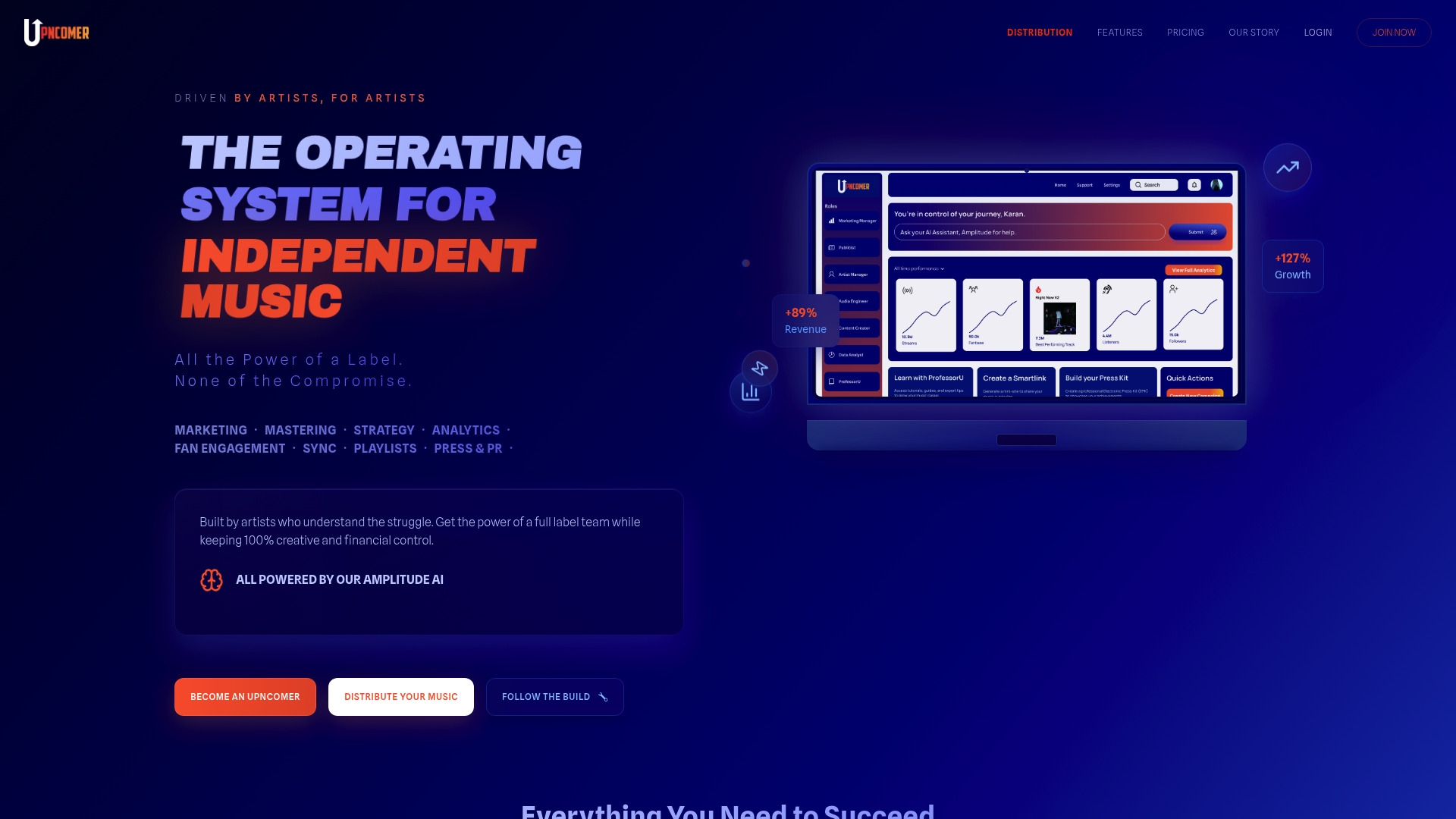
Our UpNComer Pro plan is $27 per month, or $300 per year, and you can see the details on our pricing page. If you also want your music out alongside the drop, look at our distribution page.
FAQ
Does the product drop really work?
Yes, when the scarcity is real and the demand is validated first. Drops work as demand experiments, and a waitlist lets you test interest before you commit to production. Used honestly, they reward loyal fans and give you data to improve the next release.
What is a merch drop?
A merch drop is a limited-time or limited-quantity release of products. Instead of selling constantly, you open a defined window or batch to create urgency. For artists, it is a way to reward fans and learn what your audience wants.
What merch items sell the most?
Oversized tees, heavyweight hoodies, caps, and limited collector pieces are common sellers in artist drops. The best choice depends on your goal and your fans. Start with one or two items and let your waitlist and sales data guide the next round.
What are the merchandising strategies?
Core strategies include setting a clear goal, planning inventory from waitlist signals, building a pre-launch cadence, and protecting checkout from bots. Segmenting access, such as VIP windows, also helps. Afterward, use your data to decide on restocks and future offers.