Musician Email Marketing: Move Fans From Signup to Sale

Yes, email marketing should be a top priority for independent musicians: it turns casual listeners into buyers and gives you an owned channel to promote releases, tours, and merch. This playbook covers list building, welcome series, segmentation, automations, and the metrics that matter, backed by benchmarks from MailerLite and CAN-SPAM compliance basics, with UpNComer shown as one way to run the whole flow.
TL;DR:
- Building a quality email list with exclusive offers ensures higher engagement and better conversion rates than expanding with uninterested followers.
- Segmenting your audience by location, activity, and engagement helps tailor messages that improve open rates and build stronger fan relationships.
- Automations like welcome sequences, release reminders, and re-engagement flows save time and make campaigns more relevant, increasing click-through rates.
- Monitoring metrics like click-to-open ratio and maintaining list hygiene through regular pruning and authentication are key to maintaining deliverability.
- Using an all-in-one platform simplifies management, ensures consistent messaging tied to your release calendar, and reduces time spent on manual data reconciliation.
Table of Contents
- Why an owned mailing list matters for musicians
- How to build an engaged mailing list
- Email content types and your first welcome series
- Segmentation, automation, and workflows musicians should set up
- Metrics, benchmarks, and deliverability basics
- Legal basics and consent musicians need to follow
- Tools and a practical workflow that ties it together
- A compact 30/60-day email marketing plan
- Keeping your emails human while the data does its work
- How UpNComer helps musicians run email-driven campaigns
- Primary sources for benchmarks and legal guidance
- Sources
- FAQ
Why an owned mailing list matters for musicians
Social platforms rent you an audience. The algorithm decides who sees your post, when they see it, and whether they see it at all. An email list works differently: once someone hands you their address, you can reach them directly, on your schedule, with no gatekeeper deciding whether your announcement is worth showing.
That difference shows up in the numbers. Music and artist campaigns typically see open rates near 45.9%, higher than the global cross-industry average of about 43.46%, according to 2026 benchmark data. Fans who sign up for an artist’s list are already invested, and that shows in how often they open what you send.
Apple’s Mail Privacy Protection and similar unified inbox features can inflate open numbers, so click-through rate and click-to-open rate matter more than raw opens when you’re judging whether an email actually worked, a point echoed in the Zeta benchmark report.
A healthy list, used well, supports outcomes you can point to directly:
- Stronger first-week streaming numbers when a release email lands the day a track drops.
- Faster presale sellouts because your most committed fans hear about tickets before the general public.
- Higher merch and bundle revenue, since email converts better than a social post that half your followers never see.
Streaming platforms are the top of your funnel. Email is where you turn a listener into someone who actually shows up, buys, and comes back.
How to build an engaged mailing list
Quality beats quantity here, every time. A list of 1,000 fans who open and click will outperform 10,000 people who signed up for a contest and forgot about you. The goal is to attract people who actually want to hear from you, not to inflate a number.
What to offer in exchange for an email address:
- An exclusive unreleased track or acoustic version available only to subscribers.
- Early access to presale tickets before the general on-sale.
- A private listening link or subscriber-only stream ahead of release day.
- Invitations to livestreams, private RSS feeds, or behind-the-scenes content series.
Where to collect emails:
- A signup form on your website homepage, not buried on a contact page.
- A smart link in your Instagram, TikTok, or YouTube bio that captures an email before routing to streaming.
- A tablet or phone at the merch table, framed as “join the list, get the new song now.”
- QR codes on posters, setlists, or merch tags that link straight to a mobile-friendly signup.
- Partnership campaigns with other artists or venues where both audiences opt in to hear from each other.
Consent language matters as much as placement. Say exactly what someone is signing up for, “join my list for early releases, tour dates, and merch drops,” rather than the vague “stay updated.” Double opt-in, where a new subscriber confirms via a follow-up email, filters out fake addresses and gives you a clean record of consent, which matters for both deliverability and legal compliance under frameworks like GDPR and PECR.
Skip vanity tactics like buying followers or running “like and share to enter” giveaways that collect addresses from people who have zero interest in your music. Those subscribers rarely open anything, and a list full of them drags down your sender reputation over time.
Pro Tip: Ask new subscribers one question in your signup form, like their city, and you unlock local touring emails from day one.
Email content types and your first welcome series

Not every email needs to sell something. A healthy mix keeps subscribers engaged instead of tuning you out.
Core email types to rotate through:
- Release announcements timed to streaming day.
- Presave or presale emails that reward early action.
- Tour and local show alerts, ideally segmented by city.
- Merch drops, especially limited runs or bundle offers.
- Behind-the-scenes updates: studio clips, songwriting notes, tour life.
- Fan-only exclusives that never appear on social media.
Cadence depends on where someone is in your funnel and how big your list is. A brand-new list can handle weekly emails during a release cycle, then settle into biweekly or monthly once things quiet down. A larger, more mature list can sustain more frequent contact as long as every send earns its place in the inbox.
The welcome series is where you set the tone for everything that follows. A simple three-email sequence works well:
- Deliver the incentive immediately. If you promised a free track or early access, hand it over in email one with no extra hoops.
- Introduce yourself and set expectations. Tell new subscribers what they’ll get from you and how often, so nothing feels like a surprise later.
- Invite a small, low-friction action. Ask them to add a song to a playlist, follow you on Spotify, or reply with their favorite track.
Subject lines should match intent: curiosity for engagement (“this one didn’t make the album”), urgency for conversion (“48 hours left on tour presale”), and specificity for local relevance (“playing [city] next month”). Small changes here move the needle more than most artists expect.
Segmentation, automation, and workflows musicians should set up
A list that treats every subscriber the same wastes opens and clicks you’ve already earned. Segmentation fixes that without adding manual work once it’s set up.
Useful starting segments:
- Local fans, grouped by city or region for tour announcements.
- Superfans, meaning anyone who has bought merch or tickets before.
- New subscribers, joined within the last 30 days and still in onboarding.
- Engaged fans, who open or click regularly.
- Inactive subscribers, who haven’t opened or clicked in 90 or more days.
Those five segments cover most of what an independent artist needs without turning list management into a full-time job.
Automations worth setting up once and letting run:
- A welcome sequence triggered the moment someone joins.
- A release drip that fires automatically around a scheduled release date.
- A tour-triggered local email when you add dates near a fan’s city.
- A purchase follow-up thanking buyers and suggesting related merch.
- A re-engagement flow for subscribers who’ve gone quiet.
Test one segment change or subject-line variation at a time so you know what actually moved the result. Relevance protects your sender reputation, since inboxes track how often people open, ignore, or mark your emails as spam.
Pro Tip: Tag subscribers by the link they click, not just whether they open, and your segments get sharper with every campaign.
Metrics, benchmarks, and deliverability basics
Five numbers tell you almost everything about how an email campaign performed: sends, unique opens, clicks, click-to-open rate, and unsubscribe rate. Deliverability and sender reputation sit underneath all of them, since a message that never reaches the inbox can’t be opened at all.
Music and artist benchmarks give you a realistic target, and comparing your own results against your history matters more than chasing an industry average, per MailerLite’s 2026 data.
| Metric | Typical artist benchmark |
|---|---|
| Open rate | Around 45.9% |
| Global cross-industry open rate | Around 43.46% |
| Click-to-open rate | Prioritize over raw opens due to inbox privacy features |
Quick fixes when numbers slip:
- Remove hard bounces immediately, they signal dead or invalid addresses.
- Re-engage or prune subscribers who haven’t opened anything in 90 days.
- Authenticate your sending domain with SPF and DKIM so inbox providers trust your mail.
- Keep a consistent sending cadence rather than going quiet for months and then blasting five emails in a week.
Apple’s Mail Privacy Protection and other unified inbox tools have made open rate a less reliable signal on its own, a trend the Zeta benchmark report calls out directly. Behavior-based messaging and stronger subject lines help offset that volatility, especially for time-sensitive announcements like tour dates or drops.
Legal basics and consent musicians need to follow
Email law depends heavily on where your fans live, and getting it wrong risks fines and burned trust.
- In the United States, CAN-SPAM requires an opt-out model: honest sender identification, a working unsubscribe link, and prompt processing of opt-out requests, according to the FTC’s compliance guide.
- In the EU and UK, GDPR and PECR generally require opt-in consent before you email someone, with narrow “soft opt-in” exceptions for existing customers.
- Keep a visible unsubscribe link and clear sender identity on every single email, no exceptions.
- Record consent with timestamps, especially for double opt-in signups, since that record protects you if a subscriber ever disputes how they joined.
- Honor opt-out requests immediately rather than batching them for later.
If you’re touring internationally or building lists across multiple countries, a quick conversation with a lawyer familiar with cross-border marketing saves headaches down the line.
Tools and a practical workflow that ties it together
The mechanics behind a working email system follow a simple loop: capture, tag, automate, analyze, act. Someone signs up, you tag them based on how they joined or what they clicked, an automation delivers the right message at the right moment, you check the analytics, and you adjust based on what the data shows.
UpNComer’s modules map onto that loop directly. Growth Engine handles the campaign and automation layer, Amplitude AI turns raw engagement data into suggested next steps, Artist Manager keeps fan and release information in one place, and Distribution connects release timing to the emails that should go out around it.
Whatever platform you use, run it through this checklist:
- Does signup integrate with your website, smart links, and merch table tools without manual exports?
- Can you build segment rules without needing a developer?
- Do automations trigger on real events, like a release date or a purchase, not just a calendar guess?
- Does the analytics dashboard surface CTOR and deliverability, not just raw opens?
An integrated setup means a release date change updates your drip automatically instead of leaving you to rebuild three separate schedules by hand.
A compact 30/60-day email marketing plan
You don’t need a year-long strategy to start seeing results. A focused 60 days is enough to build the foundation and start iterating.
First 30 days:
- Set up signup forms on your website and add smart links to every bio.
- Write and schedule a three-email welcome series.
- Send one release or update email to establish a baseline.
- Record your baseline open rate, click rate, and CTOR.
Next 30 days:
- Add local segmentation and a tour-triggered automation.
- Build a re-engagement flow for subscribers inactive 60 or more days.
- Test a small paid-to-list or partnership campaign to grow reach.
- Review CTOR against your baseline and adjust subject lines or cadence.
Pro Tip: Space your campaigns so no fan gets more than two emails in a single week during a normal release cycle, you’ll protect both engagement and deliverability.
Keeping your emails human while the data does its work
Automations should never sound automated. Write every email like you’re texting one specific fan, even when a thousand people receive it. Segmentation tells you who to talk to and when; your voice is what makes them stick around.
Pick one experiment this month, a subject line, a send time, a new incentive, and measure it by CTOR, not opens.
— Karan
How UpNComer helps musicians run email-driven campaigns
Running signups, welcome series, segmentation, and release drips across separate tools means constant exporting and re-uploading, and something always falls out of sync. UpNComer keeps sign-up capture, automations, audience analytics, and release and distribution workflows inside one system, so a release date change updates your email drip without you touching three different tools.
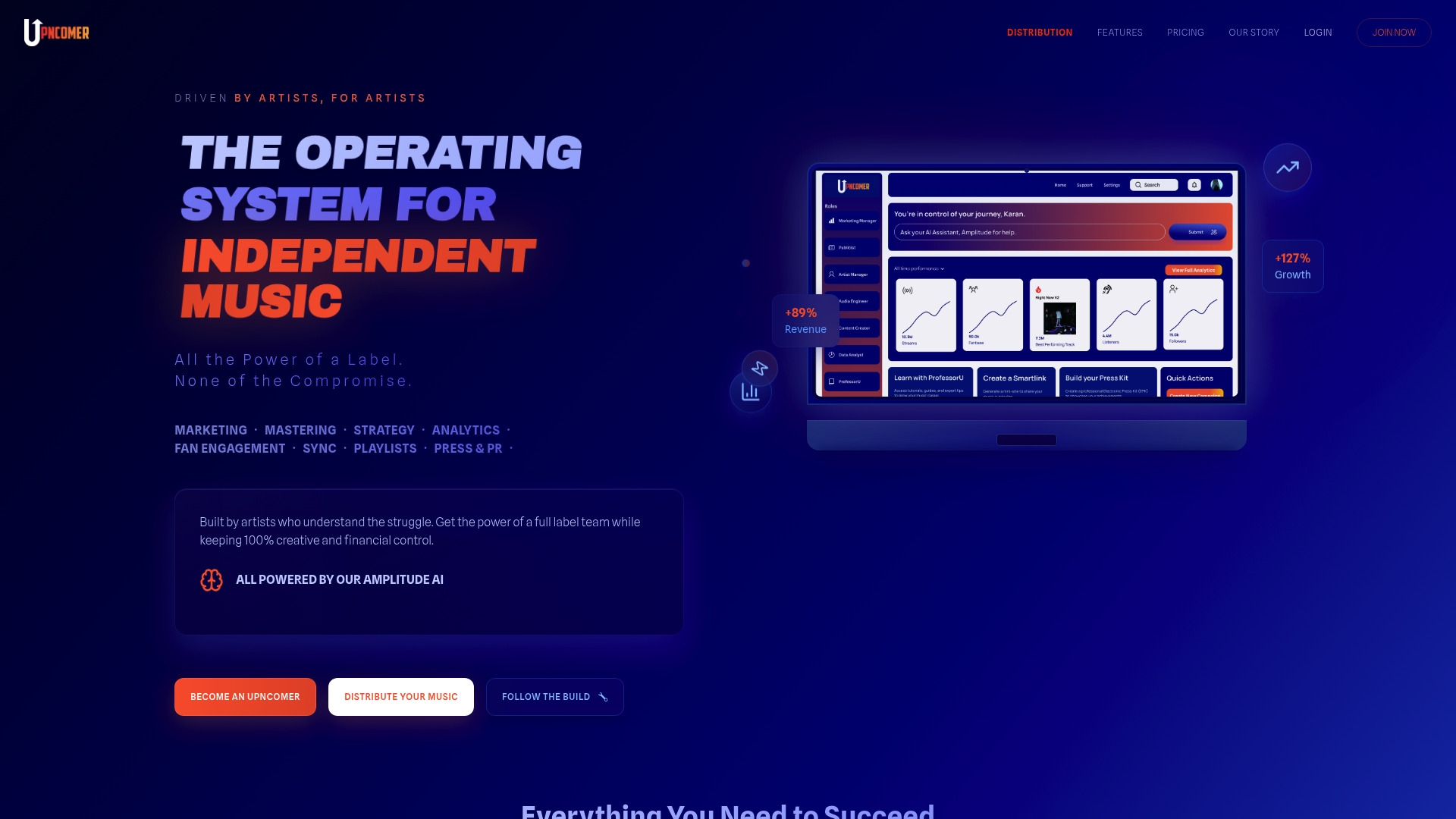
That integration matters most for solo artists and small teams who don’t have a marketing department: less time reconciling spreadsheets means more time writing songs and talking to fans.
- Signup tools, automations, and analytics live in one dashboard instead of scattered platforms.
- Amplitude AI surfaces which segments and subject lines are actually working.
- Distribution and email timing stay connected around your release calendar.
| What you need | How UpNComer approaches it |
|---|---|
| Unified fan data | Artist Manager and Amplitude AI share one audience view |
| Release-linked email timing | Distribution connects to campaign automations |
| Plan cost | UpNComer Pro is $27 per month or $300 per year |
If you’re ready to stop juggling five tools for one release cycle, check UpNComer’s pricing and see which plan fits your current stage.
Primary sources for benchmarks and legal guidance
The benchmarks and compliance points in this article come from a small set of sources worth bookmarking directly: MailerLite’s 2026 industry benchmarks, the Zeta Global benchmark report, the FTC’s CAN-SPAM compliance guide, and Twilio’s guide to email marketing for musicians. For pairing email pushes with streaming strategy, see Intonality’s Spotify marketing guide.
Sources
- Email marketing benchmarks by industry and region for 2026
- 25Q4_Zeta_Email-Benchmark-Report
- CAN-SPAM Act: A Compliance Guide for Business | Federal Trade Commission
- The Complete Guide to Email Marketing for Musicians
FAQ
What is the 80/20 rule for email marketing?
The 80/20 rule suggests that roughly 80% of your emails should deliver value, stories, behind-the-scenes content, useful updates, while only about 20% directly ask for a sale. For musicians, that means most sends should build the relationship, with release and merch pitches making up a smaller share of your overall cadence.
How much does music PR cost?
Music PR pricing varies widely depending on the publicist, campaign scope, and release size, and is not publicly standardized. Costs are typically quoted per campaign rather than as a fixed rate, so it’s worth requesting proposals from a few publicists before comparing.
What email tools work best for independent musicians?
The right tool depends on whether you need email alone or a connected system covering signups, segmentation, automations, and release timing. Platforms like UpNComer combine those pieces with distribution and analytics in one place, which reduces the manual work of keeping separate tools in sync.
How often should musicians email their list?
Cadence should match list size and engagement: weekly during an active release cycle, tapering to biweekly or monthly during quieter periods. The goal is consistency without fatigue, since sending too rarely or too often both hurt open and click rates over time.
Do independent musicians need to worry about GDPR or CAN-SPAM?
Yes, if you email fans in the EU or UK you generally need opt-in consent under GDPR and PECR, while CAN-SPAM in the United States relies on an opt-out model with clear sender identification. Keeping a visible unsubscribe link and a consent record protects you under either framework.