Turn 50 Fans Into $500: Release Linked Direct to Fan Sales for Indies

Direct to fan sales means selling music, merch, or experiences straight to your audience instead of splitting everything through streaming payouts. The fastest way to start is simple: build one low-price digital offer tied to your next release, pair it with a scarce merch bundle, and promote both to your most engaged listeners first. This guide covers platforms, pricing, the launch funnel, and the rights checklist you need before you sell anything.
TL;DR:
- Selling digital bundles for $5 to $15 and limited-run premium items can quickly generate more income per fan than streaming, especially with a small, engaged audience.
- Platform choice involves balancing control, fees, and discoverability; marketplaces are easier for beginners, while hosted stores are better for established fans.
- Accurate net contribution calculations, including production and shipping costs, are essential to set profitable prices for merchandise and digital offers.
- Building a direct fan relationship before expanding product offerings ensures sustained engagement and simplifies future marketing efforts.
- Confirm rights, platform terms, and fulfillment plans before launch to avoid disputes, and prioritize small, testable releases to learn what fans truly want.
Table of Contents
- Why direct to fan sales matter now
- What to sell: the small release-linked product mix that converts
- Where to sell: platform types and tradeoffs
- Pricing, fees, and payouts: what actually hits your bank account
- Launch funnel: turning listeners into buyers around your release
- Operational checklist before you list anything
- What I’d prioritize if I were starting today
- Running your direct-to-fan funnel inside one system
- Sources
- FAQ
Why direct to fan sales matter now
The math is blunt. Streaming pays fractions of a cent per play, so it takes an enormous volume of streams to match a handful of direct sales. Selling a $10 digital bundle to 50 fans nets $500 in a week, a number streaming platforms would need tens of thousands of plays to approach.
Global recorded-music revenue keeps climbing, and streaming is still where most listening happens. Physical and direct-to-fan channels are expanding as artists look for ways to monetize beyond per-stream payouts, according to the IFPI Global Music Report. That split matters for how you plan: streaming builds reach, direct sales build income.
Owning the fan relationship changes your economics over time too.
- You keep contact data instead of renting it from a platform algorithm.
- Repeat buyers cost less to reach than new listeners you have to win from scratch.
- You control pricing and timing instead of waiting on a playlist add.
What to sell: the small release-linked product mix that converts
Don’t build a merch empire before you know what your fans want. Start with a short, testable ladder tied to your release date.
- A low-price digital offer, like a stripped-back version, a lyric bundle, or early access to the track.
- One physical music item, such as a vinyl, cassette, or signed CD.
- One apparel piece, ideally connected to the release’s visual identity, as detailed in this Direct-to-Consumer Clothing guide.
- One scarce premium option, like a numbered print, a video call, or a tiny-run bundle.
Spotify for Artists advises calculating net contribution, not gross sales, before you set a price. That means subtracting production, packaging, shipping, payment processing, returns, taxes, and support time from the sale price before you decide it’s worth doing. A shirt that sells for $25 but costs $14 to make, ship, and process isn’t the win it looks like on paper.
Test price points in small batches. A $5 to $15 digital bundle, a $20 to $35 apparel item, and a $50-plus premium tier give you three data points to read fast.

Pro Tip: Launch your premium item as a limited run of 10 to 20 units. Scarcity does more for conversion than a discount ever will.
Where to sell: platform types and tradeoffs
Your platform choice trades off control, fees, and discoverability, and each type fits a different stage of your career.
- Hosted storefronts (your own site or a service like Shopify) give you full control over branding and pricing but require you to drive all your own traffic.
- Marketplaces (Bandcamp, Etsy-style shops) offer built-in discovery and lower setup friction, at the cost of platform fees and less control over the buying experience.
- Embedded social shops meet fans where they already scroll, which lowers friction to purchase but limits how much data and follow-up control you get.
- Streaming-integrated options, like TIDAL’s direct-to-fan tools, let you sell without sending fans off-platform, though seller eligibility and payout rules vary by market.
Onboarding for most of these involves identity verification and a payment processor like Square, and TIDAL’s own seller documentation notes that U.S. sellers face specific restrictions and that service and processing fees are handled differently depending on the payment method. Check this before you announce a drop, not after.
If you’re just starting out and don’t have a large mailing list yet, a low-friction marketplace beats a hosted store: less setup, built-in browsing traffic, and fewer things that can break at launch. Once you have a consistent buyer base, a hosted store gives you more margin and better data on who’s buying.
Pricing, fees, and payouts: what actually hits your bank account
The sale price is never what you keep. Before you set one, map out every cost that eats into it.
| Cost category | What it includes |
|---|---|
| Production | Materials, printing, manufacturing minimums |
| Payment processing | Card and platform transaction fees |
| Shipping and packaging | Postage, boxes, mailers, inserts |
| Returns and refunds | Replacement units, restocking, lost shipping |
| Taxes | Sales tax or VAT collection where required |
| Support time | Answering fan questions, fixing order issues |
Fee structures differ by platform and payment processor, so treat any percentage you see as a starting estimate to confirm on the platform you actually use, not a fixed number to build your whole pricing model around. Payout timing also varies: some platforms release funds within days, others hold them on a longer cycle, and TIDAL’s own support pages note that refund rules and payout schedules shift depending on your market and processor. Verify both before your release date, not during your launch week.
Launch funnel: turning listeners into buyers around your release
Your release date is the best marketing moment you’ll get all year. Build the funnel around it instead of scrambling after the fact.
- Find your high-intent fans first. Spotify’s super-listener framework shows that a small slice of your monthly listeners drives a disproportionate share of streams, merch purchases, and ticket sales. Use streaming and audience analytics to spot that cohort before you launch anything.
- Open with a low-friction digital offer. A pre-save, a preorder, or a discounted early-access bundle gets fans to act with minimal commitment.
- Follow with the merch bundle. Once a fan has bought once, they’re far more likely to buy again, especially if the merch connects visually or thematically to the release.
- Close with the scarce premium tier. This is where your most invested fans spend the most, and where limited numbers do real work.
Sequence your channels deliberately: pre-save and preorder links first, then artist-profile placements once the release is live, then email and direct messages to your identified super-listeners, then public social proof (sold-out notices, fan photos) to pull in everyone else. Our guide on reading streaming and engagement data walks through how to build that cohort list before you launch.
Pro Tip: Message your top 50 listeners individually before you announce anything publicly. A direct note outperforms a public post every time for early sales.
Operational checklist before you list anything
Selling direct means you’re the label, the merch company, and customer service all at once. A short checklist now saves a messy refund dispute later.
- Confirm rights first: recording ownership, composition splits, sample clearances, collaborator sign-off, and artwork licensing all need to be settled before a sale goes live.
- Check platform terms and local consumer law for refunds, since rules on returns and cancellations differ by territory and by processor.
- Choose your fulfillment model deliberately: print-on-demand lowers upfront risk but caps your margin, while pre-orders and batch printing improve margin but require you to front the cost.
- Plan packaging and returns before launch, not after your first complaint email arrives.
TIDAL’s seller documentation treats direct selling as a rights-and-commerce operation from the start: confirm ownership and complete payment onboarding before you list a single item.
What I’d prioritize if I were starting today

If you take one thing from this guide, make it this: build the owned relationship before you build the product catalog. A five-item merch line means nothing if you don’t know who your buyers are or how to reach them again next release.
Start small. One digital offer, one merch bundle, tested against real sales data instead of guesses. Integrated analytics and campaign tools cut the manual tracking that burns artists out before they’ve made their first real sale.
— Karan
Running your direct-to-fan funnel inside one system
Coordinating analytics, fan outreach, distribution, and campaign timing across five different tools is where most direct-to-fan plans fall apart before they start. UpNComer’s Growth Engine and Amplitude AI handle the audience identification and campaign sequencing described above, while Artist Manager keeps your release timeline, merch drops, and fan outreach in one place instead of scattered across spreadsheets and apps.
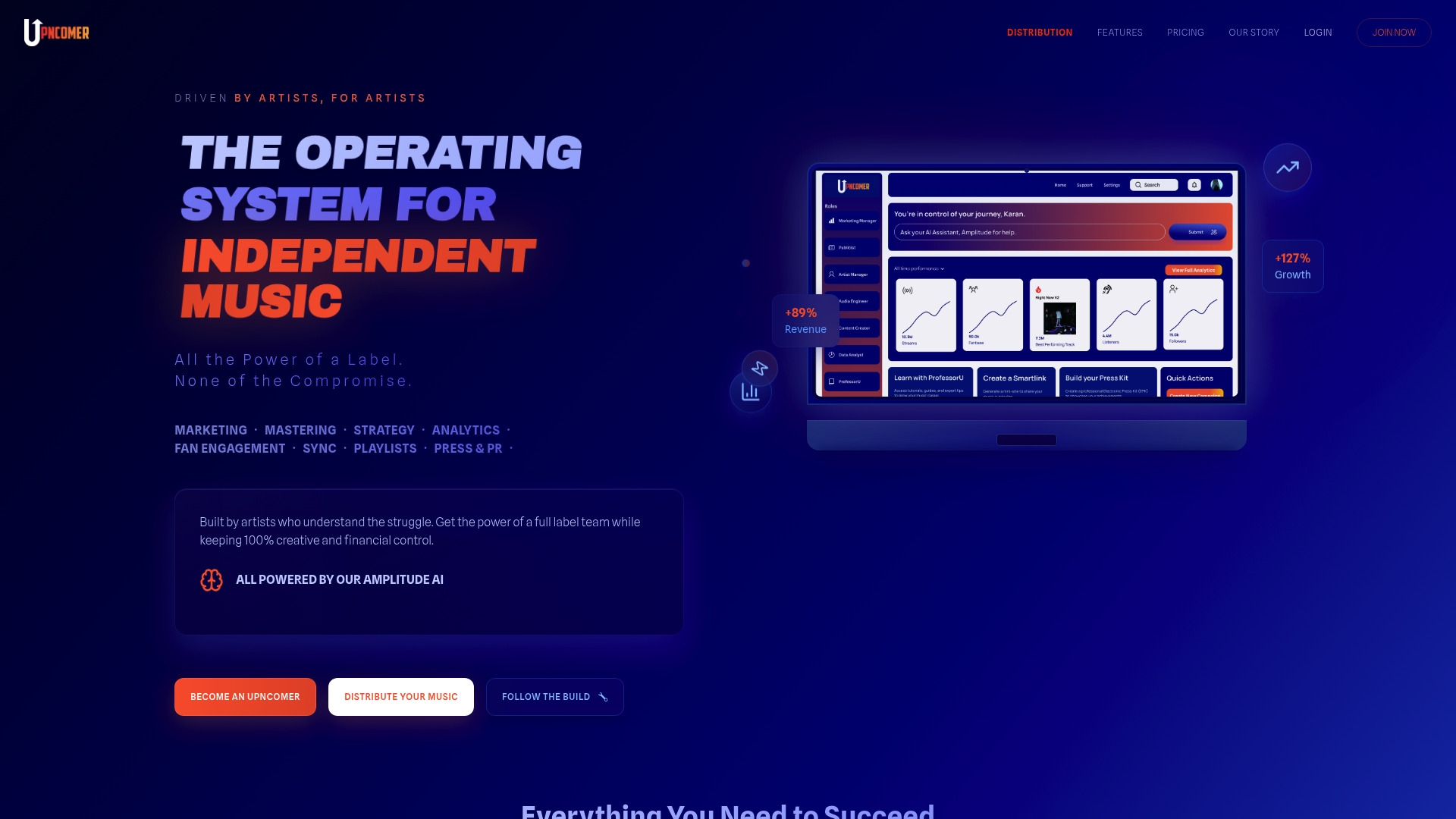
Distribution runs on a royalty split with no subscription fee, allowing streaming reach and direct sales to operate from the same release. If you’re ready to put this playbook into practice, check UpNComer Pro plans and pricing and see which tier fits where you are right now.
Sources
- How to Make Merch Your Fans Will Buy and Love – Spotify for Artists
- IFPI: 2026 global recorded-music revenues grow 6.4%
- Direct-to-Fan Sales – TIDAL Support
FAQ
How can I sell my music directly to my fans?
Pick a platform that matches your audience size, from a marketplace like Bandcamp to a hosted store or a streaming-integrated option like TIDAL, then list a release-linked digital offer alongside a merch bundle. Confirm your rights and complete payment onboarding before your listing goes live, since most platforms require identity verification first.
How many streams equal a direct sale?
There’s no fixed universal rate since per-stream payouts vary by platform and market, but the gap is large enough that a handful of direct sales can outearn a much bigger volume of streams. That’s the core argument for building a direct-to-fan offer alongside your streaming release rather than relying on streams alone.
How much does an artist make from a $100 ticket sale?
Ticket revenue splits depend heavily on the venue, promoter fees, and any agent or manager cuts, and no single percentage applies across the industry. Artists selling merch directly at their own shows typically keep a much larger share of that revenue than they do from a per-stream payout.
Why are some fans moving away from certain streaming platforms?
Some fans and artists have shifted attention toward platforms and services that emphasize higher direct payouts to artists, such as Bandcamp, which reports artist revenue share averaging around 82% on regular days, with Bandcamp Fridays pushing that even higher. The appeal is straightforward: more of each dollar spent reaches the artist directly instead of passing through a per-stream royalty pool.