Influencer Marketing for Musicians: A Playbook That Works
The fastest, highest-leverage way to run influencer marketing for musicians is to seed your unreleased or newly-released audio to five to ten small, genre-aligned creators and coordinate their posts into a single concentrated push during your release week. You don’t need a big budget or a famous name attached. You need the right creators, a clear brief, and a launch window tight enough that the algorithm reads it as a spike instead of scattered noise.
Here’s what to do this week:
- Pick one platform (TikTok if you’re starting from zero)
- Find 5 creators whose audience already listens to artists like you
- Send each one a short brief with a timestamp, a hook idea, and a deadline
- Set aside a small test budget, even $50 to $150 per creator, and track results before scaling
Expect early signals within 7 to 10 days: streams, saves, and pre-save or Smart Bio clicks. Watch those three numbers first. Everything else, including follower growth and playlist adds, tends to follow once the initial spike lands.
Key Takeaways
Influencer marketing for musicians works best as a concentrated, creator-led push around a release, measured by streams, saves, and playlist adds rather than follower counts alone.
| Point | Details |
|---|---|
| Start small and test | Run 5 to 10 micro-creator posts before committing budget to a single larger name. |
| Brief with specifics | Include the exact audio timestamp, usage rights, and deadline in every creator brief. |
| Concentrate the launch | Coordinate posts within a 48 to 72 hour window around release day for maximum algorithmic signal. |
| Track the right numbers | Watch streams, saves, and Smart Bio clicks first, then follower growth and playlist adds. |
| Build repeat relationships | Bring back creators who over-delivered instead of starting from zero every release. |
| Use one platform to manage it | UpNComer’s Growth Engine, Amplitude AI, and Artist Manager keep outreach, ad boosts, and analytics in one workflow instead of scattered tools. |
Table of Contents
- What Is Influencer Marketing for Musicians?
- Which Musicians Should Run Influencer Campaigns Right Now?
- Which Platforms Actually Move the Needle?
- What Content Formats Actually Drive Streams?
- How Do You Run a Full Influencer Campaign Start to Finish?
- How Do You Find and Vet the Right Creators?
- How Much Should You Budget for Influencer Campaigns?
- What KPIs Actually Tell You a Campaign Worked?
- What Rights and Contract Terms Should You Lock Down?
- What Mistakes Kill Most Music Influencer Campaigns?
- How Often Should You Release Music to Support These Campaigns?
- Does Influencer Marketing Work the Same Across Every Genre?
- How Do You Build Real Relationships With Creators, Not Just One-Off Deals?
- What Do Successful Music Influencer Campaigns Actually Look Like?
- What UpNComer Sees Working for Independent Artists
- Run Your Next Campaign Without the Spreadsheet Chaos
- Sources
- FAQ
What Is Influencer Marketing for Musicians?
Influencer marketing for musicians means paying, bartering with, or partnering with content creators who use your recorded audio or actively promote your release to their own audience. It’s distinct from a random fan sharing your song. It’s a coordinated ask, usually with some form of compensation, aimed at a specific outcome.
Three use cases cover most of what independent artists actually need:
- Pre-release seeding: creators post using your audio before the official release date to build anticipation and trigger platform recommendation systems early.
- Release-day amplification: a burst of coordinated posts on launch day to concentrate streams and social proof in a short window.
- Evergreen playlist seeding: ongoing, lower-intensity creator posts months after release to keep a song circulating and feeding playlist pitching opportunities.
It’s not the same as playlist pitching (getting a curator to add your song to an existing playlist) or paid ads (buying placement directly from a platform). Influencer marketing works through borrowed trust. A creator’s audience already believes them, and that belief transfers to your song faster than a cold ad ever could.
Which Musicians Should Run Influencer Campaigns Right Now?
Not every stage of a career needs the same play. Match the tactic to where you actually are:
- New releases from emerging artists: use influencer marketing to generate first-week streams and social proof when you have no existing audience to lean on.
- Growth pushes for artists with small, engaged audiences: use it to convert casual listeners into followers and repeat streamers.
- Tour or merch promotion for mid-level indies: use creators to drive ticket or product conversions, not just streams.
Set your goal before you pick creators. A tour push needs a call to action; a discovery push needs volume.
Which Platforms Actually Move the Needle?
You don’t need to be everywhere. You need to be excellent on two platforms, maybe three.
TikTok remains the highest-leverage platform for discovery, largely because its recommendation engine doesn’t care how many followers a creator has. A 15-second clip using your hook can outperform a post from someone with ten times the audience. Do: brief creators on the exact 8 to 15 second timestamp that hits hardest. Don’t: hand over the full track and hope they find the moment themselves.
Instagram Reels work best as the follow-up layer once TikTok has proven a hook works. Do: repost creator content to your Stories and tag them. Don’t: expect Reels to generate cold discovery the way TikTok does.
YouTube Shorts compound over time better than either of the above, since Shorts keep surfacing in search and suggested feeds for months. Do: pair Shorts with a full lyric video or visualizer on the main channel. Don’t: treat Shorts as disposable, since old ones will keep pulling views long after a campaign ends.
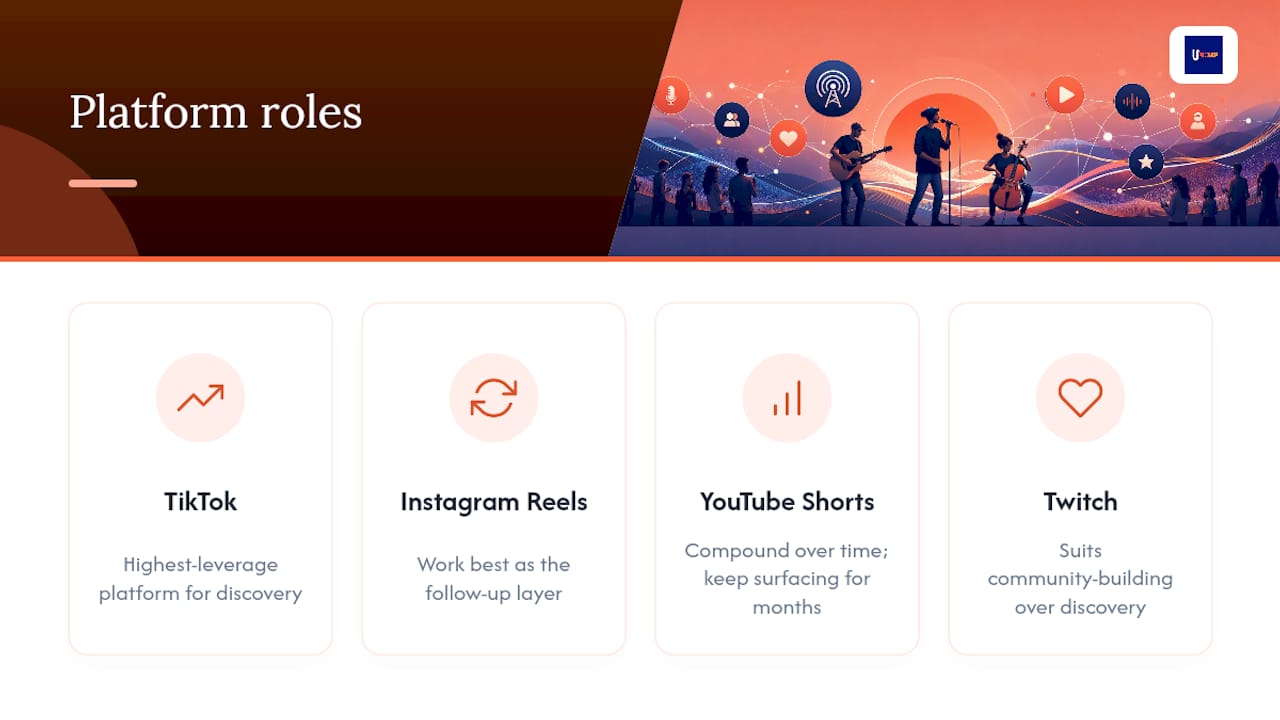
Twitch suits community-building over discovery. Streamers using your track as background music or during a “new music Monday” segment build the kind of deep, repeat engagement that turns listeners into superfans.
Pro Tip: Ask each creator for their best-performing sound-driven video from the last 90 days before you brief them. Their history tells you more about fit than any follower count.
What Content Formats Actually Drive Streams?
Format matters more than production value. A creator who understands your song’s emotional beat will outperform a highly polished but generic post every time.
The formats that consistently work:
- Challenges and dance or transition clips: fast, replicable, and built for TikTok’s remix culture.
- POV or scene-based clips: creators build a tiny story around your lyric or hook, which works especially well for emotional or narrative songs.
- User-generated content (UGC) and duets: fans and micro-creators respond to a sound they’ve already seen work, creating a snowball effect.
- Reaction videos: strong for songs with a surprising drop, key change, or lyrical twist.
- Behind-the-scenes or longer-form collaborations: better suited to YouTube, where deeper engagement matters more than raw virality.
The artists who treat marketing and songwriting as the same process, testing hooks and documenting the creative journey before release, consistently get more mileage out of creator seeding than those who wait until the song is finished to think about promotion.
Match format to goal. Chasing volume and first-week streams calls for challenges and duets. Building loyalty calls for reaction videos and behind-the-scenes content that makes fans feel like insiders.
How Do You Run a Full Influencer Campaign Start to Finish?
A workable campaign runs through five phases. Skip one and you’ll feel it in the results.
- Strategy: Define your goal (streams, saves, ticket sales), pick one lead platform, and set your budget before contacting anyone.
- Discovery: Build a shortlist of 15 to 20 creators using platform search, hashtags, and manual scouting. You’ll only need 5 to 10 of them.
- Outreach and negotiation: Send short, personalized messages. Generic mass DMs get ignored; a message referencing a creator’s actual recent video gets read.
- Content approval and scheduling: Review drafts against your brief, request one round of edits max, and lock in posting dates.
- Launch and amplification: Coordinate posts within a 48 to 72 hour window, then boost the top performers with paid spend and push them to your email list.
Here’s a brief template you can copy directly:
- Audio timestamp: exact seconds to use (e.g., 0:42 to 0:58)
- Call to action: what you want viewers to do (stream, follow, click bio link)
- Usage rights: how long the content can stay live, whether you can repost it, whether you can boost it as an ad
- Delivery deadline: the exact date drafts are due, not just the posting date
- Payment: amount, method, and whether it’s tied to a performance milestone
Timing matters as much as the creative. Seed three to five creators five to seven days before release to build early momentum, then concentrate your remaining creators into release week itself, ideally the first 72 hours, when a steady release cadence already has the algorithm paying attention.
Pro Tip: Turn your best-performing creator post into paid ad creative. A small ad spend behind creator-made content usually beats a generic image ad, since it already looks native to the platform.
For amplification, pair creator posts with a pitch to playlist-adjacent press and a direct push to your email list or superfans, and document the whole thing so the next campaign starts smarter, not from scratch. Tools like UpNComer’s campaign management workflow exist specifically to keep this process from living across ten scattered spreadsheets and DMs.
How Do You Find and Vet the Right Creators?
Discovery isn’t the hard part. Vetting is.
Start with these methods:
- Platform native search using genre and mood hashtags
- Creator marketplaces built for music brand deals
- Manual scouting through comment sections of artists similar to you
- Playlist and hashtag cross-referencing to find creators already covering your genre
Once you have a shortlist, run every creator through this checklist:
- Engagement rate relative to follower count (a smaller account with real comments beats a bigger one with silence)
- Audience overlap with your actual listener base, not just genre overlap
- Content quality and whether their editing style fits your brand
- Posting frequency and consistency over the last 60 to 90 days
- Clear, professional communication about rates and usage rights
Red flags that should stop a deal before it starts: a sudden follower spike with flat engagement, an audience clearly outside your genre or region, recycled stock footage instead of original content, and vague or evasive answers about how long they’ll keep a paid post live.
How Much Should You Budget for Influencer Campaigns?
Pricing in music influencer marketing runs on a few common models, and none of them require a label-sized budget.
- Barter or credit: free product, a shoutout, or early access in exchange for a post, common with true micro-creators under 10,000 followers.
- Fixed fee per post: a flat rate regardless of performance, the most common structure for creators with an established rate card.
- Performance-based (CPA): payment tied to results like link clicks or saves, harder to negotiate but lower risk for you.
- Usage or license fee: a separate fee if you want to repost their content as an ad or keep it live long-term.
As a rough starting point for testing: micro-creator tests often run in the $50 to $300 per post range, mid-tier creators with tens of thousands of followers often land between $300 and $1,500, and a single larger creator test can run well beyond that depending on niche and platform. These are illustrative ranges, not guarantees. Rates vary hugely by genre, region, and platform.
Pro Tip: Never commit your full budget to one creator on the first try. Run three or four small paid tests, see which creator’s audience actually converts, then put your bigger spend behind whoever proved themselves.
What KPIs Actually Tell You a Campaign Worked?
Track the right numbers or you’ll scale the wrong campaigns.
Primary KPIs to check first:
- Streams and saves in the 7 to 14 days following a post
- Follower growth on the platform where the creator posted
- Playlist adds, both editorial and user-generated
- Click-throughs to your Smart Bio or pre-save page
Secondary KPIs worth watching once the primary numbers look healthy: engagement rate on the creator’s post itself, average watch time, direct fan messages mentioning the song, and merch or ticket conversions if that was the campaign’s actual goal.
A Smart Bio or pre-save link page can make fans roughly 70% more likely to actually listen to a release once they click through, which makes it one of the cheapest, highest-return additions to any influencer campaign. Use unique tracking links or UTM parameters per creator so you know exactly whose audience converted. Check results at the 48 hour mark for early signal, then again at 14 days for the fuller picture, and report on a weekly cadence for as long as the campaign runs.
What Rights and Contract Terms Should You Lock Down?
Every paid creator relationship needs a few things settled in writing before content goes live.
Rights to clarify up front:
- How long the post needs to stay live
- Whether you can repost or cross-post the content on your own channels
- Whether you can boost the post as a paid ad
- Whether any licensing applies if you want to use their footage in future promotional material
Contract essentials beyond rights: clear deliverables, a payment schedule tied to specific milestones, who owns the final content, attribution requirements, and a defined process for requesting edits before a post goes live.
Pro Tip: A one-page written agreement, even a simple email confirmation with these terms spelled out, prevents almost every dispute that comes up after a campaign ends.
What Mistakes Kill Most Music Influencer Campaigns?
The same handful of mistakes show up again and again.
Common failures: targeting creators for follower count instead of audience fit, handing over zero creative direction and hoping for the best, going silent with new fans after the campaign instead of following up, and never measuring results because the plan never included a KPI in the first place.
What actually works: seed your audio before release so creators aren’t scrambling on launch day, build a specific hook idea for each creator instead of a generic brief, repurpose the best organic post as paid ad creative, and pay attention to which creators over-delivered so you can bring them back for your next single.
Pro Tip: Keep a simple spreadsheet ranking every creator you’ve worked with by results, not vibes. Your third campaign should always be easier to plan than your first.
How Often Should You Release Music to Support These Campaigns?
Release cadence and creator seeding aren’t separate strategies. They’re the same strategy on two timelines. Research from Berklee points to roughly one single every 6 to 8 weeks as the cadence most likely to keep algorithmic visibility active on both streaming platforms and social feeds. Consistency itself functions as a discovery strategy, since each release creates a fresh reason to seed creators and ride another wave of platform attention.
A simple calendar to copy:
- Weeks 1 to 2: finalize the track, identify the hook, and start creator outreach
- Weeks 3 to 4: lock content, get drafts approved, schedule pre-release seeding
- Week 5: release week, concentrate posts within a 48 to 72 hour launch window
- Weeks 6 to 8: follow-up seeding, playlist pitching, and prep for the next single
Pro Tip: Align your creator seeding calendar with your own creative cycle, not the other way around. If you know a song needs six weeks to finish, start creator conversations in week three so the brief is ready the moment the track is.
Does Influencer Marketing Work the Same Across Every Genre?
It doesn’t, and pretending otherwise wastes budget. A pop or hyperpop hook built for a 15-second TikTok clip lives or dies on immediacy, so the creators worth paying are the ones who can find that moment in your track within seconds of hearing it. Hip-hop and R&B audiences respond heavily to lifestyle and identity content, meaning creators who fold your track into a broader aesthetic (fashion, cars, everyday flexing) often outperform straightforward music-focused posts.
Country and Americana fans skew toward YouTube and longer-form platforms, where storytelling and behind-the-scenes footage carry more weight than a quick dance trend. Metal and hardcore audiences are smaller but intensely loyal, and they can smell an inauthentic partnership instantly. A creator who genuinely listens to the genre, even with a modest following, will outperform a generic “trending sounds” account every time.
Electronic and dance music benefits from Twitch and livestream culture, since DJs and producers already stream sets, making in-stream drops and shoutouts a natural fit rather than a forced ad read. Singer-songwriter and indie folk audiences tend to be older and more email-responsive, which means influencer seeding should feed directly into your owned channels rather than treating the creator post as the finish line.
The through-line across every genre: match the creator’s actual audience demographic and content style to your song, not just their subscriber count. A 5,000-follower creator whose audience is exactly your fanbase beats a 500,000-follower creator whose audience has never heard your genre.
How Do You Build Real Relationships With Creators, Not Just One-Off Deals?
The artists who get compounding returns from influencer marketing stop treating it as a transaction after the first campaign. They treat it as a relationship.
Start by paying fairly and on time, every time. That alone puts you ahead of a large share of artists creators have worked with. Follow up after a campaign ends, not just to ask for another post, but to genuinely comment on how their content performed and thank them for specific choices that worked.
Bring your best-performing creators back for every future release instead of starting from zero each cycle. A creator who already understands your sound will produce better content faster the second and third time around, and they’ll often extend better rates once trust is established. Some artists build informal “street teams” out of five or six creators who consistently perform, giving them early access to unreleased music in exchange for first right of refusal on new campaigns.
Engage with creator content the way you’d want fans to engage with yours: comment, share to your Stories, and mention them by name when you talk about the campaign publicly. Small gestures like sending a personal thank-you or a piece of merch after a strong post cost almost nothing and build loyalty that a purely transactional relationship never will. Over multiple release cycles, this turns a rotating cast of paid posts into something closer to a genuine promotional team, one that grows alongside your career instead of resetting with every single.
What Do Successful Music Influencer Campaigns Actually Look Like?
Patterns repeat across the campaigns that work, even without naming specific artists or brand deals.
The most common success story starts small: an unsigned artist seeds a 15-second hook to eight to twelve micro-creators in their genre a week before release. Two or three posts catch traction organically. The artist immediately identifies which creative angle worked, whether it was a lyric, a beat drop, or a visual moment, and asks the remaining creators to lean into that same angle before their scheduled post date. The result is a coordinated wave that looks organic to viewers but was actually adjusted in real time based on early data.
Another repeatable pattern involves reaction and duet chains. One creator posts an authentic reaction to a song, a handful of fans and smaller creators duet or stitch that reaction, and the original artist reposts the best of those to their own Stories. This chain effect costs little beyond the initial creator fee and often outproduces a single larger, more expensive placement.
The pattern that fails most often is the inverse: a single expensive placement with a large creator, no smaller seeding beforehand, and no plan for what happens after the post goes live. Without pre-release momentum or a follow-up push, even a big account’s post tends to spike and fade within 48 hours, leaving nothing for the algorithm to build on.
The lesson across every working example is the same: concentration and coordination beat isolated size every time.
What UpNComer Sees Working for Independent Artists
Across the campaigns we watch succeed, a few patterns show up again and again: a consistent release cadence, real relationships with the same creators across multiple singles, and a willingness to look at the data mid-campaign and adjust rather than waiting until it’s over. Artists who treat their streaming analytics as a live feedback loop, not a post-mortem report, consistently outperform artists running on instinct alone.
That’s the workflow tools like Growth Engine, Amplitude AI, and Artist Manager are built around inside UpNComer, mapping campaign data back to real decisions about which creators, hooks, and platforms deserve more budget. If you’re only going to test one thing this quarter, test a small influencer push and actually measure it.
Run Your Next Campaign Without the Spreadsheet Chaos
Everything in this playbook, from finding creators to briefing them to tracking whether it worked, usually lives across five disconnected tools: a notes app for creator lists, email for outreach, a spreadsheet for budgets, and a separate analytics dashboard to check whether any of it moved the needle. UpNComer puts that entire workflow in one place, so a small test campaign doesn’t require juggling logins just to see if it worked.
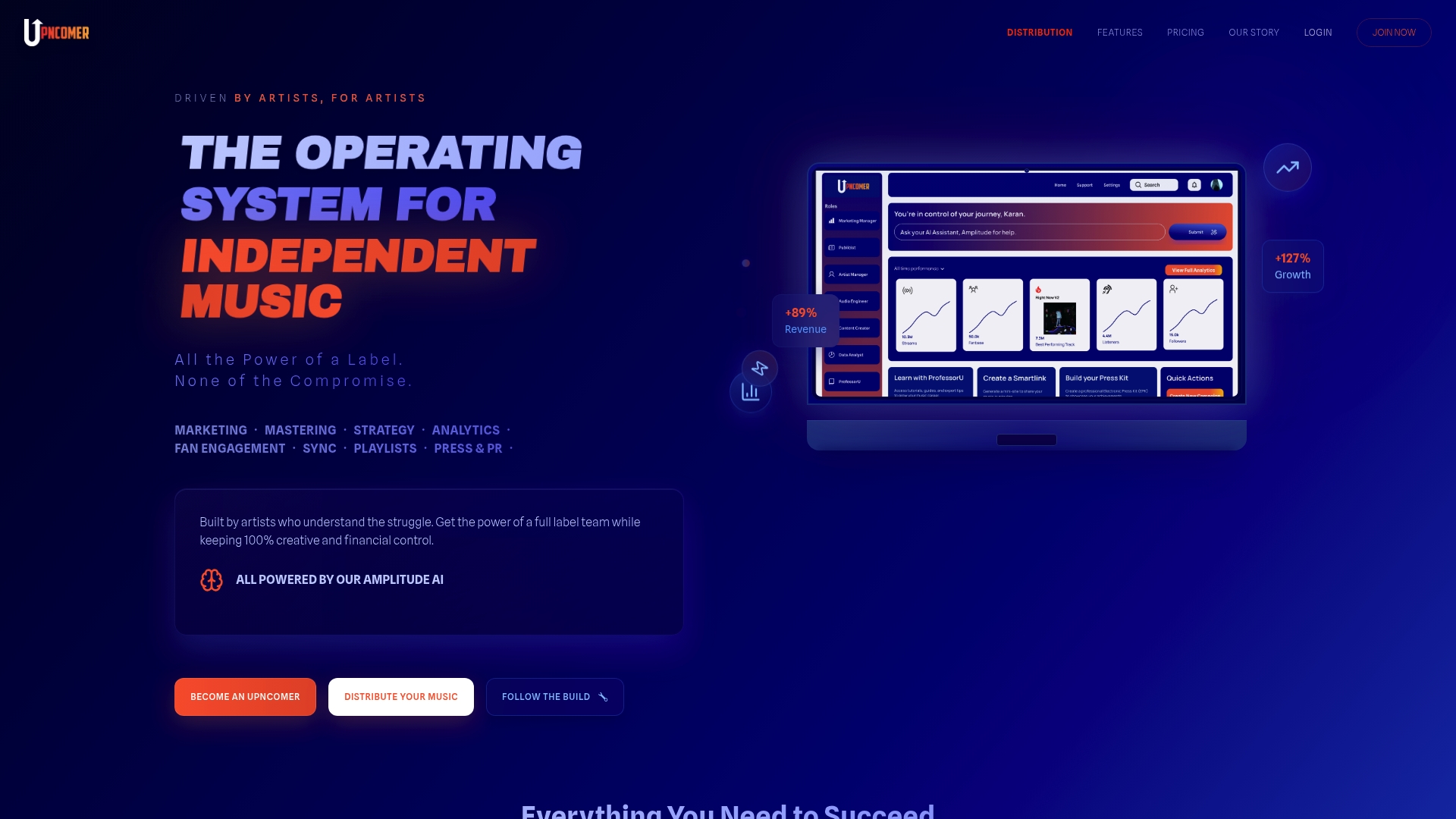
A few modules do the heaviest lifting for influencer campaigns specifically:
- Growth Engine manages ad campaign setup and budget pacing, so you can turn a creator’s best post into paid ad creative without starting from scratch.
- Amplitude AI surfaces which platforms, hooks, and creator types are actually driving streams, saves, and follower growth in real time.
- Artist Manager keeps outreach, briefs, deadlines, and payment terms organized in one workflow instead of scattered across email threads.
Distribution and royalty tracking sit in the same system, so a spike from a creator post shows up directly in your streaming numbers without needing to cross-reference three separate dashboards. If you’re ready to see how the pieces fit together, read UpNComer’s story and start with a small test campaign this month rather than waiting for the perfect one.
Sources
- Music marketing strategies | Berklee Now
- Music marketing in 2026 | DIY Musician (CD Baby)
- How to promote your music in 2026 | ALERA Blog
- Music marketing for indie artists — the 2026 guide | liminl.
- Digital marketing for musicians | MailerLite blog
FAQ
How do I find influencers to promote my music?
Search platform hashtags in your genre, scout comment sections of similar artists, and check creator marketplaces built for music partnerships, then vet each one for real engagement and audience overlap before reaching out.
What is influencer marketing in the music industry?
It’s the practice of paying, bartering with, or partnering with content creators who use your song or promote your release to their own audience, distinct from playlist pitching or paid platform ads.
How do you market a musician?
Combine a consistent release cadence, a clear artist identity, presence on the DSPs where your fans stream, and targeted creator or press outreach around each release rather than treating marketing as a one-time push.
How much should I pay a music influencer?
Micro-creator tests often run $50 to $300 per post, mid-tier creators often land between $300 and $1,500, and larger creators cost more depending on genre, platform, and audience size; these are starting ranges, not fixed rates.
Should I use TikTok or Instagram first for a new release?
Start with TikTok for discovery, since its algorithm surfaces content regardless of a creator’s follower count, then use Instagram to follow up with fans who already found the song.
Can a platform like UpNComer help manage influencer campaigns?
Yes. UpNComer’s Growth Engine, Amplitude AI, and Artist Manager modules help coordinate creator outreach, turn top posts into paid ad creative, and track which campaigns actually move streams and saves.