Social Media Growth for Your Music Brand in 2026
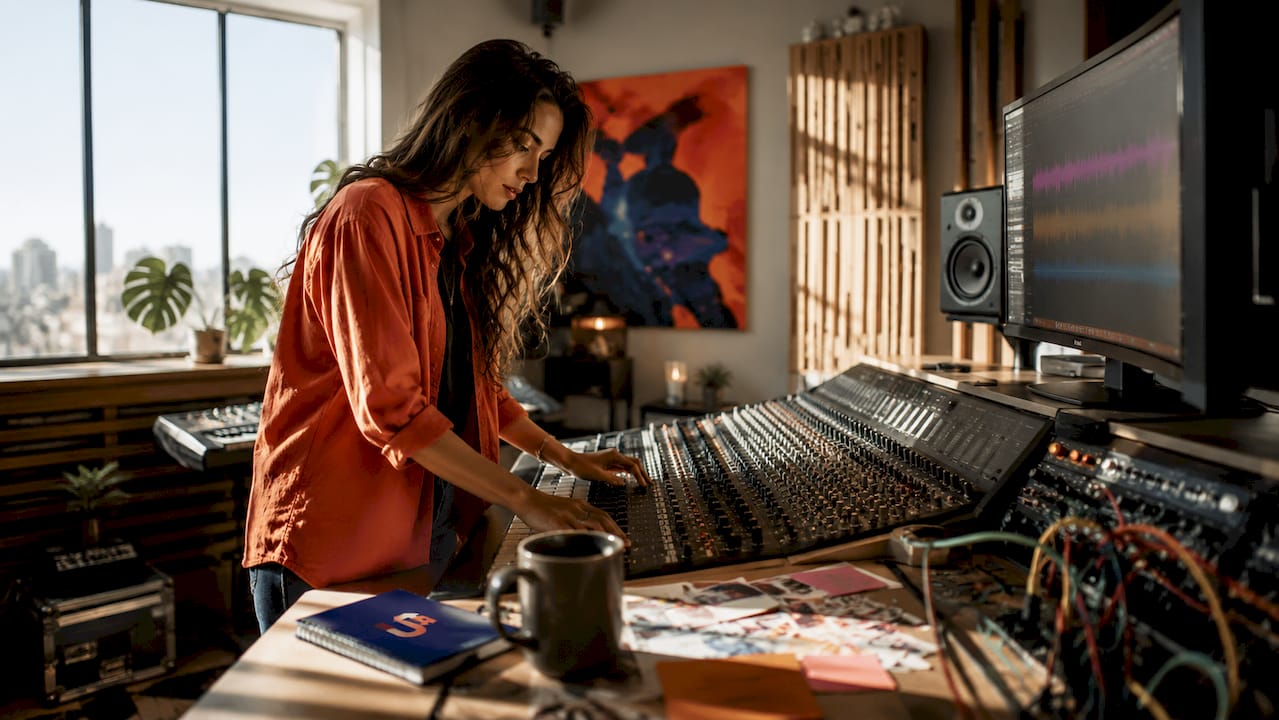
Social media growth for a music brand is defined as the measurable expansion of your audience, engagement, and streaming reach through consistent, platform-native content and community building. Independent artists who treat social media as a branding system rather than a promotional afterthought grow faster and retain fans longer. Platforms like Instagram, TikTok, YouTube, and Spotify each reward different behaviors, and the 2026 algorithm shifts are significant. Instagram now weights “Share to DM velocity” heavily, TikTok favors raw authenticity over polish, and Spotify’s own playbook pushes community investment over release-day campaigns. If you want real traction, you need a plan built around how these platforms actually work right now.
What foundational elements drive social media growth for a music brand?
Your music brand is the sum of every impression a fan gets before they press play. That means your visuals, your tone, your bio, and your handles all need to tell the same story. A sustainable artist branding framework for 2026 recommends 80% consistency in core values, tone, and narrative themes across platforms, with 20% left open for experimentation. That ratio keeps your brand recognizable while giving you room to test new content formats without confusing your audience.
Profile optimization is where most independent artists leave real growth on the table. Standardizing your handles across Instagram, TikTok, and YouTube, unifying your link hubs, and writing bio CTAs that point fans toward one clear action all reduce friction. Friction removal converts fan curiosity into consistent streaming growth more reliably than chasing a viral moment. Think of your profile as a front door. If it’s confusing or inconsistent, fans walk away before they ever hear a note.
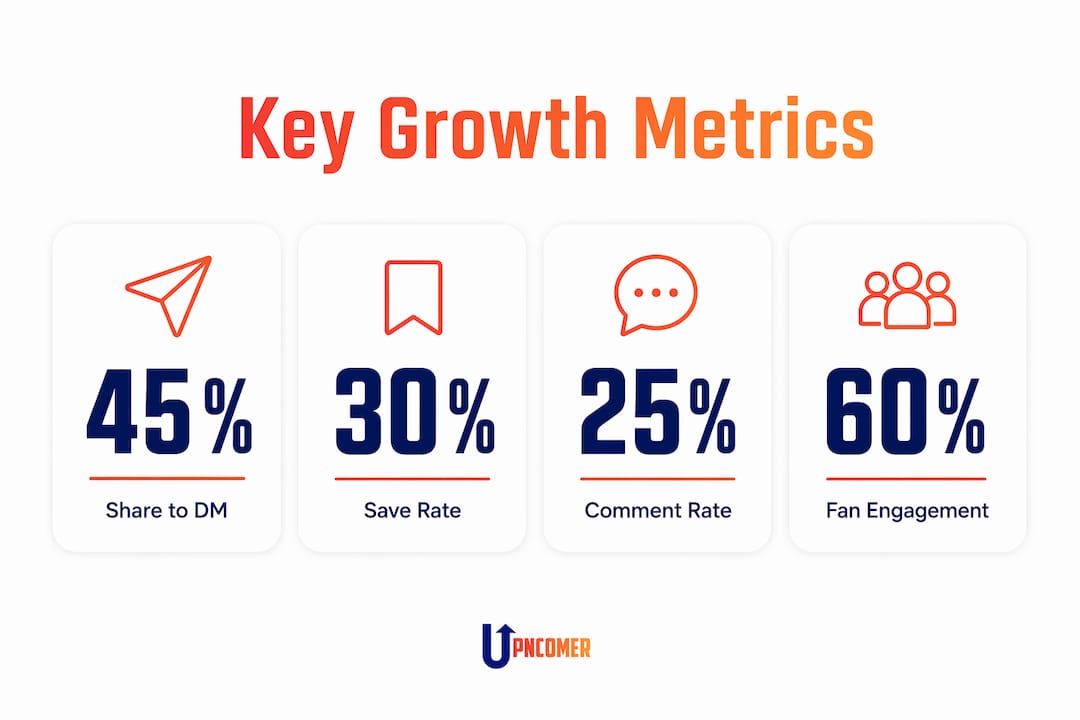
Beyond follower count, you need to track metrics that actually predict growth:
- Saves and shares: These signal that your content has lasting value, not just momentary appeal.
- Profile visits from posts: A high ratio here means your content is converting new viewers into potential followers.
- Link clicks: Measures how effectively your bio drives fans toward streaming or merch.
- Story replies and DM volume: Direct indicators of community depth and fan investment.
- Reach vs. impressions: Reach tells you how many unique people saw your content; impressions tell you how many times it was seen total.
| Metric | Why it matters |
|---|---|
| Share to DM rate | Predicts algorithm amplification on Instagram |
| Save rate | Signals content longevity and repeat value |
| Profile visit rate | Shows content-to-follower conversion potential |
| Link click rate | Measures bio effectiveness and fan intent |
| Story reply volume | Indicates depth of community connection |
Pro Tip: Use Upncomer’s Data Analyst module to pull cross-platform engagement data into one view. Tracking these metrics separately across four apps burns time and makes it harder to spot patterns.
Spotify’s branding playbook advises artists to embed branding into every creative decision from the start, not just at release time. That means your cover art, your caption voice, and your video aesthetic should all feel like the same artist. Consistency at this level is what turns a casual listener into a superfan.
How can you create content that grows your music brand organically?
The biggest mistake independent artists make is spending money on polished, cinematic videos that the algorithm actively deprioritizes. Raw, phone-shot videos outperform highly produced content by 35% in Instagram’s 2026 discovery feeds because the algorithm penalizes commercial aesthetics, reading them as ads rather than genuine posts. Your iPhone in a rehearsal room beats a $2,000 shoot in a studio, at least for organic reach.
Here is a content creation framework that works with 2026 algorithms, not against them:
- Hook in the first 3 seconds. Instagram’s Trial Reels feature rewards videos that capture attention within 1.5–3 seconds. Open with a sound clip, a visual surprise, or a direct statement. Never start with a logo or a slow pan.
- Write keyword-rich captions. Using keywords in your captions delivers a 35.6% lift in discovery reach. Treat your caption like a short search engine entry. Describe what the song feels like, not just what it is.
- Limit hashtags to 1–2. More hashtags no longer expand reach on Instagram. One precise hashtag tied to your genre or mood performs better than ten generic ones.
- Add location tags. Posting location tags can increase reach by over 215% on Instagram. If you played a show in Nashville or recorded in Brooklyn, tag it.
- Build content around three themes. Process content (studio sessions, songwriting moments), personality content (your opinions, your humor, your story), and proof content (fan reactions, streaming milestones, press mentions). Rotate these themes weekly so your feed never feels one-note.
- Design for DM sharing. The Instagram algorithm weights Share to DM velocity four times higher than likes. Post content that makes fans want to send it to a friend. Relatable lyrics, surprising behind-the-scenes moments, and emotional storytelling all drive this behavior.
Pro Tip: Write captions that are 100–149 words and tell a short story. Storytelling captions outperform question-based captions in current Instagram engagement. Think of each caption as a micro-blog entry about the song or moment.
Social media algorithms now prioritize human-to-human connection over passive metrics. That means your content strategy should aim to spark conversations, not just views. Ask yourself before posting: “Would someone send this to their best friend?” If the answer is no, rethink the angle.
What tactical steps can independent musicians take to accelerate growth?
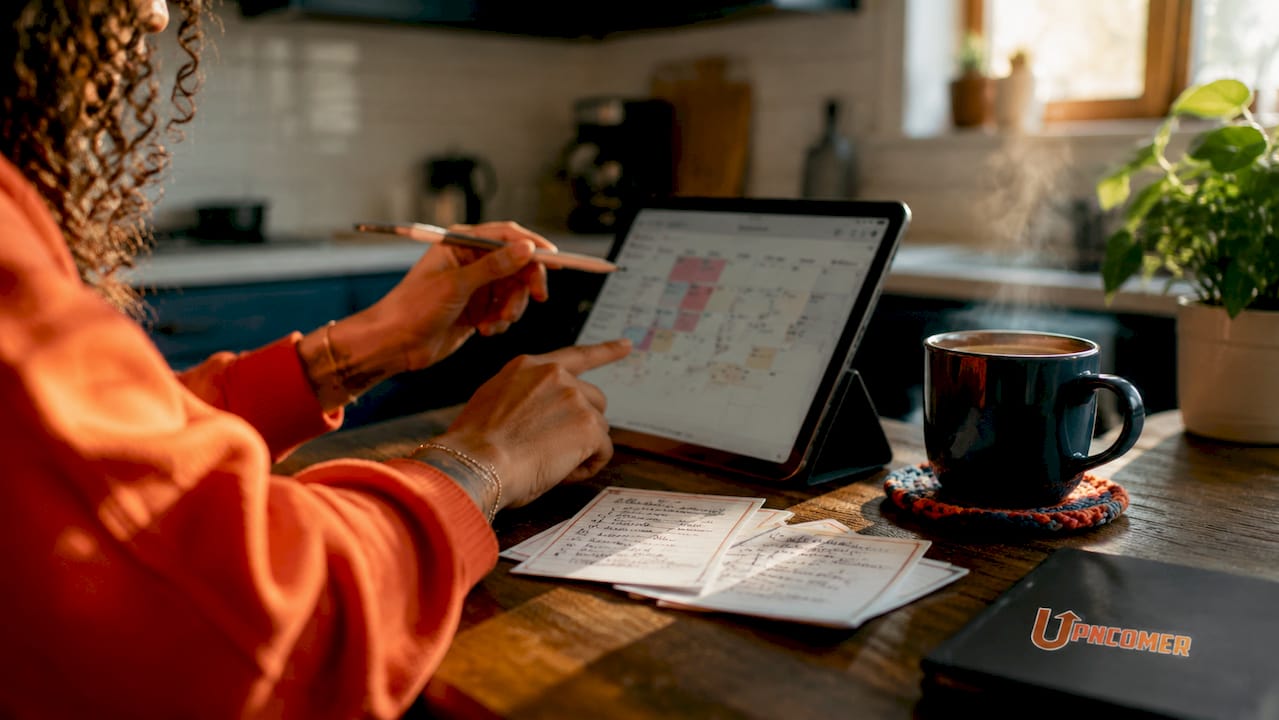
Consistency beats intensity every time. A realistic weekly posting schedule for an independent artist looks like this:
- Monday: Process content (studio clip, writing session, gear setup)
- Wednesday: Personality content (opinion on a music trend, a day-in-the-life moment)
- Friday: Proof content (fan reaction, streaming update, press mention or playlist add)
- Weekend: Community content (reshare a fan post, reply to comments publicly, collaborate with another artist)
Repurposing content across platforms multiplies your output without multiplying your workload. A 60-second Instagram Reel becomes a TikTok, a YouTube Short, and a Spotify Canvas in under 20 minutes. The key is to adjust the caption and hook for each platform’s native language. TikTok captions are shorter and more casual. YouTube Shorts benefit from a clear verbal hook in the first two seconds. Spotify Canvas loops work best with abstract or mood-driven visuals.
Paid promotion does not need a big budget to move the needle. One case study showed an established band achieved an 8% increase in Spotify monthly listeners over 30 days without releasing new music, using a controlled ad budget under €200 to boost high-performing posts. The lesson is to identify your top-performing organic post each week and put a small amount behind it rather than boosting everything.
| Tactic | Platform | Expected outcome |
|---|---|---|
| Boost top organic post | Instagram, TikTok | Expanded reach to new audiences |
| Cross-post Reels as Shorts | YouTube | Additional discovery without extra filming |
| Spotify Canvas on new releases | Spotify | Higher save rates and profile visits |
| Location-tagged posts | Reach increase from local discovery | |
| DM reply to every new follower | All platforms | Higher retention and community depth |
Engagement is not a passive activity. Replying to every DM within 24 hours, featuring fan content in your Stories, and collaborating with artists in adjacent genres all signal to the algorithm that your account generates real human interaction. For music analytics tracking, check your top posts weekly and look for patterns in what drives saves and shares, not just views.
How do you troubleshoot common challenges in ongoing music brand growth?
The most common growth killer for independent artists is inconsistency. Posting three times one week and then going silent for two weeks confuses fans and tanks your algorithmic standing. Your audience needs a rhythm they can rely on. Treat your posting schedule like a rehearsal schedule. You would not cancel band practice three weeks in a row and expect to sound tight at the show.
Chasing every trend at the expense of your identity is the second major mistake. Trends are tools, not identities. If a trending audio or format fits your brand, use it. If it does not, skip it. Fans follow you for you, not for your ability to replicate whatever is viral this week. The artists who build lasting audiences are the ones who filter trends through their own voice rather than adopting them wholesale.
The 70/20/10 content ratio keeps your feed balanced without feeling like a sales channel. 70% of your posts should deliver value and personality, 20% should focus on community and collaboration, and 10% should be direct promotion. Most artists flip this ratio and wonder why engagement drops. Fans disengage when every post feels like an ad.
“Fandom is about emotional investment well before purchase or streaming. Building a music brand means cultivating a culture and community, not just releasing songs.” — Spotify’s branding playbook, as cited by industry analysts.
Fan participation builds the kind of loyalty that no ad budget can buy. Feature fan covers in your Stories. Run a caption contest around a lyric. Ask your audience which song they want to hear live next. These micro-interactions compound over time into a community that shows up for every release, every show, and every merch drop. When platform algorithms shift, and they will, a genuine community is the asset that survives the change. For a deeper look at how online music promotion connects to community building, the principles are the same: make it easy for fans to find you, and give them a reason to stay.
Key Takeaways
Effective music brand growth on social media requires brand consistency, algorithm-native content, and genuine community engagement working together as one system.
| Point | Details |
|---|---|
| Brand consistency first | Maintain 80% consistency in tone, visuals, and values across all platforms before scaling content. |
| Raw content wins | Phone-shot, authentic videos outperform polished productions in 2026 discovery feeds. |
| DM sharing drives reach | Instagram weights Share to DM velocity four times higher than likes, so design content for sharing. |
| Small ad budgets work | Boosting top organic posts with a controlled budget delivers measurable streaming growth without a label. |
| Community over follower count | Fan participation and direct interaction build loyalty that outlasts any algorithm change. |
Why most artists are thinking about social media growth backwards
Here is what I have seen repeatedly: artists spend weeks crafting the perfect promotional post for a new release, then wonder why it gets 40 views while a shaky phone video of them humming in the car gets 4,000. The answer is not luck. The algorithm is reading signals that most artists are not even tracking.
The real shift I think independent musicians need to make is treating social media as a relationship channel, not a broadcast channel. The artists who grow consistently are not the ones with the best cameras or the biggest ad budgets. They are the ones who make their fans feel seen. A reply to a comment, a reshare of a fan’s cover, a candid caption that admits a song almost did not get finished. These moments build the emotional investment that Spotify’s own playbook identifies as the foundation of real fandom.
My honest take is that most growth problems are actually identity problems in disguise. Artists who are unclear about who they are and what they stand for produce inconsistent content, chase every trend, and confuse their audience. Clarity about your brand, your values, and your audience is the prerequisite that no posting schedule or ad budget can replace. Get that right first, and the tactics become much easier to execute. Data from why data drives music marketing backs this up: artists who understand their audience at a data level make better creative decisions, not just better marketing decisions.
— Karan
How Upncomer helps you build a music brand that actually grows
Growing a music brand across multiple platforms without a system behind you is exhausting. Upncomer is built to be that system for independent artists.
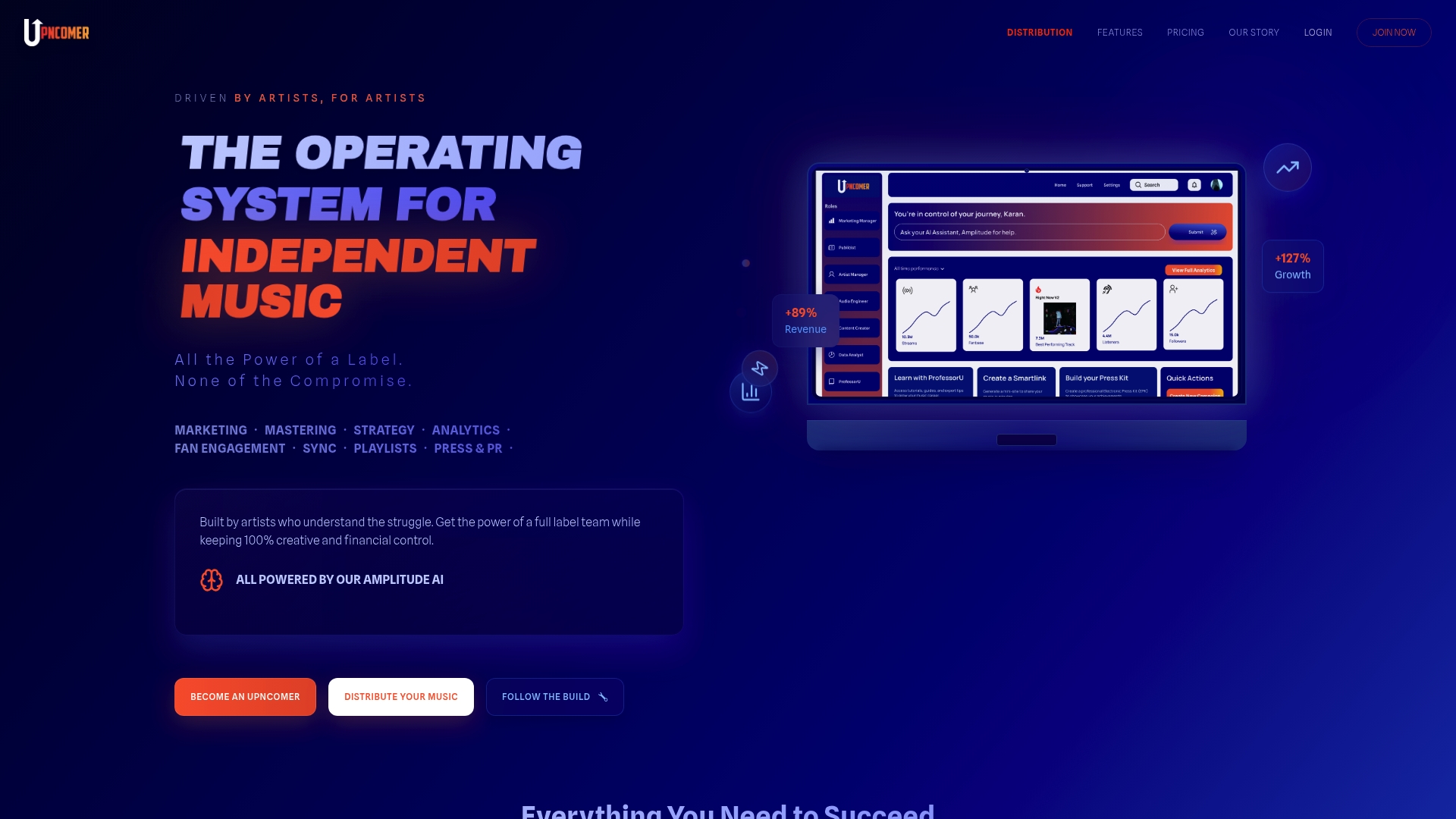
Upncomer’s Growth Engine helps you identify which content and campaigns are actually moving your numbers. The Content Creator module gives you a framework for producing platform-native content without burning out. The Data Analyst pulls your streaming analytics and audience insights into one place so you can make decisions based on real signals, not guesswork. Instead of juggling five separate tools, you get one ecosystem designed for how the modern music industry actually works. Check out the latest resources and community updates at Upncomer’s community hub to stay current on what is working right now for independent artists like you.
FAQ
What is the most important metric for music brand growth on social media?
Share to DM velocity is the most heavily weighted metric on Instagram in 2026, ranking four times higher than likes. Focus on creating content fans want to send directly to friends rather than content designed for passive scrolling.
How often should an independent musician post on social media?
Three to four times per week across your primary platform is a sustainable baseline. Consistency matters more than frequency. A reliable schedule builds algorithmic momentum and trains your audience to expect your content.
Do I need a big budget to grow my music brand on social media?
No. One case study showed a measurable increase in Spotify monthly listeners using an ad budget under €200 over 30 days. The key is boosting posts that already perform well organically rather than paying to promote weak content.
What content format works best for music artists in 2026?
Raw, phone-shot short-form video outperforms polished production in discovery feeds on Instagram and TikTok. Algorithms in 2026 deprioritize content that looks like an ad, so authenticity is a technical advantage, not just a creative preference.
How do I keep my music brand consistent across multiple platforms?
Apply the 80/20 branding framework: keep 80% of your tone, visuals, and narrative themes identical across platforms, and use the remaining 20% to experiment with platform-specific formats. Standardize your handles and use a single link hub in every bio.