Top 4 Music Marketing Tool Alternatives 2026
Managing music marketing, distribution, analytics, and fan engagement through scattered tools drains your time and budget. Too many platforms force you to pay separately for key features or jump between dashboards, making campaign setup slow and confusing. This comparison covers price, workflow, and feature scope across four music marketing tool alternatives so you can choose a platform that actually fits your release plan.
Table of contents
Upncomer
At a glance
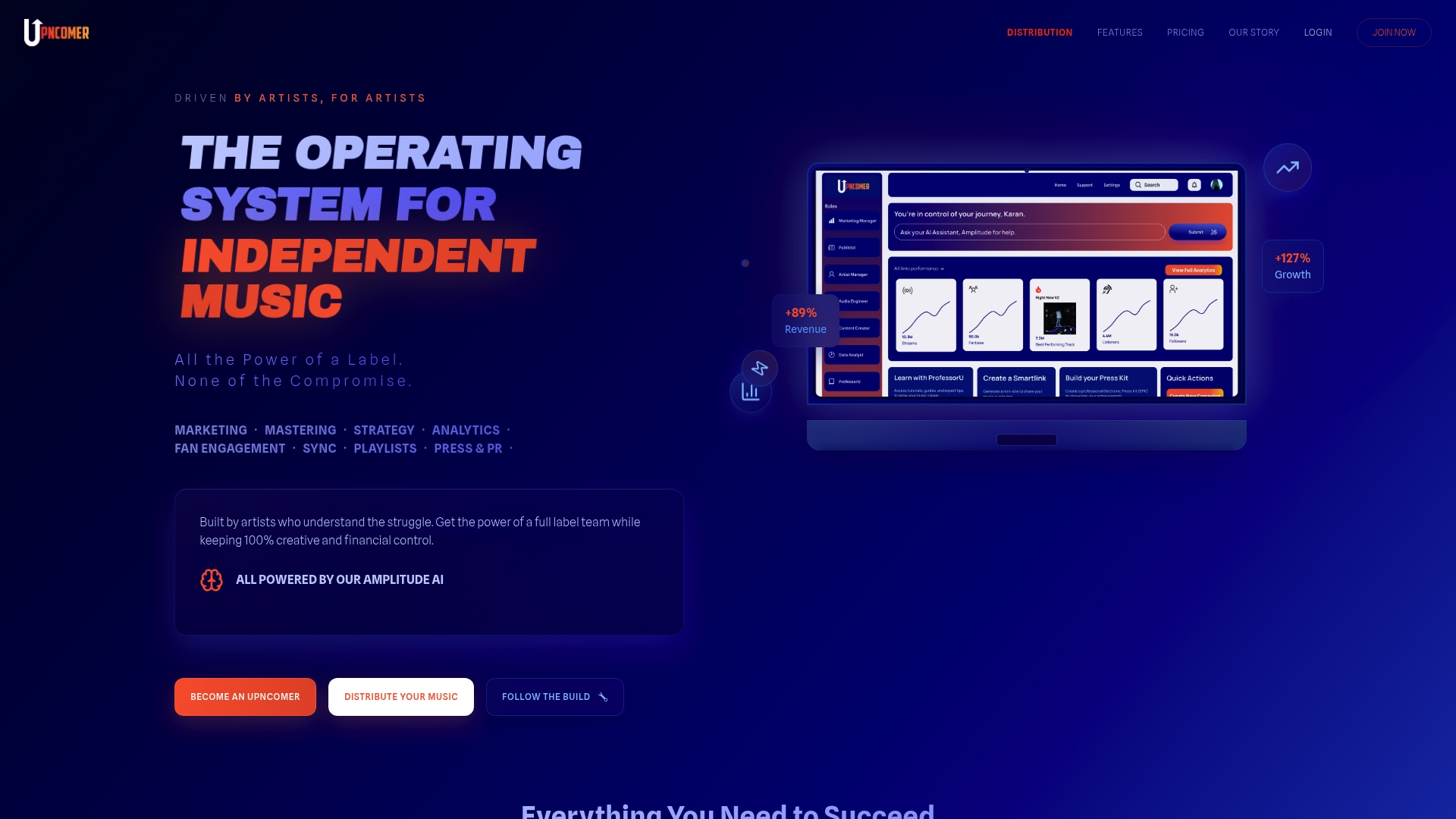
The UpNComer Pro plan starts at $27 per month, giving independent artists access to a single platform for marketing, mastering, analytics, and fan tools. The service combines campaign automation, real time analytics, and an AI strategy engine into one account. That price point makes professional tools available without hiring multiple vendors.
Core features
Upncomer includes Amplitude AI for strategy guidance and campaign recommendations. The product offers AI powered marketing campaigns with automated ad targeting and budget optimization. Artist management tools cover fan tracking, smart links, and revenue monitoring. The platform also provides content creation and scheduling, an AI driven mixing and mastering suite, and an integrated learning platform called ProfessorU.
Key differentiator
Upncomer’s main advantage is its focus on replacing several costly industry services inside one product. That consolidation means you can run ad campaigns, track streaming analytics, pitch playlists, and master tracks from a single workspace. For independent artists managing time and budget, that consolidation changes how much outside help you need.
Pros
-
Low monthly cost makes advanced tools accessible. The published price of $27 per month reduces the need for separate agencies or retainers.
-
Centralized campaign management saves you time. You can build ads, schedule content, and monitor performance from one dashboard.
-
Built in audio tools remove one more vendor. The AI driven mixing and mastering suite lets you finalize tracks without sending stems to multiple engineers.
-
Data driven guidance helps with decisions. Real time analytics and audience insights make it easier to pick where to spend ad dollars and which regions to target.
-
Educational resources and community features support skill growth. ProfessorU offers ongoing lessons so you learn while you run campaigns.
Cons
- Some advanced features such as playlist pitching and full publicist services are still in development and may not be available at launch.
Who it’s for
This product fits solo independent artists, producers, and DIY teams who want to run marketing and release operations without hiring external agencies. It suits creators who prefer retaining full rights and revenue control while consolidating tools. If you already manage ads and analytics yourself and want fewer moving parts, this is a practical match.
Unique value proposition
Amplitude AI provides step by step campaign recommendations inside the platform. That feature turns raw streaming and ad data into specific next steps you can run from the same interface. For artists who juggle creativity and admin, the workflow reduces guesswork and keeps campaign setup close to your release calendar.
Real world use case
According to the company, Karan, an independent artist with 100,000 monthly listeners, used Upncomer to replace his marketing team and saw a 127% growth in fans and streams. That claim shows how the platform is used by artists to cut costs and centralize operations. If you already have listeners, the same setup can focus ad spend and content to grow streams and direct fan revenue.
Pricing
The published price is $27 per month for the UpNComer Pro plan, with an annual option at $300 per year. The model is subscription based and bundles the platform features into one plan rather than split micro subscriptions.
Website: https://upncomer.co
Chartmetric
At a glance
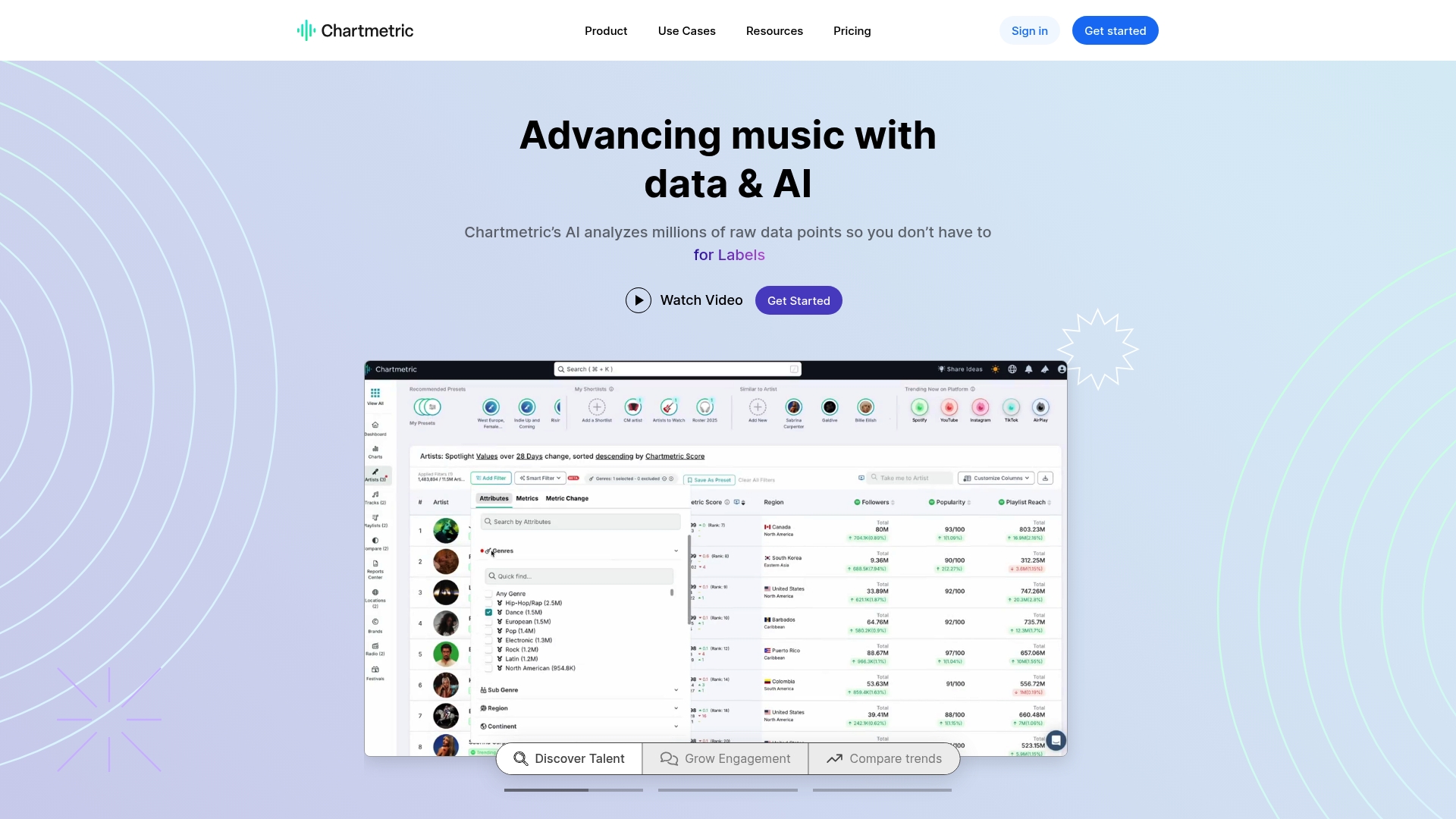
Chartmetric reports it collects data from over 30 streaming and social platforms and links that to millions of artists and tracks worldwide. The interface turns raw data into charts you can slice by region, playlist, or curator. I used it to spot early streaming bumps and to validate audience clusters before spending on ads.
Core features
Chartmetric focuses on cross-platform music analytics and audience signals. Key capabilities include:
- Artist performance analysis across streaming and social channels with historical views and growth rates.
- Track and playlist tracking that shows who is adding a song and where plays are increasing.
- Industry trend identification and forecasting driven by time series of playlist and artist movement.
- Audience demographics and regional insights so you can target low-cost markets with real demand.
- Custom dashboards and reports that you can export for A&R meetings or campaign recaps.
These features work together to help managers and marketers move from hunches to evidence.
Key differentiator
Chartmetric stands out for combining broad platform coverage with data science to generate actionable charts and signals. The product layers social, streaming, and playlist data so you can compare an artist across sources in one place. For teams that run regular A&R or campaign reviews, that cross-platform view saves hours of manual data pulling.
Pros
-
Wide platform coverage speeds discovery. The dataset lets you view Spotify, Apple Music, YouTube, TikTok, and Instagram performance side by side. This reduces blind spots when assessing an artist.
-
Visual analytics are easy to navigate. Filters for region, playlist, and date range let you answer targeted questions fast. You do not need to export raw CSVs to get useful charts.
-
Useful for both discovery and campaign tracking. You can spot which playlists drive the most sustained streams and compare short term spikes with long term growth.
-
Mobile app keeps insights available on the go. I used the app between meetings to check overnight playlist adds and adjust outreach priorities.
-
Trusted by industry teams. The product is built for professional use cases like A&R scouting and label reporting.
Cons
-
Pricing can be steep for DIY artists. The entry points are friendly but higher tiers aimed at managers and labels add cost quickly.
-
Feature set has a learning curve. New users may find filters and custom reports overwhelming without a short onboarding period.
-
Some metrics depend on platform data availability. Gaps in source platform reporting can reduce the accuracy of specific audience segments.
Who it’s for
Chartmetric fits managers, label A&R, and growth-focused marketers who need cross-platform evidence. Solo artists with a spreadsheet habit can use the lower tiers. Teams running multiple campaigns and roster evaluations will get the most value from the higher tiers.
Real world use case
A mid sized label used Chartmetric to shortlist new signings by matching playlist momentum with social engagement. The team tracked each prospect across playlist adds, follower growth, and regional streaming spikes. That combination narrowed their list from dozens to three artists for a signing meeting.
Pricing
Chartmetric starts at $5/month for individual artists and $40/month for managers according to the vendor. Higher tiers address industry professionals and custom enterprise needs. Expect stepped pricing as you add more seats and advanced reports.
Website: https://chartmetric.com
Viberate
At a glance
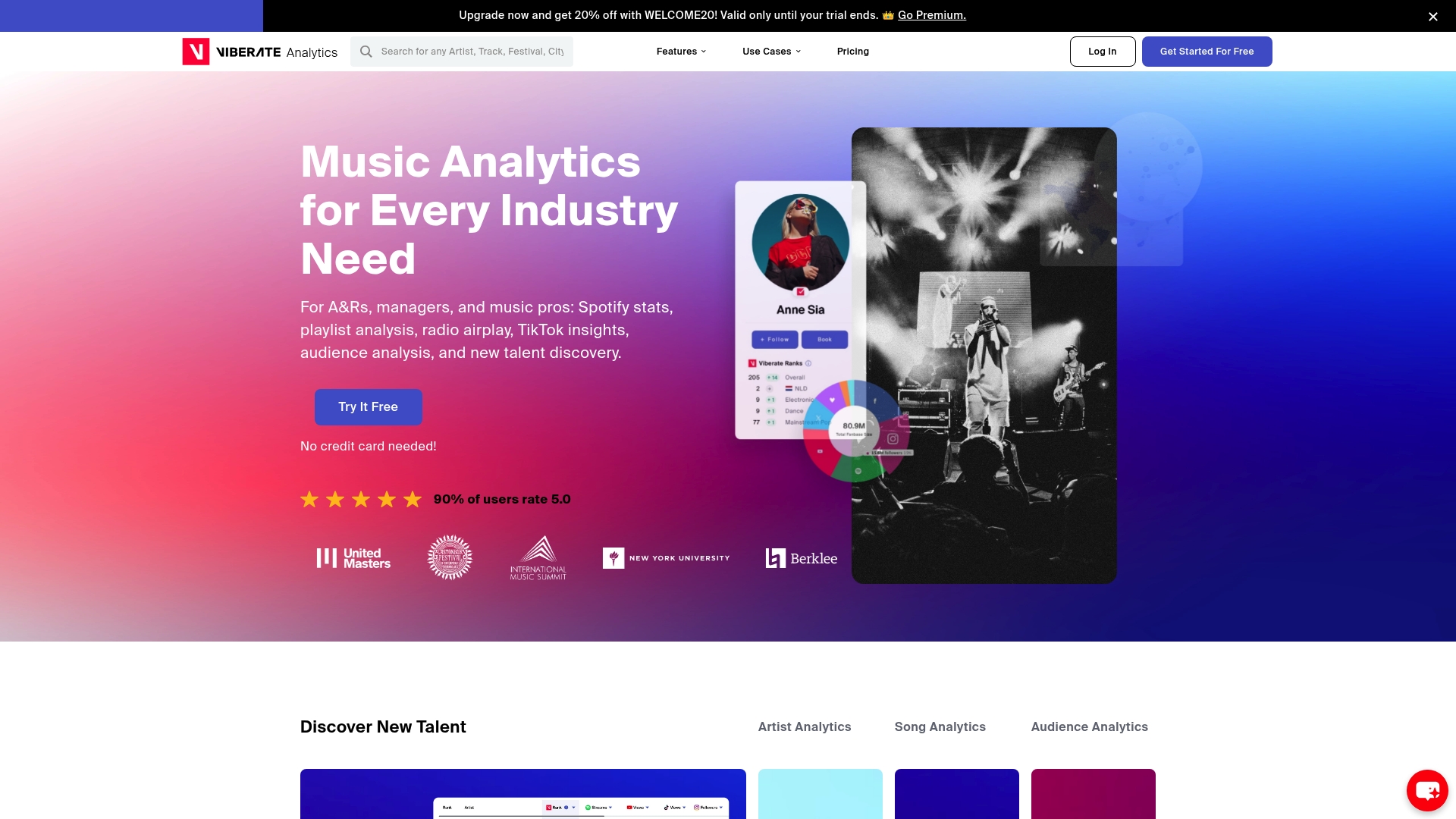
Viberate reports over 11 million artists and 100 million tracks in its database. That vendor claim signals a very large dataset for scouting and benchmarking. The platform pulls streaming and social data from Spotify, TikTok, YouTube, and radio stations to show who is gaining traction across channels.
Core features
- Artist Analytics: Social and streaming metrics for any artist across platforms, plus growth trends.
- Song Analytics: Cross channel track performance with play counts and trend visualizations.
- Playlist Analytics: Detailed playlist performance and curator insights to evaluate placements.
- Audience analytics that map fan demographics and geography.
- Charts offering unbiased rankings of artists, songs, playlists, and festivals.
- Compare Artists for side by side performance checks and competitive benchmarking.
- Festival and event analytics covering lineup, genre mix, and audience signals.
- Radio airplay metrics with spin counts and station coverage.
- Advanced talent search, custom reports and exports, and real time alerting.
Key differentiator
Viberate aims to give broad, cross platform music data at a low entry price point while keeping the interface simple. Its strength lies in combining streaming, social, playlist, and radio signals in one place so you can judge an act across channels without jumping between many tools. Visual reports make it easier to present findings to managers and bookers.
Pros
-
Wide dataset for discovery. That figure above supplies a deep pool to find emerging acts and long tail tracks.
-
Low entry cost. The vendor lists $19.90/month billed annually for the standard plan, which undercuts many competitors on price.
-
Easy to read analytics. Reviews describe the interface as user friendly, which lowers the learning curve for managers and agencies.
-
Broad channel coverage. The vendor advertises coverage of over 24,000 radio stations, which helps connect streaming momentum to terrestrial exposure.
-
Flexible exports and alerts. Custom reports and trigger alerts let you build regular monitoring or handoff concise dossiers to teams.
Cons
-
Most useful tools require a paid subscription; free access is limited.
-
The homepage provides minimal product detail, so you must explore the app to see full capabilities.
-
Festival and event insights exist but may lack depth compared with platforms built solely for live markets.
-
Data accuracy depends on tracked sources. Some regional or niche genre signals can be thin.
When it may not fit
If you need a free forever tool for DIY promotion, Viberate may not match your budget. If your work requires the deepest possible festival scouting or hyperlocal radio accuracy, a specialist product could be better. Small teams that need offline training and hand holding may find the self service model limiting.
Who it’s for
This is for A&R teams, artist managers, label staff, and marketing agencies that want one place to benchmark performance across streaming, social, playlist, and radio signals. It suits teams that prefer data driven scouting without paying enterprise prices.
Real world use case
A record label tracks rising acts across Spotify, TikTok, and YouTube. They use Viberate to compare audience age and region, check playlist momentum, and review radio spins before offering a development deal. The platform helps the label decide which markets to target for early touring and promo.
Pricing
Viberate lists a $19.90/month standard plan billed annually. Additional tiers are available for heavier data access and extra reporting features. Contact sales for enterprise or team pricing.
Website: https://viberate.com
ORPL
At a glance
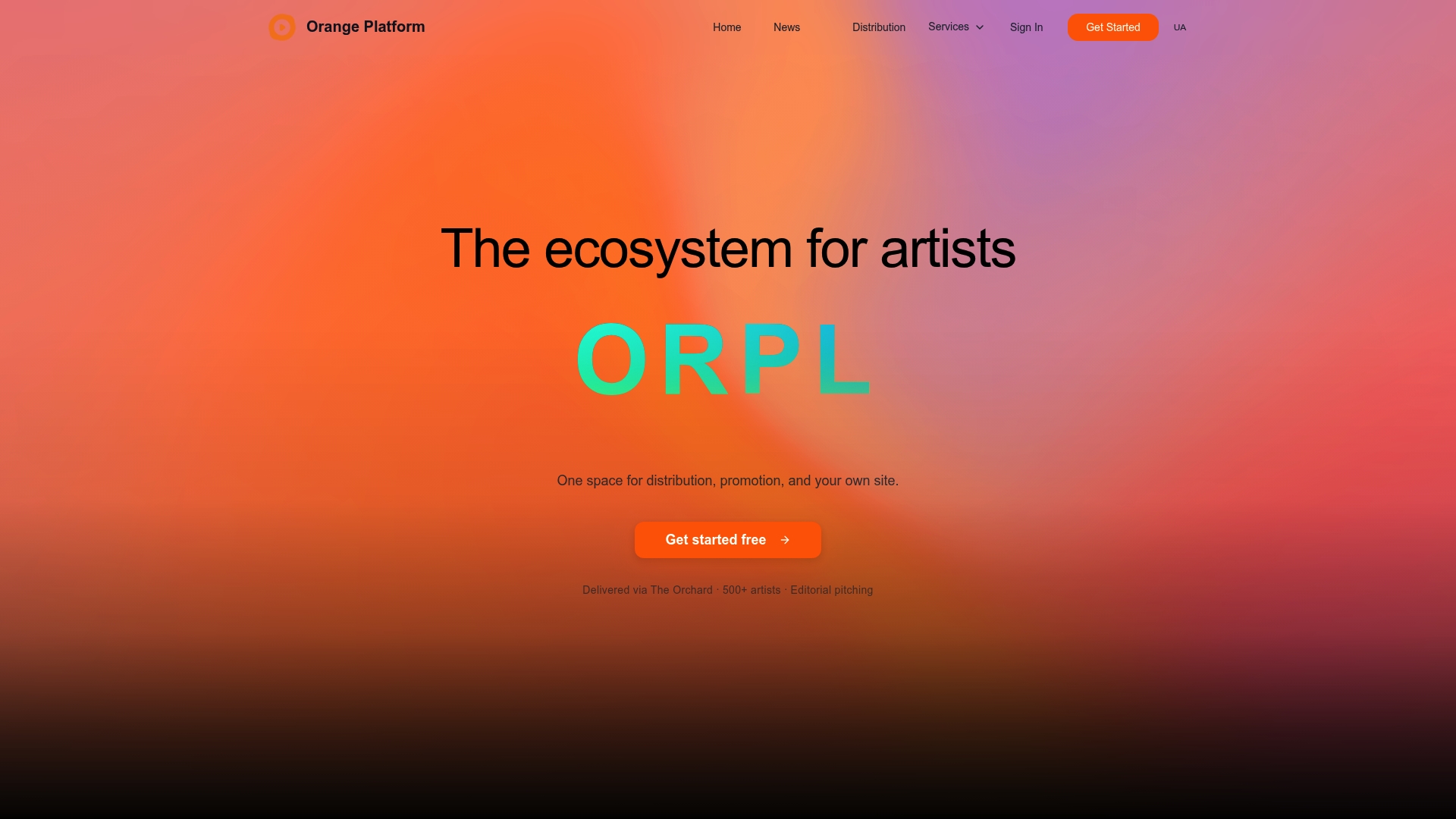
ORPL ties distribution and editorial pitching to The Orchard, including ISRC and UPC assignment and content ID handling. That linkage makes release logistics and rights management feel more consolidated for independent musicians. The platform also bundles playlist pitching, paid promotion services, and AI cover art tools under one roof.
Core features
- Distribution to major streaming platforms with ISRC and UPC assignment via The Orchard.
- Playlist pitching tools and editorial pitching workflows.
- One click artist website creation and release articles for press-ready pages.
- Promotion services covering radio, media outreach, YouTube ads, Meta ads, and playlist placements.
- AI generated cover art and short videos plus industry news and release checklists.
- Educational resources for branding and release planning.
Key differentiator
ORPL combines distribution, promotion, branding, and learning resources in a single product while using The Orchard for backend distribution and rights tasks. That makes it easier to move from upload to pitch to promotion without bouncing between separate vendors. The Orchard connection gives artists a familiar distribution path many labels and distributors already use.
Pros
-
Broad toolset for artists. You get distribution, pitching, ad options, and site creation in the same place.
-
The Orchard integration simplifies technical release steps such as ISRC and UPC assignment and content ID management.
-
Promotion services include both playlist pitching and paid ad channels, letting you coordinate promo and paid spend from one dashboard.
-
AI cover art and video features speed up visual production when you do not have a designer.
-
Educational guides and release checklists help newer artists avoid common release mistakes.
Cons
-
Several promotion services are offered as paid add ons. That can raise the total cost for a full campaign.
-
The platform focuses on musicians. Visual artists or podcasters will find fewer relevant features.
-
Public user reviews are limited, which makes it harder to judge long term support and performance from independent sources.
When it may not fit
If you represent mixed creative work beyond music, ORPL may feel narrowly targeted to musicians. If you prefer building campaigns only with free tools, paid promotional add ons will increase costs. Agencies that need white labeled client portals will likely need a different platform.
Notable integrations
- The Orchard
Who it’s for
Independent musicians and small labels that want an integrated route from distribution to promotion and branding. Artists who want a single place to assign ISRCs and UPCs, pitch for editorial placements, and run basic paid promotion will find ORPL practical.
Real world use case
An artist uploads a single, receives ISRC and UPC assignment through The Orchard, uses ORPL to pitch playlists, runs a small Meta ad campaign booked inside the platform, and publishes a one page artist site with a release article.
Pricing
ORPL offers a free tier and a PRO plan at ₴399 per month. Single release distribution can be purchased with a one time fee of ₴999.
Website: https://orpl.app
Comparison of alternatives
Selecting music marketing tools effectively enhances an artist’s capability to reach and grow their audience while managing necessary production and promotional tasks. Each option discussed here offers unique features and advantages tailored to specific needs within the independent music industry.
Tool integration and versatility
When comparing integration, UpNComer stands out by consolidating production and promotion tools into one package. This platform provides campaign automation, analytics, and audio mastering within a unified system, reducing the reliance on external service providers and making it ideal for independent artists seeking an efficient setup. In contrast, ORPL integrates distribution functionalities, such as ISRC and UPC management, with promotional features, which appeals to those focusing on release logistics.
Deep analytics and insights
For artists who prioritize data-driven decisions, Chartmetric excels by providing wide-ranging analytics that fuse data from multiple streaming and social platforms into insights. While UpNComer offers tailored recommendations via Amplitude AI, Chartmetric uniquely aids marketers and A&R teams with its ability to track granular trends and translate these into long-term strategies. Similarly, Viberate presents extensive analytics and talent search functionality, leveraging a sizable data repository, although it primarily supports broader talent management perspectives.
Best fit
- For those integrating multiple production and promotion tools within a single platform, UpNComer aligns perfectly, delivering an accessible and user-friendly service.
- If detailed, cross-platform analytics and forecasting influences your campaigns, consider Chartmetric for its superior analytical capabilities.
- If you value affordable yet wide-ranging dataset accessibility, Viberate offers an attractive balance of depth and pricing.
- Should your needs include distribution logistics paired with promotional options, ORPL delivers valuable functionalities centered around release planning.
Our pick
For independent artists prioritizing a consolidated workspace that encompasses campaign automation, audience analytics, and audio mastering without requiring collaborations with multiple third-party providers, UpNComer is the definitive choice. However, those who demand hyper-focused analytics for market planning or multi-channel promotional strategies may find options like Chartmetric or Viberate best suit their specific needs.
Here is a comparison of various platforms highlighting their capabilities relevant to artist marketing and analytics.
| Product | Primary Use Case | Unique Advantage | Pricing | Limitation |
|---|---|---|---|---|
| Upncomer | Unified marketing and mastering | AI Amplitude for guided campaigns | $27/month or $300/year | Advanced features such as playlist pitching in development |
| Chartmetric | Cross-platform analytics | Broad coverage of online platforms | Starts at $5/month | Pricing for higher tiers and features escalates steeply |
| Viberate | Cross-channel performance tracking | Affordable entry pricing | $19.90/month (annually) | Essential features require subscription |
| ORPL | Distribution and promotional tools | Integration with The Orchard for ISRC/UPC management | ₴399/month (Pro Plan) | Promotional add-ons increase campaign costs |
Simplify your music marketing with Upncomer
Managing music marketing tools across separate platforms can feel overwhelming and expensive. From campaign automation and playlist pitching to mastering and fan engagement, handling multiple services can burn you out before you make your first $50. Upncomer solves this by uniting all these essential functions into one AI-powered system designed specifically for independent artists who want full control over their careers.
Say goodbye to juggling spreadsheets and disconnected tools. With Upncomer, you get real-time streaming analytics, AI-guided campaign strategies through Amplitude AI, smart playlist pitching, and integrated mastering—all from a single dashboard. This means less guesswork, more focus on your music, and smarter decisions that directly grow your fanbase and revenue.
Take control now and explore how Upncomer lets you build and launch effective music marketing campaigns without outside agencies. Discover the difference at Upncomer and start mastering your next release with confidence.
FAQ
How does Upncomer help with campaign management for independent artists?
Upncomer offers a centralized dashboard for building ads, scheduling content, and monitoring performance. This feature allows you to manage all your marketing efforts from one place, making it easier to track your progress and adjust strategies in real time. Implementing Upncomer can streamline your campaign processes and minimize the time spent juggling multiple tools.
What is the difference between Upncomer and chartmetric in terms of data analysis?
Chartmetric excels in providing cross-platform music analytics that tracks artist performance across multiple streaming and social channels. Upncomer, however, focuses on campaign automation and audience insights for targeted marketing efforts. If you prioritize real-time marketing execution alongside analytics, Upncomer may be the better fit for you.
Which platform provides comprehensive fan tracking tools?
Upncomer includes smart links and fan tracking features to monitor engagement with your audience effectively. This capability allows you to gain insights into fan behavior and adjust your marketing strategies accordingly, fostering a more engaged fan community.
Can i use Upncomer if i need ai-driven content creation tools?
Yes, Upncomer offers AI-driven mixing and mastering tools as part of its suite, helping you finalize tracks without needing multiple platforms. This could be beneficial if you’re looking for a single solution to manage both your content and marketing strategies.
How does Upncomer support indie artists with educational resources?
Upncomer features an integrated learning platform called ProfessorU, where you can access ongoing lessons and guidance. This ensures that while you run your marketing campaigns, you’re also developing your skills, empowering you to make more informed decisions in your artist journey.