Promoting Music Videos: A 30-Day Plan for Indie Artists
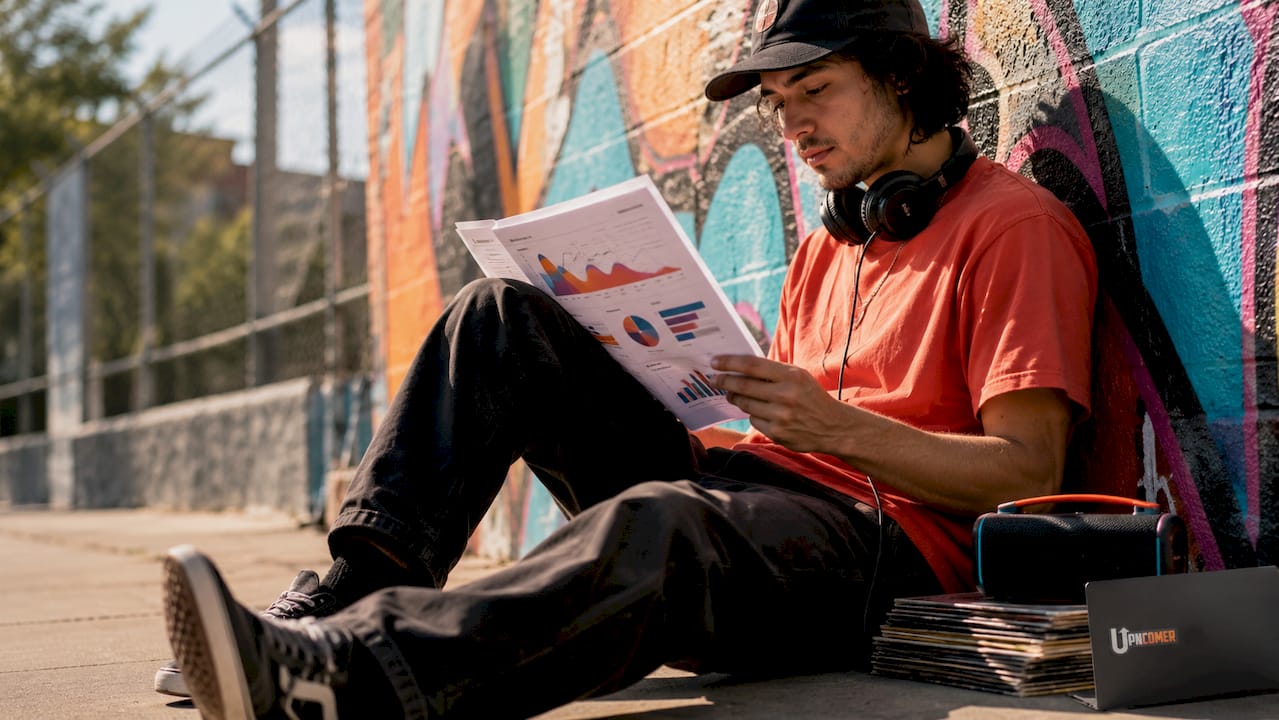
Promoting music videos is the process of distributing platform-specific video content across multiple channels to convert passive viewers into active, loyal fans. For independent artists in 2026, this means building a clip factory workflow, not just uploading one video and hoping it lands. The most effective music video marketing strategy combines three content formats, automated distribution through an Official Artist Channel, and a staggered release sequence that lets each piece of content do its job without competing against itself. This guide walks you through every step, from shoot day prep to 30-day execution.
What you need before promoting music videos
The biggest mistake artists make is launching promotion before the infrastructure is ready. You need three things locked in before you post a single clip: a distributor with YouTube Content ID support, a pre-save link, and a plan for your clip families.
Choosing the right distributor
Your distributor determines whether your music earns royalties from user-generated content on YouTube. YouTube Content ID lets you claim revenue every time someone uses your audio in their video. Without it, you leave passive income on the table and lose a key promotional signal. Upncomer Distribution includes Content ID management as part of its service, which removes the need for manual oversight.
Building your three clip families
Experts recommend producing three distinct clip types from a single shoot day to maximize reach across platforms. The three families are:
- Lyric clips: Text-on-screen videos that perform well on YouTube Shorts and appeal to listeners who want to follow along.
- Performance clips: Raw or stylized footage of you performing. These drive higher engagement on TikTok because they feel personal and immediate.
- Behind-the-scenes (BTS) footage: Candid moments from the shoot that anchor Instagram Reels and build parasocial connection with fans.
One shoot day, three content streams. That is the foundation of a sustainable promotion cycle.
Setting up your Official Artist Channel
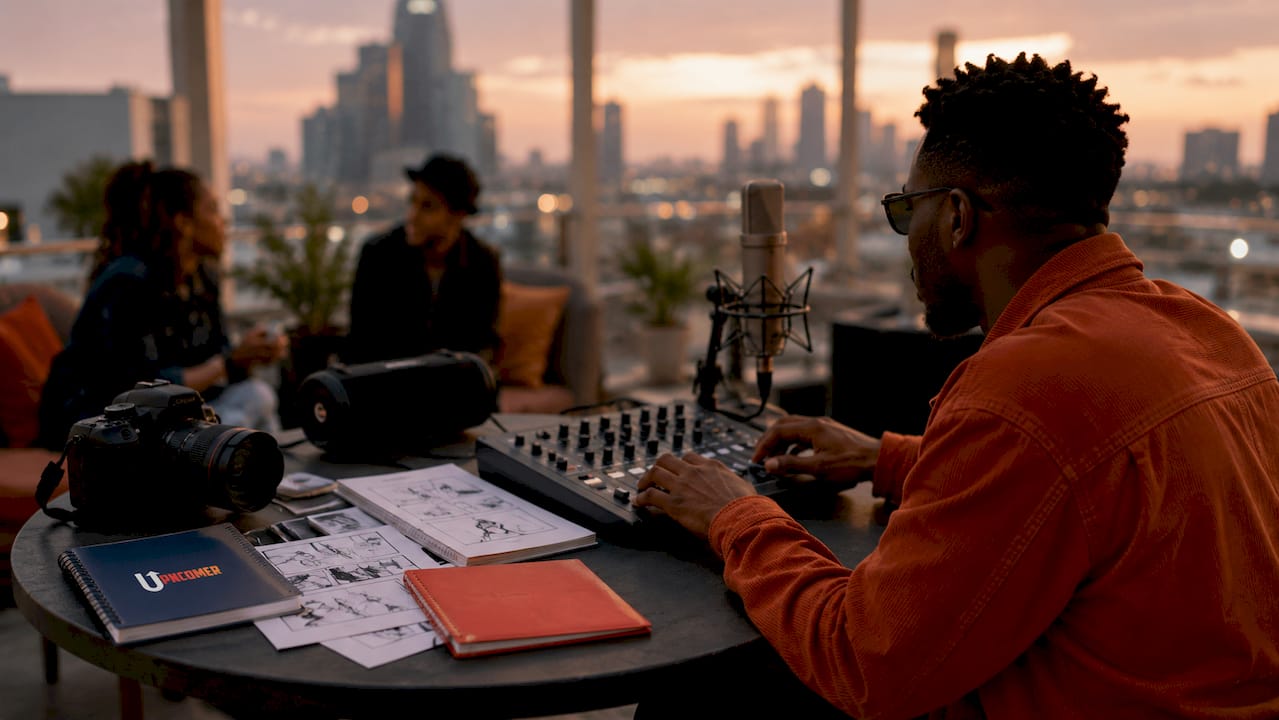
Claim your Official Artist Channel (OAC) on YouTube before your release date. An OAC gives you a verified music note badge and automates Art Track delivery, meaning your audio is automatically paired with album art and delivered to YouTube Music without extra editing. This signals authority to the algorithm and builds your catalog presence passively.
Pro Tip: Treat your shoot day as a content bank session. A single 60–90 second performance take, processed through a browser-based AI editor, can yield 12–15 distinct vertical clips ready for a full month of posting.
| Prerequisite | Why it matters |
|---|---|
| Distributor with Content ID | Earns royalties from UGC and signals promotion activity |
| Pre-save link | Captures fan intent before release and boosts day-one streams |
| Three clip families planned | Gives you platform-specific content without extra shoot days |
| Official Artist Channel claimed | Automates catalog delivery and builds algorithm authority |
How to run a 30-day clip-factory workflow
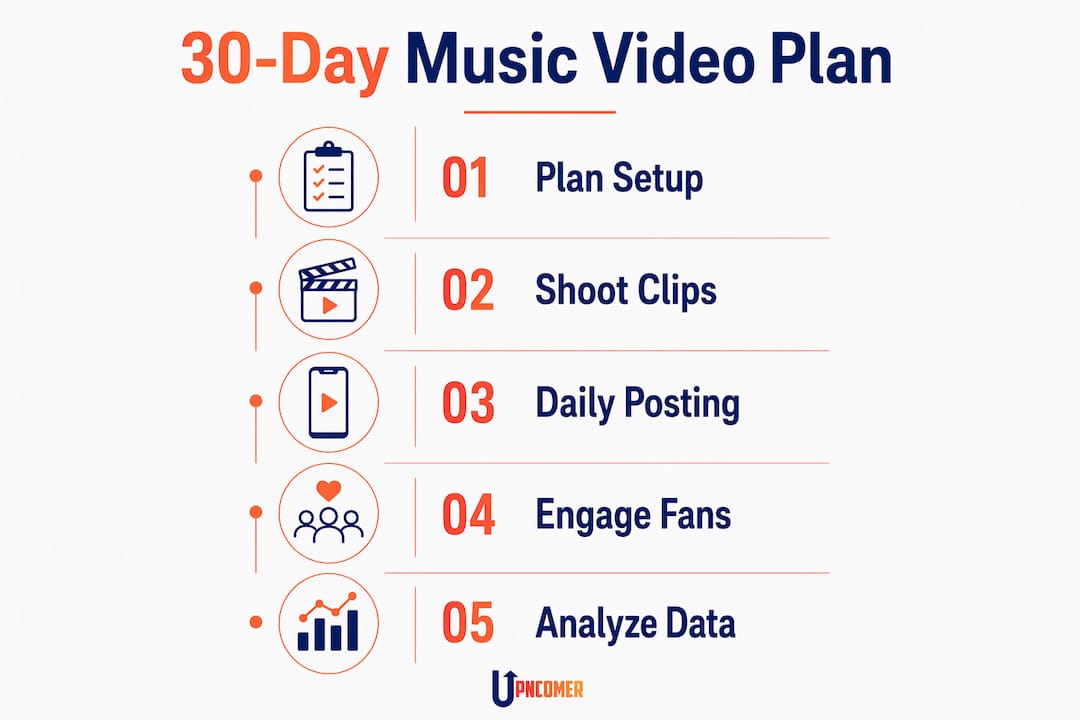
The clip factory model treats your music video shoot as raw material, not a finished product. Your job after the shoot is to extract, format, and distribute clips systematically across TikTok, Instagram Reels, and YouTube Shorts.
Here is how the 30-day sequence works:
- Days 1–3 (Pre-drop): Post three vertical clips per day anchored to your pre-save link. Use lyric clips on Shorts, performance clips on TikTok, and BTS footage on Reels. Volume matters here. Three clips daily sounds like a lot, but browser-based AI editors make batch cutting fast.
- Day 3 or Day 7 (Long-form drop): Release your full YouTube music video after the short-form push, not on the same day. Staggering the release by 3–7 days prevents your own content from competing against itself and maximizes stream conversion from fans who already know the song.
- Days 8–14 (Engagement phase): Search for user-generated content using your sound on TikTok and Instagram. Comment on those posts, duet them, and stitch them. UGC using your audio is free promotion. Engaging with it signals to the algorithm that your sound has community traction.
- Days 15–21 (Amplification phase): Repost your top-performing clips with new captions or slight edits. Introduce a second wave of BTS content. Pin a comment on your YouTube video with a smartlink to your streaming profiles.
- Days 22–30 (Conversion phase): Shift focus to saves and playlist adds. Spotify Discovery Mode gives an algorithmic boost to selected tracks, increasing saves by 50% and playlist adds by 44% in the first month. Use this window to pitch to independent playlist curators.
Pro Tip: Pin a comment on every YouTube Short that links to the full music video. Viewers who finish a Short are already warm. A pinned link gives them the next step without making them search.
The clip factory model works because it separates content creation from content distribution. You create in bulk, then distribute on a schedule. That discipline is what separates artists who grow from artists who post randomly and wonder why nothing sticks.
- Post at consistent times each day, not whenever you feel like it.
- Use platform-native captions, not copy-pasted text across all three platforms.
- Track which clip type gets the most saves and replicate that format in week two.
How do you promote music on YouTube without burning out?
YouTube is the most powerful long-term platform for music discovery, but it punishes artists who treat it like a social feed. The goal is to automate catalog uploads through your OAC and focus on audio discovery rather than constant video production.
“YouTube Shorts favor 15-second audio hooks combined with simple visuals like looping visualizers or DAW screen recordings. You do not need a film crew. You need a hook and a loop.” — We Rave You, 2026
Here is what a low-effort, high-impact YouTube strategy looks like in practice:
- Art Tracks: Your OAC auto-delivers these. They are your audio paired with album art, and they live on YouTube Music. No editing required.
- YouTube Shorts: Record a 15-second clip of your hook with a looping visualizer. Post it as a Short, then link the full video in the description and a pinned comment.
- Content ID: Your distributor registers your audio with Content ID. Every time someone uses your song in their video, you earn royalties and gain a new promotional touchpoint.
- Smartlink funnels: Use smart links in your YouTube bio and video descriptions to direct viewers to your Spotify, Apple Music, and pre-save pages. This turns YouTube traffic into streaming numbers.
The one mistake that kills YouTube momentum is dropping your long-form video on the same day as your Shorts. Your Shorts are designed to create curiosity. Your long-form video is designed to satisfy it. Give the curiosity time to build before you satisfy it.
What mistakes slow down music video promotion?
Most artists do not fail because their music is bad. They fail because their promotion strategy has structural gaps. Here are the most common ones, and how to fix them.
- Launching long-form and short-form on the same day. This splits your algorithm signals and reduces the effectiveness of both. Stagger by at least 3 days.
- Relying on one viral clip. The clip factory model exists because volume drives discovery. One clip is a lottery ticket. Twelve clips are a strategy.
- Ignoring UGC engagement. When fans use your sound, they are doing your marketing for you. Not engaging with them is a missed amplification opportunity.
- Tracking streams instead of saves. Save rates convert at 4–7 times more long-term value than raw streams and directly influence Discover Weekly and similar playlist algorithms. Watch your saves, not just your play count.
- Skipping the footage audit. Before you edit anything, watch all your raw footage and tag the best 15-second moments. Artists who skip this step end up with weak clips because they grabbed the first take, not the best one.
Pro Tip: Build a simple spreadsheet to track which clip type (lyric, performance, BTS) gets the most saves and comments each week. After 30 days, you will have real data telling you what your audience actually responds to.
Key takeaways
Effective music video promotion requires volume, structure, and staggered timing across platforms. Posting three clip families from one shoot day, claiming your Official Artist Channel, and releasing your long-form video 3–7 days after your short-form push are the three decisions that separate artists who grow from those who stall.
| Point | Details |
|---|---|
| Build three clip families | Shoot lyric, performance, and BTS clips in one day to cover TikTok, Reels, and Shorts. |
| Claim your Official Artist Channel | OAC automates Art Track delivery and signals authority to the YouTube algorithm. |
| Stagger your release timing | Drop short-form clips first, then release the full video 3–7 days later to maximize conversions. |
| Track saves, not just streams | Save rates influence playlist algorithms at 4–7 times the long-term value of raw stream counts. |
| Engage with UGC actively | Commenting on fan videos that use your sound amplifies reach without extra content creation. |
The discipline nobody talks about
Here is my honest take after watching hundreds of independent artists run video campaigns: the artists who grow consistently are not the ones with the best videos. They are the ones who treat their footage like a content bank and show up every day.
The clip factory model sounds mechanical, but it actually frees you up creatively. When you know you have 12 clips ready to post, you stop obsessing over whether each one is perfect. You post, you watch the data, and you adjust. That feedback loop is more valuable than any single viral moment.
The other thing I have seen artists underestimate is community engagement. When someone uses your sound on TikTok and you comment on their video, that interaction gets seen by their followers. You are not just thanking a fan. You are introducing yourself to a new audience. That is free promotion, and most artists scroll past it.
Automation is the other piece that changes everything. Setting up your OAC, your Content ID, and your smartlink funnels once means those systems work for you while you focus on the next release. The artists who burn out are the ones manually managing every touchpoint. Build the system once, then let it run.
Embrace imperfect clips. A slightly shaky BTS video that feels real will outperform a polished clip that feels corporate every time. Your fans want to see you, not a production company.
— Karan
How Upncomer supports your music video promotion
Independent artists who want to promote their music effectively need more than a posting schedule. They need infrastructure that works in the background.
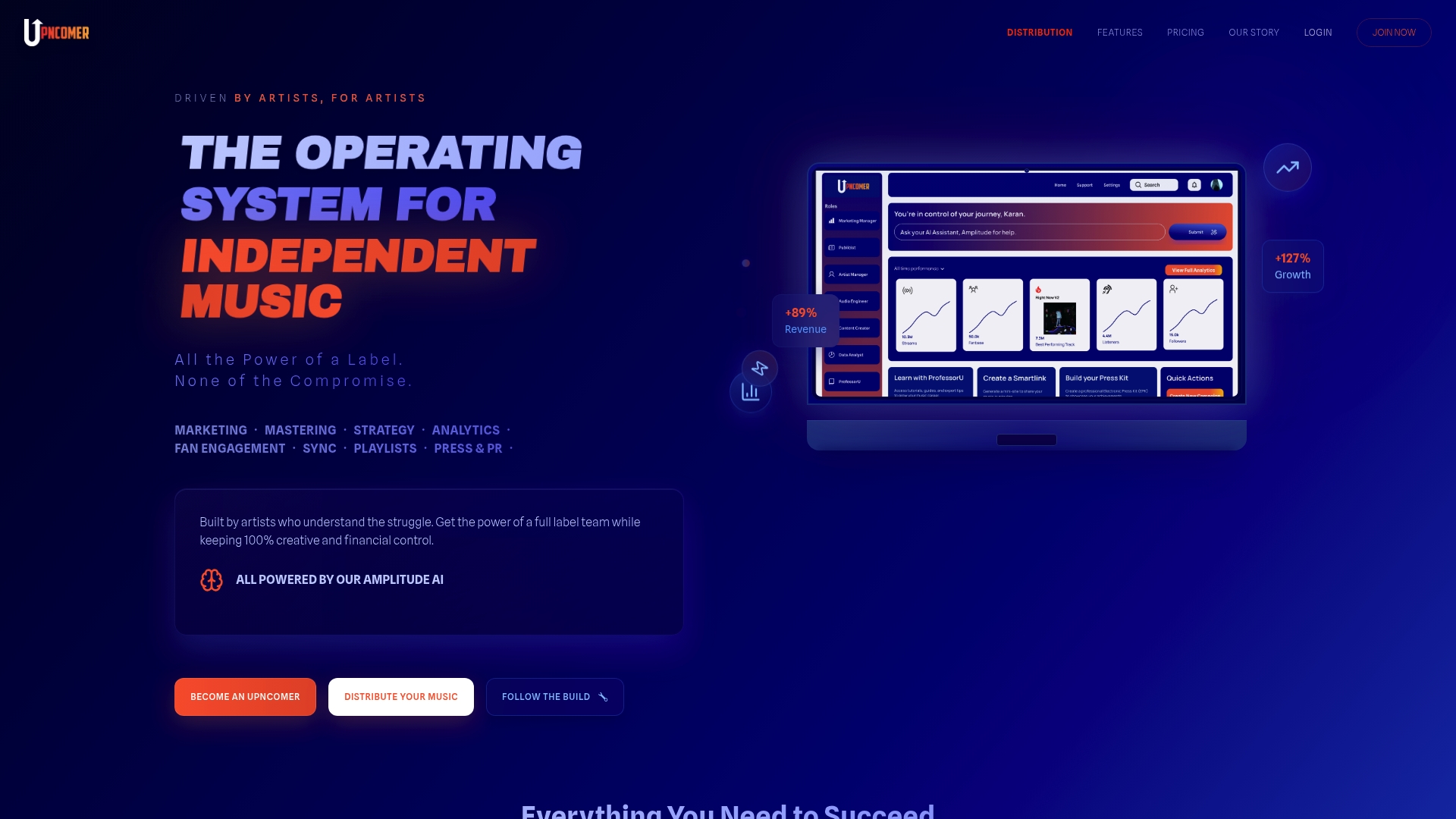
Upncomer brings distribution with YouTube Content ID, streaming analytics, fan engagement tools, and AI-powered guidance through Amplitude AI into one place. You can set up your Official Artist Channel integration, manage your smartlink funnels, and track save rates and playlist adds without switching between five different apps. The Upncomer platform is built specifically for independent artists who want to grow without handing their career over to a label or an expensive agency. Check out community updates for the latest trends, artist growth tips, and music marketing resources from the indie community.
FAQ
What is the best way to start promoting music videos?
Build your three clip families (lyric, performance, and BTS) from a single shoot day, then post three vertical clips daily anchored to a pre-save link before your full video drops.
How do you promote music on YouTube without making new videos constantly?
Claim your Official Artist Channel to automate Art Track delivery, then use 15-second Shorts with looping visuals and smartlink funnels to drive traffic to your full catalog without constant production.
When should you release a full music video after posting short clips?
Release your long-form YouTube video 3–7 days after your initial short-form push. Launching both on the same day splits your algorithm signals and reduces the effectiveness of each format.
What metrics matter most for music video promotion?
Save rates matter more than raw stream counts. Saves convert at 4–7 times more long-term value and directly influence playlist placement algorithms like Discover Weekly.
How does YouTube Content ID help independent artists?
Content ID lets you claim royalties every time someone uses your audio in their video, turning user-generated content into a passive revenue stream and an additional promotional signal for your music.