90 Day Plan to Organize Fan Data for Music and Sports Teams
Organize fan data by building a single fan profile for every supporter, connecting your key sources into it, segmenting that profile into audiences, activating personalized campaigns against those audiences, and measuring the uplift. Done right, this workflow turns scattered spreadsheets and platform exports into usable profiles, testable segments, and campaigns you can actually tie to revenue. UpNComer builds this exact pipeline into one system, but the method matters more than the tool.
TL;DR:
- Building one unified fan profile requires both deterministic and probabilistic matching to account for changing emails, duplicate records, and behavioral overlaps.
- Segmentation should be dynamic, based on recency, frequency, value, behavior, or affinity, and tested with small segments before scaling.
- Activating campaigns consistently involves personalized messaging across multiple channels, timed to real-time events, and supported by AI content drafting tools.
- Measuring success depends on KPIs like customer lifetime value, retention, conversion, and actual revenue impacts, not vanity metrics like follower counts.
- Automating this workflow with a platform like UpNComer eliminates manual data handling, speeds up campaign deployment, and improves data ownership and measurement accuracy.
Table of Contents
- Build a Single Fan Profile: Unify and Deduplicate Records
- Segment Fans and Create Actionable Audiences
- Activate Fan Data: Campaigns, Personalization, and Channel Orchestration
- Measure What Matters: KPIs, Dashboards, and Validation
- How to Operationalize This Workflow With a Platform
- A First 30, 60, and 90-Day Checklist
- Try UpNComer to Put This Workflow on Autopilot
- Sources
- FAQ
Build a Single Fan Profile: Unify and Deduplicate Records
A single fan profile is one record per person that pulls together every signal you have on them: contact info, ticket and merch purchases, streaming behavior, email opens, app activity, and stated preferences. Without it, the same fan shows up as three different “people” across your ticketing system, your email tool, and your streaming dashboard, and every report you pull is quietly wrong.
Getting to one clean record per fan usually takes two matching approaches working together:
- Deterministic matching links records using exact identifiers like email addresses, phone numbers, or transaction IDs.
- Probabilistic matching catches the rest by scoring similarity across device patterns, purchase timing, and behavioral overlap.
AWS’s Fan360 architecture shows one version of this, using graph data models to connect disparate fan interactions into shared profiles rather than isolated tables. Whatever system you use, schedule recurring audits. Fans change emails, merge accounts, and generate duplicate records constantly, so enrichment isn’t a one-time setup task.
Segment Fans and Create Actionable Audiences

A unified profile is only useful once you can slice it into groups you’ll actually act on. Segmentation turns a database into a set of decisions: who gets the renewal email, who gets the VIP invite, who gets left alone until they show signs of coming back.
Three approaches cover most use cases:
- RFM segmentation ranks fans by recency, frequency, and value, which is the fastest way to spot your highest-worth supporters and your at-risk ones.
- Behavioral cohorts separate engaged fans (frequent streams, opens, purchases) from passive ones who signed up once and went quiet.
- Affinity and psychographic tagging groups fans by genre preference, merch category, or team allegiance for more targeted creative.
Build these as dynamic audiences that update automatically as fan behavior shifts, not static exports you refresh manually. Start with two or three small, testable segments before rolling personalization out to your whole fan base. A tight VIP cohort of 200 fans will teach you more in a week than a vague segment of 50,000 ever will.
Activate Fan Data: Campaigns, Personalization, and Channel Orchestration

Segments only pay off once you activate them. Deloitte’s research on fan loyalty makes a clear case for engaging fans 365 days a year, not just around matchdays or release dates, and recognizing every interaction rather than treating fans as anonymous traffic.
A few campaign types consistently work across music and sports:
- Welcome flows for new subscribers or ticket buyers, triggered the moment they enter your system.
- Renewal and reactivation sequences aimed at fans whose engagement is trending down.
- Matchday or release-day triggers tied to real-time events, like in-app predictors or half-time polls that drive engagement in the moment.
- Merch drops and sponsor activations targeted at fans who’ve already shown purchase intent.
Scaling personalization at this volume means combining message templates with data-driven triggers, and increasingly, AI content agents that draft variations of a campaign fast enough to test several angles in the time it used to take to write one. Orchestrate channels so a fan isn’t hit with the same offer by email, push notification, and SMS on the same day. Overlap kills goodwill and makes attribution nearly impossible to untangle afterward.
Measure What Matters: KPIs, Dashboards, and Validation
None of this counts unless it’s measurable. Vanity metrics like follower counts tell you almost nothing about whether your fan data strategy is working. The KPIs that actually connect to revenue include customer lifetime value, DAU/MAU ratio, churn and retention rate, and organic conversion rate.
Baseline before you test. Set your CLV, retention, and conversion numbers before launching a new segment or campaign, so any lift you see afterward is measurable against a real starting point rather than a guess.
Build dashboards around these numbers early, even before you have much data flowing through them. Run lift tests comparing a segment that received a campaign against a similar group that didn’t. Cohort analysis over 30, 60, and 90 days will show you whether a reactivation campaign actually moved fans back into active status or just produced a short-term bump that faded. Where possible, tie activity directly to revenue: a merch drop email that generated $4,000 in sales is a far more useful data point than an open rate.
How to Operationalize This Workflow With a Platform
Running this entire pipeline manually across spreadsheets, a CRM, and three analytics dashboards is where most teams stall out. It’s not that the workflow is complicated. It’s that keeping five disconnected tools in sync eats the time you should be spending on the campaigns themselves.
UpNComer maps directly onto the steps already covered:
- Data ingest from streaming, ticketing, and social feeds into a Data Analyst dashboard that centralizes the numbers instead of scattering them across tabs.
- Audience creation tools that turn raw fan data into the kind of dynamic segments described above.
- Growth Engine for activating campaigns against those segments across channels.
- Amplitude AI for speeding up enrichment, suggesting which segments are underused, and drafting first-pass campaign copy so you’re editing instead of starting from a blank page.
Pro Tip: Run your first test on a small, existing segment, like your top 100 streamers or ticket buyers, rather than your whole list. A cohort that size gives you a real signal within days without risking your broader fan base on an unproven message.
Managers who’ve adopted analytics platforms as part of their regular workflow tend to catch churn signals weeks before they’d notice through casual observation alone.
A First 30, 60, and 90-Day Checklist
Here’s how I’d sequence this if you’re starting from scratch. In the first 30 days, audit every source you have, map where the gaps are, and make sure consent capture is airtight before you build anything else on top of it. Prioritize connecting just one high-value integration rather than trying to wire up everything at once.
By day 60, you should have single profiles running and two or three test audiences live, with one small campaign already sent. By day 90, measure the uplift, iterate on whatever underperformed, and start scaling the campaign that worked.
The two mistakes I see most often: teams skip data quality checks because audits feel unglamorous, and teams over-personalize before they’ve tested anything, burning a big segment on an unproven idea instead of learning cheap first.
— Karan
Try UpNComer to Put This Workflow on Autopilot
UpNComer gives you the full pipeline in one place instead of stitching together a CRM, a spreadsheet, and a separate analytics tool that don’t talk to each other. That’s the real advantage over piecing this workflow together manually: you’re not exporting CSVs between systems every week just to see whether a campaign worked.
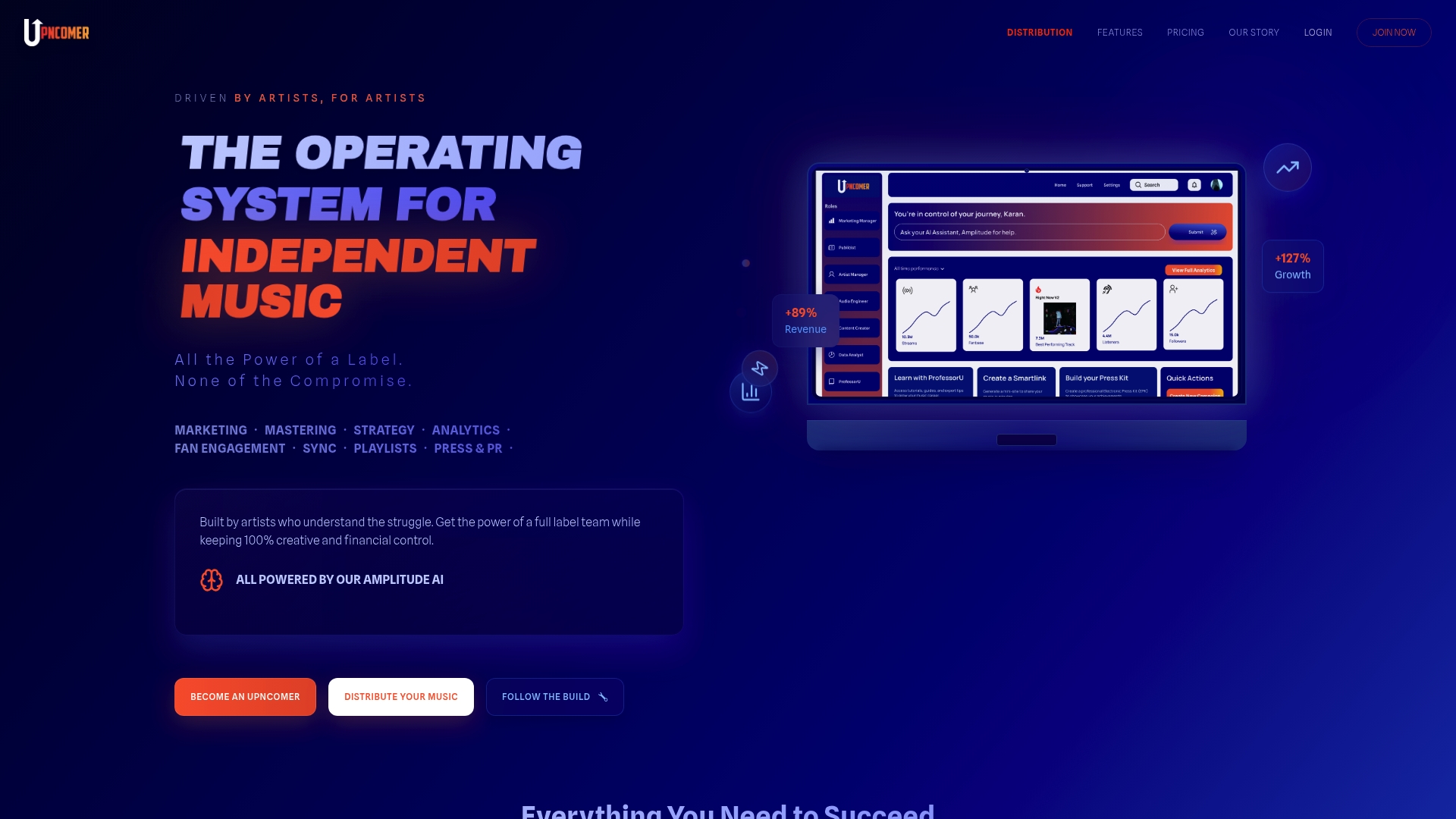
The Data Analyst module builds your single fan profiles automatically as new data comes in from Distribution, streaming, and ticketing. Growth Engine turns your segments into live campaigns, and Amplitude AI helps you draft and test creative faster than doing it by hand. Every bit of data stays inside your own account, so you keep ownership of your fan relationships instead of renting access to them from a third-party platform. If you’re ready to see how the modules connect, explore UpNComer’s distribution and fan data tools and start mapping your first audience today.
Sources
Before you can unify anything, you need consistent data flowing in from the places fans already interact with you. The highest-value sources tend to be ticketing platforms, CRM systems, merch and ecommerce checkout, streaming analytics, app events, email engagement, social listening, and any sponsor or partner data you’re allowed to use.
How you connect those sources depends on what you’re working with:
- Fan engagement: home field advantage and loyalty (Deloitte)
- Better understand sports fan data with Fan360 on AWS
Every record you capture should include consent status, a timestamp, and the channel it came from. Skip fields you don’t need. A bloated intake form kills conversion and clutters the profile with data you’ll never use.
Pro Tip: Log consent and channel attribution at the point of capture, not after the fact. Retroactively figuring out where a contact came from or whether they opted in is nearly impossible once the record is buried in a database.
FAQ
How do you organize fan data?
Organize fan data by unifying records into a single profile per fan, connecting your key sources through APIs or batch imports, segmenting profiles into dynamic audiences, activating personalized campaigns, and measuring the results against baseline KPIs.
What is the Deloitte fan data platform?
Deloitte doesn’t sell a fan data platform. Its research on fan engagement and loyalty instead outlines a framework: engage fans year-round, personalize interactions, and recognize every touchpoint to build owned relationships rather than relying on one-off ticket or streaming transactions.
What are the main types of fan data?
Common categories include identity data (contact info, account IDs), transactional data (purchases, ticket history), behavioral data (streams, app activity, opens), and preference data (genre, merch size, communication choices). Definitions vary by organization, so treat this as a practical grouping rather than a fixed standard.
What is fan engagement?
Fan engagement is the ongoing set of interactions a fan has with an artist, team, or brand, measured through activity like streaming, purchases, opens, and app usage. Deloitte’s research identifies five guiding tenets for strong programs: know your target, make it personal, think holistically, engage year-round, and recognize loyalty.
How is fan data different from general customer data?
Fan data includes emotional and behavioral signals unique to entertainment and sports, like streaming frequency or matchday engagement, on top of standard transactional records. Platforms like UpNComer are built specifically to capture and act on that entertainment-specific behavior rather than treating fans like generic ecommerce customers.