Music Release Automation: A 2026 Workflow Guide for Indies
Music release automation means using software and AI tools to handle the repetitive, deadline-driven work of a release: scheduling, metadata checks, pre-saves, social content, and analytics tracking. The primary benefit is time. You stop chasing spreadsheets and missed deadlines, and you get a rollout process you can reuse for every single or album instead of reinventing it each time. It works for solo artists, managers juggling multiple rosters, and small labels without a full ops team.
TL;DR:
- Automation simplifies workflows that are consistent across releases, such as metadata validation, deadline adjustment, and content batch production, saving significant time.
- Using integrated platforms reduces errors caused by managing multiple disconnected tools and ensures updates, like date changes, propagate automatically across all tasks.
- Starting with basic automation for timeline management and metadata checks yields immediate benefits and prevents delays caused by manual oversight or file errors.
- No-code tools and APIs are suitable for small teams or solo artists, but locking metadata standards and permissions before scaling automation prevents compounding errors.
- A centralized release management system, like UpNComer, minimizes manual updates and automates validation, making the process more reliable and less maintenance-intensive.
Table of Contents
- What Does Music Release Automation Actually Cover?
- Which Workflows Should You Automate First?
- Which Tools and Integrations Make This Work?
- What Do Real Automation Recipes Look Like?
- How Do You Choose an Automation Approach and Roll It Out?
- How Does a Unified Platform Reduce the Friction?
- When Should You Trust Automation, and When Should You Not?
- Ready to Put This Into Practice?
- Sources
- FAQ
What Does Music Release Automation Actually Cover?
Automation handles the mechanical parts of a rollout: file naming, metadata validation, deadline tracking, social post scheduling, and pulling streaming numbers into one place. It does not handle the parts that require taste or legal judgment. A&R decisions, final mix approvals, and contract terms still need a human in the room.
Here’s how the split usually plays out across a release cycle:
- Automated: distribution submission checks, smart link creation, pre-save reminders, social caption drafts, streaming data pulls
- Human-required: final track selection, legal clearance on samples, contract negotiations, brand partnership approvals
- AI-assisted (with review): first-draft press copy, short-form video cuts, suggested posting cadence based on past release timing
Think of automation as the crew that sets up the stage. You still decide what gets played.
Which Workflows Should You Automate First?
Some workflows pay off almost immediately once you set them up, because they run the same way on every release. Build these once and reuse them for years.
- Timeline-driven task automation. Set your release date, and let a system back-calculate deadlines for mastering, artwork, distribution submission, and press outreach. When the date shifts, dependent tasks should shift with it automatically. Real release-planning platforms already do this kind of auto-adjustment so nothing quietly falls off the calendar when a date moves, as Orphiq’s 2026 buyer guide notes.
- Metadata and asset validation. Check ISRC codes, UPCs, contributor credits, and file specs before you submit to distribution, not after. A failed validation post-submission can delay payments or trigger takedowns.
- Content production pipelines. Batch-generate short clips, lyric snippets, and caption drafts from your master files and press assets, then queue them for review instead of writing everything from scratch each week.
- Promo orchestration. Pre-save links, smart links, and ad flight dates should all reference the same release date variable, so one change updates everything downstream.
- Analytics collection. Pull streaming numbers, playlist adds, and social engagement into a single dashboard on a schedule instead of logging into five apps every morning.
Pro Tip: Build your timeline template once, on your easiest release, before you touch a catalog-wide rollout. A template built under pressure on your biggest release will have gaps you won’t notice until it’s too late to fix them.
Which Tools and Integrations Make This Work?
The tool you need depends on how technical your team is and how many releases you manage per year. Distribution platforms with real APIs let you run automated validation checks (catching bad metadata before it becomes a payout problem), which matters more as your catalog grows. LabelGrid’s distribution API is a useful example of what a modern, API-first distribution layer looks like in practice.
For teams without engineering resources, no-code connectors fill the gap:
- Automation connectors (Zapier-style tools) link email, spreadsheets, and social scheduling apps without writing code
- Dedicated release-ops platforms centralize deliverables, deadlines, and validation in one place instead of stitching tools together
- Spreadsheets plus a connector work fine for one or two releases a year but break down fast once you’re running a full catalog
- Social schedulers and ad platforms plug into the same release-date variable so campaign timing stays synced
Indie-focused workflow guides generally recommend starting with the lightest tool that solves your actual bottleneck, not the most feature-packed one.
What Do Real Automation Recipes Look Like?
You don’t need to imagine these from scratch. Here are four you can build this week using tools you likely already have:
- Inbox to task board. A press mention or master file arrives by email, triggers a rule that logs it to a shared spreadsheet, then creates a task for review. Zapier’s own use-case library shows this exact pattern for tracking incoming release assets.
- Master upload to distribution package. A new master file lands in your storage folder, a validator checks metadata completeness, and a distribution-ready package gets assembled automatically if it passes.
- Press mentions to promo highlights. New coverage or an RSS mention triggers an AI summary, which drops into a running document of promo wins you can pull from for your next pitch.
- Release date change to cascading updates. Moving your release date by even a week should auto-shift mastering deadlines, press embargo dates, and your queued social posts, all from one edit.
How Do You Choose an Automation Approach and Roll It Out?
Start by sizing the problem honestly. A solo artist releasing three singles a year needs a lighter setup than a label managing twelve artists across quarterly rollouts.
Weigh these before picking tools:
- Team size and budget determine whether you need full API access or a no-code connector is enough
- Data centralization matters if multiple people touch the same release; scattered spreadsheets create version conflicts fast
- Permissions and governance prevent someone from accidentally submitting an unfinished master to distribution
- Metadata standards should be locked before you automate anything, since automation just repeats whatever pattern you feed it
Roll out in three steps: pilot the whole workflow on one release, lock your templates once you’ve fixed the rough edges, then apply the same system catalog-wide. Enterprise release-management practices built around dependency graphs and readiness scoring are worth borrowing in a lighter form, even if you’re a team of one.
Measure three things afterward: hours saved per release, how many deadline misses or metadata errors you catch before submission, and whether engagement on release day actually moved compared to your last few drops.
Pro Tip: Run your pilot release with a slightly earlier internal deadline than you need. Automation surfaces gaps in your process fast, and you want time to fix them before the real deadline, not during it.
How Does a Unified Platform Reduce the Friction?

Most of the friction in DIY automation comes from switching between five disconnected tools and hoping the release date stays consistent across all of them. A platform built around one shared release record avoids that problem by design.
Here’s how UpNComer’s modules map to the workflows above:
- Growth Engine handles ad scheduling and campaign pacing tied to your release date
- Amplitude AI surfaces timeline suggestions and audience insight without you pulling reports manually
- Distribution runs metadata and asset checks before your release ever hits streaming services
- Content Creator drafts short-form clips and captions from your existing assets
- Publicist manages press outreach and promo tracking in the same place as everything else
Centralizing metadata, scheduling, analytics, and content under one release record means a date change or a metadata fix updates everywhere at once, instead of requiring five manual edits across five separate tools.
When Should You Trust Automation, and When Should You Not?
Automation earns its keep on timelines, metadata governance, and repetitive asset production, tasks that follow the same pattern release after release. It has no business making A&R calls or clearing legal risk on a sample. The most common mistake isn’t under-automating. It’s over-automating without locking metadata standards first, so every automated task just repeats the same broken pattern faster. Set your permissions and templates before you scale anything catalog-wide.
— Karan
Ready to Put This Into Practice?
UpNComer gives you one release record instead of five disconnected tools fighting over the same date. Where a spreadsheet-and-connector setup asks you to manually keep timelines, distribution, and promo in sync, UpNComer’s Distribution module runs metadata validation automatically, feeds into Growth Engine for ad pacing, and shares the same release calendar with Publicist and Content Creator, so one date change updates everything downstream.
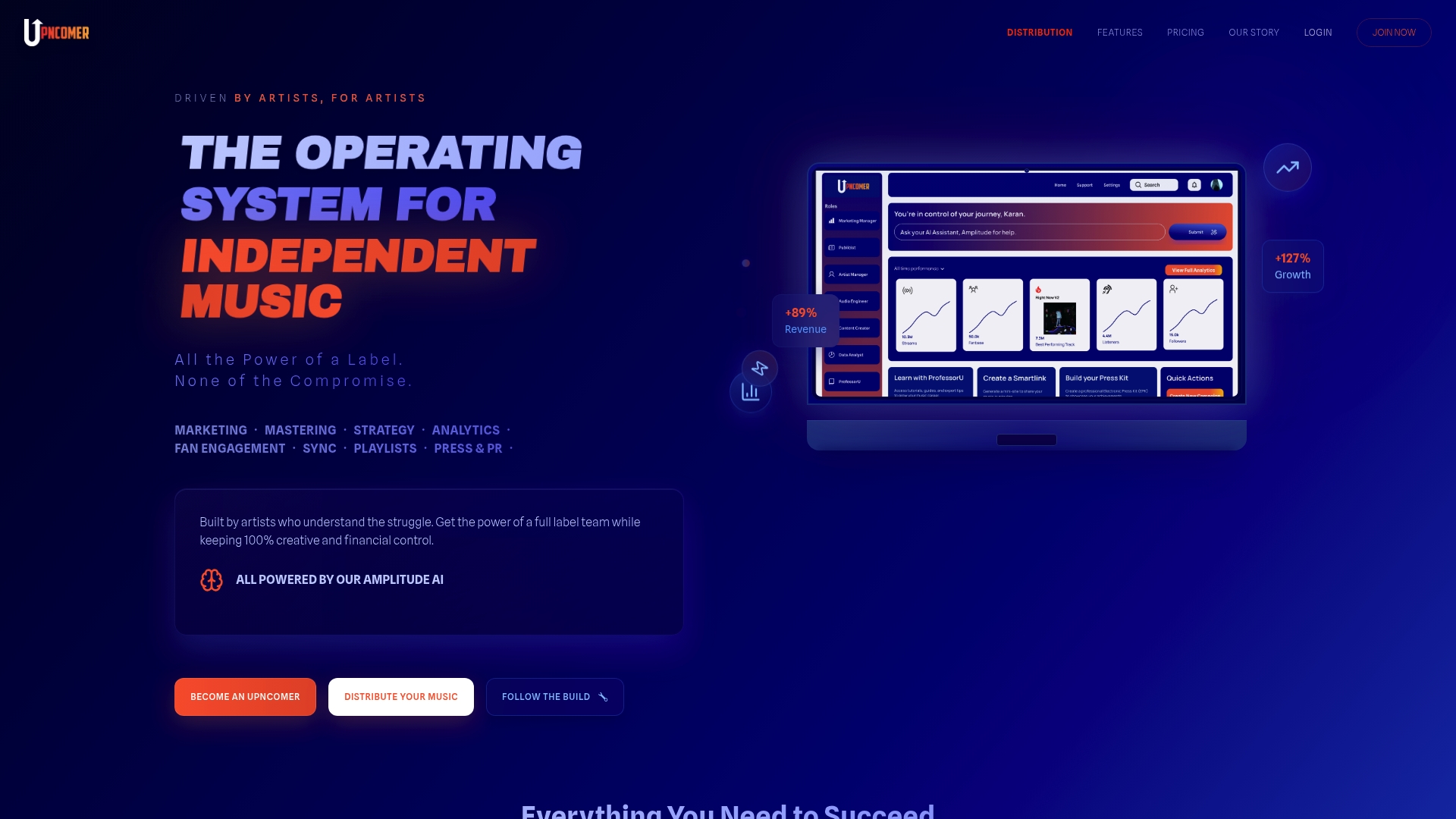
That’s the difference between automation that requires constant babysitting and automation that actually holds. If you’re planning your next rollout, start by reviewing UpNComer’s distribution and release-ops features to see how metadata checks and campaign scheduling work together before you commit to a plan. You can also browse the community updates page to see how other independent artists are structuring their rollouts right now.
Sources
FAQ
What Is the Best Platform to Release Music On?
There’s no single best platform for everyone; the right choice depends on whether you want a flat distribution fee, a royalty-split model, or built-in release-ops features like metadata validation and campaign scheduling. UpNComer’s Distribution module pairs release submission with automated metadata checks and promo tools in one place.
What Is Music Automation?
Music release automation is the use of software and AI to handle repetitive rollout tasks, deadline tracking, metadata checks, social scheduling, and analytics pulls, so a team can run a consistent process on every release without redoing manual work each time.
Can AI Music Be Released?
Yes, distribution platforms generally accept AI-assisted or AI-generated tracks, though you’re still responsible for accurate metadata, rights clearance, and following each platform’s own content policies before submission.
How Much Does It Cost to Release a Song?
Costs vary widely by distributor and model. Some charge flat annual or per-release fees, while others, including UpNComer, use a royalty-split model with no subscription fee for distribution itself, so the exact cost depends on your streaming revenue rather than a flat charge.