Build a Music EPK in an Afternoon: One Sheet First for Indie Artists
A music EPK is a compact digital kit, usually a one-page PDF or a web link, that gives bookers, press, and playlist curators everything they need to say yes: your music, your story, your photos, and your contact info. The fastest path to a usable one is to build a one-sheet first, publish a simple web press page or organized shared folder second, test every link on your phone, then send one clean link with every pitch.
TL;DR:
- A strong EPK should contain a clear, one-sentence pitch, a concise short bio, a featured track with labeled links, and basic contact info, all optimized for quick review.
- Use a format tailored to your audience, with web press pages offering flexibility, PDFs for portability, and shared folders for complex assets, but always test links and compatibility beforehand.
- Build your EPK in one focused afternoon by drafting a pitch, gathering assets, and testing links, ensuring the kit proves your worth without unnecessary padding.
- Keep your EPK updated weekly or monthly by checking links, refreshing press quotes, and adjusting assets to reflect your current work and achievements.
- An integrated platform like UpNComer can streamline asset management, track performance data, and simplify updating your EPK, making it more effective for targeted outreach.
Table of Contents
- What Is a Music EPK and Who Actually Uses It?
- The Complete Music Artist Press Kit Checklist
- Web Page, PDF, or Shared Folder: Which EPK Format Wins?
- How to Build Your EPK in One Afternoon
- Tailoring Your EPK for Booking, Press, Playlists, and Sync
- Keeping Your EPK Current: A Simple Maintenance Routine
- A Copy-Ready One-Sheet Template You Can Use Today
- How an Artist OS Simplifies EPK Assembly
- Best Practices for EPK Design and Layout
- Writing Bios and Press Quotes That Actually Get Read
- Choosing and Sequencing Your Music and Video
- Photography and Video Quality Standards Worth Following
- Including Social Proof Without Overselling It
- Integrating Social Media and Analytics Into a Digital EPK
- What Actually Happens After You Send It
- Let UpNComer Handle the Busywork Behind Your EPK
- Sources
- FAQ
What Is a Music EPK and Who Actually Uses It?
An EPK, short for electronic press kit, is a digital package, whether a website, a PDF, or a shared folder, built to give an industry contact everything needed to evaluate and act on an artist in under two minutes. Think of it as a resume for your music career, minus the corporate formatting.
Bookers use it to check your live footage and technical rider before committing to a date. Press and blog editors use it to grab a bio and a quote without emailing you back and forth. Playlist curators skim it for a featured track and streaming numbers. Sync agents and licensors check it for rights contacts and instrumental versions. Apple Music for Artists frames the EPK the same way: a professional resume that lets industry pros move fast.
Here’s the part a lot of guides skip: an EPK doesn’t get you booked, covered, or playlisted. It removes friction once someone is already curious. Every item in it should serve one job, proving your worth the next step, not padding out your history. If the music isn’t strong or you’re not pitching anyone, the world’s best EPK sits unopened.
The Complete Music Artist Press Kit Checklist
Every solid EPK contains the same core pieces, whether it lives on a webpage or inside a PDF. Miss one and you’re forcing a booker or editor to email you for the thing they actually needed.
- Short bio (about 100 words): Genre, hook, one standout fact, current release name. This is the version a busy editor copies straight into a write-up.
- Long bio (300 to 400 words): Your story, influences, career highlights, and what makes the current project worth covering. Industry guides recommend keeping both lengths on hand so you’re never rewriting under deadline pressure.
- Featured track and links: One lead single, clearly labeled. Separate streaming links (Spotify, Apple Music) from private download links, and mark versions explicitly, like “Clean version, Spotify” or “Unreleased, private stream, password: xxxx.”
- One-sheet PDF: A single page combining your pitch, bio snippet, photo, and links. Name the file something searchable, like
ArtistName-OneSheet-2026.pdf, notfinal_v3_use_this.pdf. - Photos: At least one portrait orientation and one landscape orientation shot, high resolution, with the photographer credited by name.
- Video: One live performance or music video link, not five. Curators skim; they don’t binge.
- Press quotes: Two or three lines from real coverage, attributed by outlet name.
- Achievements and credits: Notable gigs, chart placements, sync placements, awards.
- Contact block: Name, role (artist, manager, booking agent), email, and phone if you take calls.
- Optional technical rider: Stage plot and input list, only if you’re pitching venues.
Pro Tip: Keep a master labeling convention across every file: track name, version, and access notes. Reviewers open the wrong link constantly when files are named “final2” or “new mix” instead of something like “Midnight Drive — clean — Spotify.”
Web Page, PDF, or Shared Folder: Which EPK Format Wins?
There’s no single right format. What matters is matching the format to who’s opening it and how fast they need to move.
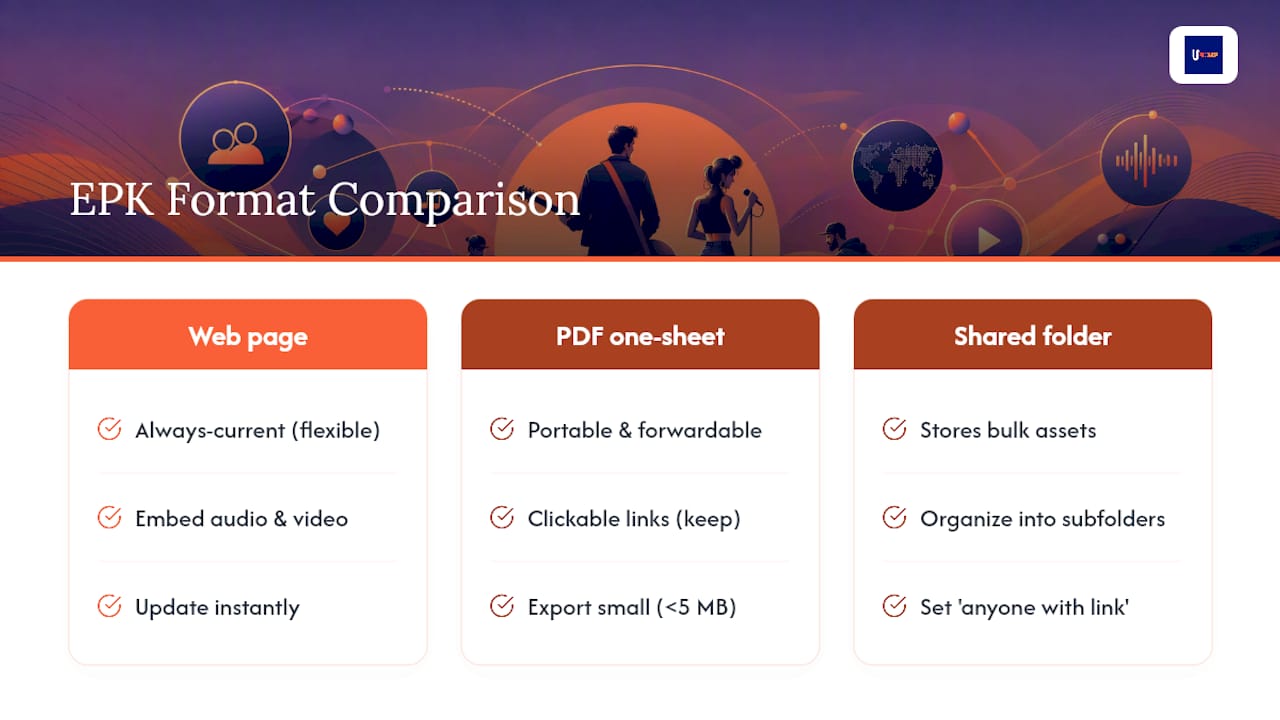
A web press page wins on flexibility. You can embed audio and video directly, update it the moment a new press quote lands, and never worry about file size. It’s the always-current option, which matters more than most artists realize since a stale EPK reads as an inactive artist.
A PDF one-sheet wins on portability. Bookers forward PDFs internally without a second thought, and a well-built one-sheet doubles as a leave-behind after an in-person meeting. Export it small (aim under 5MB) and keep every link clickable, not just pasted as plain text.
A shared folder (Google Drive or Dropbox) works for bulkier press kits with multiple photo sets or stems, but only if permissions are set to “anyone with the link can view” and the folder is organized into clearly named subfolders, not a dump of 40 unlabeled files.
Add smart links wherever you’re pointing someone toward streaming, since they consolidate every platform into one URL and let you track click data. Whatever you choose, test it in a private browser window and on a phone before it goes anywhere near an outreach email.
How to Build Your EPK in One Afternoon
You don’t need a designer or a week of tinkering. Follow this order and you’ll have a tested, sendable EPK by dinner.
- Write your one-sentence pitch. Genre plus hook plus current release. “Bedroom pop with jazz chords, new EP out in March” beats a paragraph nobody reads first.
- Draft your short bio. Around 100 words, built directly from the pitch sentence above.
- Choose your featured track. Pick one song, not your whole discography. Prepare a labeled streaming link and, if needed, a separate private download link.
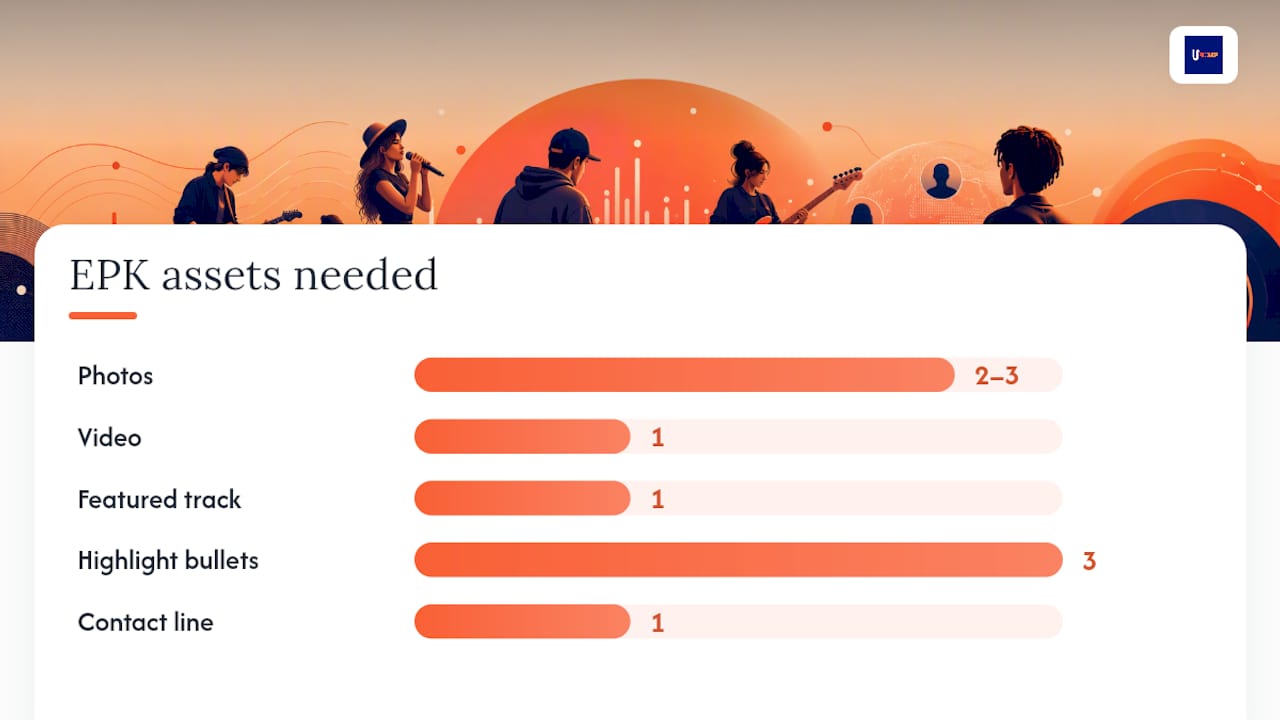
- Gather 2 to 3 photos and one video. Portrait, landscape, and one live or video-content link. Credit the photographer in the caption.
- Build the one-sheet PDF. Pitch, short bio, photo, featured track link, three highlight bullets, contact line, one page only.
- Publish a web press page or organized folder. This becomes your always-current home base, with the one-sheet as the downloadable companion.
- Test everything in a private browser window and on mobile. Click every link. Fix anything that 404s or asks for a password you forgot to share.
- Draft your outreach email and a follow-up plan. One clear ask, one link, and a note in your calendar to follow up in seven to ten days if you hear nothing back.
Pro Tip: Draft the outreach email before you finish the EPK, not after. Writing the pitch first forces you to figure out what the EPK actually needs to prove, which keeps you from padding it with things nobody asked for.
The whole build takes one focused afternoon if you already have decent photos and a mixed track ready. If you’re missing assets, that’s your actual bottleneck, not the EPK itself.
Tailoring Your EPK for Booking, Press, Playlists, and Sync
One EPK, four audiences, four different emphases. Sending the same version to a booking agent and a sync licensor wastes both their time.
- Booking agents want live footage front and center, a technical rider if you have one, and your three most recent gig dates with set length noted.
- Press and blog editors want the full long bio, your strongest recent quote, and one standout video, not a wall of links.
- Playlist curators want streaming numbers, your featured single loaded and ready to click, and a short bio they can skim in fifteen seconds. If you’re actively pitching playlists, lead with the data.
- Sync agents and licensors want a clear rights contact, instrumental or stem versions of your tracks, and basic publishing details up front.
Keep one master version with everything, then trim a lighter copy for each recipient type before you hit send.
Keeping Your EPK Current: A Simple Maintenance Routine
An EPK that looked great in January can quietly rot by June. Broken links and outdated press signal inactivity to anyone reviewing it, which is the opposite of the impression you’re going for.
Set a weekly five-minute check on your active links, especially private streaming links that expire or get repassworded. Do a fuller monthly review: swap in your latest press quote, retire achievements that no longer matter, and confirm your featured track is still the one you want leading.
Archive old one-sheets by year instead of deleting them, since you’ll want the history later. Refresh photos at least once a year or after any noticeable style shift. Before any send, run a 60-second checklist: links click, bio matches your current release, contact info is right, and the featured track is the one you meant to feature.
A Copy-Ready One-Sheet Template You Can Use Today
Your one-sheet needs exactly six elements, no more. Overbuilding it defeats the point of a one-page leave-behind.
- One-sentence pitch (genre plus hook plus current release)
- Short bio (~100 words)
- Featured track with a clearly labeled link (“Track Name — clean — Spotify”)
- Two photo thumbnails (portrait and landscape)
- Three bullets of highlights (biggest gig, best press quote, notable placement or award)
- Contact line (name, role, email)
Name the file ArtistName-OneSheet-2026.pdf, keep the export under 5MB, and make sure every link is clickable text, not a screenshot of a link.
| Element | Use PDF | Use Link/Web Page |
|---|---|---|
| Quick email attachment for a booker | Yes | No |
| Always-current, embeddable audio/video | No | Yes |
| In-person leave-behind after a meeting | Yes | No |
| Ongoing press page you update monthly | No | Yes |
How an Artist OS Simplifies EPK Assembly
Most of the friction in building an EPK isn’t creative, it’s logistical: hunting down the right photo file, remembering which streaming link is clean versus explicit, or realizing a link broke three campaigns ago. An integrated platform removes that friction by keeping your assets, links, and outreach in one workspace instead of scattered across five apps.
An integrated platform can help you generate and organize the photo and video assets your EPK needs, while smart links stay live and testable without manual link-checking. AI tools can flag which track is actually performing best right now, so your “featured track” choice is based on real data, not guesswork. The workflow becomes: collect assets, export your one-sheet, publish your share link, then hand that same link straight into a campaign.
Best Practices for EPK Design and Layout
A cluttered EPK loses reviewers in the first ten seconds. The best-performing kits follow a strict visual hierarchy: pitch and hero image at the top, bio and featured track next, then supporting material (photos, credits, press quotes) below the fold.
White space matters more than most artists expect. A one-sheet crammed edge to edge with text reads as amateur, while one with generous margins and a clear font hierarchy reads as intentional. Stick to two fonts maximum, one for headers and one for body text, and keep body copy left-aligned since centered paragraphs are harder to scan.
Color should reinforce your artist branding, not distract from it. If you’ve already established a visual identity through your artist branding work, carry those exact colors and fonts into the EPK rather than inventing a new palette for it.
On a web press page, put your embedded player and video above the fold, before any bio text. Reviewers want proof of sound before proof of story. On a PDF one-sheet, that same logic applies: your featured track link should be visible without scrolling. Mobile responsiveness isn’t optional either. If your web EPK doesn’t resize cleanly on a phone screen, you’ve lost a chunk of reviewers who click links from their inbox on the subway.
Writing Bios and Press Quotes That Actually Get Read
Your short bio has one job: survive being copy-pasted directly into someone else’s write-up with zero edits. That means no inside jokes, no vague mood language like “genre-bending soundscapes,” and no burying your genre three sentences deep. Lead with what you sound like and who you sound like it for.
A useful structure for the 100-word version: sentence one states genre and hook, sentence two states your current release and why it matters now, sentence three drops one concrete, verifiable fact (a placement, a milestone gig, a real number). Skip adjectives that could apply to any artist, like “passionate” or “unique.” Specificity is what makes an editor trust the rest of the kit.
The long bio (300 to 400 words) has more room for narrative, but it still needs a spine: where you came from, what you make now, and why this particular project matters. Resist the urge to list every gig you’ve ever played. Curators and editors skim for relevance, not completeness.
Press quotes work the same way. A quote that says “great music” is dead weight. A quote that says something specific, like a comparison to a known sound or a reaction to a specific track, earns its place. If you don’t have press yet, a strong quote from a respected local radio programmer or blog carries real weight, and understanding what programmers actually look for can help you pitch for that first quote in the first place.
Choosing and Sequencing Your Music and Video
Pick one lead track, not three. An EPK stuffed with your entire back catalog signals indecision, and reviewers rarely listen past the first thirty seconds anyway. Choose the song that best represents your current sound and current release, even if it’s not your personal favorite.
Sequencing matters if you do include more than one track. Lead with your strongest, most immediate song first, then follow with something that shows range, like a different tempo or mood. Never bury your best material third or fourth, because most reviewers won’t get there.
For video, one live performance clip or one music video is enough. If you have both, choose based on the recipient: bookers want to see you perform live, press and playlist curators generally respond better to a produced music video. Keep clips under three minutes when possible, and trim live footage to the strongest section rather than uploading a full unedited set.
Always separate streaming links from private or unreleased material, and label both clearly. A reviewer who clicks a link expecting your radio edit and instead gets an unmastered demo will lose trust in the whole kit fast.
Photography and Video Quality Standards Worth Following
Your photos and video are doing more work than most artists give them credit for. A blurry, poorly lit phone photo undercuts a strong bio instantly, because reviewers judge professionalism visually before they read a single word.
Aim for at least one high-resolution portrait shot and one landscape shot, both properly lit and in focus, ideally shot by someone other than yourself. Credit the photographer by name in the caption. Even a single, well-composed session with a local photographer beats a dozen inconsistent phone shots.
For video, resolution matters less than stability and audio clarity. A shaky, poorly mixed phone recording of a live set undermines the performance itself, even if the performance was strong. If you’re working with limited resources, prioritize clean audio over cinematic visuals. A tool like UpNComer’s UrStudio can help you get a rough mix or master sounding presentable before you attach a track to your EPK.
Consistency across your photos and video matters too. If your live shot has warm, golden lighting and your portrait is cold and clinical, the kit feels disjointed. Match tone and color grading across everything you include.
Including Social Proof Without Overselling It
Notable achievements, awards, and past gigs are the fastest way to build instant credibility, but only if they’re specific and verifiable. “Played several great shows” means nothing. “Opened for [Artist] at [Venue], 400 capacity” means everything, because it’s checkable and concrete.
List your three strongest data points, not fifteen mediocre ones. A booker skimming your EPK wants proof you can draw a crowd or hold a stage, not a complete performance history. If you’ve placed in a sync licensing deal, had a track added to an editorial playlist, or won a regional award, those go near the top of your highlights.
Streaming numbers count as social proof too, especially for playlist curators. If a track has meaningfully outperformed your average, mention the number specifically rather than a vague “doing well.” If you don’t yet have standout numbers, skip the metric entirely rather than including a weak one that undercuts your pitch.
Order your highlights by relevance to the recipient, not chronologically. A sync agent cares about a past licensing placement far more than a hometown headline show, even if the show happened more recently.
Integrating Social Media and Analytics Into a Digital EPK
Your web EPK should link out to your primary social platforms, but resist turning it into a directory of every account you’ve ever created. Two or three active platforms, linked clearly, beats six accounts where half haven’t posted in months.
If you’re tracking streaming analytics, a short, specific data point (a strong monthly listener count, a playlist add, a notable geographic spread) adds real weight for playlist curators specifically. Keep it current, since a six-month-old number reads as evidence you’ve stalled rather than evidence you’re growing.
Smart links deserve a place here too. Instead of listing five separate streaming platform links, a single smart link consolidates them and gives you click data you can actually use for future campaigns. That same link can double as your call-to-action across social bios, not just inside the EPK itself.
If you’re building toward a specific campaign, like a release rollout, your EPK’s social and streaming links should stay aligned with whatever push is currently live, rather than pointing at an old single from two projects ago.
What Actually Happens After You Send It
Do the work right, and here’s the honest outcome: a strong EPK paired with real, targeted outreach gets you faster replies and fewer wasted follow-ups, not guaranteed bookings or guaranteed coverage. EPKs remain genuinely effective when the music is strong and the pitching is proactive; they don’t fix either problem on their own.
The most underrated benefit isn’t the kit itself. It’s the process of building it, since forcing yourself to write a 100 word bio and pick one featured track makes you clarify your own brand faster than almost any other exercise. If you can’t summarize your sound in one sentence for your EPK, that’s worth fixing before you worry about who’s opening it.
— Karan
Let UpNComer Handle the Busywork Behind Your EPK
UpNComer is the alternative to juggling five separate apps for your EPK assets. Instead of hunting for the right photo file, checking which streaming link is clean versus explicit, and manually retesting URLs before every campaign, you manage assets, smart links, and outreach in one workspace.
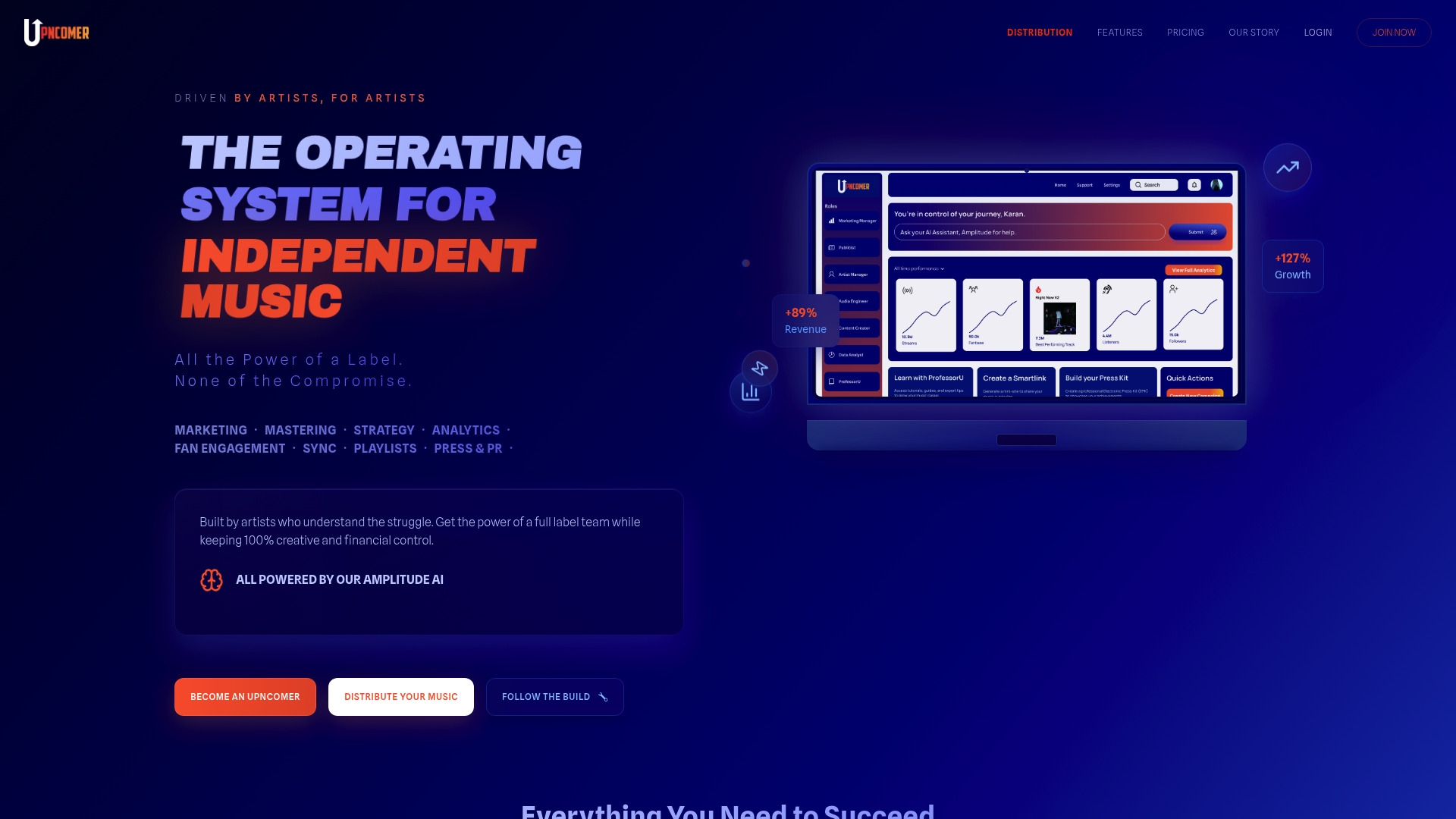
Content Creator helps you generate and organize the visuals your EPK needs. Distribution builds smart links that stay live and trackable, so you’re not fielding “this link is broken” emails from a booker mid-campaign. Amplitude AI flags which track is actually your strongest performer right now, so your featured song choice comes from real data instead of a guess. Once your EPK link is built, feed it straight into a Growth Engine campaign and keep momentum going instead of starting from scratch every time.
Check out UpNComer’s distribution tools to see how smart links and asset management work together, and start building an EPK that stays current without the manual upkeep.
Sources
- How to Create an Electronic Press Kit in 2026 (EPK Guide)
- Why every indie artist needs an EPK (Sonicbids blog)
- MusicNSW — How to Build an Electronic Press Kit (EPK)
- Why an Electronic Press Kit matters (Apple Music for Artists)
- How to Build Your First Electronic Press Kit (EPK)
FAQ
What Is an EPK in Music?
An EPK, or electronic press kit, is a digital package containing your bio, music, photos, video, and contact info, built to help bookers, press, playlist curators, and sync agents quickly evaluate you as an artist.
How Do I Make an EPK for My Music?
Start with a one-page one-sheet (pitch, short bio, featured track, photo, three highlights, contact line), then build a fuller web press page once you have time, and always test every link before sending.
What’s the Best EPK Setup for Independent Musicians?
The strongest setup pairs a downloadable one-sheet PDF with a dedicated web press page, since the one-sheet is easy to forward and the web page always stays current with embedded audio and video. A platform can help manage both in one place alongside your smart links.
Are EPKs Still Relevant for Artists in 2026?
Yes. EPKs remain effective when paired with strong music and targeted outreach; they’re a support tool that removes friction from a pitch, not a substitute for good songs or proactive networking.