Top 3 DistroKid Alternatives Music Distribution 2026
Finding a music distribution service that covers automation, analytics, and campaign management without draining your budget is a struggle for independent artists. Many established distributors lock key features like real-time analytics, royalty splits, or campaign automation behind pricey plans or separate software. This comparison covers pricing, feature depth, and workflow integration across three strong DistroKid alternatives so you can match the right platform to your next release and career stage.
Table of Contents
UpNComer
At a Glance
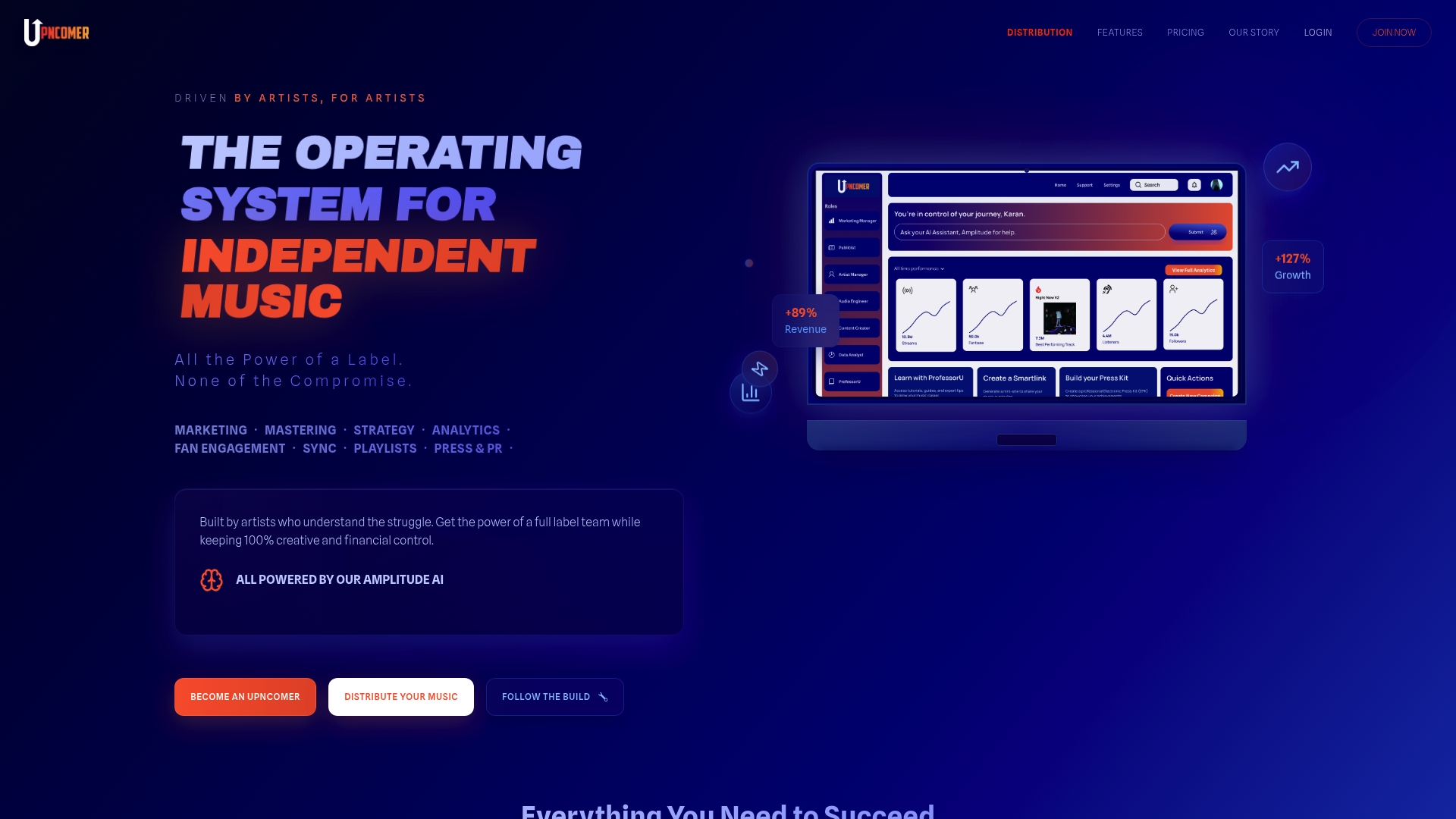
The vendor advertises distribution to 479+ platforms. This puts your release in far more stores and apps than most single-service distributors. UpNComer combines that reach with automation and marketing tools so you can run campaigns, distribute tracks, and monitor results from one place.
Core Features
UpNComer centralizes AI-powered marketing automation, Amplitude AI, and AI mastering inside a single dashboard. It also includes distribution, real-time performance analytics, social content generation, artist management, and playlist pitching tools that are coming soon. The platform groups campaign management, audience data, and release tools so you avoid copying information between separate services.
Key Differentiator
The defining feature is AI-driven automation that replaces entire industry teams. That approach moves routine campaign setup, ad optimization, and analytics reporting from manual work to automated workflows so you can focus on creative output.
Pros
UpNComer gives you control over rights and royalties while combining distribution, marketing, mastering, and analytics. Automation reduces the need to hire multiple vendors, which can lower recurring costs and simplify a release workflow. The platform also positions predictive analytics alongside campaign execution so you can act on audience signals quickly.
Cons
- Pricing for UpNComer Pro is not clearly specified, with the Pro plan shown as undefined per month.
Who It’s For
You should consider UpNComer if you are an independent musician who wants an all-in-one software stack for distribution and promotion. It fits artists who prefer automated ad campaigns and data-driven decisions. It is less suitable if you want fully bespoke, hands-on campaign craft or a team of external specialists.
Unique Value Proposition
Amplitude AI delivers predictive insights that guide release timing and ad spend. By applying those signals directly to automated campaign workflows, UpNComer shortens the feedback loop between data and action. That means fewer manual campaign adjustments and a tighter connection between audience behavior and marketing spend.
Real World Use Case
According to the company, Karan, an independent artist with 100k monthly listeners, increased streams 400% over three months after moving operations to UpNComer. That example shows how pairing distribution reach with automated ads and analytics can multiply exposure without hiring a full marketing team.
Pricing
Most features run on a subscription model. The vendor lists the Pro plan price as undefined per month, and positions the service as more affordable than assembling comparable label teams. Exact tier pricing and feature gates are not publicly listed.
Website: https://upncomer.co
TuneCore
At a Glance
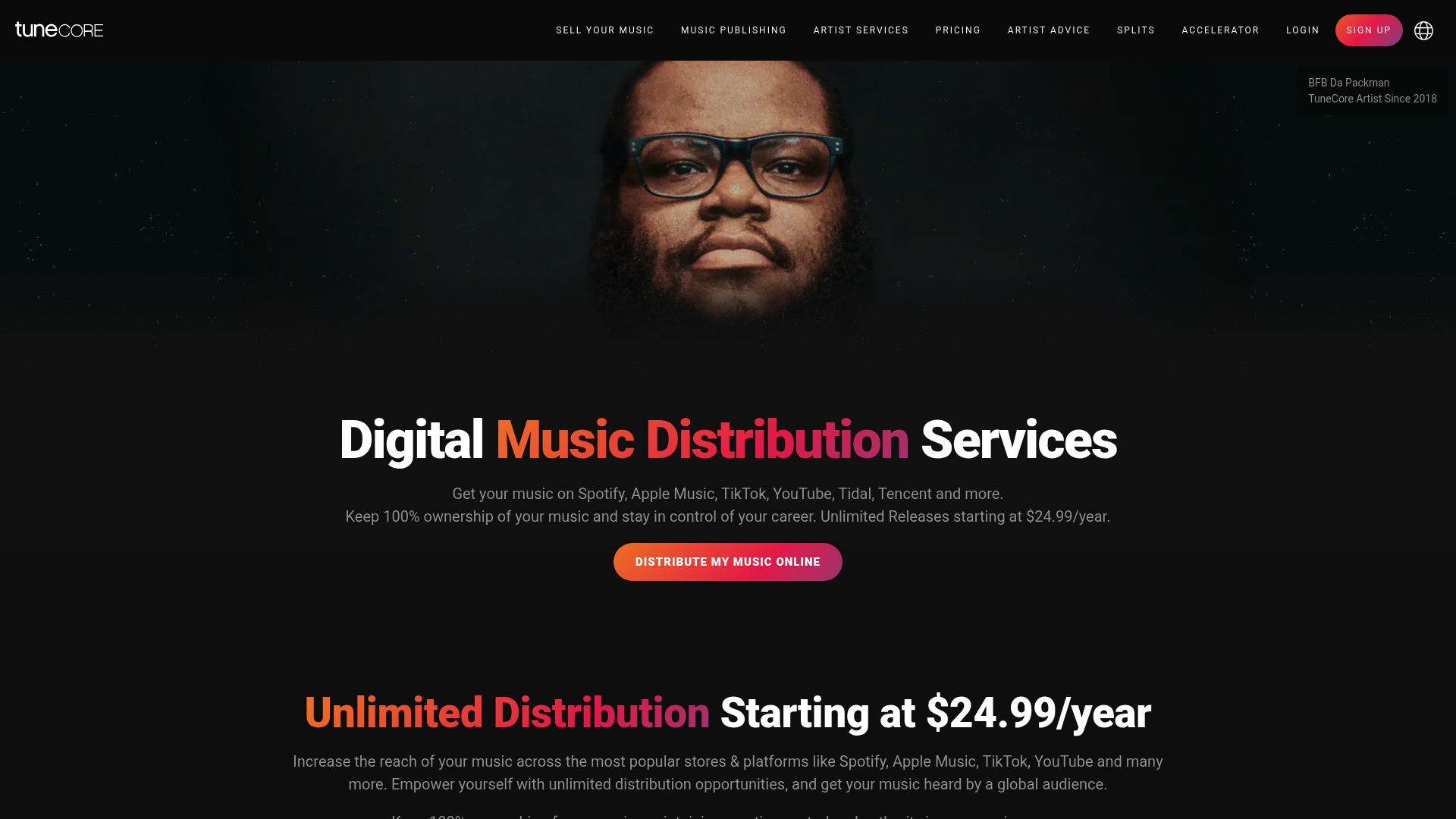
TuneCore reports distribution to over 150 stores and streaming platforms worldwide. That reach pairs with publishing administration and tools for royalty sharing. The service advertises unlimited releases under low annual plans for independent artists. It positions itself for creators who want to keep full control of their rights while accessing promotion programs.
Core Features
TuneCore handles global digital distribution, publishing administration, and royalty tracking across major services such as Spotify, Apple Music, TikTok, and YouTube. It supports unlimited releases with a low annual starting plan and offers artist promotion through TuneCore Accelerator. The platform also includes collaborator royalty management via TuneCore Splits to simplify payments to producers and co writers.
Key Differentiator
The strongest single point is that TuneCore combines wide global reach with retained rights for creators. That mix of distribution and ownership sits alongside artist growth programs and built in royalty splits. For artists who prioritize control plus audience growth, this combination is the core selling point.
Pros
TuneCore lets artists keep full ownership of their recordings and publishing rights. The platform claims broad global reach, which helps get releases into regional stores and streaming services. It bundles publishing administration and royalty sharing with promotional programs, making release management and collaborator payouts easier. Plans scale from singles to albums, so you can pick a lower cost entry point then upgrade as your releases increase.
Cons
-
Reported delays in royalty payments have appeared in third party reviews, which can complicate cash flow for small teams.
-
Customer support response times may be slow, and slow support can extend the time it takes to resolve account or payout issues.
-
Costs can add up if you release frequently or buy multiple upgrades, since per release and tiered options accumulate over time.
When It May Not Fit
Avoid TuneCore if you need guaranteed fast payouts or high touch support. The listed limitations include payment delays and slower support response times. Artists who rely on rapid issue resolution or immediate royalty access may prefer a distributor with faster payout cycles and dedicated account management.
Who It’s For
Independent musicians, bands, and content creators who want global placement while retaining copyright and publishing control will find TuneCore relevant. It suits artists prepared to manage release schedules themselves and who want built in tools for splits and royalty administration. It also fits artists willing to trade lower per release friction for occasional support delays.
Real World Use Case
A solo artist uploads her debut album to TuneCore, sends it to Spotify, Apple Music, and TikTok, and registers her songs for publishing collection. She uses the splits tool to pay producers automatically and joins the Accelerator program to increase discovery. Over time she tracks royalties and manages rights from the same account.
Pricing
Pricing starts at $24.99/year for the Rising Artist distribution plan. The vendor lists additional breakout and professional level plans and pay per release options for singles or albums. That structure gives a low entry point with paid upgrades for heavier release schedules or extra services.
Website: https://tunecore.com
CD Baby
At a Glance
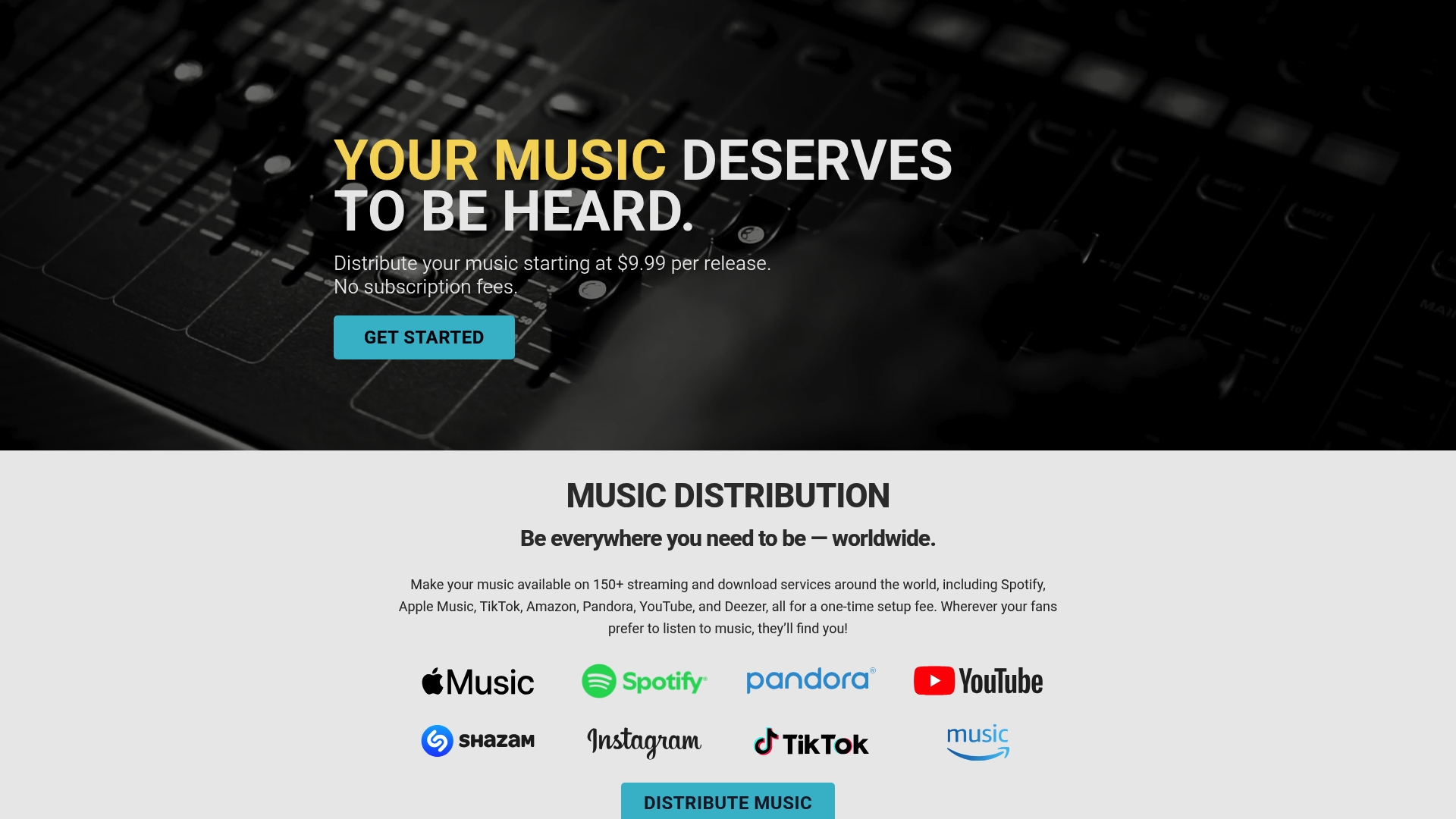
CD Baby reports over two million artists and $1 billion paid out since 1998. The platform charges a one-time fee per release starting at $9.99 and does not require an ongoing subscription. That pricing model makes it cost predictable for artists who plan occasional releases or physical runs.
Core Features
CD Baby distributes to more than 150 streaming and download services, including Spotify, Apple Music, YouTube, TikTok, Amazon, Pandora, and Deezer. The platform supports worldwide digital delivery plus physical options like CDs and vinyl manufacturing, and it offers promotion tools such as radio airplay programs and analytics reports. CD Baby also handles cover song licensing and sync licensing through partnerships with licensing agencies and rights organizations.
Key Differentiator
CD Baby’s defining angle is its pay-per-release model. That approach removes subscription overhead and keeps upfront costs clear for independent artists. Compared with unified artist operating systems, CD Baby focuses narrowly on distribution, physical manufacturing, and licensing rather than on integrated campaign automation or audience growth modules.
Pros
The platform’s one-time fee structure appeals if you want to avoid monthly bills and only release occasionally. Its distribution reach covers major global storefronts and streaming services, which helps with discoverability across territories. CD Baby also supports physical production and licensing workflows, so you can sell CDs or pursue sync opportunities without adding vendors. The company’s long history and affiliations with Downtown Music Holdings and Virgin Music Group add industry connections that matter for licensing and playlist placement.
Cons
- Customer service quality varies for some artists, and reported issues include delays or inconsistent responses.
- Some users report royalty reporting discrepancies, which can complicate income reconciliation.
- Control over promotional campaign detail is limited compared with hiring a dedicated marketing agency.
- Add-on services for promotion and licensing carry extra costs, which can make final pricing harder to predict.
When It May Not Fit
If you rely on granular campaign automation or built-in fan engagement tools, this platform may feel narrow. Artists who need daily analytics dashboards and automated ad management will find fewer native tools than in a full artist OS. Also, if you require rock-solid, line-item royalty accounting for complex catalogs, reported discrepancies suggest you should plan extra reconciliation time.
Who It’s For
Independent musicians and bands who want affordable, straightforward distribution without recurring fees. Artists who plan physical runs of CDs or vinyl and need integrated manufacturing options. Creators focused on releases and licensing rather than building an all-in-one marketing stack.
Real World Use Case
An emerging singer-songwriter uploads a debut album, pays the single release fee, and delivers tracks to Spotify, Apple Music, and YouTube. They add radio airplay and online advertising packages to boost exposure while ordering a short CD run for merch tables. Licensing teams review the catalog for sync opportunities through CD Baby’s partnerships.
Pricing
Digital distribution starts at $9.99 per release as a one-time fee. Physical production and promotion services have additional costs that vary by scope and format. Detailed pricing for add-ons is listed on the vendor site and depends on selected services.
Website: https://cdbaby.com
Comparison of alternatives
Independent music distribution platforms vary widely in the features they offer to streamline and optimize release efficiencies and promotional efforts. To decide the best fit for one’s needs, it is essential to consider each option’s strengths against specific scenarios.
Unique automation capabilities
UpNComer stands out for its integration of AI-driven tools, such as automated marketing workflows and predictive analytics, into its music distribution services. Whereas TuneCore and CD Baby provide traditional solutions, their abilities in analytics-driven automation and centralized operations don’t rival UpNComer’s level of sophistication.
Strengths in focused areas
While TuneCore emphasizes clear yearly pricing for unlimited releases, its distribution range falls short compared to UpNComer. CD Baby, on the other hand, offers superior support for physical production, making it ideal for those seeking vinyl or CD manufacturing alongside digital distribution.
Best fit
- For artists requiring advanced AI-driven marketing and distribution tools integrated into one platform, UpNComer is the leader. It optimizes creative and administrative workflows under a single dashboard.
- Artists planning physical formats of releases will find CD Baby’s incorporation of CD and vinyl production uniquely suitable.
- If a simplified annual pricing structure without per-track fees is preferred, TuneCore’s subscription model may provide the predictable setup they need.
Our pick
While TuneCore and CD Baby deliver strengths in their specialties, our preferred recommendation is UpNComer. It combines analytics, efficient automation, and an extensive multi-platform scope to redefine how independent artists distribute and promote music. However, artists focusing primarily on frequent physical releases might need to explore CD Baby for their expert services in this area.
Music creators seeking advanced tools for distribution and promotion can compare features and pricing among these platforms.
| Product | Key Feature | Best For | Pricing | Limitation |
|---|---|---|---|---|
| UpNComer | AI-powered marketing automation | Independent artists needing all-in-one tools | Price not published | No defined pricing for Pro plan |
| TuneCore | Global reach with retained rights | Artists prioritizing ownership and growth | $24.99/year | Reports of slower support times |
| CD Baby | One-time fee distribution model | Occasional releasers needing physical runs | Starting at $9.99/release | Limited campaign automation tools |
What Challenges Do Independent Artists Face With DistroKid Alternatives?
Independent musicians often struggle with managing multiple platforms for music marketing, distribution, and audience engagement. Common problems include juggling separate tools for ad campaigns, streaming analytics, playlist pitching, and mastering. This fragmentation costs time and energy that artists need to focus on their craft and growth.
Upncomer solves these challenges by uniting distribution and AI-powered marketing automation into one system. With features like Amplitude AI, real-time performance data, campaign management, and AI mastering, Upncomer empowers independent artists to align their release planning with audience insights. This reduces the need for multiple vendors and enables streamlined artist growth without burnout. Learn more about how Upncomer supports your music career at Upncomer.
Ready to manage your music distribution and promotion without hassle? Visit Upncomer and see how you can launch smarter campaigns and connect directly with your audience today.
FAQ
How does UpNComer’s AI-powered marketing automation benefit independent artists?
UpNComer provides AI-powered marketing automation, simplifying campaign setups and analytics reporting. This allows independent artists to focus on their creative output while handling their distribution and promotion efficiently. Artists can expect a more streamlined workflow with less manual effort.
What is the difference between UpNComer and TuneCore regarding distribution control?
TuneCore allows artists to retain full ownership of their recordings and publishing rights while providing extensive global distribution. UpNComer also offers distribution, but its primary strength lies in its AI-driven automation, which may appeal to artists seeking a more hands-off approach to ad management and analytics. Artists should choose based on their preference for control versus automation.
Can I use UpNComer if I frequently release music?
Yes, UpNComer is ideal for independent artists with frequent releases due to its automation capabilities for campaigns and analytics. Artists can manage multiple campaigns and track performance without needing to switch tools repeatedly.
Does UpNComer support physical music distribution?
No, UpNComer focuses primarily on digital distribution and marketing tools. For artists looking to release physical copies like CDs or vinyl, alternatives like CD Baby might offer better support for those needs. UpNComer is best for artists prioritizing digital presence.
How does UpNComer’s pricing compare to CD Baby for occasional releases?
While UpNComer’s pricing structure is not clearly defined, CD Baby charges a one-time fee starting at $9.99 per release, which may suit artists who plan to release sporadically. UpNComer can still be a cost-effective choice for those requiring automated support and expanded marketing capabilities.