Top 5 Dittomusic.com Alternatives 2026

Getting music onto Spotify, Apple Music, TikTok, and dozens of platforms while keeping full control of royalties and artist rights feels needlessly tangled for independent artists. Most music distribution software either ties releases to recurring subscription fees, delays payouts, or makes it hard to bundle promotion and analytics without paying for multiple services. This comparison covers pricing, features, release control, and royalty handling across five music distribution platforms so you can match one to your release strategy and budget.
Table of Contents
UpNComer
At a Glance
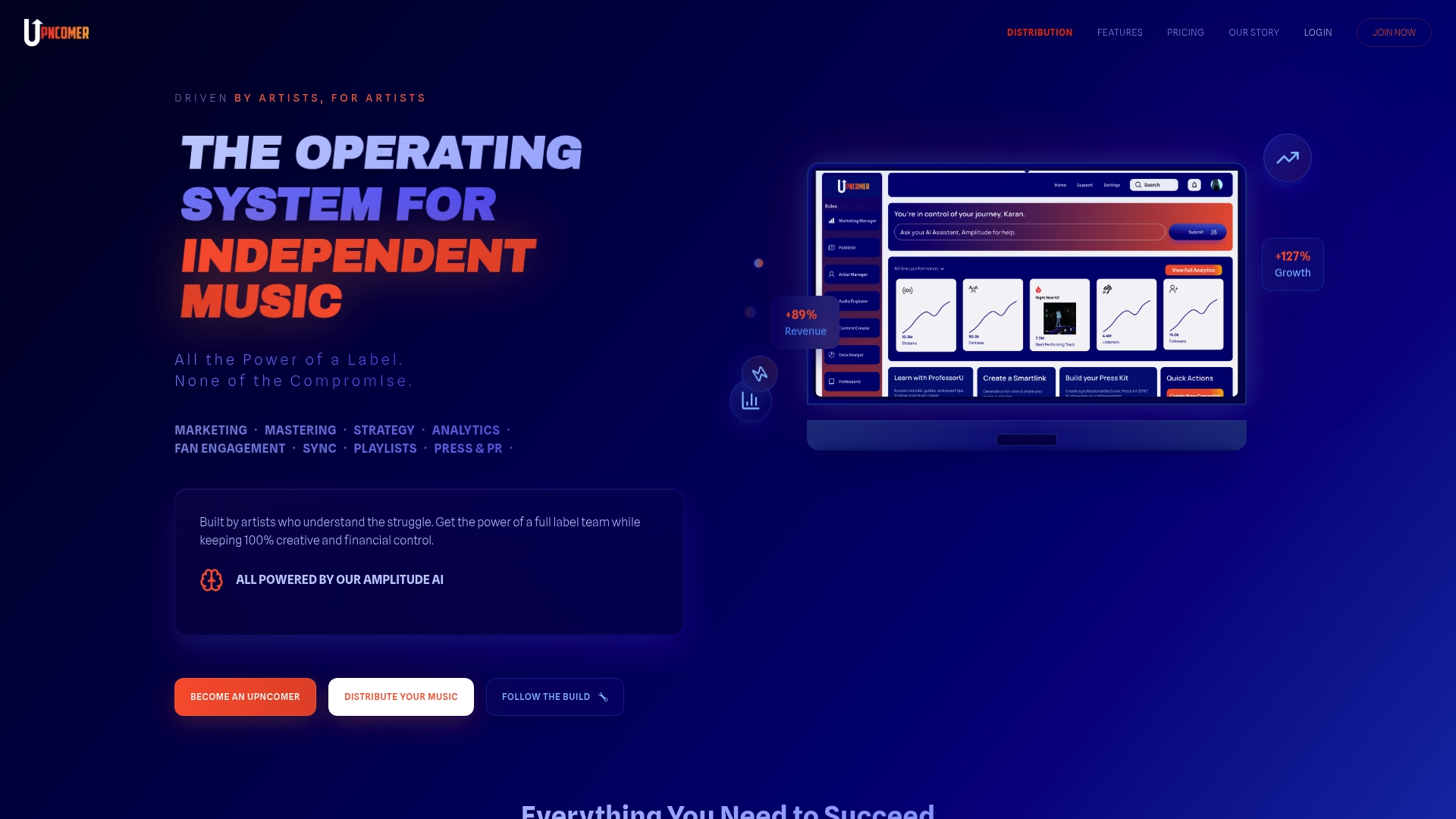
$27/month for UpNComer Pro replaces multiple industry subscriptions with a single AI-driven toolset aimed at independent musicians. The platform centralizes marketing, mastering, distribution, playlist pitching, analytics, and fan engagement inside one workspace.
Core Features
- Amplitude AI strategy engine that suggests campaign steps and timing.
- AI-powered marketing campaigns plus ad campaign management and playlist pitching automation.
- AI-driven mastering and audio optimization paired with real-time performance analytics.
- Fan engagement tools, smart links, release promotion, and educational modules through ProfessorU.
Key Differentiator
AI automation touches every stage of a release cycle. UpNComer replaces separate vendors for mastering, distribution, playlist pitching, campaign execution, and analytics by offering those modules in a single product, which changes how independent artists budget and operate.
Pros
- Affordable single subscription replaces a patchwork of tools and services, making monthly spend predictable and easier to manage.
- The integrated analytics and campaign tools let you tie promotion spend to streaming movement and audience signals rather than guessing which tactic worked.
- Built-in mastering and distribution remove transfer friction between services, so release timelines shorten and file handoffs stop being a bottleneck.
- ProfessorU and educational resources reduce guesswork for release strategy, giving DIY artists step-by-step guidance instead of scattered blog posts.
- Artist-first royalty and ownership model helps you keep rights and revenue while using automation to scale your reach.
Cons
- Some third-party reviews note that press and PR management features are still developing, so full-service publicity workflows may require external help for now.
Who It’s For
Solo artists, independent musicians, and DIY creators who want an integrated platform to run releases, ad campaigns, and analytics without hiring multiple vendors. Best for users comfortable with digital tools and willing to learn an AI-driven workflow.
Unique Value Proposition
At $27/month, the economics change: one predictable line item replaces several subscriptions and ad hoc agency retainers. That price point makes it feasible for artists to run repeated campaigns and experiments without monthly cost sprawl.
Real World Use Case
According to the vendor, an independent artist named Karan grew streams by 127% while managing marketing, mastering, and distribution inside the platform. That case illustrates how automation plus realtime analytics can concentrate promotional effort and shorten iteration cycles.
Pricing
UpNComer advertises a single Pro plan at $27/month that bundles distribution, marketing automation, AI mastering, analytics, playlist pitching, fan engagement, and educational tools into one subscription.
Website: https://upncomer.co
DistroKid
At a Glance
Flat annual subscription covering unlimited uploads is DistroKid’s defining promise, designed for artists who release frequently. The platform pairs that model with notably fast release times and a simple interface, but artists must keep the subscription active to keep releases live.
Core Features
DistroKid focuses on rapid, low-cost distribution and straightforward release management for independent artists.
- Unlimited music uploads for a single recurring fee
- Fast delivery to major streaming platforms
- A user-friendly release flow that minimizes setup time
- Cost-effective subscription model for frequent releases
Key Differentiator
The single biggest practical difference is the flat annual subscription that allows unlimited uploads, a mechanic that lowers marginal costs for artists releasing singles or EPs monthly. That price structure shifts decision-making from per-release budgeting to cadence planning.
Pros
-
Fast releases reduce wait time between upload and platform availability, which helps when you run monthly single schedules.
-
The platform is simple enough that you can complete a release in minutes once you have masters and metadata ready.
-
The subscription model is cost-effective for artists who put out lots of material, since you pay once rather than per release.
-
DistroKid distributes to multiple major services simultaneously, so you avoid submitting to each store individually.
Cons
-
Many users report slow or unresponsive customer support, which becomes painful when you need a quick correction or metadata change.
-
The vendor’s process can result in sudden, unexplained takedowns of tracks according to user reports, a risk if you depend on continuous availability.
-
Music can be removed if you cancel or let the subscription lapse. That requirement ties availability directly to an active account.
-
Some users have reported difficulties with payouts and payment flows, which creates friction for artists counting on timely income.
When It May Not Fit
If you plan to keep a back catalog permanently without recurring fees, this model is a poor match because releases depend on an active subscription. If responsive support and dispute handling matter to you, reported support limits make DistroKid a risky primary distributor.
Who It’s For
Independent musicians who release often and need a low-cost, no-friction way to get tracks onto streaming platforms. This works best for solo artists and DIY labels that can tolerate occasional platform support delays.
Real World Use Case
A solo indie artist publishes a new single every four weeks, using DistroKid to push each release to major stores quickly. The flat subscription keeps distribution cost predictable and lets the artist focus on promotion rather than per-release fees.
Pricing
DistroKid uses a flat recurring subscription that covers unlimited uploads and distribution. Specific price points are not provided in the source material, and artists should plan for an active subscription to keep releases live.
Website: https://distrokid.com
TuneCore
At a Glance
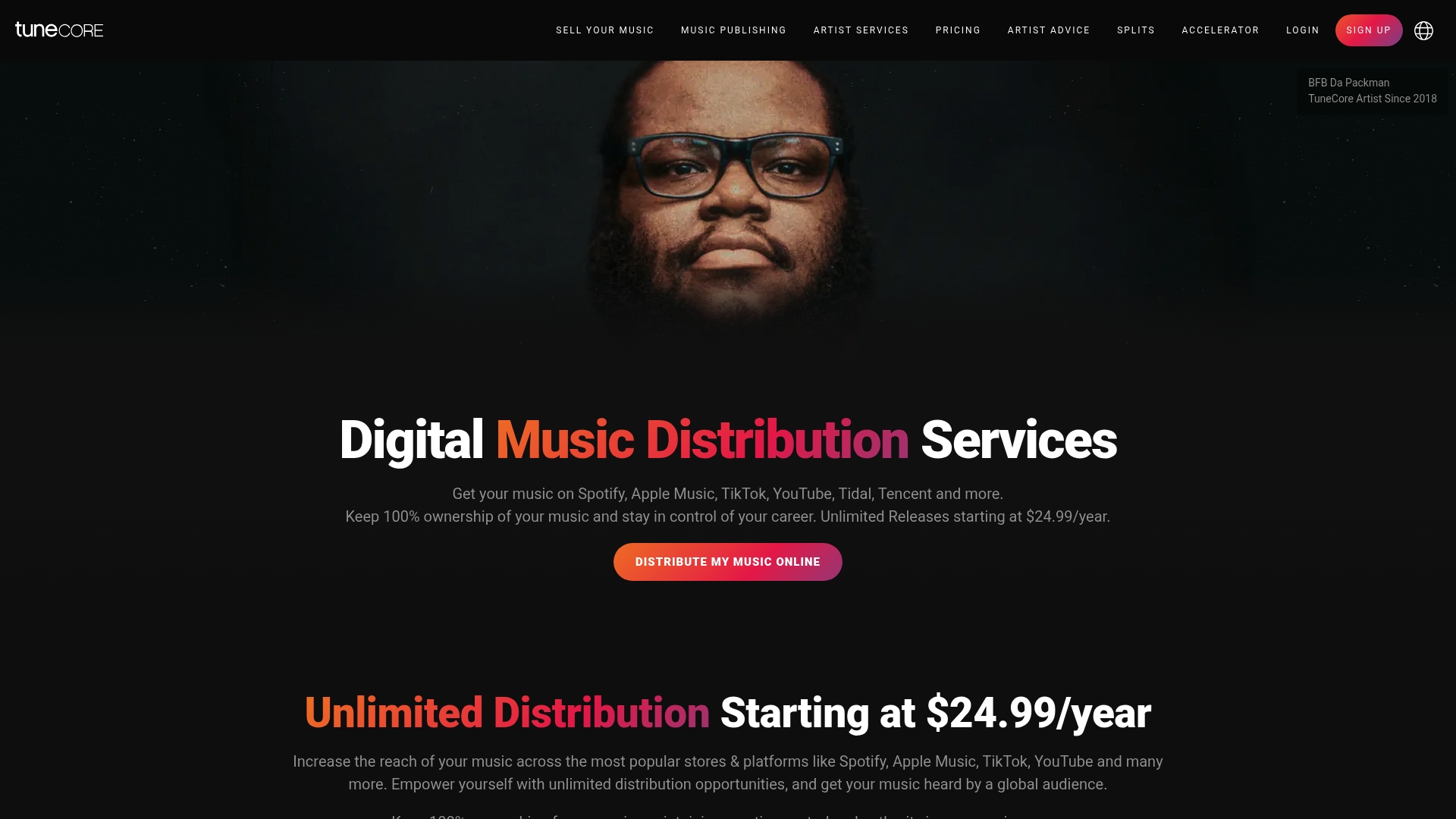
Unlimited releases start at $24.99 per year — a price point that lets you publish frequently without per-release hangups while keeping ownership of your masters and publishing rights. TuneCore combines distribution, publishing administration, and promotional tools aimed at indie artists.
Core Features
- Distributes to 150+ stores and platforms including Spotify, Apple Music, TikTok, YouTube, and Tidal.
- Offers Music publishing administration and royalty collection to capture songwriter and publishing income.
- Includes Performance analytics and detailed sales and streaming reports for tracking revenue by territory.
- Cover art creation tools, customizable release settings, artist growth programs, and optional advance funding based on projected royalties.
Key Differentiator
The real hook is the unlimited release model combined with retention of rights. For artists who release frequently, that single plan removes per-release friction and preserves control over masters and publishing. That setup appeals to creators who treat releases as continual engagement rather than occasional events.
Pros
-
User-friendly interface. The upload and metadata flow is straightforward, which reduces the time between finishing a track and going live.
-
Professional distribution reach. You can push releases to major platforms and niche storefronts without negotiating individual deals.
-
Retains full ownership. You keep 100 percent of your masters and publishing rights while using their distribution and collection services.
-
Revenue and reporting tools. Detailed sales and streaming breakdowns help you reconcile statements and make data-driven release plans.
-
Extra services available. Cover art, promotional programs, and advance funding add practical options for artists who want one vendor for multiple release tasks.
Cons
-
Slow support response. Customer support responsiveness is often reported as poor, which can be disruptive when a release needs urgent fixes.
-
Complex release review. The platform’s review and approval flow can feel bureaucratic for time-sensitive drops and tight marketing schedules.
-
Account and fund holds. There are instances of accounts or payouts being frozen, which creates risk for artists relying on timely income.
-
Difficult cancellation and dispute processes. Resolving account issues can require persistence and long waits.
When It May Not Fit
If you need hands-on, rapid-response support for high-stakes release windows, TuneCore’s reported support delays can be a deal breaker. Teams that need white-glove label-style account management or guaranteed payout timing may find the platform frustrating.
Who It’s For
Solo artists, small bands, and independent labels that want to publish often and maintain ownership. It fits creators who value access to many storefronts and in-platform publishing administration more than concierge-level account service.
Real World Use Case
An independent artist schedules monthly singles and a quarterly EP. They upload masters, add metadata and artwork, collect publishing royalties, and monitor territory-by-territory revenue. The low cost per year removes friction for frequent releases and simplifies reporting.
Pricing
Plans start at $24.99/year for unlimited releases. Additional fees apply for publishing administration and optional services like advance funding or bespoke promotional programs.
Website: https://tunecore.com
OFFstep
At a Glance
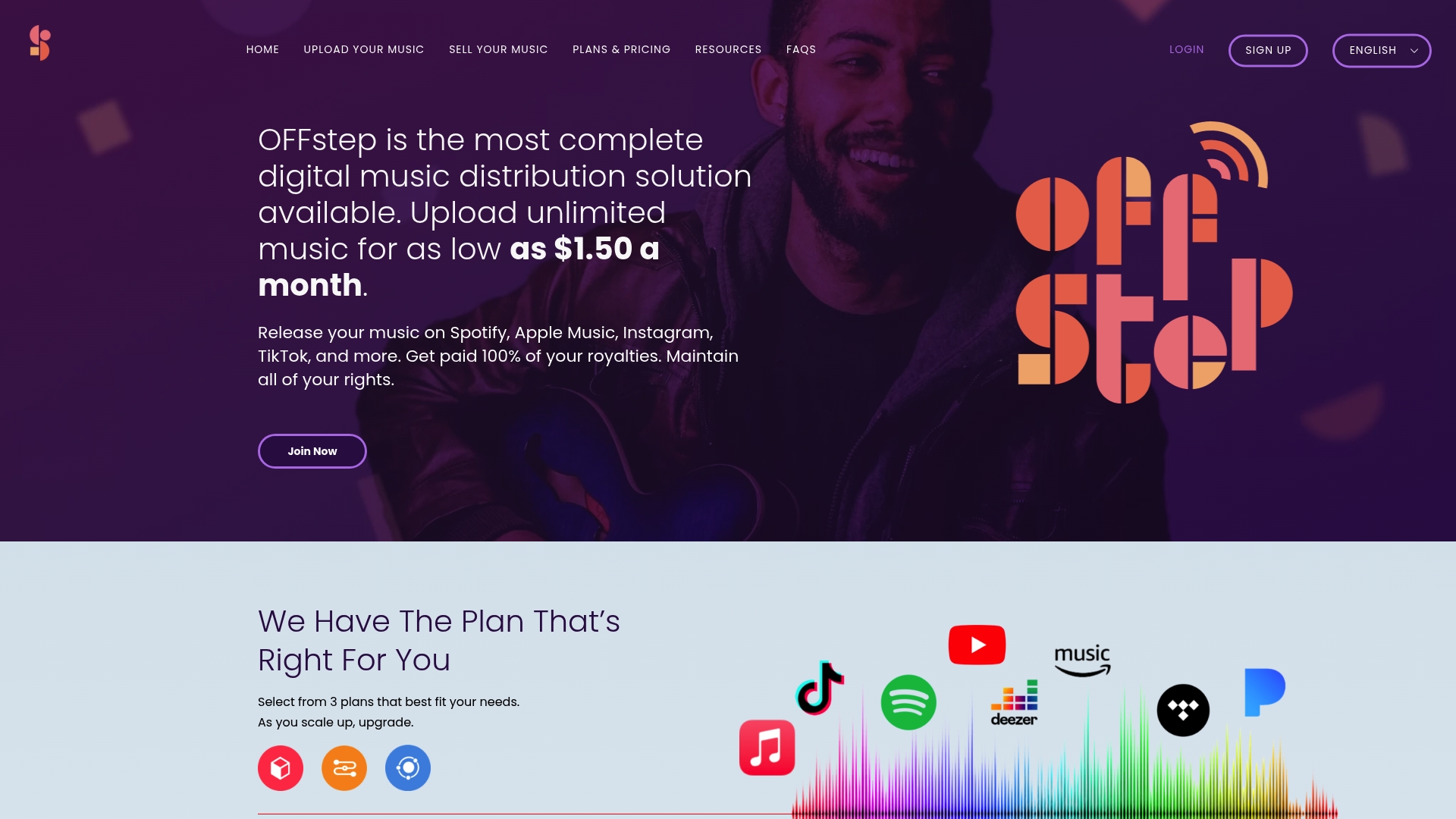
The vendor advertises distribution to over 45 platforms and states artists retain 100% of royalties in most cases. OFFstep also lists plans starting at $1.50 per month, positioning itself as an ultra-low-cost option for independent releases. That combination targets budget-conscious artists who still want video distribution and marketing tools.
Core Features
Unlimited audio and video distribution to major stores and social outlets. Release scheduling supports precise regional timing so you can target local market windows and playlist drops.
Includes real-time performance tracking and analytics, collaborator royalty splits and payout management, plus basic marketing tools for social sharing and campaign tracking.
Rights management tools help keep metadata and ownership clear when you add collaborators or splits to a release.
Key Differentiator
OFFstep’s marketing emphasizes low entry cost plus an integrated set of distribution and monetization tools. Where an operating system like UpNcomer bundles campaign orchestration, automated ads, and AI-driven growth guidance, OFFstep narrows its focus to cost effective distribution, royalty splits, and release timing for independent artists and small labels.
Pros
-
Easy upload flow and minimal setup make going from master to live store simple. That speed helps artists who release frequently and need low friction.
-
Very low starting price at the figure above lets solo artists experiment without a big upfront commitment; budget releases become practical rather than costly.
-
Built-in collaborator royalty shares remove manual bookkeeping when splitting revenue with producers or features, saving time and payment errors.
-
Video distribution alongside audio opens TikTok and YouTube Music opportunities without separate vendor relationships.
-
Real-time analytics give immediate feedback on performance so you can adjust promotion between releases.
Cons
-
Reported slow or unresponsive customer support. Slow responses can be costly during takedown disputes or metadata corrections.
-
Users have described intermittent bugs around track clearance and platform performance, creating occasional delivery delays.
-
Subscription management and cancellations are reported as confusing for some users, which can complicate refunds or plan changes.
When It May Not Fit
If you run a mid to large label that needs enterprise reporting, multi-user permissioning, or SLA-backed support, OFFstep will feel limited. The vendor’s support responsiveness issues above make it a poor choice for time-sensitive release schedules that require fast escalation.
Who It’s For
Solo musicians, producers, and small labels that prioritize low cost and simple royalty splits. Ideal when you want straightforward distribution, video support, and basic marketing analytics without hiring a distributor or agency.
Real World Use Case
An emerging artist drops singles on Spotify, Apple Music, and TikTok using OFFstep to schedule precise release times across markets. They set collaborator splits for the producer, distribute the promo video, and use the platform’s analytics to plan the next single’s push.
Pricing
Plans start at the advertised $1.50 per month, with higher tiers up to an annual option near $96 per year for added features. Pricing makes it feasible to keep a back catalog live while testing singles and videos on a tight budget.
Website: https://offstep.com
Unchained Music
At a Glance
The vendor advertises distribution to 220+ streaming platforms while artists retain 100% of their royalties, a rare combo for budget-conscious independents. The platform pairs DIY tools with human review and bespoke label services to reduce low-quality uploads and fraud.
Core Features
- Unlimited digital distribution across that 220+ figure, covering Spotify, Apple Music, TikTok, and niche storefronts.
- Artist and label services including catalog management, radio campaign support, and vinyl pressing coordination.
- Royalty management with transparent statements, split handling, and YouTube Content ID support.
- Marketing toolkit with playlist pitching, AI mastering, advertising support, and Dolby Atmos delivery.
Key Differentiator
Unchained Music operates a strict review gate that gives some proven artists access to verified free accounts, which the vendor says cuts down on fraud and low-quality uploads. That manual screening alongside automated checks targets quality control rather than purely algorithmic onboarding.
Pros
- Free accounts for verified artists lower the financial barrier to distribution and reward prior industry traction.
- The combination of wide distribution and the royalties claim above is attractive for artists who want broad reach without revenue splits.
- Transparent financial statements and split management make accounting simpler when you work with collaborators or small labels.
- Human review plus AI tools reduces common auto-flag problems and improves metadata quality compared with pure-AI pipelines.
- Offers physical support like vinyl pressing and radio campaigns, useful if you want both digital and tangible release strategies.
Cons
- Support response times are inconsistent, and ticket backlogs have produced slow turnarounds for some users.
- Users report distribution delays and pending review holdups that can push release dates beyond planned schedules.
- The platform’s AI filters have flagged original music as AI-generated for a subset of artists, creating extra steps to clear releases.
When It May Not Fit
If you run tight, time-sensitive release schedules or need same-week delivery to playlists and stores, the reported distribution bottlenecks make Unchained risky. Also, artists experimenting with novel vocal processing or generative techniques may hit AI-flagging friction.
Who It’s For
Independent musicians, emerging artists, and small labels that value control over splits and broad platform reach. Good choice if you prefer a mix of DIY tools and human oversight and if keeping full revenue from streams matters to you.
Real World Use Case
An indie electronic artist uses Unchained Music to push singles to multiple platforms, run playlist pitching, and apply AI mastering before release. They manage splits, track transparent statements, and arrange a small vinyl run without handing away royalties.
Pricing
Free accounts are available, and optional paid plans start at $1.66 per month billed annually for basic growth features and $2.91 per month billed annually for pro features. Verified free distribution remains an advertised pathway for qualified artists.
Website: https://unchainedmusic.io
Leading Music Distribution Software Comparison
Choosing the right platform for music distribution involves considering various factors, including cost, available features, and alignment with your creative and promotional goals. Here, we compare five notable platforms for independent musicians.
Cost and Subscription Models
UpNComer stands out with its flat subscription model at $27/month, integrating multiple services like mastering, distribution, and promotional tools. This predictable pricing structure contrasts with OFFstep, which offers a lower entry cost of $1.50/month but focuses on basic distribution services without advanced campaign features. DistroKid and TuneCore adopt subscription models suited for high content output; DistroKid’s unlimited uploads for a flat fee eliminate per-release costs, a clear advantage for frequent releases. Choosing between these depends on release cadence and the breadth of integrated tools needed.
Distribution and Rights Management
Unchained Music provides the most extensive distribution coverage, reaching 220+ platforms while ensuring artists retain 100% of royalties. This surpasses competitors like DistroKid and TuneCore in reach, further solidifying it as a contender for those prioritizing broader distribution. Additionally, it distinguishes itself through its transparent royalty management features, benefiting artists collaborating with others on projects. However, bottlenecks in its distribution process may disadvantage artists with time-sensitive releases.
Best Fit
- UpNComer: Best for independent musicians looking for an all-in-one platform combining multiple tools like distribution, mastering, and marketing at a competitive monthly cost.
- DistroKid: Ideal for frequent releases by independent artists or labels who need fast distribution and predictable costs without halting creative output over pricing concerns.
- Unchained Music: Suitable for musicians seeking the broadest distribution coverage with detailed rights and royalty management and who aren’t reliant on tight release schedules.
Our Pick
For independent musicians valuing an integrated approach, UpNComer represents a standout choice. Its inclusion of mastering, distribution, and promotion within a single platform enhances operational efficiency and creative decision-making. While competitors excel in specific domains, UpNComer’s unification of essential tools for $27/month makes it an excellent primary tool for most independent artists. However, those with high-volume release schedules might consider DistroKid for its unique cost structure for frequent uploads.
Music Distribution Software Comparison
For independent musicians and music marketers, selecting the right distribution platform depends on factors like cost, feature integration, and ease of use. The following table compares key options to help you decide.
| Product | Key Features | Pricing | Best For | Limitation |
|---|---|---|---|---|
| Upncomer | AI-driven mastering, analytics, and marketing | $27/month | Solo artists needing an all-in-one platform | Press and PR management features still developing |
| DistroKid | Unlimited uploads and fast distribution | Not disclosed | Artists releasing frequent singles or EPs | Releases removed if subscription lapses |
| TuneCore | 150+ stores, publishing admin, analytics | $24.99/year | Frequent release schedules with rights retention | Support responsiveness may delay time-sensitive releases |
| OFFstep | Video and audio distribution with analytics | $1.50/month | Budget-conscious musicians and video creators | Intermittent platform bugs and confusing subscription handling |
| Unchained Music | Wide platform reach, royalty management tools | $1.66/month | Artists valuing quality control and transparency | AI filters irregularly flag original music for some creators |
Discover a Smarter Alternative to Dittomusic.com for Independent Artists
Managing separate platforms for distribution, marketing, playlist pitching, and mastering can feel overwhelming when exploring dittomusic.com alternatives. UpNComer removes that frustration by combining all essential music growth tools into a single AI-powered ecosystem. With features like Amplitude AI strategy guidance, real-time streaming analytics, fan engagement, and automated campaign management, UpNComer is designed just for independent musicians who want to keep full creative control while scaling their careers effectively.
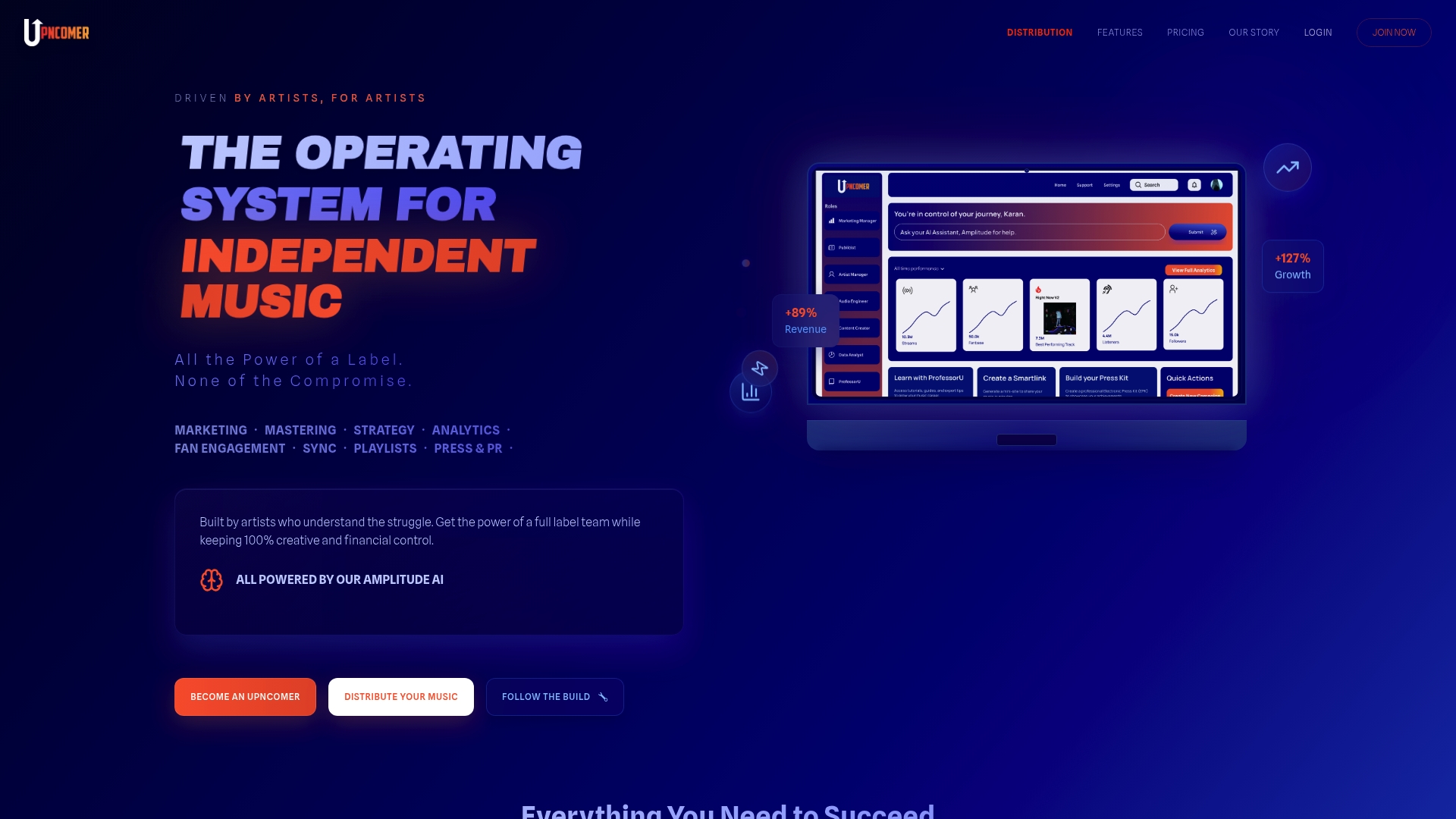
Stop juggling multiple services and start making data-driven decisions tailored for your unique release plans. Visit UpNComer today and use AI mastering, playlist pitching automation, and fan insights to launch your next release with confidence.
Frequently Asked Questions
What makes UpNComer ideal for independent musicians?
UpNComer offers a single subscription model for $27/month that consolidates multiple services needed by independent artists. This includes AI-driven mastering, distribution, marketing automation, and analytics, streamlining artist workflows and reducing overall costs. You can expect a more intuitive management of your music releases and marketing strategies, simplifying your process significantly.
How does UpNComer compare to DistroKid in terms of subscription model?
DistroKid features unlimited music uploads for a flat annual fee, which is advantageous for artists releasing frequently. In contrast, UpNComer charges a monthly fee that provides a comprehensive suite of tools including marketing and analytics, making it a better fit for musicians looking for integrated marketing solutions as well. Artists focused on campaign-driven releases may find UpNComer’s offerings to better suit their needs.
What features in UpNComer help with effective release planning?
UpNComer’s Amplitude AI strategy engine suggests marketing campaign steps and timing, providing tailored guidance for releases. This feature allows artists to make informed decisions while planning their promotions based on real-time data. Using this capability can significantly enhance the effectiveness of your music marketing efforts and improve audience engagement.
Can I keep my royalties if I switch to UpNComer?
Yes, UpNComer maintains an artist-first royalty model, ensuring you retain 100% of your rights and revenue while using their platform. This approach is crucial for independent artists focused on maximizing their income from releases. Knowing that your royalties are secure allows you to concentrate on your creative work without worrying about revenue loss.
What are the key educational resources available through UpNComer?
UpNComer’s ProfessorU offers educational modules designed to guide DIY artists through release strategies and music marketing. This resource helps users to navigate the complexities of promotion effectively. Engaging with these resources can enhance your understanding and execution of marketing tactics, driving better results for your releases.