CD Baby vs TuneCore vs UpNComer: Which Model Wins?
If you release music once or twice a year and never touch a spreadsheet, a one-time-fee distributor like CD Baby still makes sense. If you’re building a career, releasing constantly, and need your distribution, marketing, and royalty data talking to each other, the unified model behind UpNComer Pro is the stronger long-term play. The reason comes down to friction: separate tools for distribution, ad management, and analytics mean separate logins, separate data, and separate mistakes.
Here’s the trade-off in plain terms. CD Baby charges once and takes a permanent cut of your revenue, but the exact percentage is not stated here. TuneCore charges annually but usually keeps a larger share of royalties. UpNComer Pro folds distribution into a subscription that also runs your marketing, mastering, and audience data, so you’re not stitching together four different services by hand.
- Pick per-release (CD Baby model) if you release once a year and want it to live online forever without upkeep.
- Pick annual subscription (TuneCore model) if you release often and want to keep more of your streaming royalties.
- Pick unified AI platform (UpNComer Pro) if you want distribution plus growth tools in one place.
One number worth sitting with: CD Baby’s one-time model still takes roughly 9% of your distribution revenue indefinitely, which means a song that keeps earning for a decade keeps paying that commission for a decade, too.
Key Takeaways
The right distribution model depends on release frequency and administrative discipline, and a unified platform like UpNComer Pro removes the most friction for artists releasing regularly.
| Point | Details |
|---|---|
| Match model to cadence | Choose per-release for rare releases, subscription for frequent ones, unified for both plus marketing. |
| Permanent commissions compound | A 9% cut taken forever on a per-release model adds up as a song keeps earning for years. |
| Publishing admin is often missed money | Register with a PRO and the MLC, and use signed split sheets to collect mechanical and performance royalties. |
| AI policy clarity prevents takedowns | Document your creative process and read a platform’s AI terms before uploading AI-assisted work. |
| UpNComer Pro unifies the stack | Distribution runs on a 6% royalty split with no subscription fee, bundled with Amplitude AI, Growth Engine, and Data Analyst tools. |
Table of Contents
- CDBaby vs TuneCore vs UpNComer: The Three Distribution Models
- How Pricing and Royalty Splits Affect Your Long-Term Earnings
- Publishing Administration: The Money Most Artists Never Collect
- How AI Music Policies Differ Across Distributors
- How to Choose the Right Distribution Model for You
- Why UpNComer Pro Is Built to Remove the Trade-Offs
- Where Your Music Actually Reaches Listeners
- When and How Often You Actually Get Paid
- Marketing Tools and Integrations Beyond Distribution
- Getting Help When Something Goes Wrong
- Do You Need to Be Technical to Use These Platforms?
- Making Sure Your Files and Metadata Are Release-Ready
- What Independent Artists Get Wrong About This Comparison
- Get Distribution, Marketing, and Royalties in One Place
- Sources
- FAQ
CDBaby vs TuneCore vs UpNComer: The Three Distribution Models
Every distribution decision you make boils down to one of three underlying business models, no matter which logo is on the invoice. Understanding the model matters more than comparing brand names, because two services on the same model behave almost identically, while two services on different models can produce wildly different outcomes for the same catalog.
One-time fee, permanent commission
This is CD Baby’s approach: pay once per release, and the platform keeps a slice of what that release earns for as long as it’s live. There’s no annual bill to remember, no risk of your back catalog vanishing because a card expired. That permanence is the entire selling point.
The catch is compounding. A 9% cut taken forever on a song that streams steadily for years adds up to real money, and it never goes away no matter how long you’ve been a customer. This model rewards artists who release rarely and want to “set it and forget it.”
Annual subscription, near-full royalty retention
TuneCore and similar services flip the math: you pay a recurring fee (often per release, per year), but you typically keep close to 100% of your streaming royalties. Miss a renewal and your catalog can come down from stores, which is the risk nobody mentions until it happens to them.
This model rewards prolific artists. If you’re dropping singles every month, the annual cost per release shrinks fast, and margin retention compounds in your favor instead of the platform’s.
Unified AI-powered platform
The third model, which UpNComer Pro represents, treats distribution as one module inside a broader operating system rather than a standalone product. You get releases in stores, but the same subscription also runs ad campaigns through the Growth Engine, tracks performance with the Data Analyst dashboards, and uses Amplitude AI to recommend what to do next.
Pro Tip: Don’t evaluate a distributor in isolation. Ask what happens to your marketing, your metadata, and your fan data six months after you upload a track, not just what happens on release day.
Here’s how the three models stack up on the factors that actually affect your bottom line:
| Factor | One-time fee | Annual subscription | Unified AI platform |
|---|---|---|---|
| Cost structure | Pay once per release | Pay yearly, per release or catalog-wide | One subscription covers distribution, marketing, analytics |
| Royalty retention | Permanent commission taken | Near-full retention while subscribed | 6% royalty split, no distribution subscription fee |
| Catalog permanence | Stays live indefinitely | At risk if renewal lapses | Tied to active subscription |
| Admin burden | Lowest, pay and forget | Moderate, track renewal dates | Lowest per-task, since tools are unified |
| Best release cadence | Rare releases (1 to 2 per year) | Frequent releases (monthly or more) | Any cadence, especially artists actively marketing releases |
The practical rule most comparisons land on is release frequency. Analysts comparing DistroKid, CD Baby, and TuneCore consistently point to cadence as the deciding factor: subscriptions win for frequent releasers who benefit from margin retention, while per-release permanence wins for artists who upload rarely and want long-term stability without recurring bills.
How Pricing and Royalty Splits Affect Your Long-Term Earnings
The model you choose today compounds into a very different number five years from now, and most artists never run the math before signing up. Here’s a framework you can apply to your own catalog in under ten minutes.
- Estimate your annual streaming revenue per release at low ($50), medium ($500), and high ($5,000) tiers.
- Apply each model’s commission structure: roughly 9% permanent for a one-time-fee platform, near 0% ongoing for a paid annual subscription, or a flat 6% royalty split for a unified subscription platform.
- Add the fixed costs: a one-time fee per release, an annual renewal fee per release or per catalog, or a single monthly/annual subscription covering unlimited releases.
- Multiply by your release cadence (releases per year) and project across 1, 3, and 5 years.
- Subtract hidden costs: renewal lapses, publishing admin fees, and any paid add-ons like premium placement or extra mastering credits.
Run that against a mid-tier artist releasing four songs a year, each earning $500 annually in streaming revenue. Under a permanent 9% commission, you lose about $45 a year per song, and that number never shrinks, even in year ten. Across five years and four releases a year, that’s roughly $900 in commission on top of whatever one-time fees you paid upfront.
Under an annual subscription with near-full retention, you’re paying a yearly fee per release but keeping almost all of the $500. Over five years, the fees add up, but so does your retained royalty, and the crossover point where the subscription becomes cheaper than the permanent commission depends entirely on how much each song earns and how long it stays profitable.
Scale that across a growing catalog, and the gap between models widens every year your older releases keep earning.
The number that matters most: compounding. A permanent commission on a 9% cut looks small on one song but scales linearly with every release you ever put out, forever. Reviewers evaluating CD Baby’s model note it’s genuinely cost-effective for hobbyists releasing rarely, but scales poorly as your catalog and earnings grow, because that commission never resets and never negotiates down.
Watch for the deductions nobody puts on the pricing page: renewal failures that pull your catalog from stores mid-campaign, publishing admin setup fees charged separately from distribution, and premium placement or promotional add-ons billed per campaign. None of these show up in the headline price, and all of them change your real cost per release.
Publishing Administration: The Money Most Artists Never Collect
Publishing administration is the part of your income that has nothing to do with streams and everything to do with being the songwriter. Every time your track gets streamed, played on radio, used in a sync placement, or covered by another artist, two separate royalty streams get generated: mechanical royalties (for reproducing the composition) and performance royalties (for the composition being performed publicly). Distribution gets your recording into stores. Publishing administration makes sure you actually get paid for writing the song.
Analysts comparing distributor publishing tools note that platforms with a dedicated publishing arm collect mechanical and performance royalties far more comprehensively than distributors that treat publishing as an afterthought. That gap is where a lot of independent songwriters quietly lose money for years without noticing.
You generally have three paths:
- Platform-provided publishing administration, bundled into your distribution service for a fee or percentage of collections.
- Third-party publishing administrators, dedicated services that handle registration and collection across territories, usually for a setup fee plus a cut.
- DIY through your PRO and the MLC, registering directly with a performing rights organization and the Mechanical Licensing Collective in the US, which keeps more money in your pocket but demands more paperwork from you.
Pro Tip: If you write your own songs, publishing admin is probably the single most overlooked source of missed income in your entire career. It’s not glamorous, but it’s real money sitting uncollected in databases you’ve never registered with.
Before you release anything, run through this checklist:
- Metadata is complete and accurate on every track, including songwriter names, publisher information, and ISRC codes.
- Split sheets are signed for every co-write, before the song goes out, not after a dispute starts.
- Songwriters are registered with a PRO (like ASCAP, BMI, or SESAC in the US, or the equivalent in your territory).
- ISWC codes are assigned to your compositions so mechanical royalties can be matched correctly across platforms.
- You’ve registered with the MLC if you’re a US-based songwriter earning mechanical royalties from streaming.
Miss any one of these and royalties can sit uncollected indefinitely. Nobody proactively chases you down to pay you what you’re owed. That’s on you, and it’s the single most correctable gap in most independent artists’ revenue.
How AI Music Policies Differ Across Distributors
Every major distributor has drawn a line on AI-generated music, and the lines don’t match. Some platforms accept AI-assisted work as long as a human clearly contributed to the writing or production. Others draw a hard line against anything fully generated by AI, and a few have gone as far as pulling tracks retroactively once a release is flagged.
Reporting comparing distributor policies shows stricter platforms will ban fully AI-generated tracks outright while still allowing AI-assisted work where a human’s creative input is documented and clear. That distinction, assisted versus generated, is where most artists get tripped up, because the line isn’t always obvious from the outside.
The retroactive risk is the part that should worry you most. Analysts tracking these policy differences point out that stricter bans can trigger takedowns after the fact, pulling a track (and its accumulated streams and playlist placements) months after release if it’s later flagged as violating the platform’s AI terms. That’s not a hypothetical. If you used an AI tool anywhere in your production chain and didn’t document your process, you’re exposed.
Protect yourself with a short list of habits:
- Keep records of your creative process, including project files, stems, and drafts that show human authorship at each stage.
- Read the platform’s AI policy before you upload, not after a takedown notice arrives.
- Disclose AI usage where a platform requests it, rather than hoping it goes unnoticed.
- Understand the difference between AI-assisted and AI-generated as your specific platform defines it, since the definitions genuinely vary.
- Favor platforms with clear, written AI policies over ones that enforce inconsistently or change terms without notice.
If you use AI tools anywhere in your workflow, whether that’s AI mastering, AI-assisted arrangement, or AI-generated stems, policy clarity isn’t optional. It’s the difference between a release that stays live and one that disappears six months into its life.
How to Choose the Right Distribution Model for You
Treat this decision the way you’d treat any other part of your operating stack: match the model’s economics to your actual habits, not to what sounds impressive. Ask yourself these questions in order.
- How often do you release music? Once or twice a year points toward a per-release, permanent-commission model. Monthly or more often points toward a subscription or unified platform.
- How much are you realistically earning per release? Low earners rarely feel a permanent commission. Growing catalogs feel it every year it compounds.
- Do you write your own songs? If yes, publishing administration needs to be part of your decision, not an afterthought you handle later.
- Are you using AI tools anywhere in production? If so, prioritize platforms with clear, documented AI policies over ones with vague or aggressive enforcement.
- Do you have the administrative discipline to track renewal dates, metadata, and registrations yourself? If not, a unified platform that centralizes those tasks reduces the number of things you can forget.
- Do you want marketing and analytics built into the same workflow as distribution? If yes, a standalone distributor will always feel like half a solution.
Here’s the practical version of that flow. If you release once a year and have no interest in marketing automation, a one-time-fee model is genuinely fine, and you shouldn’t feel pressured out of it. If you release monthly and are disciplined about renewals, a subscription-only model can retain more royalty per release. If you release regularly and want your distribution paired with growth tools, the unified model removes the manual work of connecting separate platforms.
Watch for these red flags regardless of which model you pick:
- Vague or hidden commission structures that aren’t stated plainly on the pricing page.
- No clear policy on catalog removal if you cancel, miss a payment, or violate a content rule.
- No stated AI content policy at all, which usually means enforcement will be inconsistent and unpredictable.
- Publishing administration bundled with confusing fine print about who owns collection data and for how long.
- Customer support that’s slow to respond about royalty discrepancies or takedown disputes.
Once you’ve picked a model, the release checklist that follows matters just as much as the platform itself.
Why UpNComer Pro Is Built to Remove the Trade-Offs
Most of the trade-offs covered so far exist because distribution, marketing, and analytics have traditionally lived in separate products built by separate companies. UpNComer Pro was built on the opposite assumption: that an independent artist’s operating stack should be one system, not five subscriptions duct-taped together with spreadsheets.
The platform bundles several purpose-built modules into a single subscription:
- Distribution, monetized through a flat 6% royalty split with no separate subscription fee for getting your music into stores.
- Amplitude AI, the platform’s AI guidance layer that recommends next steps based on your actual streaming and audience data.
- Growth Engine, handling ad campaign management so you’re not learning ad platforms from scratch.
- Data Analyst, centralizing streaming analytics and audience insight dashboards in one place instead of six separate tabs.
- Artist Manager, coordinating workflow and release planning like a digital team member.
- AI mastering, giving you finished, release-ready audio without a separate mastering engineer subscription.
- Publicist, automating press and playlist pitching so promotion doesn’t stall after release day.
That integration solves the exact friction points the earlier sections flagged. Metadata entered once flows through distribution, marketing, and analytics instead of being re-typed into four different dashboards. Royalty data from Data Analyst feeds directly into decisions the Growth Engine makes about ad spend. Release planning through Artist Manager means nothing falls through the cracks between “song is mastered” and “song has a marketing plan.”
UpNComer functions like a full digital music team for artists, combining AI-powered guidance through Amplitude AI with the operational tools independent musicians need to grow without relying on major labels or a patchwork of disconnected services.
For artists weighing CD Baby’s permanence against TuneCore’s royalty retention, the unified platform offers a third path: distribution economics that don’t compound against you at 9% forever, plus the marketing and analytics tools that a standalone distributor was never built to provide in the first place.
Here’s what that comparison looks like when you line the three models up side by side.
| Model | Cost model | Royalty split | Catalog permanence | Publishing admin | AI policy | Best for |
|---|---|---|---|---|---|---|
| One-time fee (CD Baby model) | Pay once per release | Permanent commission (about 9%) | Stays live indefinitely | Limited, often separate service | Varies by platform | Infrequent releasers wanting permanence |
| Annual subscription (TuneCore model) | Recurring fee per release or catalog | Near-full retention while active | At risk if renewal lapses | Available as add-on | Varies by platform | Frequent releasers prioritizing margin |
| Unified AI platform (UpNComer Pro) | Single subscription | 6% royalty split, no distribution fee | Tied to active subscription | Integrated into platform | Documented, clear policy | Artists wanting distribution plus marketing and analytics |
Where Your Music Actually Reaches Listeners
All three models get your music onto the major streaming services, so territory reach isn’t the differentiator it once was. What varies is how completely each platform handles regional stores, metadata localization, and less mainstream outlets beyond Spotify and Apple Music.
Global reach today generally means distribution to the major DSPs (Spotify, Apple Music, Amazon Music, YouTube Music) plus a longer tail of regional and niche platforms across Asia, Latin America, and Africa. The difference between distributors shows up in the details: how well metadata translates for regional stores, how quickly new territories get added when a platform expands, and whether region-specific royalty reporting is broken out clearly or buried in a single lump sum.
A per-release model like CD Baby’s tends to prioritize breadth, getting your song everywhere it can, since that’s a one-time task tied to the release itself. Subscription models often add regional platforms incrementally as they negotiate new deals. A unified platform’s advantage isn’t necessarily more stores. It’s that the same release automatically feeds your marketing and analytics tools with territory-level performance data, so you can see which regions are actually responding and adjust your promotion accordingly, rather than treating global reach as a static checkbox you tick once and forget.
If cross-border royalty collection matters to you, ask specifically how each platform handles reporting for non-English-language territories and whether metadata supports non-Latin scripts, since that’s where regional gaps tend to hide.
When and How Often You Actually Get Paid
Payment schedules are one of the least discussed differences between distribution models, and one of the most frustrating when you get them wrong. Most platforms pay out on a monthly or rolling basis, but the minimum threshold before funds actually land in your account varies, and so does the reporting lag between when a stream happens and when it shows up as payable revenue.
One-time-fee and subscription distributors typically report royalties with a delay of a couple of months, reflecting how streaming services themselves report and reconcile data upstream. That lag is standard across the industry, not a flaw specific to any one platform. Where models diverge is in payout thresholds and how transparently they show pending versus available balances.
A unified platform ties payment visibility to the same dashboard you’re already using for streaming analytics, so you’re not logging into a separate royalty portal to check whether you’ve hit a payout minimum. That matters more than it sounds, especially for artists managing multiple releases where each one might individually sit under a threshold but the catalog as a whole has cleared it.
Before committing to any distributor, confirm three things directly: the minimum payout threshold, the payment method options available in your country, and whether unpaid balances roll over indefinitely or expire after a set period of inactivity. Those three details rarely make it onto a pricing page, but they determine whether your money actually reaches you on a schedule you can plan around.
Marketing Tools and Integrations Beyond Distribution
Getting your song into stores is only the starting line. What happens in the weeks after release determines whether anyone actually hears it, and this is where the three models diverge most sharply.
A pure distribution service, whether one-time-fee or subscription, generally stops at delivery. Some offer basic extras like pre-save links or playlist submission forms, but promotion beyond that is up to you, using whatever separate tools you can afford or learn.
A unified platform folds promotion into the same subscription as distribution. UpNComer Pro’s Publicist module automates press and playlist pitching, the Growth Engine manages ad campaigns across platforms, and Content Creator tools help you produce promotional assets without hiring a separate designer or editor for every release. ProfessorU adds structured educational resources so you’re not guessing at marketing strategy from scratch.

The practical difference shows up in campaign timing. When distribution and marketing live in separate tools, your promotional push often starts late, after you’ve manually exported release data, uploaded it somewhere else, and built a campaign from a cold start. When they’re integrated, campaign setup can begin the moment a release is scheduled, using the same metadata and audience data the distribution module already has.
For artists who treat every release as a marketing event, not just an upload, this integration is the clearest practical argument for a unified platform over a standalone distributor plus a stack of separate marketing tools.
Getting Help When Something Goes Wrong
Customer service quality is hard to evaluate until you actually need it, which is exactly when it matters most. Royalty discrepancies, takedown disputes, and metadata errors all require a human response, and response time varies enormously across distribution models.
Per-release and subscription distributors that operate at massive scale often rely heavily on ticket-based support systems, with response times that can stretch into days for anything beyond a basic account question. That’s not necessarily a knock against any single company. It’s a structural reality of supporting millions of accounts through a single support queue.
A platform built around a smaller, more integrated toolset can generally offer more direct support, since fewer separate systems means fewer places for an issue to get lost between departments. When your marketing, distribution, and analytics all live in one account, a support team addressing a royalty question also has visibility into your campaign history and release metadata, rather than needing to loop in a separate team that owns a different part of your account.
Before you commit to any platform, look at independent reviews specifically mentioning support responsiveness, not just feature lists. A distributor with excellent pricing but a two-week support backlog on royalty disputes can cost you more in frustration and lost time than the fee difference between models ever will.
Do You Need to Be Technical to Use These Platforms?
None of the three models require coding knowledge or technical production skills, but they differ noticeably in how much friction they add to the release process for artists who aren’t naturally comfortable with spreadsheets and admin panels.
Per-release distributors tend to have simple, linear upload flows since each release is a discrete, one-time transaction. There’s not much to configure beyond the release itself. Subscription distributors often add more account management complexity, since you’re tracking renewal dates and per-release costs across a growing catalog.
A unified platform faces a harder design challenge: it has to make distribution, marketing, mastering, and analytics all feel approachable in one interface, without becoming overwhelming. UpNComer’s approach leans on Amplitude AI to reduce that complexity, surfacing recommendations rather than requiring you to interpret raw analytics yourself. Instead of staring at a streaming dashboard and guessing what a spike in a particular city means, the AI layer suggests what action might be worth taking.
For non-technical artists, the real test isn’t whether a platform has advanced tools. It’s whether those tools require you to become an analyst or a marketer to use them. A platform that surfaces “here’s what to do next” beats one that hands you a wall of numbers and calls it transparency.
Making Sure Your Files and Metadata Are Release-Ready
Distributors generally accept the same core audio formats (WAV is the standard for master uploads, with most platforms specifying minimum bit depth and sample rate requirements), so format support rarely decides which model you choose. Metadata completeness is where the real differences show up.

Complete metadata means accurate songwriter and performer credits, correct ISRC codes for each recording, proper genre and mood tagging for playlist algorithms, and consistent spelling of artist names across every release so streaming platforms don’t fragment your catalog into duplicate profiles. Sloppy metadata doesn’t just look unprofessional. It actively breaks royalty matching and can cause a song to miss playlist consideration entirely.
Per-release and subscription distributors generally leave metadata entry entirely in your hands, with a form you fill out once per release. A unified platform can catch errors earlier by cross-referencing metadata against your existing catalog and flagging inconsistencies before submission, since the same system that stores your metadata also powers your analytics and marketing tools downstream.
Whichever model you choose, treat metadata as part of the release itself, not an administrative afterthought. A correct ISRC and a properly credited songwriter split sheet, entered once and entered right, save you months of chasing missing royalties later.
What Independent Artists Get Wrong About This Comparison
The conventional advice treats this as a brand loyalty question, CD Baby people versus TuneCore people, when it’s actually a math question about your own release habits. Nobody asks how often you actually release music before recommending a platform, and that’s backwards.
The bigger blind spot is publishing administration. Artists obsess over distribution commission percentages while leaving mechanical and performance royalties completely uncollected, which is almost always the larger number. A songwriter who never registers with a PRO can lose more money to that gap than any distribution fee ever takes.
And the AI policy question isn’t going away. Artists using AI tools in their workflow without reading a platform’s terms are gambling with their entire catalog, not just one track. My honest read: the artists who do best aren’t the ones who found the “cheapest” platform. They’re the ones who matched their tools to their actual habits and stopped treating distribution as a separate decision from marketing and money management.
Get Distribution, Marketing, and Royalties in One Place
Everything covered above points to the same conclusion: the friction in independent music careers usually comes from tools that don’t talk to each other, not from any single bad decision. UpNComer Pro was built specifically to close that gap for artists who are past the “one release a year” stage and are actively trying to build something sustainable.
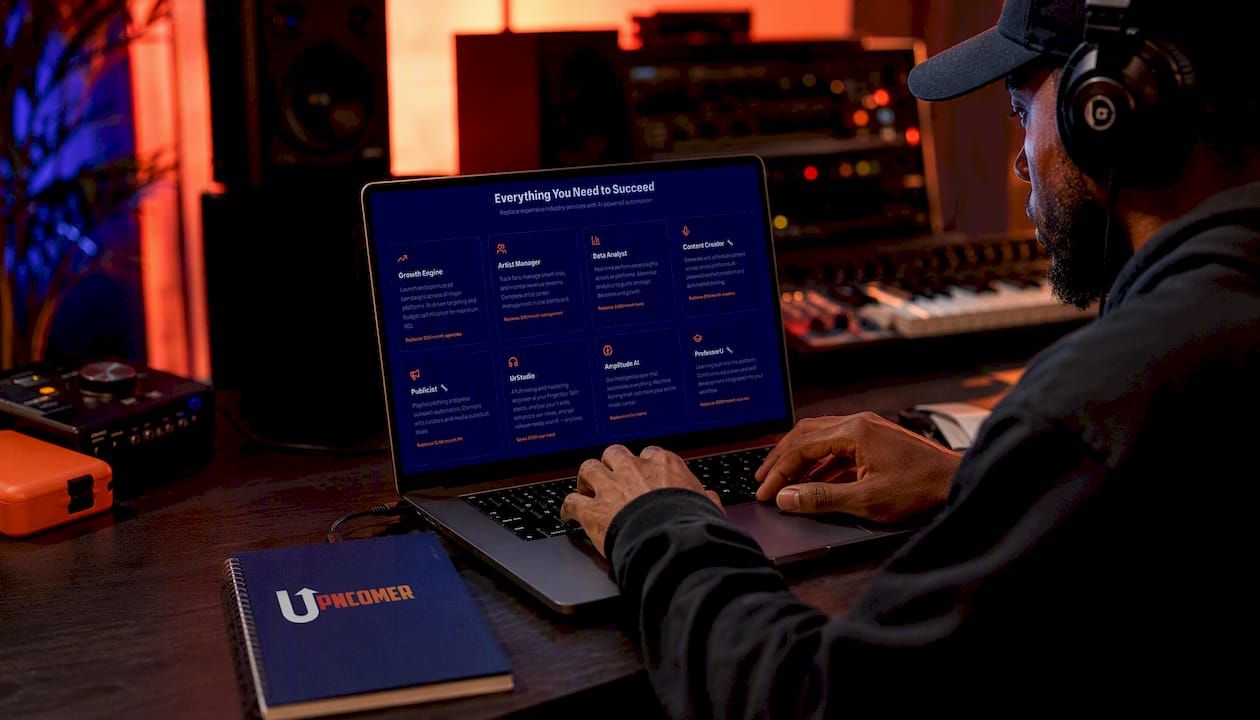
Instead of paying a permanent commission on one platform, a separate annual fee on another, and then hunting for a third tool to actually promote your release, UpNComer Pro puts distribution, Amplitude AI guidance, the Growth Engine for ad campaigns, and Data Analyst dashboards into a single subscription.
If you’re ready to see how the plans break down for your release schedule, check the UpNComer Pro pricing page and compare it against what you’re currently paying across separate tools.
Sources
- CD Baby review — SoundGuys
- DistroKid vs CD Baby vs TuneCore — MusicProductionWiki
- CD Baby review — TopConsumerReviews
FAQ
Is CD Baby better than TuneCore?
Neither is universally better. CD Baby suits infrequent releasers who want permanence without renewal fees, while TuneCore’s subscription model favors artists releasing often who want to retain more royalty per stream over time.
Is CD Baby a good distributor?
CD Baby is a legitimate, established option, particularly for artists releasing rarely who value catalog permanence, though reviewers note its permanent commission scales poorly as earnings grow.
Does CD Baby give 100% royalties?
No. CD Baby’s one-time fee model still takes a permanent percentage of distribution revenue, historically around 9%, rather than passing along 100% of royalties.
How much does TuneCore pay for $1000 streams?
TuneCore does not publish a fixed payout rate for a specific stream count, since royalty rates vary by platform, territory, and subscription tier at the streaming service itself; TuneCore’s model generally passes along a high percentage of what the streaming platforms actually pay per stream.