YouTube Content ID Explained for Independent Musicians
Content ID is YouTube’s automated fingerprinting system that flags matches between uploaded videos and a database of copyrighted audio and visual files, then typically takes one of three actions on your behalf as the rights owner: blocking, monetizing, or tracking the video. When another creator uses your song, a match against your registered work triggers a Content ID claim, not a strike, and that distinction matters more than almost anything else in this guide.
Here’s what that claim usually does:
- Block — the video becomes unavailable, either everywhere or in specific countries
- Monetize — ads run on the video and revenue routes to you, the rights owner
- Track — the video stays live, untouched, but you can see its viewership data
For music, monetization is the default and most common outcome, which means Content ID often works less like a takedown hammer and more like a royalty collection engine running quietly in the background.
Key Takeaways
Content ID protects music revenue by matching fingerprints to registered assets, and monetization, not blocking, is the default outcome for most music claims.
| Point | Details |
|---|---|
| Content ID triggers one of three actions | A match leads to blocking, monetizing, or tracking, with monetization the most common policy for music. |
| Claims are not strikes | A Content ID claim rarely affects channel standing, unlike a formal copyright strike tied to legal action. |
| Eligibility is restrictive | Full Content ID access requires exclusive rights to a substantial, frequently uploaded catalog, so most independent artists go through a distributor. |
| Metadata prevents disputes | Accurate ISRCs, splits, and documentation reduce mismatch risk and speed up any dispute you do file. |
| UpNComer strengthens the foundation | Its Distribution and Artist Manager tools keep metadata and rights documentation consistent from release to resolution. |
Table of Contents
- What Is YouTube Content ID and How Does It Find Matches?
- Who Can Use Content ID and Why Eligibility Matters
- Does a Content ID Claim Affect Monetization?
- How Do You Dispute a Content ID Claim?
- Practical Checklist for Independent Musicians
- How UpNComer Helps Musicians Manage Content ID Risk
- Enforcement Versus Exposure: A Musician’s Trade-Off
- A Simpler Path Through Distribution and Metadata
- Sources
- FAQ
What Is YouTube Content ID and How Does It Find Matches?
Content ID works by comparing uploaded videos against a library of reference files called assets. A rights owner (a label, distributor, or eligible independent artist through a partner) uploads the master recording, composition, music video, or Art Track, along with metadata identifying who owns what. That asset becomes the fingerprint YouTube checks every new upload against.

The matching itself is fingerprint-based, not a simple audio comparison. The system analyzes patterns in the waveform and video frames rather than scanning for exact file duplicates, which is why a cover, a remix, or a 10-second clip buried in a vlog can still trigger a match. YouTube’s own explanation of the process confirms that even short or altered excerpts can register if the fingerprint overlap is strong enough.
Here’s the part most creators miss: matching isn’t limited to videos uploaded after your asset goes live. Once you activate an asset, Content ID runs a legacy scan across the entire platform to catch older uploads that predate your registration. Recent and popular videos get scanned first, so a viral clip from two years ago could surface a claim well before an obscure upload with 40 views does.
Practical takeaways for musicians:
- Registering a track doesn’t just protect future uploads. It can surface years of unlicensed use you never knew existed.
- Matches account for length, audio quality, and how much of the original is present, so a heavily pitched or chopped sample may or may not trigger a hit.
- If someone embeds your composition inside a video that also uses someone else’s sound recording, YouTube applies whichever policy is most restrictive between the two assets.
Pro Tip: If you notice a claim on a video you uploaded months or years ago, check whether your distributor recently activated a new asset. That’s almost always the legacy scan doing its job, not a sudden system error.
Who Can Use Content ID and Why Eligibility Matters
Content ID isn’t a tool you sign up for on a whim. YouTube reserves access for copyright owners who hold exclusive rights to a substantial body of original material that gets uploaded frequently by other users. That bar exists because full Content Manager access gives someone the power to claim revenue across the entire platform, and YouTube monitors that power closely.
What this means in practice:
- A single-release bedroom artist almost never qualifies directly for a Content Manager account.
- Most independent musicians get Content ID coverage through a distributor or aggregator partner that already holds eligible status and registers assets on their behalf.
- Misusing the system, claiming content you don’t exclusively own, or filing inaccurate ownership claims can lead to losing Content ID privileges entirely, whether you’re a direct partner or working through one.
If you don’t qualify for direct access, you’re not without options. YouTube’s Copyright Match Tool flags re-uploads of your own videos on other channels, manual claiming exists for advanced accounts handling content the automated system missed, and distribution partners can register your catalog as assets even when you’d never qualify solo. This is exactly the gap a service built around structured metadata delivery is designed to close.
Does a Content ID Claim Affect Monetization?
Yes, and this is where the music-specific mechanics get interesting. When your track triggers a match on someone else’s video, the claim typically activates the monetize policy, meaning ads run on that video and the ad revenue flows to you as the rights holder rather than the uploader. The uploader usually keeps the video live and simply loses that slice of ad income.
What creators see in YouTube Studio varies by policy:
- Monetized claim — video stays up, revenue redirects to the rights owner, uploader keeps a public record but no ad earnings from that view count
- Blocked claim — video disappears, either globally or in specific countries where the rights owner hasn’t cleared use
- Tracked claim — nothing visible changes, but the rights owner gets viewership analytics
Territory matters more than most creators expect. A track can be monetized in the United States, blocked in Germany, and tracked in Japan, all under the same claim, because rights owners set policies by region based on licensing deals that vary country to country. YouTube’s copyright claims documentation confirms that mixed, geography-specific policies are standard practice rather than an edge case.
The scale here isn’t small. Content ID has driven roughly $2 billion in payments to copyright holders since its early years, which tells you this isn’t a niche enforcement tool. It’s a functioning revenue pipeline that rewards artists who actually register their work.
How Do You Dispute a Content ID Claim?
A Content ID claim and a copyright strike are not the same thing, and confusing them causes unnecessary panic. A Content ID claim generally does not affect your channel standing; it’s an automated, revenue-routing action. A copyright strike is a formal, manual takedown request tied to a legal complaint, and it can lead to real consequences, including channel termination after repeated strikes. Claims almost never escalate to strikes unless a rights owner files a separate, deliberate legal action.
If you believe a claim is wrong, here’s the sequence to follow:
- Open the claim details in YouTube Studio and check exactly which asset triggered the match and what policy was applied.
- Gather your proof — original session files, split sheets, distribution confirmation, or a license if you cleared a sample.
- File a dispute through Studio, selecting the reason that matches your situation (you own the rights, you have a license, or it’s fair use).
- Wait for the claimant’s response. They can release the claim, uphold it, or, in rare cases, escalate to a takedown, which is when legal exposure enters the picture.
- Appeal if the dispute is rejected, understanding that a second rejection is when consulting legal counsel becomes worth the cost.
Pro Tip: Never file a dispute without documentation ready. A vague “this is my song” claim gets rejected fast; a dispute with a distribution receipt or session file attached gets resolved faster.
Practical Checklist for Independent Musicians
Most Content ID headaches are preventable before you ever hit upload. The fix isn’t complicated, but it does require treating metadata like part of the release, not an afterthought.
- Lock your metadata before release. Correct artist name, accurate composition splits, and a valid ISRC per track make asset creation cleaner and reduce mismatch risk. Deliver stems to your distributor when possible; a checklist for pre-release delivery keeps this from slipping through the cracks.
- Confirm your distributor registers assets, not just distributes audio. Not every distributor handles Content ID registration by default, so confirm coverage exists before you assume your catalog is protected.
- When a claim appears on your own video, inspect it immediately. Studio shows the claiming asset and the policy applied; screenshot everything before disputing.
- Keep a documentation folder per release with session files, split sheets, and distributor confirmations, so you’re never scrambling when a dispute needs proof.
- Escalate methodically. Contact the claimant through the dispute flow first, appeal if rejected, and only consider a formal counternotice or legal advice if the claim involves a takedown rather than a routine monetization dispute.
Pro Tip: Treat your split sheet like a legal document, not a group text. A signed, dated split sheet is often the single fastest way to win a dispute when co-writers or samples are involved.
How UpNComer Helps Musicians Manage Content ID Risk
Most Content ID friction traces back to messy metadata or a distributor that doesn’t handle registration well. UpNComer’s Distribution module builds accurate ISRC, split, and ownership data into the release process from the start, which reduces the chance of a mismatch before it ever happens.
Beyond delivery, a few other pieces of the platform matter here:
- Artist Manager keeps split sheets, contracts, and release documentation organized in one place, so you’re not digging through email threads when a dispute needs proof fast.
- Data Analyst surfaces streaming and viewership patterns, useful for spotting unusual activity tied to unauthorized use of your catalog.
- Content Creator helps you plan and schedule releases with consistent metadata across platforms, cutting down on the version mismatches that confuse fingerprinting systems.
None of this replaces YouTube’s own dispute process, but a cleaner foundation means fewer claims to fight in the first place.
Enforcement Versus Exposure: A Musician’s Trade-Off
Content ID rewards artists who think like rights holders, not just uploaders. The instinct to dispute every claim on sight is understandable, but it’s often the wrong move: a monetized claim on a fan cover or remix is usually free promotion paying you directly. Save disputes for real errors, not every automated flag.
What actually protects you long-term is documentation, not aggression. Accurate splits, registered assets, and a paper trail settle disputes faster than any strongly worded appeal. Treat Content ID as a monitoring tool first and an enforcement tool second.
— Karan
A Simpler Path Through Distribution and Metadata
Independent musicians typically handle Content ID exposure one of two ways: bounce between a distributor, a manual metadata spreadsheet, and a separate analytics tool, or run everything through one system built to keep those pieces connected from the start. UpNComer takes the second route, pairing Distribution with asset-ready metadata so your ISRCs, splits, and ownership details stay consistent from upload to release, which is exactly the foundation that keeps fingerprint matches accurate and disputes short.
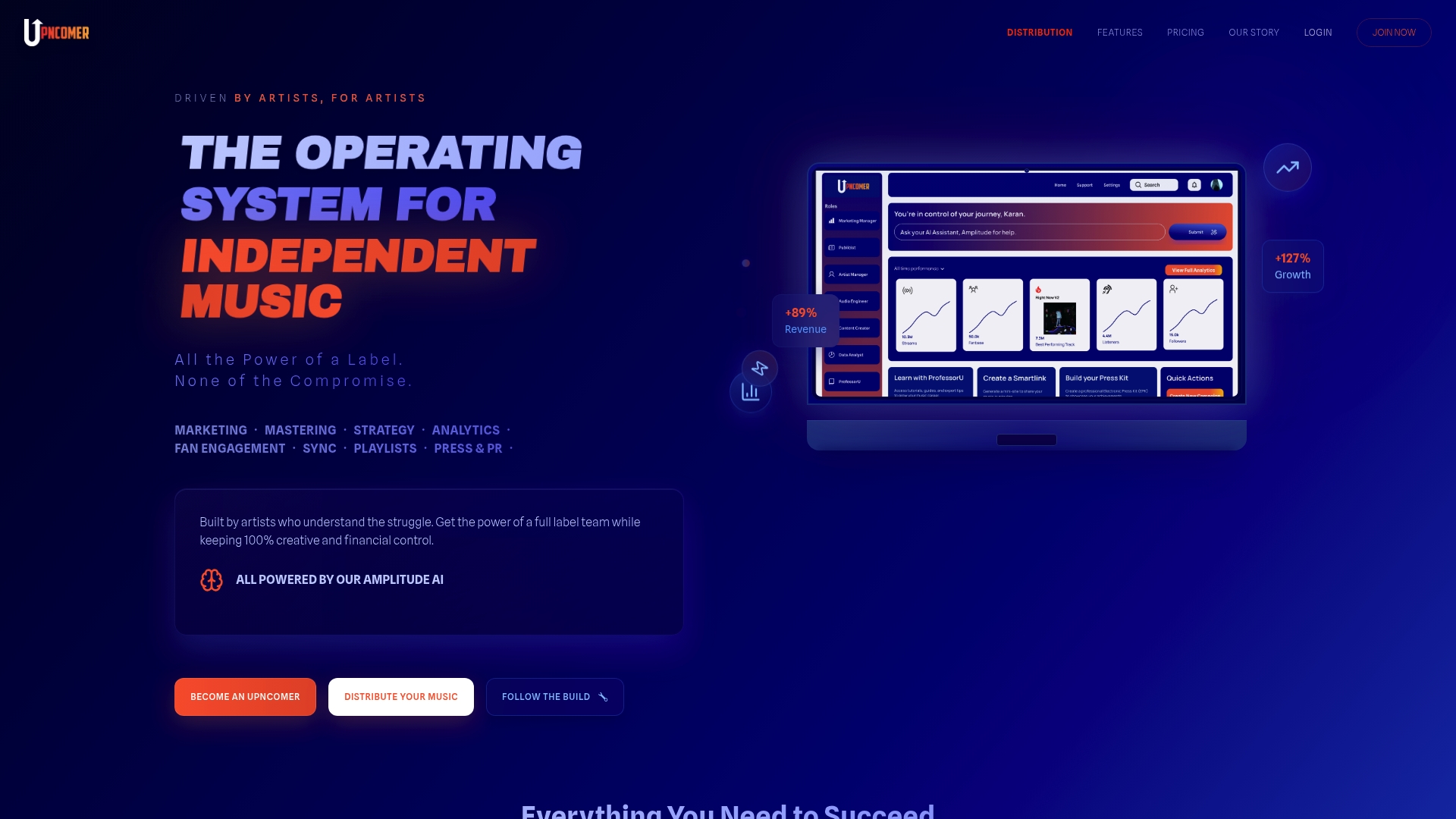
That consistency matters because most false claims trace back to a metadata mismatch somewhere upstream, not a broken system downstream. When your release data is clean going in, there’s simply less to untangle later. If you want to see how the platform’s release and monitoring tools fit together, check the latest updates on the UpNComer community page and start your next release with metadata built to hold up.
FAQ
How does Content ID work on YouTube?
Content ID compares uploaded videos against a database of registered audio and visual assets using fingerprint matching, then applies the rights owner’s chosen policy: block, monetize, or track.
Is YouTube actually going to require ID?
This question often confuses YouTube’s Content ID copyright system with personal identity verification; Content ID is a copyright matching tool for rights owners and has nothing to do with verifying a creator’s personal identity.
Does a Content ID claim affect monetization?
Yes. A claim typically routes ad revenue on the claimed video to the rights owner rather than the uploader, and monetization is the most common policy applied to music claims.
Can YouTube Content ID claims be cleared right away?
Not instantly. Disputes go to the claimant for review, and resolution depends on their response time, so having ownership documentation ready when you file speeds up the outcome considerably.