TikTok Creator Marketplace for Indie Artists: CML or a License?

TikTok Creator Marketplace now lives inside TikTok One, and yes, musicians can use it to land brand campaigns and creator partnerships. The catch is music rights: any commercial post needs a track that’s cleared through the Commercial Music Library or separately licensed. Before you touch the marketplace, check whether your distributor offers CML opt-in, or upload through SoundOn, then start applying to projects or accepting invites.
TL;DR:
- TikTok account eligibility requires creators to be at least 18, live where TikTok One is available, and follow Community Guidelines and Branded Content Policy.
- Campaigns set their own selection rules, and many open projects accept creators starting around 1,000 followers; rejection rarely prevents a later application.
- CML clearance covers TikTok, sometimes only specified regions, and does not grant brands rights to reuse music on other platforms or transfer ownership.
- Submit tracks for CML approval early: review takes roughly two to four weeks, and uncleared samples or covers can disqualify a submission.
- Coordinate creator posts within a window of three to ten days; concentrated releases can create a trend signal more effectively than scattered timing.
Table of Contents
- What TikTok Creator Marketplace Is Now and How to Reach It
- Who Can Join and the Current Eligibility Bars
- Music and Rights: The Commercial Music Library, Explained
- How Music Campaigns Actually Run Inside Creator Marketplace
- Your Checklist: Making a Track CML-Ready and Joining Projects
- Tactics for Seeding Music Through Creator Collaborations
- How UpNComer Supports Each Step of This Process
- Where Independent Artists Should Focus First
- Get Your Music TikTok One Ready
- FAQ
- Sources
What TikTok Creator Marketplace Is Now and How to Reach It
If you went looking for the old standalone Creator Marketplace site and hit a dead end, that’s because it closed on April 1, 2025. Everything moved into TikTok One, the single hub TikTok announced in 2024 to consolidate creator tools, brand tools, and monetization programs under one roof.
For musicians, this matters because the merger changed where the audience data lives and how brands find you. You’re no longer dealing with a separate portal with its own login and its own quirks. You’re inside the same ecosystem where you already post, mix, and check analytics.
To reach Creator Marketplace in the app: open your profile, tap into TikTok Studio, then find Creator Marketplace from there. It’s also accessible through the web version of TikTok One if you prefer working from a desktop when you’re writing proposals or reviewing briefs.
A few features inside the module are worth knowing before you dive in:
- First-party audience metrics pulled straight from your account, so brands see real follower demographics and engagement, not third-party estimates.
- An opted-in creator directory, meaning you have to join before brands can find you through search.
- A project workflow that tracks briefs, drafts, and approvals in one thread instead of scattered emails.
- Direct sync with Ads Manager, so a successful organic post can become paid media without re-uploading anything.
Who Can Join and the Current Eligibility Bars
The old rumor mill still circulates numbers like 10,000 followers or 100,000 likes as if they’re gatekeeping requirements. They’re not, and treating them as current policy will have you waiting around for a bar that no longer exists.
TikTok’s actual published sign-up criteria are simpler than that. You need to be 18 or older, have TikTok One available in your region, and stay compliant with Community Guidelines and the Branded Content Policy. That’s the account-level bar.
Project-level requirements are a different story, and they’re set by whoever’s running the campaign, not TikTok itself. Many open projects accept creators starting around 1,000 followers, which is a big shift from the days when the marketplace felt built for six-figure accounts only.
Here’s what actually determines whether you get picked up:
- Brand invite: a label, artist, or company finds your profile directly and sends an offer.
- Open application: you browse live projects and submit a pitch, often with a quoted rate.
- Agency invite: a marketing agency running the campaign on a brand’s behalf reaches out.
- Invite links: a shareable link that lets a brand pull in creators outside the opted-in directory.
Review and reapply windows vary by project, so if you’re turned down once, it’s rarely permanent. Updating your profile with recent work and clearer rate expectations before your next application round tends to help more than resubmitting the same pitch.
Music and Rights: The Commercial Music Library, Explained
This is the section that trips up more musicians than any follower count ever will. TikTok’s Commercial Music Library is a pre-cleared catalog of over one million tracks built specifically for businesses, advertisers, and anyone posting branded content. It exists because the general Sounds library, the one you use for personal posts, was never licensed for commercial use.
Business and Organization accounts get routed toward CML by default when they post anything sponsored. If you’re posting as a musician promoting your own commercial release through a brand deal, you’re in that same lane.
| Music pool | Who it’s for | Commercial use |
|---|---|---|
| Personal Sounds library | Individual creators, non-commercial posts | Not licensed for branded or paid content |
| Commercial Music Library (CML) | Businesses, advertisers, branded content | Pre-cleared, built for commercial campaigns |
Using a non-CML track in a branded post risks having the audio muted, triggering a Music Usage Confirmation prompt, or creating legal exposure for whoever posted it. None of that is a great look mid-campaign.
One detail independent artists often miss: CML clearance is scoped to TikTok itself, and often to specific regions. Getting your track into CML doesn’t hand a brand rights to use it on YouTube, Instagram, or anywhere else, and it doesn’t transfer your masters or publishing. It’s a TikTok-specific green light, not a blanket license.

Pro Tip: Check your distributor’s dashboard for a CML opt-in toggle before assuming you need a separate application process.
How Music Campaigns Actually Run Inside Creator Marketplace
Once you’re in, the workflow looks less like a cold pitch and more like a structured production process. Brands set up projects, and those projects come in a few flavors: direct invites to specific creators, open applications anyone can browse, Branded Buzz style campaigns built around trend participation, and Spark opportunities tied to boosting an existing post as an ad.
Creators get pulled into these projects through several routes. Brands search the Explore creators directory, send invite links to people outside that directory, use retroactive sync to formalize a relationship that started organically, or run smaller Lite projects with lighter requirements.
The approval chain matters for musicians specifically, since your track clearance gets checked at this stage:
- You submit a draft, the brand reviews it, and paid partnership labeling gets applied automatically once it’s flagged as sponsored content.
- Approved posts can be converted into Spark Ads, letting the brand boost your organic post using your account’s engagement history instead of running a cold ad.
- Revisions happen inside the same thread, so keep deliverables specific in your brief to avoid back and forth.
On payment, TikTok’s structure places the relationship between you and TikTok under the TikTok One Creator Program terms, with the One Pay system aiming for timely payouts. Brand-side fees can still show up depending on how the deal was structured, so read the invoice carefully rather than assuming every dollar quoted in the brief lands in your account untouched.
Your Checklist: Making a Track CML-Ready and Joining Projects
Getting a track commercial-ready takes longer than people expect, mostly because rights issues surface late if you don’t check early. Work through this before you start applying to projects:
- Confirm you fully own the master recording and composition, and clear any samples or co-writes, since covers and uncleared samples get disqualified from CML.
- Opt into CML through a participating distributor dashboard, such as Believe, DistroKid, or Vydia, or upload directly through SoundOn if your distributor doesn’t support it.
- Contact your distributor’s support team if the opt-in toggle isn’t visible. It’s often buried in settings rather than missing entirely.
- Choose the right account type for your goals. A Business or Creator account with Branded Content enabled unlocks the commercial posting features you’ll need.
- Fill out your Creator Marketplace contact and rate fields completely. Brands skip profiles with blank rate cards more often than you’d think.
- Set deliverables in writing before accepting a project: number of posts, usage rights, and whether Spark Ads boosting is included.
- Expect a review window of roughly two to four weeks for CML approval, and keep track of reapply timing if your first submission gets declined.
Pro Tip: If you’re distributing through SoundOn, check their specific TikTok program terms first, since moving to a different distributor later can change how future TikTok payouts work.
Tactics for Seeding Music Through Creator Collaborations
Rights clearance gets you in the room. What actually moves a track is how you coordinate the rollout once creators are on board.
The strongest pattern worth borrowing: concentrated seeding, where multiple creators post using your track within a tight three to ten day window. Clustering posts that way creates a trend signal the algorithm can recognize, which tends to outperform spreading the same budget across a slower, scattered timeline.
Build your brief around a few specifics:
- Flag the exact hook timestamp in your track, the three or four seconds that should anchor the visual.
- Suggest visual treatments loosely rather than dictating every shot, since creators know their own audience better than you do.
- Require the mandatory disclosure tag on anything sponsored, and confirm CML status in writing before posting.
- Set your KPIs before launch: median video views, engagement rate, completion rate, and any downstream streaming uplift you can track afterward.
On negotiation, decide upfront whether you’re offering flat fees or a performance-based pool, and get clear on whether Spark Ads reuse rights are included in the rate or billed separately. Vague agreements here cause more friction than almost anything else in the process.
How UpNComer Supports Each Step of This Process
Our platform addresses exactly these friction points. Our Distribution module routes CML opt-in requests through participating distributors or SoundOn, so rights clearance doesn’t become its own side project.
For the campaign side, tools help organize invites, briefs, and approval threads in one place instead of across group chats and spreadsheets.
Once posts go live, analytics tools track streaming uplift and audience segmentation, so you can see whether seeded campaigns actually moved your numbers, not just your view count.
Where Independent Artists Should Focus First
Rights clarity isn’t optional here. A track that isn’t CML cleared can stall a campaign mid-approval, and that’s a worse outcome than never applying at all.
Beyond that, resist spreading a small budget across too many creators. Concentrated seeding with proper measurement beats scattershot spending nearly every time. Trust TikTok One’s first-party metrics for reach, but cross-check actual streaming impact against your own analytics before calling a campaign a win.
— Karan
Get Your Music TikTok One Ready
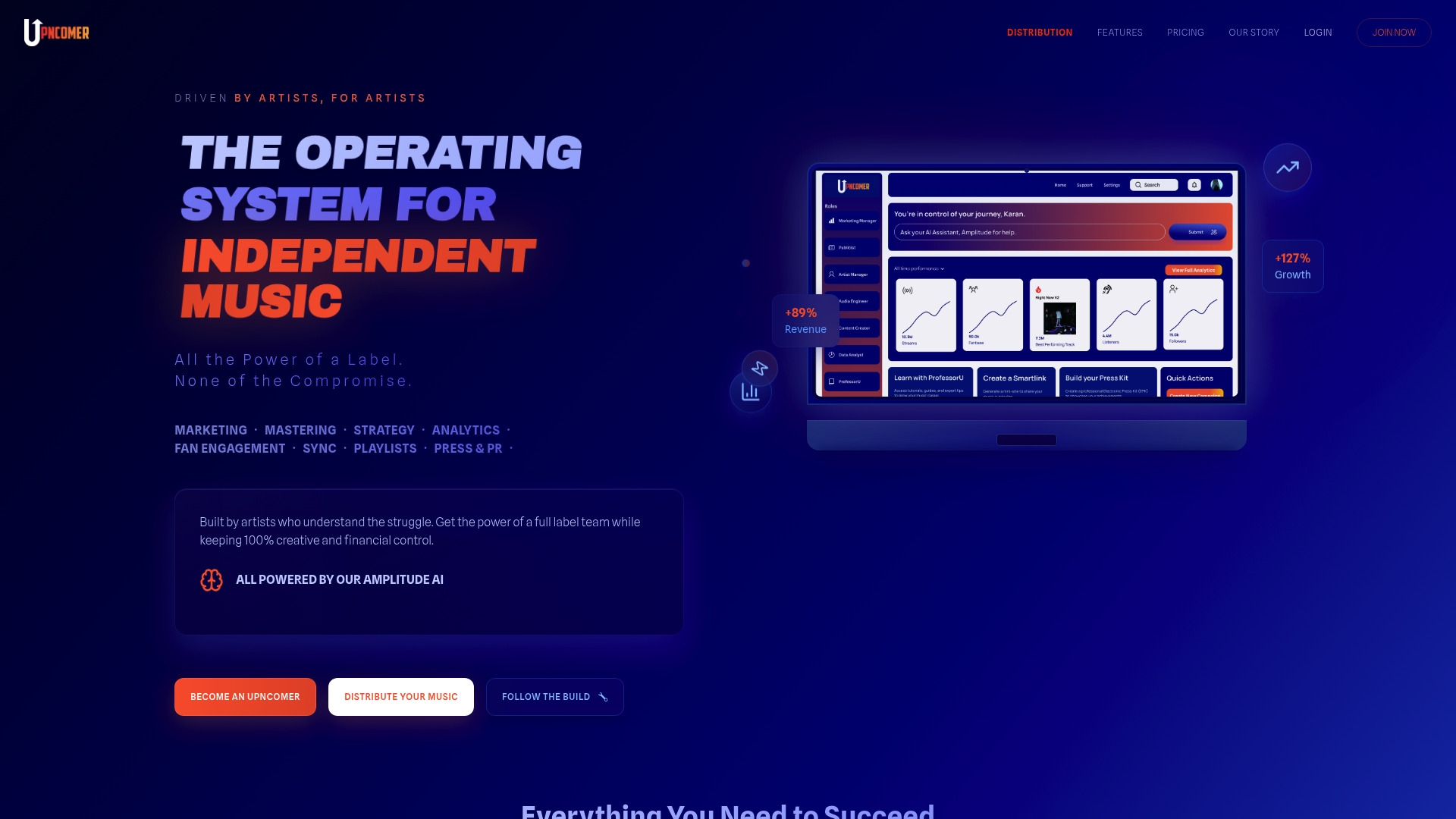
We map directly to every step in this guide: Music Distribution handles your CML opt-in request through participating distributors, Growth Engine and Content Creator organize your creator briefs and approvals, and Data Analyst tracks whether seeded posts actually move your streaming numbers.
Here’s where to start:
- Check your distribution setup and CML eligibility on our distribution page.
- Compare our UpNComer Pro plans at $27 USD per month or $300 USD per year to see which fits your campaign workload.
- Browse creator-side content format ideas from THE GURLZ for brief inspiration before your next project.
Visit Upncomer to get your catalog and campaigns ready for TikTok One.
FAQ
How to unlock Creator Marketplace on TikTok?
Access comes through TikTok One rather than a separate unlock process: open your profile, tap TikTok Studio, then select Creator Marketplace. Eligibility requires being 18 or older, having TikTok One available in your region, and complying with Community Guidelines and the Branded Content Policy.
What’s the 3 second rule on TikTok?
There’s no officially documented “3 second rule” tied to Creator Marketplace policy. In practice, creators and brief writers often treat the first few seconds of a video as the make-or-break hook, which is why briefs for seeded music campaigns usually flag a specific timestamp in the track to anchor that opening moment.
Can business accounts on TikTok use music?
Business accounts can use music, but they’re routed toward the Commercial Music Library rather than the general Sounds catalog for branded or paid posts. Using a non-CML track in commercial content risks the audio getting muted or a Music Usage Confirmation prompt appearing.
Does TikTok pay $1 per 1000 views?
That figure isn’t part of Creator Marketplace payment terms. Payment inside Creator Marketplace runs through TikTok under TikTok One Creator Program terms and the One Pay system, with rates set per project or brand deal rather than a fixed per-view rate.
Sources
- TikTok Commercial Music Library: The Only Safe Playlist for Brands
- TikTok Creator Marketplace: How to Join TikTok One | SirenCY
- TikTok Creator Marketplace (Now TikTok One): 2026 Guide
- How to join the TikTok creator rewards program (creator marketing advice)
- TikTok Commercial Music Library explained (for musicians)