Top 5 Spotify Promotion Alternatives 2026
Choosing a Spotify promotion tool that matches your budget and gives you control is messy for most independent artists. Most promotion services either lock features behind expensive plans, force you to juggle multiple subscriptions, or limit campaign data and fan ownership. This comparison lets you match price, campaign automation, analytics, and ownership so you can pick a music promotion platform that fits how you actually work.
Table of Contents
UpNComer
At a Glance
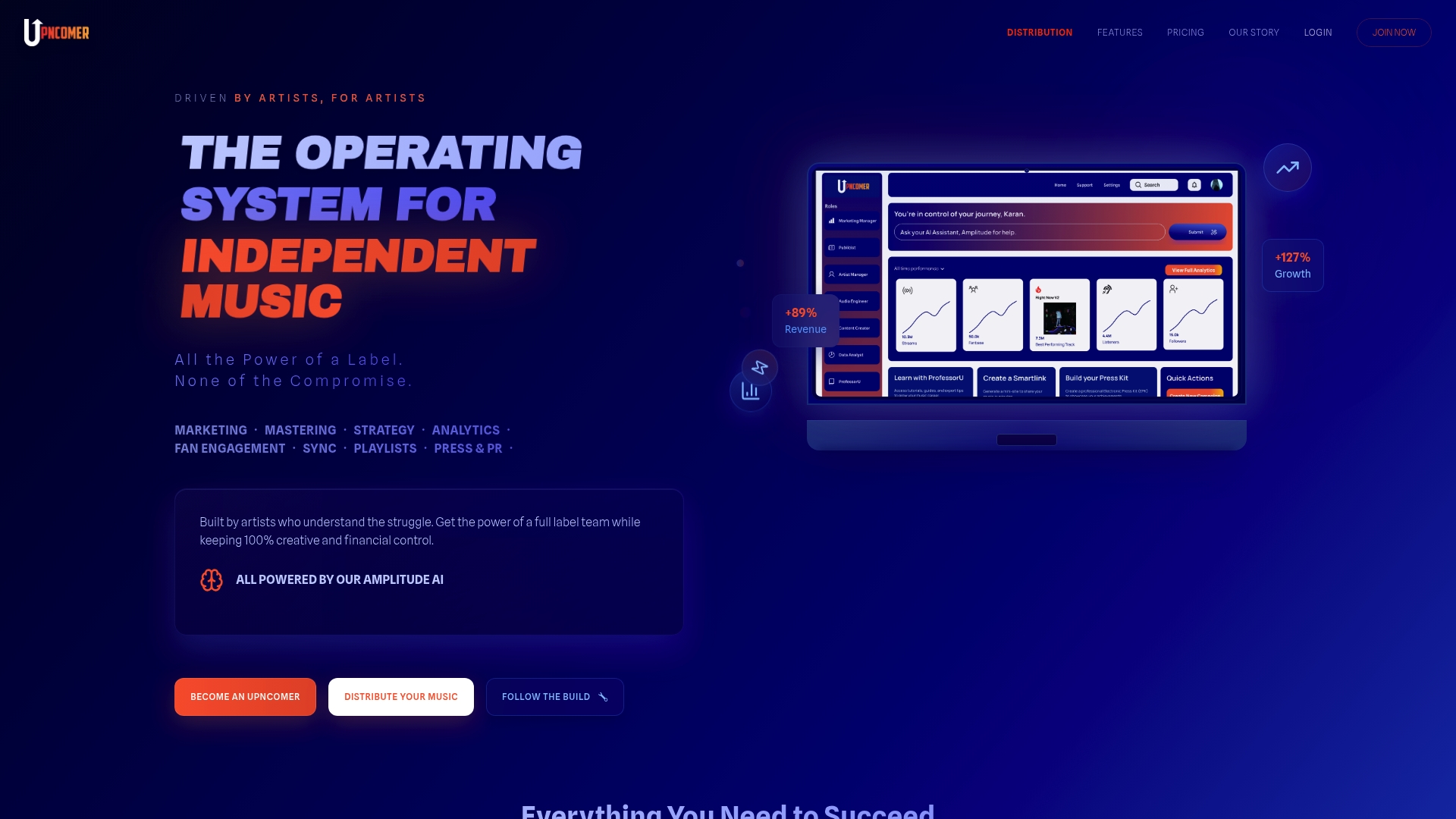
Starts at $27 per month while the vendor says it replaces more than $10,000 per month in traditional services. The platform bundles campaign automation, mastering, analytics, and fan tools into one workspace. That price claim positions UpNComer as a low-cost alternative for artists who currently pay separate agencies.
Core Features
UpNComer combines Amplitude AI for predictive guidance with a campaign tool called Growth Engine that automates ad targeting and budget allocation. The suite includes artist management with fan tracking, smart links, and real-time streaming analytics. It also offers AI-powered mastering through UrStudio and scheduled content creation, with playlist pitching and press outreach listed as upcoming.
Key Differentiator
The single biggest difference is the predictive AI layer tied directly into campaign execution and mastering. That link lets you run automated ad tests, adjust spend, and push releases without copying metrics across tools. The result is fewer manual handoffs between distribution, promotion, and analytics.
Pros
UpNComer consolidates tasks most independent artists juggle across multiple vendors into one product, which reduces admin and subscription costs. Its AI features aim to automate audience targeting, ad budgeting, and content scheduling so you spend less time guessing. The platform keeps 100% of royalties and rights with distributed releases, and it includes learning resources for artists who want to learn the same workflows the system uses.
Cons
- Some features listed as part of the product are still upcoming, namely press outreach and parts of the content creator and ProfessorU modules, which can limit immediate functionality for certain campaigns.
Who It’s For
Solo independent artists, producers, and musicians who want a single workspace to run marketing, distribution, and basic production tasks will find this appealing. Artists who want to retain full ownership while cutting agency fees benefit most. This is not aimed at acts that need bespoke, hands-on label-style services.
Unique Value Proposition
Amplitude AI gives you predictive suggestions tied to active campaigns and releases, so decisions come with data rather than guesses. That changes workflow by letting you test creative and budget faster inside the same system you use to distribute and master tracks. It reduces the time spent exporting reports and manually adjusting ad sets.
Real World Use Case
According to the company, Karan, an independent artist with 100K monthly listeners, used UpNComer to grow his streams by 400% in three months. That example shows how an artist can replace an external marketing team while keeping royalties and managing releases in one place.
Pricing
The Pro plan starts at $27 per month, billed annually, and the vendor states no credit card is required to start. The model targets independent artists who would otherwise pay separate fees for distribution, ads, mastering, and PR.
Website: https://upncomer.co
PlaylistSupply
At a Glance
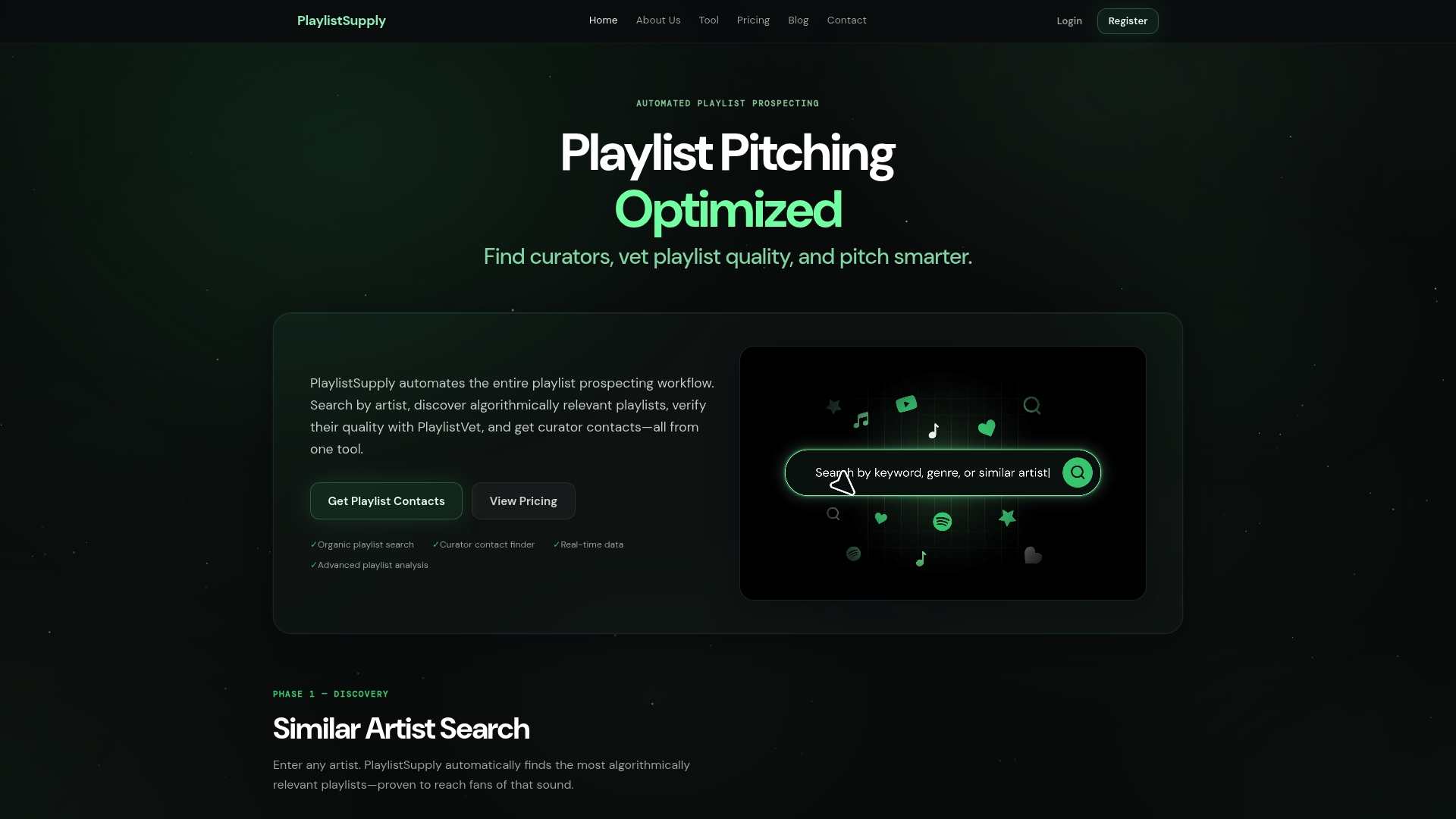
PlaylistSupply includes verified curator contact details such as email addresses and social handles for playlists. It pairs those contacts with engagement signals so you can judge playlist quality before you reach out. The combination helps artists and managers avoid paid placement schemes and focus on playlists with real listeners.
Core Features
The tool offers automated playlist discovery that finds playlists by artist or genre and returns play and engagement estimates for Spotify and YouTube. It runs playlist quality checks to separate active lists from low-value ones, and it supplies verified curator contact information for outreach. Organic filters let you narrow results to playlists that show genuine listener activity.
Key Differentiator
PlaylistSupply stands out for combining playlist quality metrics with verified curator contacts, not just a list of playlist names. That focus makes it a specialist discovery and outreach tool rather than a full artist operating system. Unlike Upncomer, which bundles campaign management, analytics, and distribution, PlaylistSupply concentrates on finding playlists and connecting you to curators.
Pros
It surfaces near real-time playlist and curator data so you spend less time copying and pasting bad leads and more time pitching playlists likely to move streams. The verification checks go beyond simple bot detection and highlight lists with measurable listener activity. Contact details reduce the friction of outreach and help you personalize pitches instead of blasting anonymous messages.
Cons
- Pricing may be a barrier for emerging artists on tight budgets.
- The product appears to offer a limited free trial or introductory option.
- Results depend on the accuracy and update frequency of public playlist data.
- The interface and feature set may require a short learning curve for novices.
When It May Not Fit
If you need an all-in-one music operations platform for distribution, ad campaigns, and long-term fan engagement, this narrow playlist tool will feel limited. Artists who work in very niche microgenres may find coverage spotty. Very early stage artists with almost no promotion budget could be priced out until they can afford subscription tiers.
Who It’s For
Independent artists, managers, and boutique labels that prioritize organic playlist placement and need verified outreach contacts. It fits teams running focused playlist campaigns who already manage distribution and audience growth elsewhere. Agencies that want playlist data to plug into campaigns will also find the feature set useful.
Real World Use Case
A manager searches for playlists that match an act’s microgenre, runs the playlist through the quality checks, and pulls verified emails. They craft tailored pitches to curators and follow up only with lists showing real engagement. The campaign yields playlist adds that drive streams and new followers.
Pricing
Plans start at $16.67 per month billed annually for basic access, with higher tiers that include more credits and features. Monthly billing options are available for those who prefer not to commit annually.
Website: https://playlistsupply.com
ORPL
At a Glance
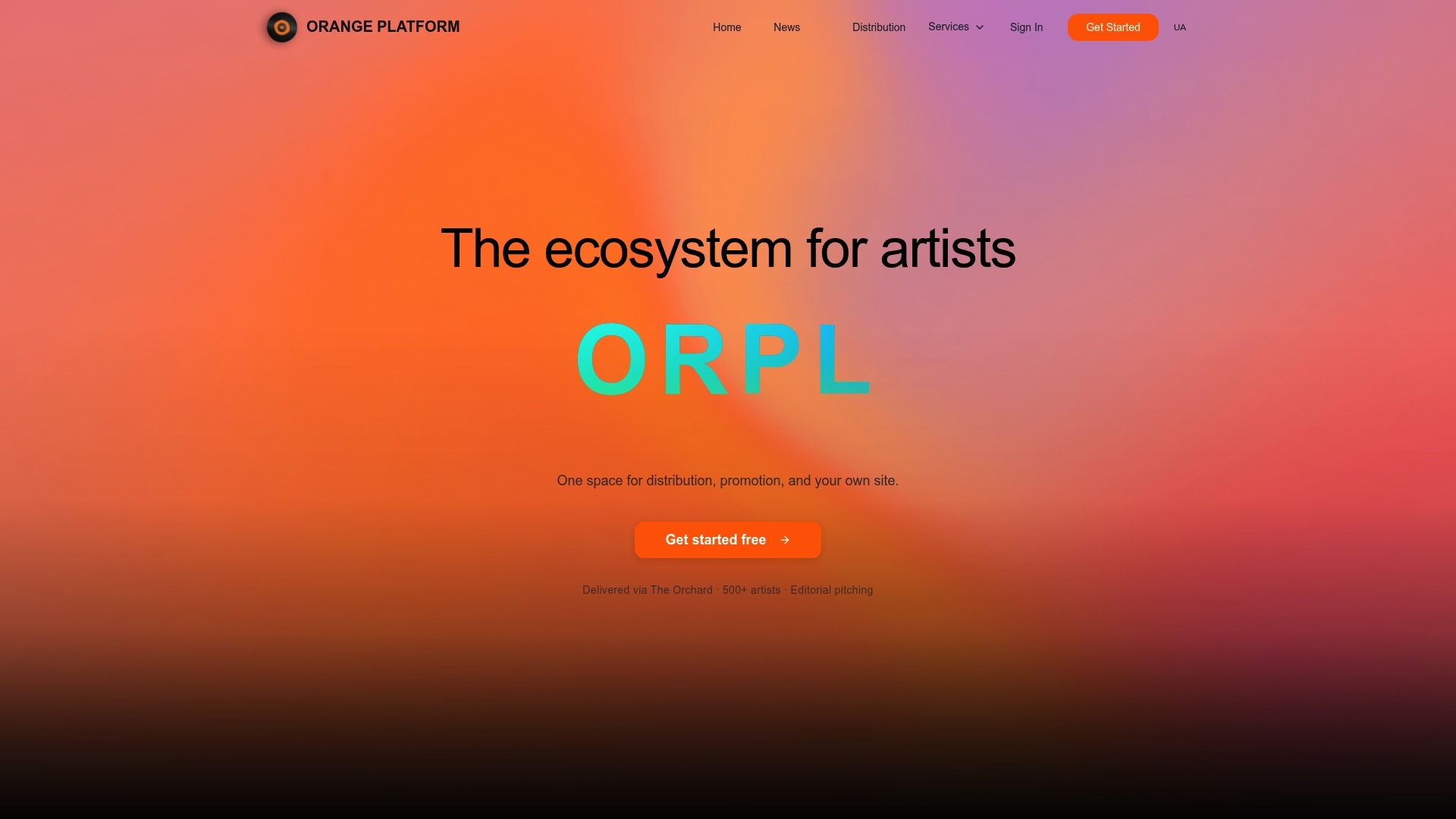
ORPL reports a 70% artist royalty share. That detail stands out for independent musicians worried about payout splits.
The platform sells both a subscription plan and per release fees. The pricing table lists a free profile, PRO ₴399/month, and a ₴999 single release option.
Core Features
ORPL combines distribution to major streaming services with playlist pitching and promotional services such as radio, YouTube ads, and social media adverts. The product also includes artist site creation with custom links and stories, Content ID and Meta support, plus AI-generated covers and videos for releases. Release checklists and post-release articles help artists structure promotion and follow up after a launch.
Key Differentiator
ORPL focuses on grouping distribution, playlist pitching, branding, and promotional campaigns in a single environment tailored for independent artists. That concentration reduces the need to juggle separate distributors, PR agencies, and site builders when you prepare a release.
Pros
ORPL puts distribution, promotion, and a customizable artist site into one place, which saves time when you manage releases and brand assets. The platform lists multiple promotional channels, including radio and paid ads, which gives you options for reach beyond streaming. Pricing flexibility covers free use, a monthly plan, and a one-time release fee, so you can pick the model that matches how often you release. Ownership of rights stays with the artist.
Cons
- Limited analytics detail. The product pages do not describe deep performance reporting or advanced tracking features.
- Unclear support and onboarding. The vendor does not publish specifics about response times or guided setup.
- Limited clarity on educational content. The scope of industry news and learning resources is not well defined.
- Pricing above the PRO plan may be expensive for lean budgets. Single release or premium services could stretch a small campaign budget.
When It May Not Fit
If you need in-depth streaming analytics and granular campaign measurement, ORPL may not fit your needs. Artists who require white glove onboarding or guaranteed account support should look elsewhere. If you release very frequently on a tight budget, the single release or premium service costs could add up.
Notable Integrations
ORPL connects directly to major streaming platforms and social networks that matter for release distribution and promotion.
- Spotify
- Apple Music
- YouTube Music
- TikTok
- Meta (Facebook, Instagram)
Who It’s For
Indie musicians and self managed artists handling their own releases and branding will get the most from ORPL. The product fits people who want distribution alongside promotion and a simple artist site. It also suits artists who prefer fewer vendors and like controlling rights and creative assets themselves.
Real World Use Case
A solo artist distributes a new single through ORPL, publishes a personalized artist site, and launches targeted YouTube and social adverts. They use playlist pitching and follow the release checklist to coordinate press outreach and social posts.
Pricing
ORPL offers a free basic profile, a PRO ₴399/month subscription for regular distribution and promo tools, and a ₴999 one-time fee per single release. Pick the free account to test features or the single release option for occasional drops.
Website: https://orpl.app
Aura Music AI
At a Glance
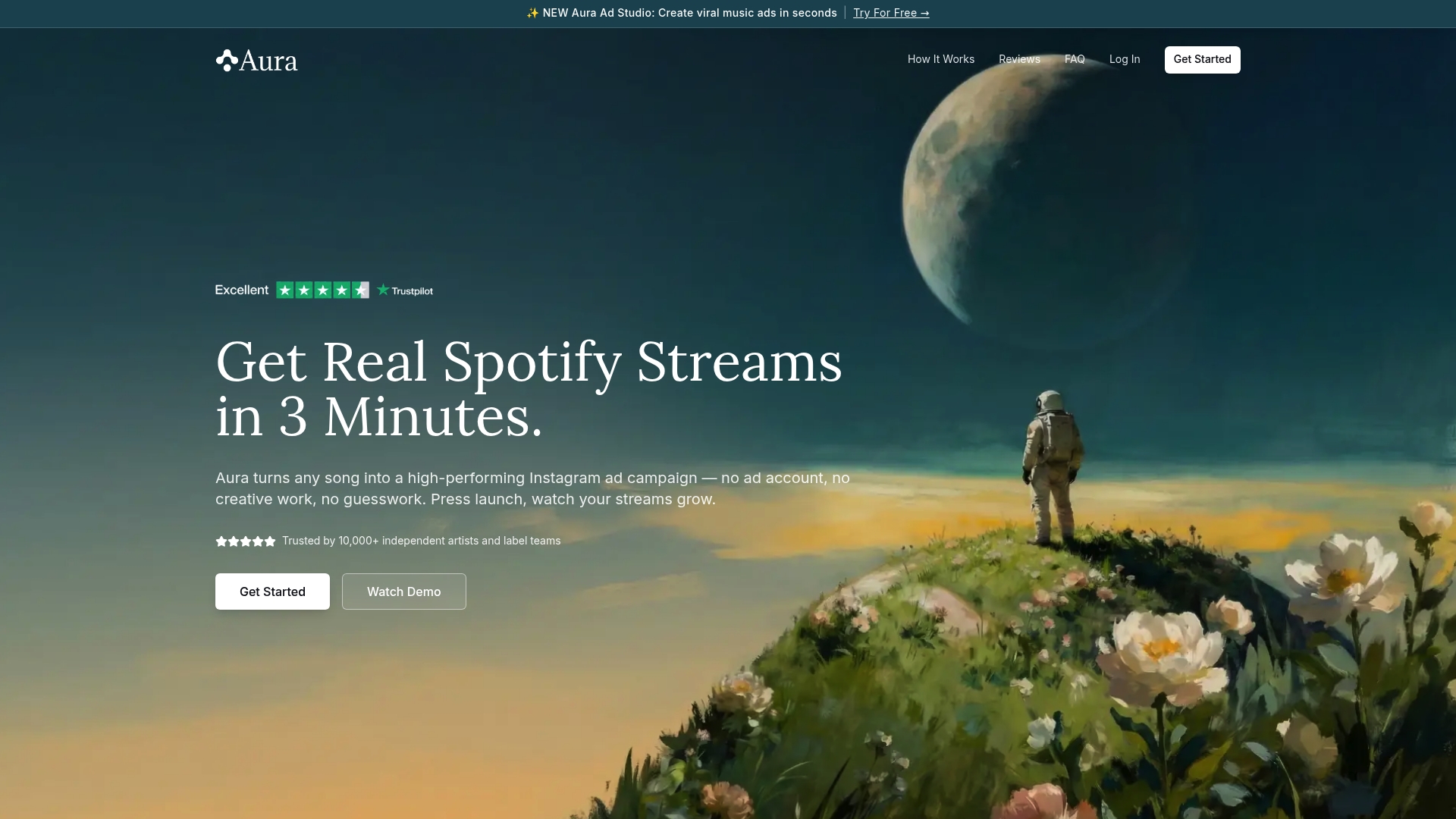
Aura reports being trusted by more than 10,000 artists and label teams. The platform automates campaign creation from song analysis to live ad delivery. That workflow aims to convert listeners into streams and followers with minimal hands on time.
Core Features
Aura offers one-click campaign setup that turns a Spotify link into a running ad campaign in minutes. The system produces AI-generated custom music ad creatives and applies advanced targeting that uses the track’s audio data rather than simple interest categories. Real time tracking and a template library let you monitor performance and pause or tweak campaigns quickly.
Key Differentiator
Aura’s AI focuses on the song itself to choose who sees the ads and what creative will likely resonate. That music-aware matching separates it from platforms that rely mainly on demographic or interest signals. For artists who prioritize matching mood and sonic identity with listeners, that approach can reduce wasted impressions.
Pros
The onboarding is quick and low friction, which helps artists who prefer to spend time making music not managing campaigns. Targeting by audio and genre gives the ads a better chance to reach fans who actually enjoy the sound. Automated creative generation saves hours of editing for artists without in-house designers. Campaigns report transparent fees tied to ad spend, making budgets predictable and easier to track.
Cons
- Primarily suited for artists with tracks ready for promotion; may not support pre-existing ad assets extensively.
- Dependence on AI matching might not align perfectly with every artist aesthetic or brand.
- Limited ability to customize creatives beyond selecting templates and small tweaks before launch.
When It May Not Fit
If you need full creative control over every visual and cut, Aura’s template driven workflow will feel restrictive. Artists without at least one finished track will not get much value from the automated pipeline. Campaign outcomes also scale with budget and music quality, so low budgets and weak source recordings reduce effectiveness.
Who It’s For
Independent artists and small label teams who want quick, music aware advertising without hiring an agency. Musicians who prefer hands off campaign management and fast iteration from templates will find it useful. Teams that need deep creative customization or agency level controls may need a different tool.
Real World Use Case
An artist submits a Spotify track link and Aura analyzes tempo, mood, and genre to pick a template. The platform generates short video ads that pair waveform visuals with a chorus hook and launches campaigns on social channels. The artist monitors streams and follower growth while the AI optimizes targeting in real time.
Pricing
Pricing is based on ad spend, and Aura advertises a transparent fee structure tied to how much you allocate to campaigns. The vendor does not publish fixed tier prices in this summary, so you will need to check the site or request a quote for exact rates. That model makes it simple to scale spend up or down with predictable platform fees.
Website: https://auramusic.ai
Droplink
At a Glance
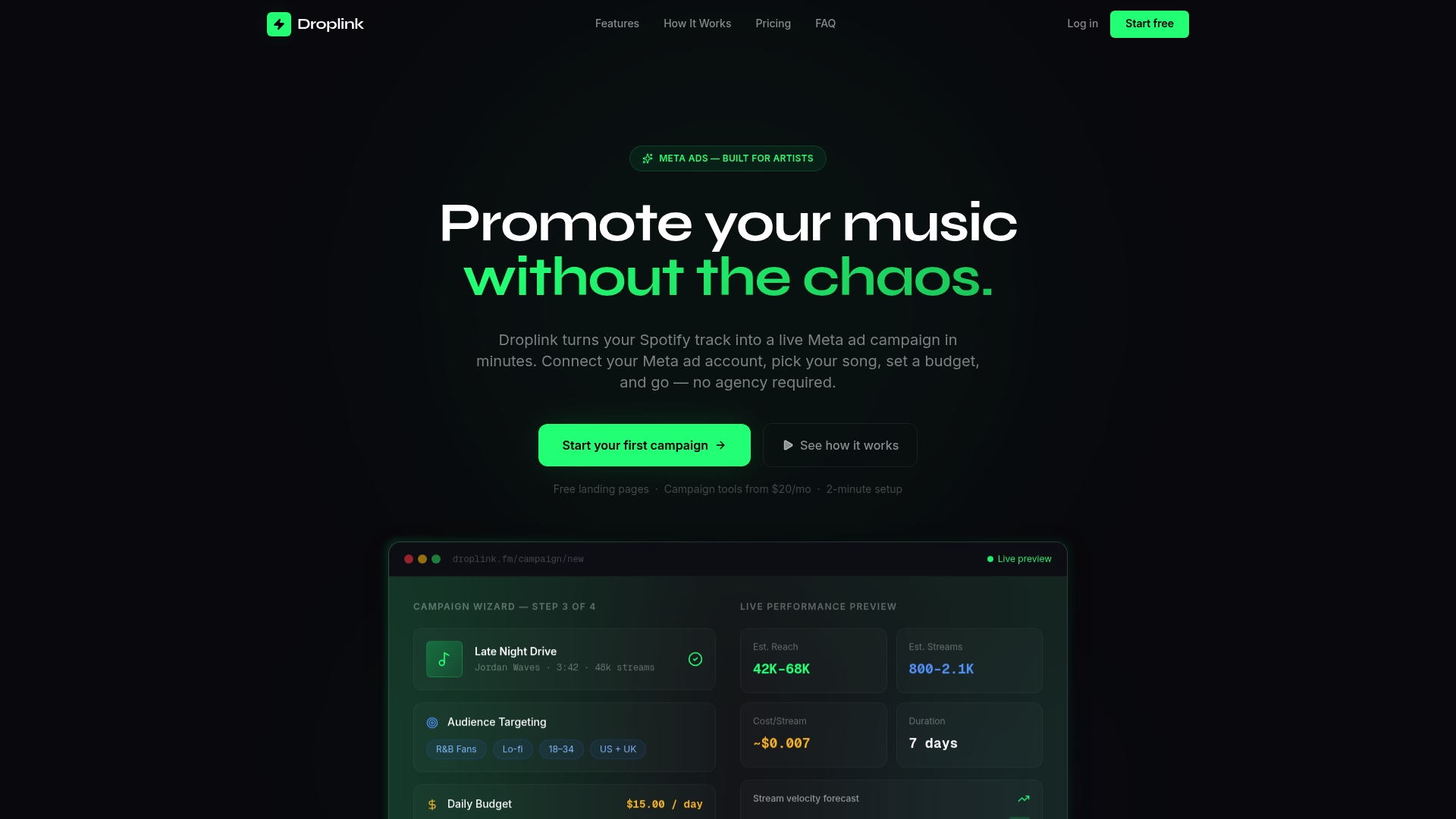
Droplink automatically turns a Spotify track into a live Meta ad campaign with an artist styled landing page in minutes. The platform focuses on ad setup, retargeting, and conversion tracking so artists can test paid promotion without learning Ads Manager.
Core Features
Droplink builds auto-built Spotify landing pages that match your artwork and host Spotify players and CTAs. It offers smart audience targeting by genre, mood, and demographics, plus automated retargeting for landing page visitors and engaged people. Conversion analytics track clicks, CTAs, and landing page performance, and the product guides Pixel and CAPI setup with simplified instructions.
Key Differentiator
Droplink centers entirely on making Meta ad campaigns stupidly easy for music promotion by removing most Ads Manager steps. Its interface ties every campaign directly to a Spotify track and a landing page so creative and tracking are ready at launch. This focus makes Droplink narrower than platforms that try to cover discovery, distribution, and long term audience development at once.
Pros
Droplink saves time by automating repetitive ad setup work, which helps you focus on creative and release timing. The landing pages come styled to your artwork, which keeps visual identity consistent and lowers the production load. Retargeting runs automatically so you keep reaching people who interacted with your ad or page. The analytics concentrate on engagement metrics that matter to artists, like click through and landing page conversions. The platform claims you do not need a Meta Business account or full Ads Manager access to get campaigns running.
Cons
- Limited to Meta platforms; you cannot run native campaigns on YouTube or Apple Music from Droplink.
- Advanced creative studio features and custom audiences live behind paid plans, which restricts what free users can test.
- Some buyer feedback reports weaker targeting granularity and reporting depth compared with manual ad management or agency services.
- Performance depends heavily on Meta algorithms and policy changes, which are outside Droplink’s control.
When It May Not Fit
Droplink is not a good match if you want cross platform paid promotion covering TikTok or YouTube. It will frustrate teams that need deep audience segmentation or raw exportable ad data for audits. If you expect AI optimization or enterprise grade analytics on the lowest tier, those features appear reserved for higher plans.
Who It’s For
Independent artists, DIY managers, and small labels who want a fast, low effort way to run Meta ad tests linked to Spotify tracks. It fits people who prefer to launch experiments quickly rather than build or manage full ad accounts.
Real World Use Case
An indie artist uploads a new single and uses Droplink to create a campaign in five minutes. They select the track, pick a genre based audience, set budget, and launch with a built landing page and retargeting running. The result is measurable lift in streams and social follows while the artist watches campaign metrics.
Pricing
Landing pages are free. Campaign tools start at $20 per month. A Pro tier with advanced retargeting and deeper analytics starts at $45 per month.
Website: https://droplink.fm
Comparison of alternatives
When choosing music promotion solutions, understanding the unique advantages of each platform helps tailor them to your campaigns’ specific demands. Each product in this analysis addresses diverse aspects of promotion, providing strengths that align with varied artistic needs.
Integration and automation depth
UpNComer excels in combining marketing and production tools like predictive AI-guided campaign execution and integrated mastering features, offering a complete artist management experience. However, Aura Music AI specializes in automating ad creative generation and matching campaigns with precise audience targeting derived from a track’s musical profile. While Aura’s approach benefits artists focusing solely on advertising, UpNComer offers a broader workspace for managing distribution and analytics.
Targeting niche promotion needs
PlaylistSupply is clearly advantageous for playlist discovery, providing verified curator outreach details and playlist analytics for engagement. In contrast, Droplink focuses on simplifying ad campaign creation through pre-designed landing pages tailored to promote tracks, which works excellently on Meta platforms. ORPL provides a flexible solution, handling both distribution and promotional outreach, ideal for artists emphasizing independence and branding.
Best fit
- Artists requiring an all-in-one solution for managing automated campaigns, mastering, and promotion will benefit from UpNComer.
- Teams prioritizing playlist outreach and organic placement data should consider PlaylistSupply for its efficiency in detailed curator contact and engagement verification.
- Musicians seeking plug-and-play advertising on Meta platforms will find Droplink’s auto-built campaigns and tracking tools effective.
- Creators needing integrated distribution with options for personalization might find ORPL’s bundled promotional services and artistic site creation more suitable.
Our pick
For independent artists seeking a dedicated platform to manage promotion, team engagement, and production coordination effectively, UpNComer provides a toolkit. While some features require time to become available, the current offerings, such as predictive AI-guided campaign execution, make this platform noteworthy. However, artists solely focused on playlisting or standalone ad management might find specific tools like PlaylistSupply or Droplink to be superior fits for those purposes.
For independent artists seeking an efficient platform to optimize their music promotion via automation, integrated features, and predictive AI, the following table compares leading options:
| Product | Core Features | Key Differentiator | Pricing | Notable Limitation |
|---|---|---|---|---|
| UpNComer | AI-driven campaign automation, mastering, analytics | Predictive AI integrated across tools | $27/month billed annually | Upcoming features not yet available |
| PlaylistSupply | Playlist discovery and curator contact verification | Contact-focused playlist outreach | $16.67/month billed annually | Limited scope beyond playlist and curator discovery |
| ORPL | Distribution, promo tools, custom artist site | Unified platform for distribution, ads | ₴399/month, ₴999/release | Limited analytics and unclear onboarding support |
| Aura Music AI | AI-generated music ads, real-time optimization | Audio-driven ad targeting via AI | Cost tied to ad spend | Limited creative customization beyond templates |
| Droplink | Spotify-Linked Meta ads, landing page generation | Streamlined ad setup for Meta campaigns | $20/month, $45 Pro | Limited to Meta platforms, lacks advanced segmentation |
Simplify Your Spotify Promotion with Upncomer
Navigating Spotify promotion can leave you juggling multiple tools and campaigns that burn you out before your music reaches its audience. The pain of switching between analytics, mastering, playlist pitching, and ad management slows down your growth and eats up your valuable time. Upncomer offers a unified AI-powered platform designed to replace scattered services with a single workspace that guides your marketing and release strategy using real-time data.
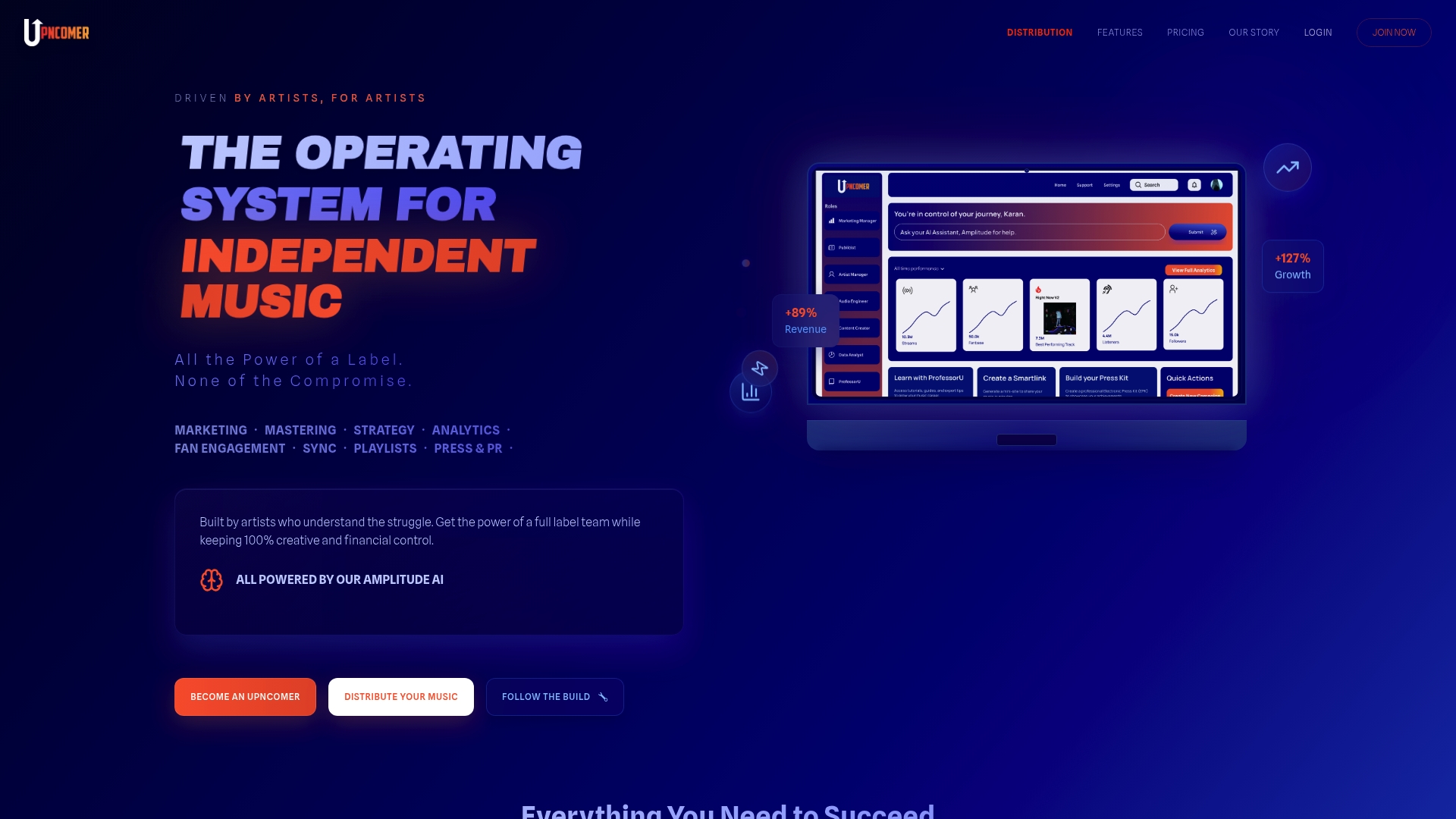
Focus on what matters—creating great music—while Upncomer handles ad campaigns, streaming analytics, fan engagement, and AI mastering all in one place. Start gaining control over your releases without losing royalties or rights. Visit Upncomer to explore tools built for independent artists ready to grow effective Spotify campaigns and scale their careers with confidence.
FAQ
How does Upncomer help with campaign automation?
Upncomer automates ad targeting and budget allocation through its Growth Engine feature. This allows independent artists to manage their promotional campaigns with greater efficiency. Artists can focus more on their music while benefiting from streamlined marketing processes.
What is the difference between PlaylistSupply and Upncomer?
PlaylistSupply excels in providing verified curator contact details and playlist quality metrics to help artists connect with real listeners easily. Upncomer, on the other hand, combines distribution, campaign management, and mastering all in one platform, making it ideal for artists looking for an all-in-one solution rather than just playlist outreach.
Which platform is best for retaining artist royalties?
Upncomer offers 100% of royalties and rights on distributed releases. This feature is particularly beneficial for independent artists who want to maximize their earnings without sharing them with middlemen or agencies.
Can I use Upncomer if I want to maintain full ownership of my music?
Yes, Upncomer ensures artists retain full ownership along with maximizing their reach and engagement. This makes it suitable for independent musicians intent on controlling their creative assets and financial returns.
How is Upncomer priced compared to other platforms?
Upncomer’s Pro plan starts at $27 per month, which positions it as a cost-effective solution compared to other music marketing software that might involve multiple fees for different functionalities. This pricing structure helps artists manage their budgets effectively.
Can I expect personalized support while using Upncomer?
While the article doesn’t detail specific support options, Upncomer provides learning resources for artists to familiarize themselves with their offerings. This can make it easier for individuals to navigate the platform and utilize its features effectively.