Recording Studio Additional Revenue Streams in 2026
What are the best additional revenue streams for recording studios?
The studios making real money in 2026 are not the ones with the biggest rooms. They are the ones with the most income sources. Hourly recording fees alone leave you exposed to slow seasons, client cancellations, and the constant pressure of filling every hour. The fix is diversification, and the good news is that your existing space, gear, and skills are already most of the way there.
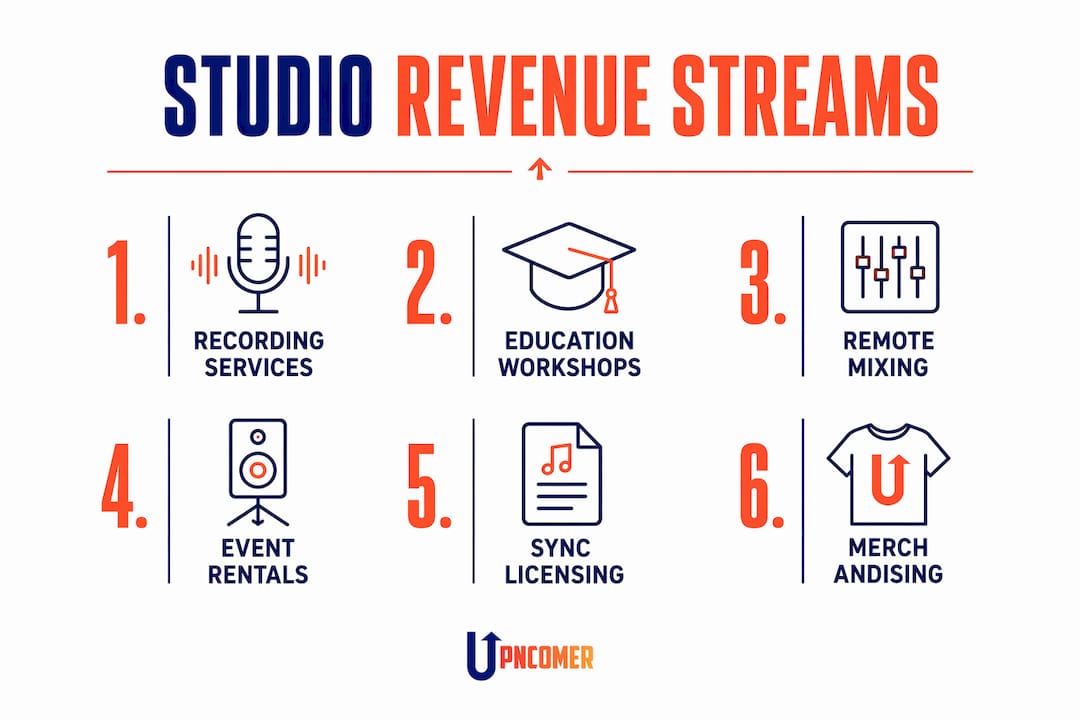
Here is a clear breakdown of the highest-impact options:
- Artist development retainers: Shift from one-off sessions to ongoing partnerships. Retainers run $2,800–$14,800 per month per artist, turning a single client into a predictable monthly income line.
- Mixing and mastering services: Post-production carries stronger margins than live tracking because it needs less room time and can be delivered remotely to clients anywhere.
- Educational workshops and lessons: Running audio engineering classes or instrument lessons during slow periods, especially february and november, fills downtime with steady supplementary revenue.
- Merchandising and physical media: Branded gear, CD duplication, and physical releases tap into artist fan bases and add income without requiring extra studio hours.
- Remote and online services: Online mixing, podcast editing, and voiceover production expand your client base well beyond your local market.
- Event and rehearsal space rentals: Renting your live room for rehearsals, video shoots, or creator content sessions fills hours that would otherwise sit empty.
- Selling beats, samples, and royalty-free catalogs: A well-tagged catalog generates passive income and complements your active client work.
- Subscription and membership programs: Monthly packages give clients regular studio access and perks while giving you predictable cash flow.
- Sync licensing and commercial music: Jingles and sync placements can bill premium fees per commercial, with established sync-focused producers commanding significant annual retainers.
- Partnerships with local artists and businesses: Referral relationships with managers, entertainment attorneys, and music supervisors create a steady pipeline of new clients.
How to manage studio costs and run a tighter operation
Diversifying income only works if your cost base does not eat the gains. The biggest cost drivers for most independent studios are rent, equipment maintenance, software licenses, and labor. Getting a handle on all four starts with a monthly financial review, not a quarterly one.
Project-based pricing is one of the most underused levers here. When you quote a flat rate for an EP or album, you protect yourself from scope creep and give the artist cost certainty upfront. Both sides win.
- Audit your software stack: DAW licenses, plugin subscriptions, and sample libraries add up fast. Cut anything you have not used in the last 90 days.
- Prioritize room treatment and microphones over outboard gear. Clients notice the sound of a room and the quality of a vocal chain far more than whether you have a vintage compressor in the rack.
- Automate your booking process: Scheduling software reduces admin friction, builds a professional digital storefront, and frees you to focus on the work that actually pays.
- Set peak and off-peak rates: Charge more for weekend evenings, less for weekday mornings. This nudges clients toward your empty hours without discounting your premium slots.
- Remove public hourly rates from your website: Studios that negotiate by project value rather than posting a flat rate achieve better pricing and avoid being filtered out before a conversation even starts.
Pro Tip: Quote projects, not hours. A client who knows their total cost upfront is less stressed, more focused, and far more likely to come back.
Building client relationships that generate repeat revenue
The fastest path to stable income is not finding new clients. It is getting your current ones to come back, and to bring others with them. That starts with outcome selling: instead of pitching “eight hours of studio time,” pitch “a finished single ready for release.” The framing shifts you from a commodity to a partner.
Recurring income models like podcast editing retainers and artist development packages are the clearest example of this in practice. One podcast client producing two episodes a month is worth more than a dozen one-off bookings, and they require almost no sales effort after the first conversation.
- Follow up after every session with a short message, a rough mix preview, or a release checklist. It costs nothing and keeps you top of mind.
- Offer retainer packages for ongoing content creators: Podcasters, YouTubers, and independent artists releasing regularly all benefit from a monthly rate, and so do you.
- Build referral pipelines with local music managers, entertainment attorneys, and venue bookers. These relationships send you pre-qualified clients who already trust the source.
- Use client feedback actively: A genuine testimonial on your website or Google profile does more for new client acquisition than most paid advertising.
- Leverage Upncomer’s Artist Manager and Growth Engine to track client engagement, manage follow-ups, and identify which artists in your network are ready to move into a development retainer.
Explore artist development frameworks to understand how studios can structure these ongoing partnerships for maximum value on both sides.
Expanding studio services to diversify income beyond recording
Your studio is already a production facility. The question is how many ways you are using it. The services below tend to carry higher margins than straight tracking because they require less room time, can often be delivered remotely, and serve client segments that traditional recording studios ignore.
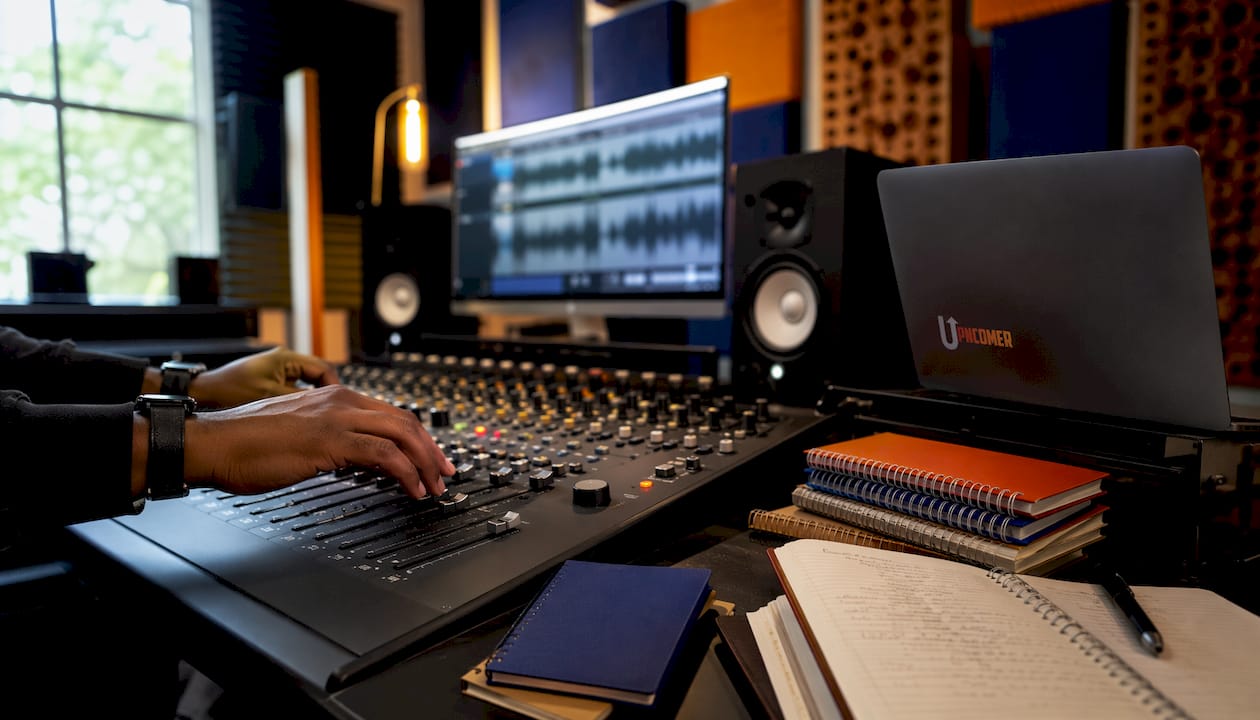
Educational services are one of the most overlooked options. Audio engineering classes, music production workshops, and private instrument lessons all generate income during your slowest booking periods. Students who learn in your space often become recording clients.

Remote services remove geography as a constraint entirely. Online mixing, mastering, and podcast production let you serve clients in other cities or states without them ever setting foot in your studio. This is where AI mastering tools and remote session platforms make a real difference, expanding your capacity without adding staff.
Event-related offerings fill the hours between sessions. Rehearsal room rentals, live sound and lighting for local gigs, and hosting showcases or listening parties all monetize space that would otherwise sit dark. Live sound work also functions as a lead generation tool: engineers who work local festivals and venues regularly convert performing musicians into studio clients.
Sync licensing and commercial music represent the highest-margin specialty for studios willing to build the expertise. Jingle production, brand sonic identity packages, and library music catalogs all command fees that dwarf standard hourly rates.
Merchandising rounds out the picture. CD duplication, branded studio gear, and physical media sales capitalize on artist fan bases and add income that requires no additional room time. Subscription models, where clients pay a monthly fee for guaranteed studio access and exclusive perks, add the predictability that hourly bookings never will.
How AI tools help studios unlock more revenue
AI is not replacing studio engineers. It is handling the tasks that used to eat hours without generating income: scheduling, client follow-up, catalog tagging, and marketing analytics. Studios that adopt these tools free up time for the work that actually pays.
| Area | Without AI tools | With AI tools |
|---|---|---|
| Booking management | Manual back-and-forth, missed slots | Automated scheduling, real-time availability |
| Marketing | Guesswork-based outreach | Audience insights, targeted campaigns |
| Mastering and mixing | Limited to in-person capacity | Remote delivery at scale |
| Catalog management | Untagged files, missed sync opportunities | Metadata-rich library, pitchable to supervisors |
| Client engagement | Reactive, ad hoc follow-up | Automated touchpoints, retention tracking |
Upncomer’s platform brings these capabilities together in one place. Amplitude AI provides data-driven guidance on artist growth and release strategy. The Data Analyst module surfaces audience insights that help you target marketing spend. UrStudio supports AI mastering for remote clients, and the Distribution module opens new monetization channels beyond session fees. For studios building a sync licensing specialty, Upncomer’s catalog and metadata tools help you build a pitchable library without hiring a separate administrator.
Pro Tip: Start with one AI tool, not five. Automate your booking process first. The time you recover there funds everything else.
Understanding publishing administration is also worth your time if you are helping artists collect royalties from sync placements and streaming, since that knowledge positions you as a more complete partner.
Grow your studio with Upncomer
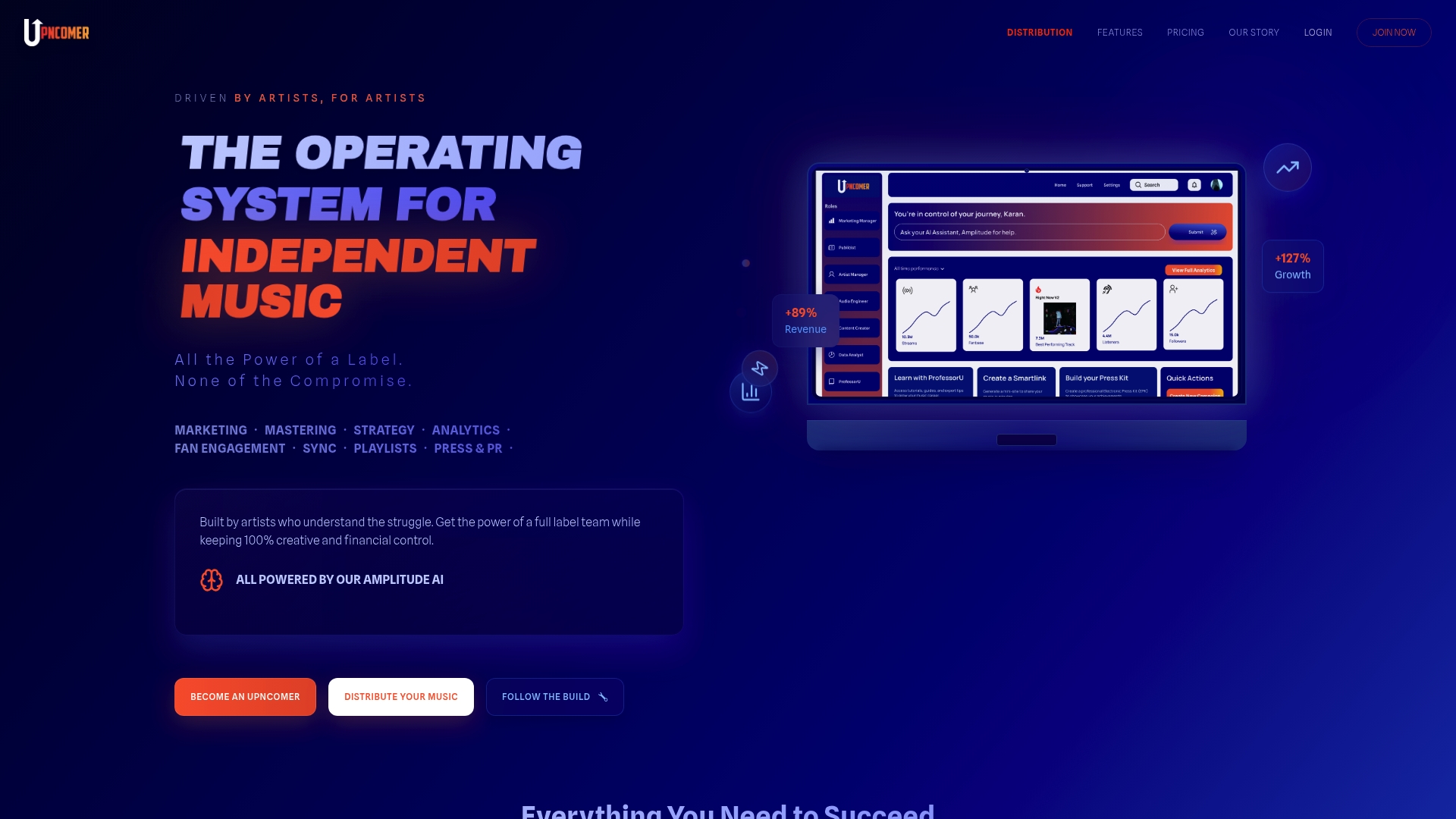
Upncomer is built for independent artists and the studios that support them. If you are ready to move beyond hourly bookings and build a studio business that generates income from multiple directions, Upncomer’s platform gives you the tools to do it: AI-powered artist management, streaming analytics, distribution, and release promotion, all in one place.
Key Takeaways
Studios that diversify across multiple income streams are more profitable and more resilient than those relying on hourly bookings alone.
| Point | Details |
|---|---|
| Retainers beat hourly fees | Artist development retainers run $2,800–$14,800 per month, turning one client into reliable monthly income. |
| Remote services expand reach | Online mixing, mastering, and podcast production serve clients outside your local market with no extra room time. |
| Education fills slow periods | Workshops and lessons generate steady income during your quietest booking months. |
| Project pricing protects margins | Flat-rate project quotes reduce scope creep and improve client satisfaction over hourly billing. |
| AI tools multiply capacity | Automated scheduling, AI mastering, and data analytics free up time and open new revenue channels. |
FAQ
Is owning a recording studio profitable?
Yes, but profitability depends on diversification. Studios that combine recording, mixing, mastering, education, and rental services achieve stronger margins than those relying solely on hourly bookings.
How do you create additional revenue streams for a studio?
Start with services that use your existing space and skills: remote mixing, podcast editing, educational workshops, and rehearsal room rentals. Add retainer packages for recurring clients to stabilize cash flow.
What are the highest-margin services a recording studio can offer?
Sync licensing, artist development retainers, and commercial music production typically command the highest fees, with established sync-focused producers commanding significant annual retainers.
How can a studio generate passive income?
Selling beats, royalty-free sample packs, and library music catalogs generates income without requiring active studio time. Subscription membership programs also create predictable monthly revenue with minimal ongoing sales effort.
How do recurring income models work for studios?
Recurring projects like podcast editing retainers and artist development packages provide predictable cash flow and reduce dependence on finding new clients every month.