Top 6 Meta Ads for Musicians Alternatives 2026
Managing paid ads, fan tracking, and streaming analytics from separate tools wastes time and splits important data for independent musicians. Most platforms lock advanced campaign automation behind expensive plans or require manual setup across multiple dashboards. You can compare features, pricing, and automation options across six alternatives to find one that matches your workflow and budget.
Table of Contents
UpNComer
At a Glance
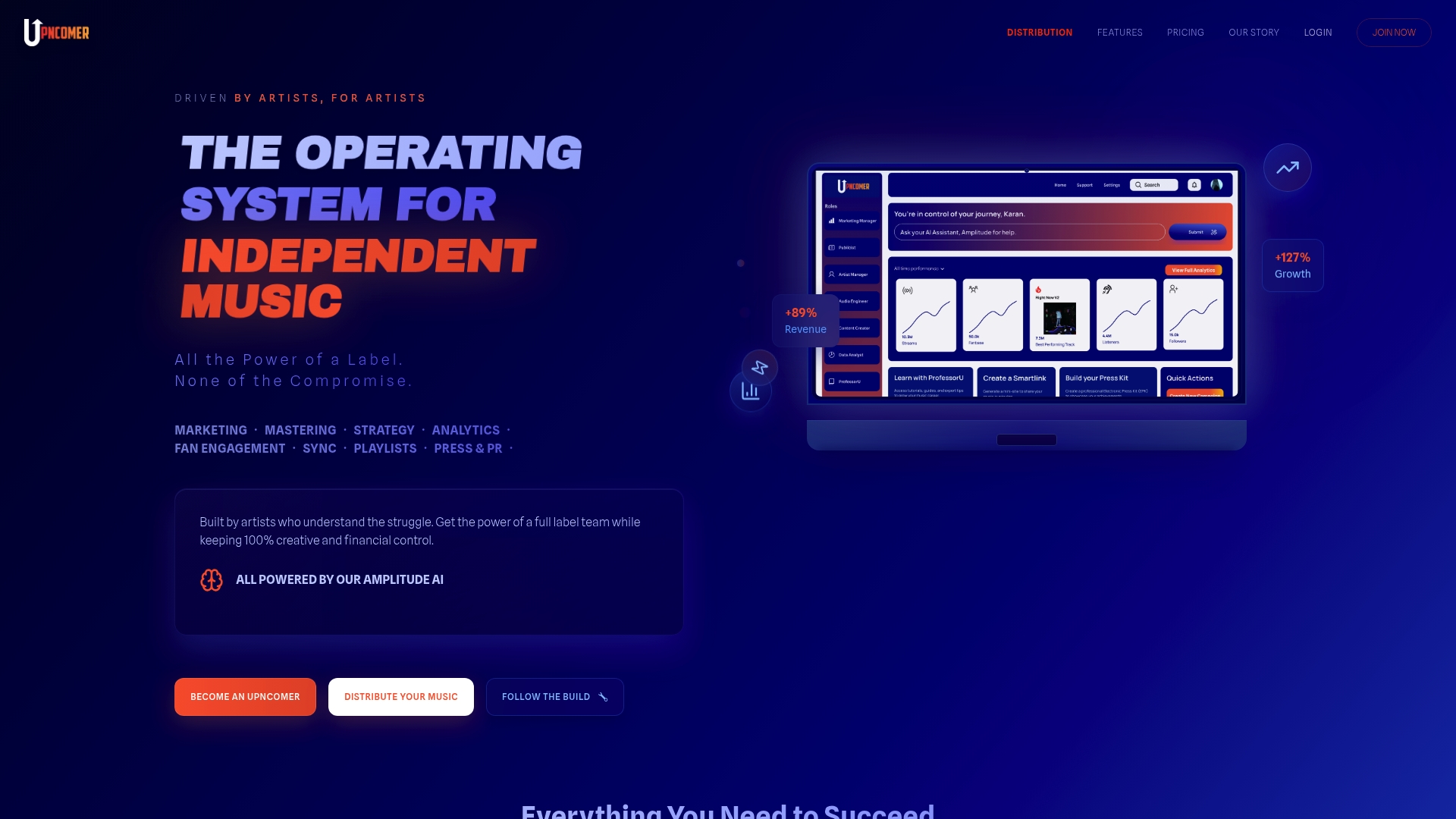
Built entirely around AI-driven automation, UpNComer packages ad campaigns, distribution, mastering, and analytics into an all-in-one workspace for independent artists. The platform centers its workflow on Amplitude AI and combines campaign management with content tools and fan tracking. That setup reduces the need to juggle separate vendors.
Core Features
UpNComer runs automated ad campaigns across major platforms and offers an artist management dashboard that tracks fans, smart links, and revenue. The platform includes real time performance analytics and AI content generation with social scheduling. It also bundles audio mastering and mixing via UrStudio, plus learning modules labeled ProfessorU and pipeline tools for playlist pitching and press outreach that are rolling out.
Key Differentiator
Built around AI-driven automation and insights, UpNComer aims to replicate a label-like toolkit while keeping artists in control of royalties and routing. The platform ties campaign execution to analytics and creative tools inside one workspace, which shortens feedback loops between ads, releases, and audience data.
Pros
UpNComer replaces multiple traditional services so you pay fewer vendors and keep more revenue. Its automation reduces routine campaign setup and ad tuning, freeing time for writing and performance. The platform keeps royalty ownership with the artist and centralizes distribution, marketing, analytics, and mastering in one account. Community support and continuous updates add practical help as new modules arrive.
Cons
- Pricing is not clearly specified publicly, which may make budgeting and vendor comparisons harder.
Who It’s For
Independent musicians who want to run promotion and distribution without a large management team will get the most from UpNComer. It fits artists who are comfortable using AI tools to handle ad campaigns, content scheduling, and basic mastering. Bands or labels that need deep customization for enterprise workflows may find the platform less suited to their needs.
Unique Value Proposition
Amplitude AI drives campaign recommendations and automations inside the same workspace where you upload releases and master tracks. That means you can build an ad, see audience splits, adjust creative, and push a mastered file to distributors without moving between separate dashboards. For artists with limited time and small teams, this workflow reduces manual handoffs and shortens the path from idea to paid promotion.
Real World Use Case
According to the company, Karan, an independent artist with 100,000 monthly listeners, used UpNComer to centralize marketing and content workflows and reported a 400% increase in streams while retaining full royalties. That case shows how an artist can replace multiple vendors and keep revenue control by running campaigns, mastering, and distribution from one account.
Pricing
Most features live under a Pro plan with monthly or annual payment options, but the vendor does not publish clear pricing on the site. Some newer features are listed as coming soon and may sit behind higher tiers or add-ons. Contact sales for exact costs and enterprise terms.
Website: https://upncomer.co
intellijend
At a Glance
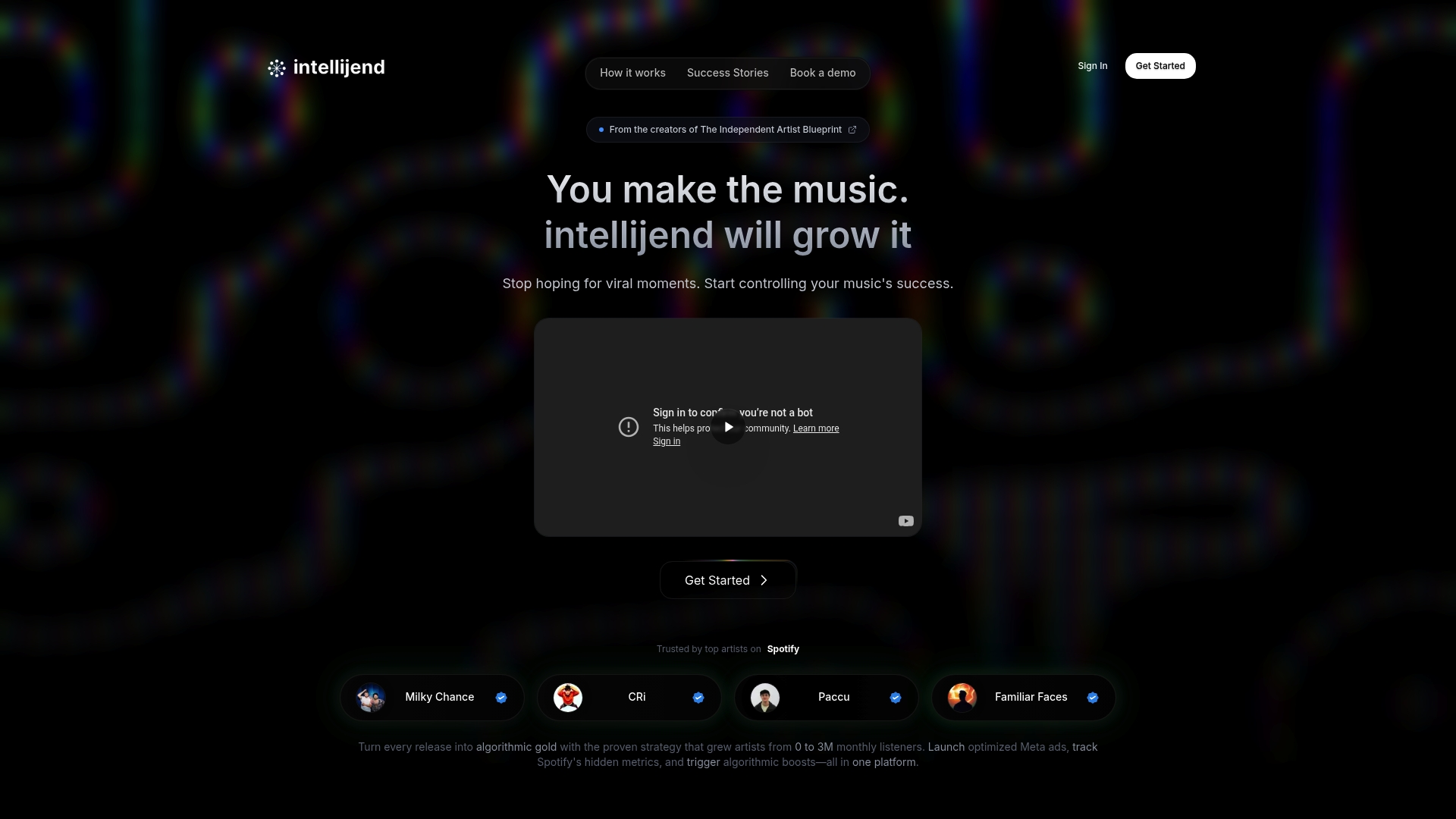
Proven drop-in automation triggers Spotify algorithm boosts by using front loaded ad spend and precise timing strategies. The vendor advertises thousands of campaigns and proprietary research that shaped those timing rules. That method targets artist and track popularity scores to increase visibility in algorithmic playlists.
Core Features
intellijend combines a dashboard for Spotify growth metrics and campaign analytics with Meta Ads integration that automates ad deployment and pacing. It tracks historical follower and playlist growth while sending algorithmic insight notifications and daily growth action items. The platform also includes proven strategy templates for campaign structure and timing so you rarely start from scratch.
Key Differentiator
The platform’s core distinction is a drop-in automation system that triggers Spotify’s algorithmic boosts through front loaded ad spend and data driven timing. That focus on timing and early spend sequencing sets intellijend apart from tools that only report metrics or run static campaigns.
Pros
The company claims its data backed templates significantly increase monthly listeners. That claim pairs with campaign automation that reduces hands on campaign work and frees you to focus on releases and creative. Pricing sits below typical agency retainers, and the solution supports scaling by managing multiple artists or projects inside one account while offering community support for strategy questions.
Cons
-
May require an initial learning period to fully leverage automation and templates.
-
Effectiveness depends on following recommended campaign structures and on the quality of your music and creative.
-
Some users report occasional bugs and slower support response times.
When It May Not Fit
intellijend requires a Spotify artist account and a Meta Ads setup, so it does not work for artists who do not control those accounts. The approach depends on visual creative and audience demand, so genres with very small or niche audiences may see limited payoff. If you prefer manual ad control or bespoke agency work, the drop in automation model may not match your workflow.
Who It’s For
Solo independent artists, small labels, and managers who want an affordable way to run repeatable Spotify growth campaigns fit best. It matches teams that want to reduce hands on ad management while keeping control over creative and release timing. The platform suits people who value templates and clear daily tasks over one off consulting.
Real World Use Case
An independent artist launches a single and connects their Spotify artist account and Meta Ads. intellijend automates front loaded ad spend, monitors artist and track popularity scores, and sends daily timing recommendations for follow up pushes. The artist uses those signals to schedule a second promotion window and to time playlist pitching.
Pricing
Pricing starts at $24.99/month with options for annual billing and additional artist accounts. Monthly billing lets you test campaigns before committing to a full year. Additional artist accounts are available as paid options for managers or small labels.
Website: https://intellijend.com
SongTools
At a Glance
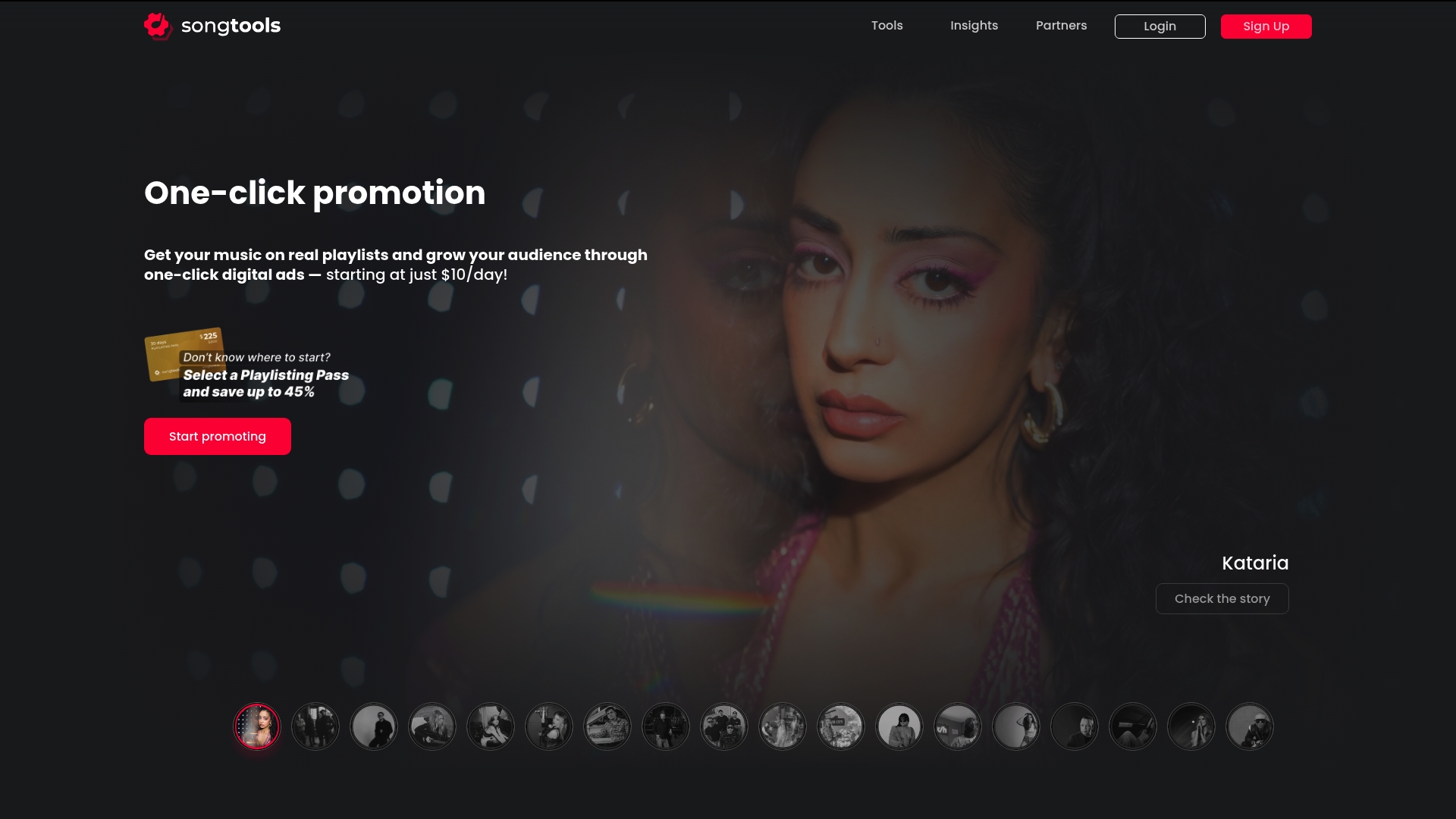
Starts at $10/day for promotion tools while offering free options for landing pages, blogs, and asset storage. The platform combines playlist pitching, automated ads, and landing page creation in one place. That pricing and bundled approach makes it easy to test paid promotion without locking into a long contract.
Core Features
SongTools provides one click promotion to playlists, social media, and streaming platforms alongside landing page and SEO blog builders that require no coding. The platform includes cloud storage for music assets and automated ad delivery across TikTok, Instagram, and Facebook. Campaign tracking sits in a single dashboard with AI driven insights from VYBE technology to help you read performance faster.
Key Differentiator
The standout is the combination of an integrated campaign dashboard and white label reseller options that let partners rebrand services for their clients. That setup pairs DIY promotion for artists with a reseller model for agencies and labels. The product positions itself as a single vendor for pitching, advertising, content, and analytics.
Pros
SongTools simplifies promotion by grouping playlist pitching, paid ads, and landing pages inside a single dashboard so you spend less time switching tools. The no code landing page and blog builders reduce production friction and make it faster to publish promo assets. Its white label option and real-time analytics from VYBE support partners who want to resell marketing services under their brand.
Cons
-
Limited public detail about tiered pricing beyond the $10/day starting point.
-
External reviews emphasize feature lists and success stories more than gaps or technical limits.
-
New users may find managing multiple functions inside one platform initially complex.
When It May Not Fit
If you need a fully transparent monthly pricing table before trialing, SongTools may feel too opaque. Organizations that require documented service level agreements and clear support response times should verify those details before committing. Large labels that expect dedicated account management might find the public information insufficient.
Who It’s For
Independent artists, DIY managers, small labels, and music marketing professionals who want a unified tool set for promotion and content publishing. Also suited to agencies and partners who plan to resell marketing services under their own brand. The platform fits teams that prefer one place to run landing pages, ads, and playlist outreach.
Real World Use Case
An indie artist builds a landing page, stores stems and artwork, and launches a playlist pitch and social ad campaign from the same dashboard. They monitor clicks, streams, and ad spend in one view and adjust creatives based on the VYBE insights. That workflow cuts coordination time between separate tools and agencies.
Pricing
Starts at $10/day for promotion tools with free options for landing pages, blogs, and asset storage. The vendor does not publish a full tier breakdown publicly, so monthly plan details and higher tier pricing must be requested. Free features let you test pages and basic asset hosting before funding paid campaigns.
Website: https://songtools.io
MAVA
At a Glance
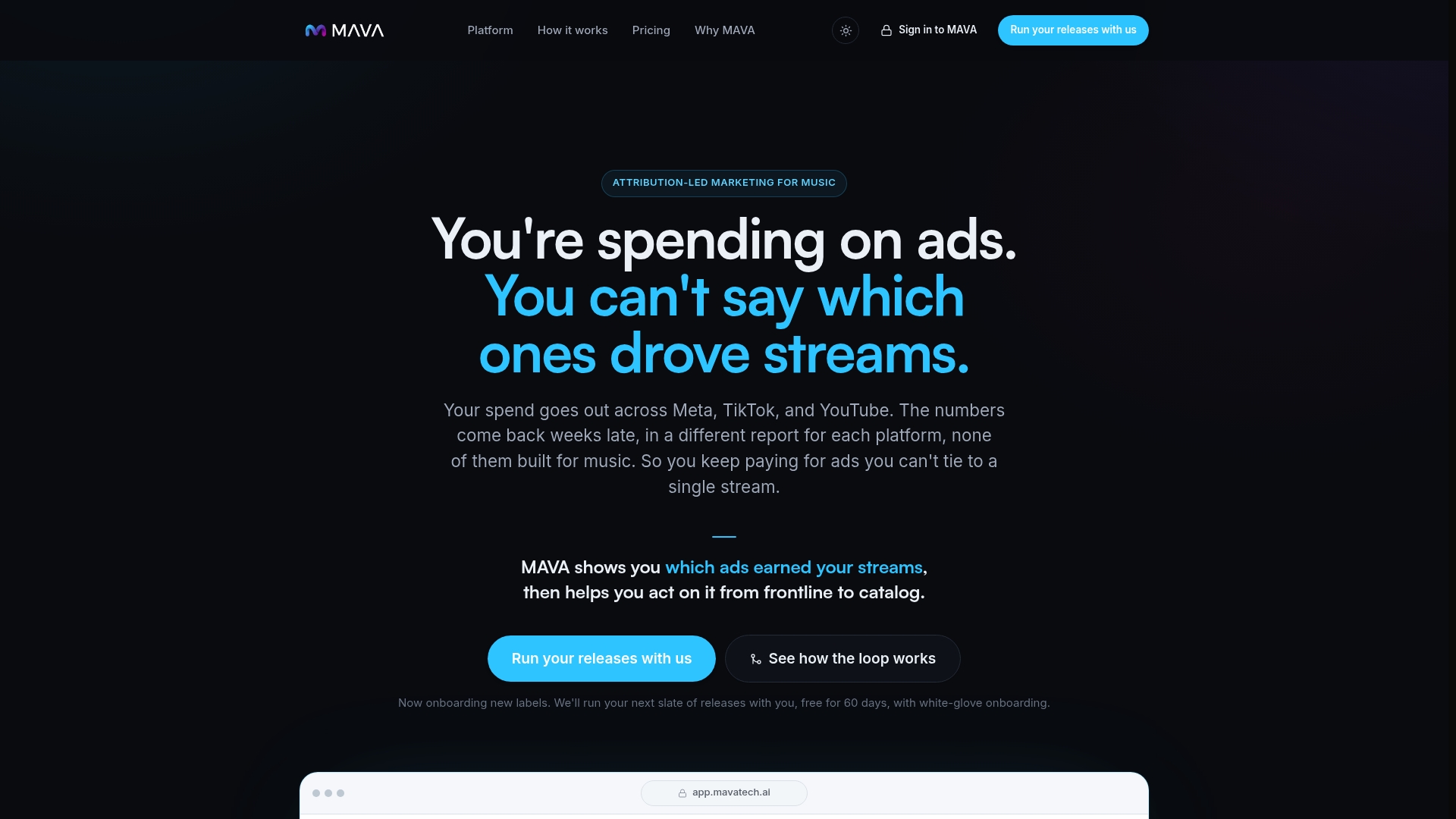
MAVA pairs Stop Loss alerts with auto pause controls and automatic Breakouts that boost trending posts. It links ad spend directly to streaming activity across major platforms. That focus makes it easier to spot and act on short term momentum.
Core Features
MAVA connects to Meta, TikTok, YouTube, Instagram, Spotify, and Apple Music to centralize ad and streaming data. The platform attributes ad spend to streams and produces platform specific recommendations for campaign adjustments. It also runs automated risk controls and highlights breakout posts so you can shift budgets quickly.
Key Differentiator
MAVA combines cross platform attribution with real time momentum detection and automated campaign optimization in one workspace. That pairing lets marketing teams trace which ads drive streams and then react automatically to emerging opportunities. The system emphasizes lifecycle management from frontline releases to long term catalog attention.
Pros
MAVA enables near real time attribution that matches ad spend to streaming shifts and campaign outcomes. The platform shows activity across every connected channel so teams stop guessing which placement moved the needle. MAVA automates campaign adjustments and risk controls to reduce wasted spend. MAVA’s marketing materials state a free 60 day onboarding for new clients, which helps teams adopt the workflow faster.
Cons
- Some third party reviewers request deeper automation and finer manual control options for complex campaigns.
- Pricing scales by roster and may be costly for very small labels or artists with minimal budgets.
- API refresh frequency varies by streaming provider and can impact real time decision-making.
When It May Not Fit
If you need full hands off automation for every campaign type, MAVA may require a higher tier to reach that level. Teams that demand instantaneous streaming feeds from every provider will face limits tied to source API refresh schedules. Very small DIY artists with single act budgets may find roster based pricing harder to justify.
Notable Integrations
MAVA connects directly to these platforms:
- Meta
- TikTok
- YouTube
- Spotify
- Apple Music
Who It’s For
This product suits music marketing teams, independent labels, and artist managers handling multiple releases and ad campaigns. It fits groups that track ROI across social ads and streaming services and that need clearer attribution. Solo artists who run a single release may find the pricing model less friendly.
Real World Use Case
A label links TikTok, Meta, and YouTube into MAVA during an album rollout. The team watches breakout posts and shifts budgets to the specific ad creative that drives the spike in streams. They use Stop Loss alerts to pause losing ads and preserve budget for winners.
Pricing
MAVA charges by roster rather than by usage. Pricing scales with the number of artists you manage, which aligns costs to team scope. Exact tiers and quotes are available from the vendor.
Website: https://mavatech.ai
ORPL
At a Glance
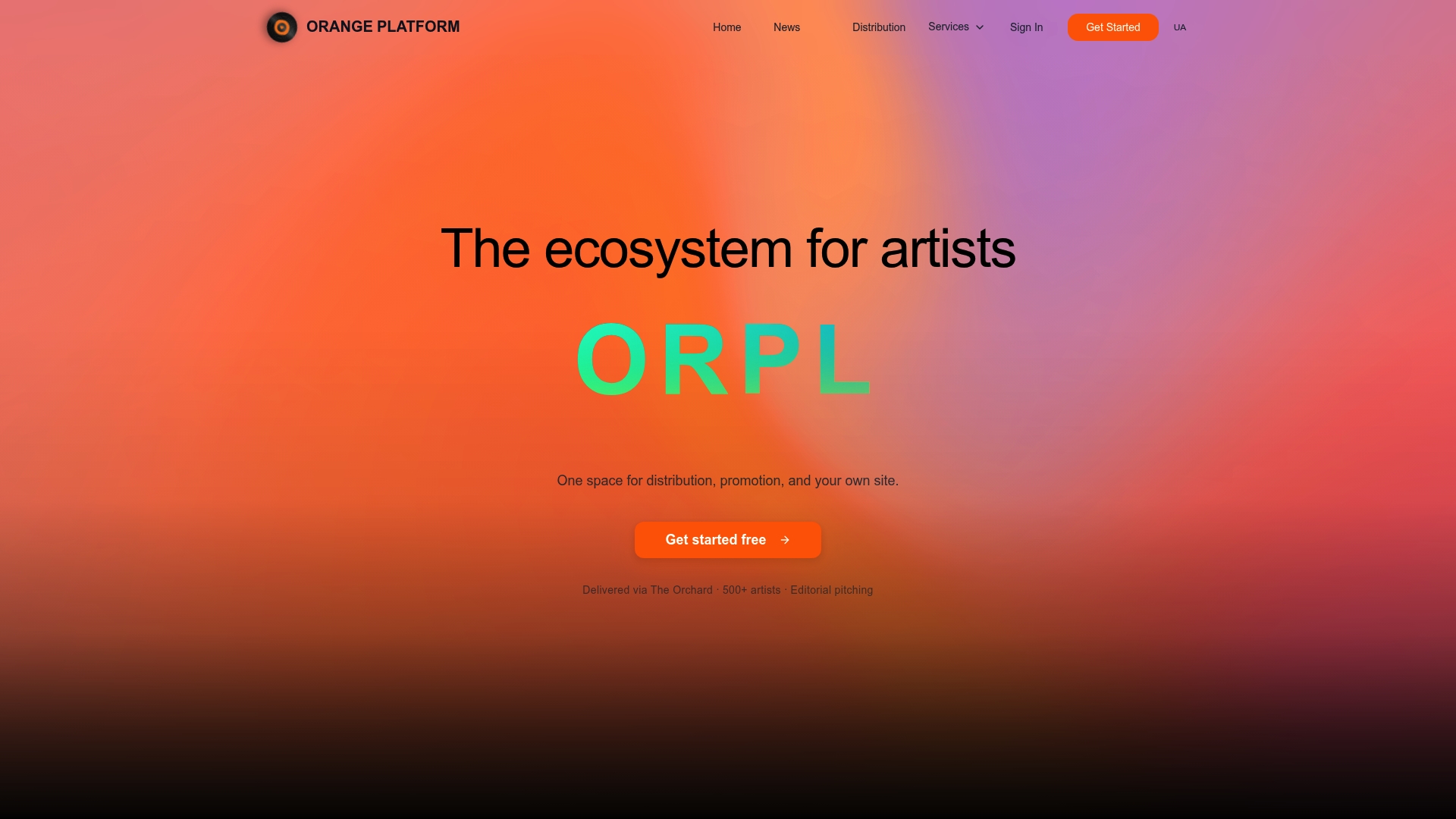
ORPL lists a single release one-time fee of ₴999 while also offering a free plan and a PRO plan at ₴399/month. That pricing sits alongside distribution, playlist pitching, artist websites, and an AI Lab for covers and videos.
Core Features
ORPL centralizes distribution to major streaming platforms including Spotify, Apple Music, YouTube Music, and TikTok, and pairs that with playlist pitching and release checklists. The platform includes artist website creation, promotional services such as radio and media pitching, plus an AI Lab for generating covers and short videos.
Key Differentiator
The company advertises a combined suite of distribution, promotion, branding, and educational tools inside a single platform. That focus on putting release logistics, marketing, and creative tools together is meant for artists who prefer one place to manage releases and marketing.
Pros
ORPL acts as an all-in-one hub for distribution, promotion, and branding, which reduces the number of separate vendors you must manage. The integration with The Orchard helps automate content ID and metadata handling for distributed releases. A free entry-level plan lowers the barrier to try the service, while paid tiers add dedicated promotional services such as YouTube ads and radio pitching.
Cons
-
Limited analytics depth: the platform lists release management features but gives little detail on audience segmentation or advanced reporting.
-
Potential cost for small budgets: monthly and single release fees may strain emerging artists with minimal promotion budgets.
-
Unclear promotional reach: specifics about the reach and success rate of playlist and radio pitching are not provided.
When It May Not Fit
If you need deep audience analytics and granular targeting, ORPL may not meet your requirements. Artists on very tight budgets might prefer pay-as-you-go options with lower upfront costs. Larger teams that rely on enterprise-grade reporting and custom APIs will likely find ORPL too limited for their workflows.
Notable Integrations
- The Orchard
Who It’s For
Emerging independent musicians and artists who want a single place to manage releases, build a simple artist website, and combine basic promotion with distribution. This suits solo artists and small teams that prefer fewer service vendors and straightforward pricing tiers.
Real World Use Case
A solo musician prepares a new EP, uses ORPL to upload masters and metadata to streaming services, pitches playlists, builds an artist landing page, and runs short YouTube ad campaigns all from the same dashboard. The artist tracks checklist items for PR and delivery while keeping promotional tasks in one workflow.
Pricing
Free plan available for basic use. PRO plan costs ₴399/month, and a single release option is available for ₴999 as a one-time fee. The pricing offers clear entry points but may require a paid plan for full promotional services.
Website: https://orpl.app
Droplink
At a Glance
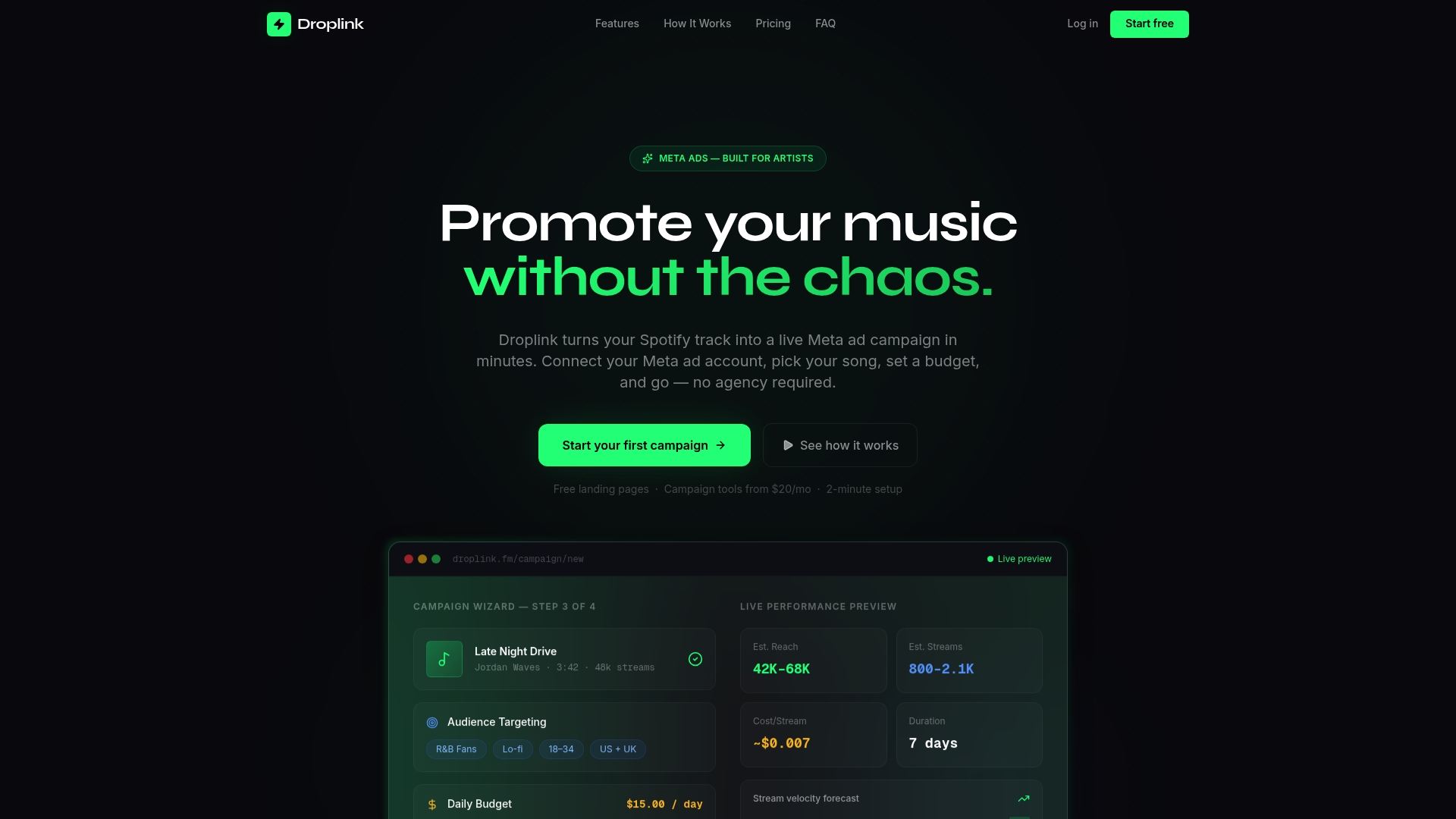
Droplink reports that artists can create and launch a Spotify-focused Meta ad campaign in under 3 minutes. This claim reflects the product’s focus on fast, low-friction setup for musicians who do not want to learn complex ad flows. The platform pairs auto-generated Spotify landing pages with guided Meta Pixel and CAPI setup to keep the post-click experience consistent.
Core Features
Droplink auto-generates Spotify landing pages and pairs them with guided Pixel and conversion event setup for Meta Ads. It offers smart audience targeting based on genre, mood, and demographics, plus tracking and analytics that show engagement on landing pages. On higher plans Droplink adds retargeting automation so you can re-engage visitors without manual campaign restructuring.
Key Differentiator
Droplink reduces campaign setup time by automating landing pages, audience selection, and conversion tracking for Spotify promotions. That centralized automation turns what usually takes hours into a few guided steps, which is useful if you prefer simple, repeatable campaigns over hands-on ad management.
Pros
Droplink removes much of the technical friction around Meta Ads setup and post-click tracking, which helps artists who want to focus on creative work. The platform claims a very short campaign creation time, and that speed appears across its landing page generator and guided Pixel integration. Targeting options are tailored to music categories and listener moods, and the Pro plan adds automated retargeting to help convert casual listeners into repeat streamers.
Cons
-
Limited to Facebook and Instagram advertising only. It does not support other platforms such as YouTube or TikTok.
-
Artists still must build and optimize their ads inside Meta Ads Manager. Droplink handles the landing page and tracking side but not ad creative optimization.
-
Advanced features such as AI optimization and custom audiences are currently in beta or gated behind higher plans. That limits full automation for power advertisers.
-
Campaign success depends on the artist’s ability to produce compelling creatives and select effective targets. The tool reduces setup time but does not guarantee outcomes.
When It May Not Fit
If you need cross-platform reach across YouTube or TikTok, Droplink will feel narrow. If you want an agency-style service that runs end-to-end creative testing inside Meta Ads Manager, this tool offloads only the post-click and tracking work. Heavy advertisers who require advanced audience engineering or third-party integrations will find the feature set limited compared with broader marketing stacks.
Who It’s For
Droplink fits independent musicians, managers, and small labels that want a fast way to push Spotify traffic from Facebook and Instagram. It suits teams that prefer guided setup and clear post-click analytics without hiring an agency. If you want a single tool that handles landing pages and basic retargeting for Meta campaigns, this product matches that narrower need.
Real World Use Case
An independent artist prepares a new single and uses Droplink to spin up a Spotify landing page, pick genre and mood audiences, and follow the guided Pixel setup. The artist launches a Facebook ad in Meta Ads Manager and relies on Droplink to report clicks, conversions, and retargeting audiences. The workflow saves setup time and centralizes post-click measurement, freeing the artist to focus on creative testing.
Website: https://droplink.fm
Comparison of alternatives
Independent artists have various digital platforms to select from for promoting their music. Each platform offers a unique set of features tailored to specific workflows and priorities, making understanding their distinctions key to finding the best fit for your needs.
Feature specialization and workflows
UpNComer distinguishes itself through its integrated AI-driven tool, offering a centralized workspace for ad campaigns, music mastering, distribution, and analytics. This integration makes it a strong choice for artists looking to consolidate their operations into one solution. In contrast, intellijend targets Spotify algorithm boost strategies through front-loaded ad campaigns and proprietary timing templates, appealing to those focusing on maximizing Spotify visibility. SongTools provides landing pages, SEO-friendly blog creators, and reseller options, which cater to agencies and DIY marketers. Meanwhile, MAVA emphasizes real-time post monitoring to optimize spending efficiency across multiple platforms, suiting managers of broad, cross-platform campaigns. Lastly, Droplink excels in rapid Meta Ads campaign initialization for Spotify promotions, simplifying entry for independent artists.
Pricing structure and accessibility
Cost considerations play a crucial role in software selection. SongTools offers one of the lowest initial barriers, starting at $10 per day, appealing to those testing promotional campaigns risk-free. Droplink features a beginner-friendly pricing scheme beginning at $24.99 per month, demonstrating its accessibility. Alternatively, MAVA utilizes a roster-based pricing model, advantageous for labels managing multiple artists. However, only intellijend publicly displays fixed rates for their services, a potential deciding factor for budget-conscious buyers.
Best fit
- Independent musicians and small teams who require an all-in-one platform for efficient promotion, mastering, and distribution without shifting between services will find UpNComer to be precise.
- Emerging artists aiming to grow their Spotify presence, using data-driven techniques with minimal manual intervention, will benefit from intellijend.
- Marketing agencies prioritizing a reseller model or teams looking to consolidate ad management with landing pages may lean towards SongTools.
- Labels and groups overseeing diverse campaigns across platforms and requiring spending optimizations should consider MAVA.
- Artists or managers prioritizing minimal setup time and instant Meta Ads campaign launch might align with Droplink.
Our pick
For independent artists seeking a multi-faceted platform that consolidates all essential promotional features into one widely automated workflow, UpNComer provides a leading solution. Its integration of campaign management, music mastering, and distribution supports streamlined operations, reflecting its tagline of offering label-like resources. However, for teams pursuing more narrowly defined functions—such as enhanced Spotify visibility or rapid Meta Ads deployment—other platforms like intellijend or Droplink may suit specific needs better.
Optimizing Meta ads for musicians depends on understanding platform features, ease of use, and audience targeting.
| Product | Core Feature | Key Differentiator | Pricing | Notable Limitation |
|---|---|---|---|---|
| UpNComer | AI-driven automation for campaigns, analytics | All-in-one toolkit for independent artists | Price not published | Pricing clarity may require contacting sales |
| intellijend | Spotify growth metrics and automation | Targeted ad spend triggers algorithmic boosts | $24.99/month | Requires Spotify artist account and Meta Ads setup |
| SongTools | Playlist pitching and landing page creation | Integrated dashboard with reseller options | Starts at $10/day | Pricing tiers lack detailed public information |
| MAVA | Ad attribution and momentum detection | Real-time cross-platform campaign optimization | Contact for pricing | API refresh frequency impacts decision-making |
| Droplink | Spotify-focused ad campaign automation | Automated landing pages with genre targeting | Contact for pricing | Limited to Facebook and Instagram advertising only |
| ORPL | Distribution and AI tools for promotion | Single fee plans for releases | ₴999 release ₴399/month | Limited analytics depth for audience segmentation |
How to Manage Meta Ads for Musicians Without Losing Control
Many independent musicians find handling Meta ads confusing and time-consuming. You have to juggle several platforms to run campaigns, track fan engagement, handle distribution, and manage creative assets. This scattered approach often burns time and leaves you uncertain about which ads truly connect with your audience.
UpNComer solves this by offering a single platform where you can create, launch, and analyze Meta ads alongside mastering, distribution, playlist pitching, and fan tracking. Powered by Amplitude AI, it helps you understand audience data and optimize campaigns without losing control of royalties or multiple vendors.
See how UpNComer reduces the hassle of managing separate tools for music marketing, streaming analytics, and content creation. Visit UpNComer to simplify your artist growth and launch campaigns faster.
FAQ
How does Upncomer help with ad campaigns for independent artists?
Upncomer automates ad campaigns across major platforms, making it easier for independent artists to manage their promotions. The platform includes an artist management dashboard that tracks fans, smart links, and revenue, which helps streamline marketing efforts.
What is the difference between Upncomer and intellijend for Spotify promotion?
Intellijend features a drop-in automation system that triggers Spotify’s algorithmic boosts through precise timing and front-loaded ad spend. Upncomer, in contrast, centralizes campaign execution and analytics in one workspace, making it more user-friendly for independent artists looking to consolidate their marketing efforts.
Can I use Upncomer for playlist pitching as part of my marketing strategy?
Yes, Upncomer includes tools for playlist pitching along with its other features like ad campaigns and distribution. This combination allows artists to engage more effectively with their audience while promoting their music across various channels.
Does Upncomer support automated analytics for campaign performance?
Upncomer offers real-time performance analytics, which allows artists to track their campaign effectiveness efficiently. This feature supports informed decision-making, helping artists optimize their marketing strategies to maximize impact.
Which platform is best for an emerging artist looking for affordable promotional tools?
For emerging artists, Upncomer is a great choice as it combines multiple services, including ad management, analytics, and mastering, all under one roof. The platform’s community support and continuous updates aid in managing promotional efforts without a large management team.