How to Scale Artist Management Operations in 2026

Scaling artist management operations is defined as the process of growing your artist roster, revenue, and workflows without sacrificing service quality, response times, or artist trust. Most independent managers hit a wall not because they lack talent or ambition, but because their systems break before their roster does. Managing each artist demands 4 to 6 hours weekly, which means a 10-artist roster already consumes 50-plus hours per week. The solution is not working harder. It is building the right operational infrastructure, adopting purpose-built artist management software, and setting quality thresholds that protect your reputation as you grow.
How to scale artist management operations without losing quality
The industry term for what most managers are chasing is operational scalability: the ability to increase output without a proportional increase in effort or error. Scaling artist management is only sustainable when you define what “good” looks like before you add more artists to your plate.
Quality thresholds act as service reliability signals. When these signals slip, you lose deals, miss payments, and damage artist relationships. The three non-negotiables are:
- 24-hour enquiry response time. Every unanswered booking enquiry is a lost revenue opportunity. Venues and promoters move fast, and a slow reply signals disorganization.
- Monthly commission reconciliation. Tracking what you are owed and what has been paid, on a fixed monthly date, prevents disputes and cash flow surprises.
- Quarterly roster performance reviews. Reviewing streaming analytics, booking conversion rates, and fan engagement data every 90 days keeps you ahead of problems instead of reacting to them.
These three KPIs are your early warning system. If you cannot consistently hit all three with your current roster, adding more artists will not fix the problem. It will multiply it.
Pro Tip: Set a recurring calendar block every first Monday of the month for commission reconciliation. Treat it like a payroll deadline, not an optional admin task.
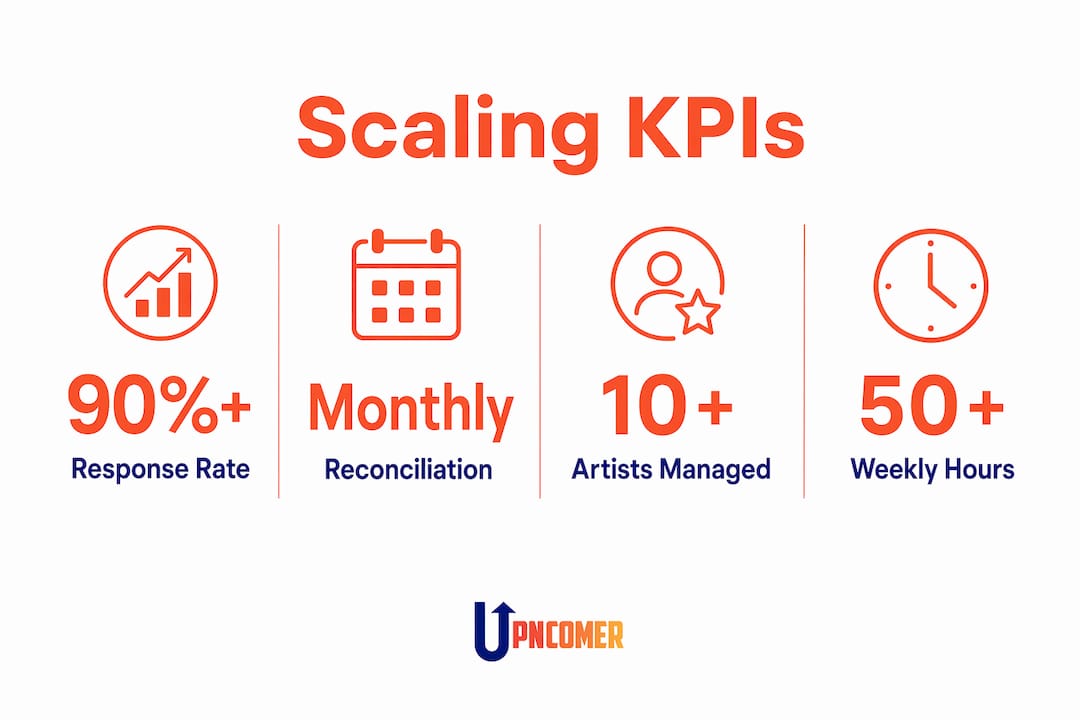
The roster ceiling is rarely hit because a manager runs out of passion. It is hit because response times slip and reconciliations pile up. Treat your SLAs as bottleneck indicators, not just best practices.
Which tools and processes make scaling operations in artist management work?
Once your quality thresholds are defined, you need systems that make them easy to maintain. Here is a practical setup that works whether you are managing five artists or fifteen.
- Build an enquiry pipeline. Log every inbound booking request in a shared tracker with columns for artist name, venue, date, offer amount, and status. Tools like Notion, Airtable, or a dedicated platform give you a live view of every open deal.
- Create a commission ledger. A simple spreadsheet with columns for gig date, gross fee, your commission percentage, invoice sent date, and payment received date is enough to start. The goal is never losing track of money owed.
- Centralize all artist assets. Contracts, press photos, technical riders, and sync licenses should live in one shared folder structure, not scattered across email threads. This is what Synchtank describes as a “single source of truth,” and it is the difference between a manager who looks professional and one who constantly asks artists to resend files.
- Automate reminders. Payment due dates, contract renewal windows, and press deadlines should trigger automatic notifications. You should not be relying on memory for any of these.
- Use a shared team calendar. Every artist’s tour dates, release dates, and key meetings should be visible to everyone on your team in real time.
The pain point most managers report is toggling between platforms and hunting for scattered information. A centralized system is not a luxury. It is a risk-control layer that prevents costly errors.
| Tool Type | Example Use Case | Impact on Scaling |
|---|---|---|
| Enquiry tracker | Log venue offers, status, and follow-ups | Prevents missed deals and slow responses |
| Commission ledger | Monthly reconciliation of fees and payments | Eliminates payment disputes and cash flow gaps |
| Centralized asset hub | Store contracts, riders, and press kits | Reduces time lost searching for files |
| Automated reminders | Payment deadlines and contract renewals | Protects reliability without manual effort |
Pro Tip: Before investing in paid artist management software, audit your current workflow for one week. Write down every task you repeat more than twice. Those are your automation targets.
How to scale team capacity and artist collaboration together
Growing your roster without growing your team is a recipe for burnout. The phased approach that works in practice looks like this:
- Solo phase (3 to 10 artists). You handle everything. Your priority is building clean systems and hitting your KPIs consistently before adding anyone new.
- Part-time admin phase (10 to 15 artists). Hire a part-time assistant to handle calendar management, logistics coordination, and payment chasing. These are high-volume, low-judgment tasks that drain your time without requiring your expertise.
- Agency infrastructure phase (15 to 30 artists). You now need a full support structure: a booking coordinator, a finance person, and potentially a junior manager. Resistance to investing at this stage caps your earnings and your artists’ growth.
Delegation works only when you protect the reliability signals. Your assistant can chase invoices, but you still sign off on commission reconciliations. Your coordinator can manage logistics, but you still handle artist relationships directly.
The other half of this equation is your artists. Successful scaling depends on artists who engage operationally, not just creatively. Artists who understand their own deal structures, respond to approval requests promptly, and share responsibility for logistics make your job scalable. Artists who treat management as a one-way service create a ceiling you cannot break through.

Educating your artists on the business side of their careers is not optional when you are trying to grow. It is a prerequisite. Build a simple onboarding document for every new artist that explains your processes, your response time expectations, and what you need from them to do your job well.
What technology is transforming operations in artist management in 2026?
The biggest shift in artist management software right now is the move from data storage to real-time decision support. Platforms are no longer just places to save files. They are systems that reduce uncertainty and speed up execution.
SystemOne’s 2026 rebuild is a strong example of where the industry is heading. The platform now includes structured invoice lifecycle stages, moving deals from draft through review to outstanding and settled. It also uses AI to extract flight information directly from PDF documents, which removes a genuinely tedious step from tour planning. For managers handling international touring, Peppol-compliant invoicing and AI-enhanced scheduling are no longer nice-to-haves. They are the baseline for operating at scale across borders.
UpNComer approaches this from the independent artist side. Its Artist Manager module centralizes communications, approvals, and scheduling. The Growth Engine tracks streaming analytics and fan engagement data in one place. Amplitude AI provides real-time guidance on campaign decisions without requiring a full marketing team. For independent managers who cannot afford agency-level staffing, this kind of integrated platform is the practical alternative.
The core principle behind all of these tools is the same: AI and integrated platforms free managers from administrative repetition so they can focus on artist development. That is not a marketing claim. It is a structural shift in how management capacity is allocated.
Pro Tip: When evaluating any artist management software, ask one question: does this reduce the number of places I need to check to get a complete picture of my operations? If the answer is no, it is adding complexity, not removing it.
How to implement a scaling plan step by step
Scaling is not a single decision. It is a sequence of decisions made at the right time. Here is how to approach it without overextending.
- Start with 3 to 5 artists and spreadsheet-level tools. Your goal at this stage is proving you can consistently hit your KPIs, not building a tech stack.
- Add 2 to 3 artists per quarter only after meeting your SLAs. This is the rule that prevents overextension. If your enquiry response time is slipping or your commission reconciliation is late, you are not ready to grow.
- Invest in software when manual tracking creates errors. The trigger is not a roster size. It is the first time a missed payment or a lost enquiry costs you real money or a real relationship.
- Hire support staff when delegation becomes the bottleneck. If you are spending more than 30 percent of your week on logistics and admin, a part-time assistant pays for itself within one month.
- Build a vendor and crew database independent of any label. Knowing which sound engineers, photographers, and tour managers work well with your artists is institutional knowledge. Keep it in your systems, not in someone else’s.
Common pitfalls to watch for as you grow:
- Missed enquiries because your inbox is unmanaged and no tracking system exists
- Payment delays because commission reconciliation is done reactively instead of on a fixed schedule
- Overworked managers who add artists without adding capacity, which degrades service for everyone on the roster
- Artists who are unprepared for the operational demands of a growing career, which amplifies manager workload significantly
The operational excellence that drives sustainable roster growth lives in the deal pipeline, from the first enquiry to the final payment. Every gap in that pipeline is a revenue leak.
Key takeaways
Scaling artist management operations requires structured quality thresholds, centralized systems, and phased team growth before adding more artists to your roster.
| Point | Details |
|---|---|
| Set quality thresholds first | Define 24-hour response times and monthly reconciliation before growing your roster. |
| Centralize everything | A single source of truth for contracts, assets, and communications prevents costly errors. |
| Scale in phases | Add 2 to 3 artists per quarter only after consistently meeting your service KPIs. |
| Invest in the right software | Choose platforms that reduce uncertainty with real-time data, not just file storage. |
| Align artists operationally | Artists who engage with business processes make your management scalable and sustainable. |
Why the systems you build now determine how far you go
I have watched a lot of managers hit 8 or 10 artists and then plateau. Not because they were not good at their jobs, but because they were still running everything the way they did at artist number two. The spreadsheet that worked for three acts becomes a liability at twelve. The mental calendar that felt manageable at five becomes a source of missed deals at nine.
The managers who scale well share one habit: they treat their operations like a product. They document their processes, they audit their systems regularly, and they are willing to invest in tools before the pain becomes unbearable. The ones who struggle wait until something breaks, then scramble to fix it while their artists notice the drop in service.
Technology is genuinely useful here, but it is not a substitute for clear thinking about what your operation actually needs. A platform like UpNComer or SystemOne can centralize your workflows and automate your reminders, but only if you have already decided what your workflows are. The tool does not create the process. You do.
The other thing I would say is this: your artists are your partners in scaling, not just your clients. The managers who grow the fastest are the ones whose artists understand the business well enough to share the load. That requires education, honest conversations, and a music release checklist mentality where everyone knows their role before the campaign starts. Build that culture early, and scaling becomes a shared project rather than a solo grind.
— Karan
Ready to scale smarter with UpNComer?
If you are managing artists independently and want to stop juggling disconnected tools, UpNComer is built for exactly where you are right now.
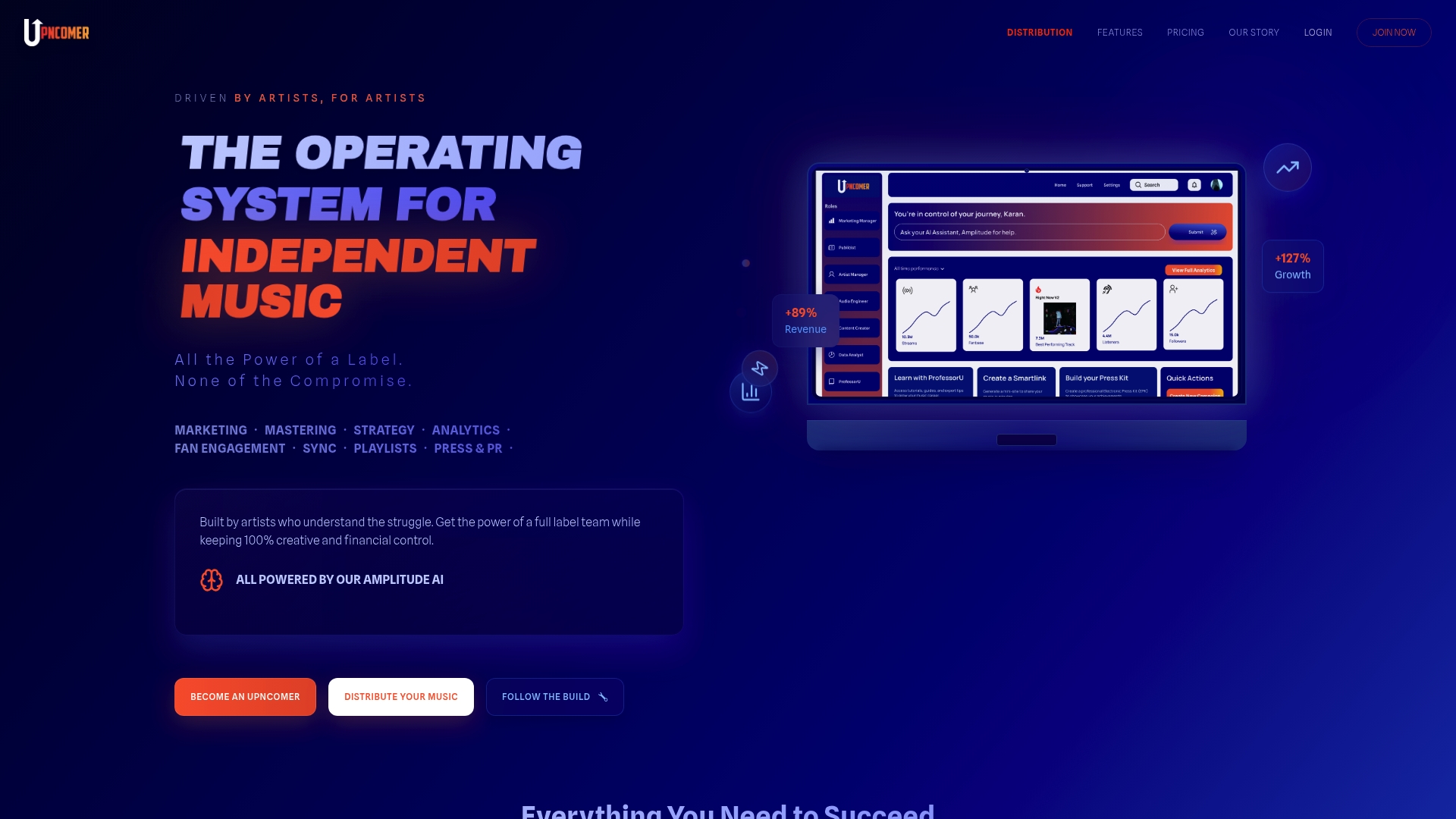
UpNComer brings together the Artist Manager module, Growth Engine, Data Analyst, and Amplitude AI into one platform designed for independent music teams. You get centralized communications, streaming analytics, fan engagement data, and AI-powered campaign guidance without needing a label budget or a full agency behind you. Whether you are managing your first five artists or building toward thirty, UpNComer gives you the infrastructure to grow without losing control. Check out the latest features and community resources at UpNComer community updates, or explore UpNComer Distribution to add release management to your operation.
FAQ
What does it mean to scale artist management operations?
Scaling artist management operations means growing your roster and revenue without proportionally increasing your workload or reducing service quality. It requires defined KPIs, centralized systems, and phased team investment.
How many artists can one manager handle alone?
One manager can sustainably handle up to 10 artists solo, but beyond 10 acts weekly time requirements exceed 50 hours and service quality drops. Part-time support staff become necessary at this stage.
What are the best practices for artist management when scaling?
The best practices for artist management at scale include maintaining a 24-hour enquiry response SLA, reconciling commissions monthly, centralizing all artist assets in one system, and adding artists only after existing KPIs are consistently met.
What artist management software helps with scaling?
Platforms like SystemOne, UpNComer, and Airtable-based custom setups each address different scaling needs. UpNComer is purpose-built for independent artists and managers, combining AI guidance, analytics, and workflow tools in one place.
Why do artist rosters stall when managers try to grow?
Rosters stall because operational reliability signals like response times and commission reconciliation break down before team capacity is added. Fixing systems before adding artists is the only way to grow without losing existing clients.